Your First Cello: Renting, Sizing and Getting It Playable
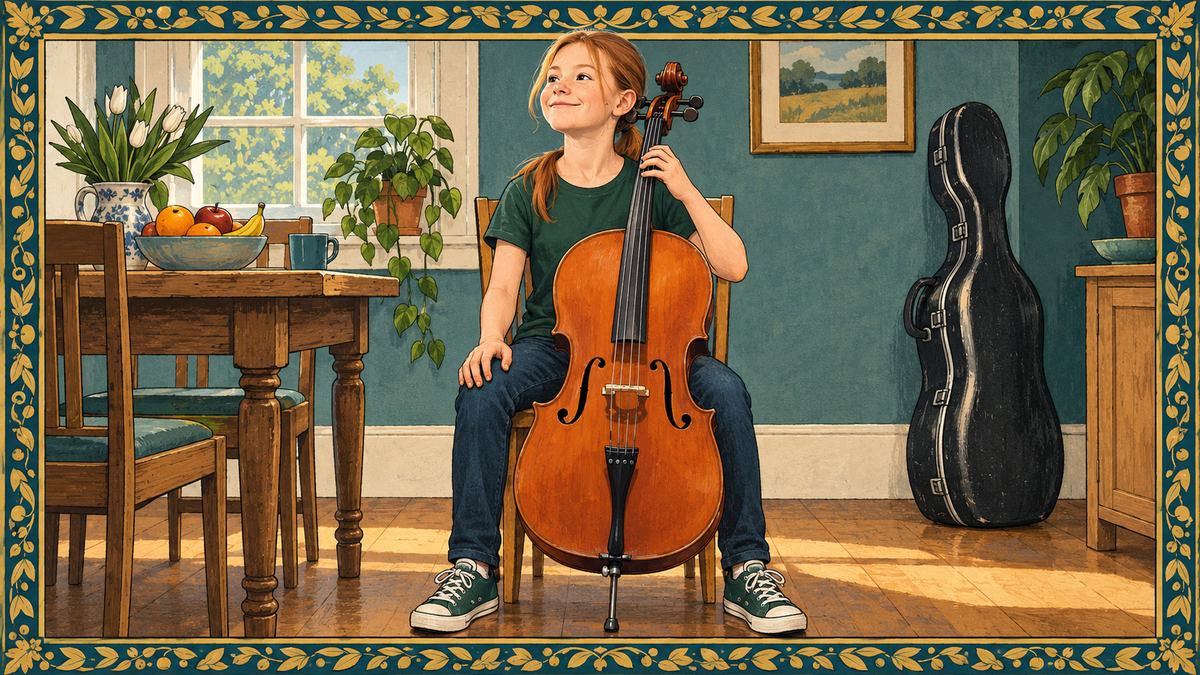
Rent a cello for the first six to twelve months, get it sized by a teacher or a string shop rather than by a birthday, and have a teacher check that it is playable before the first lesson. A rental runs roughly $30 to $80 a month as of 2026, a cello worth owning runs $700 to $2,000, and most rental programs credit part of the rent toward a purchase later.
Rent now, buy later
Rental is the normal starting point on cello. A child grows through several sizes before a full-size cello fits, and an adult who buys a $700 to $2,000 instrument in month one does not yet know whether they will be practicing in month twelve. Our guide to how long it takes to learn cello puts the point where the sound becomes recognizably musical at around six months, a sensible moment to decide whether to keep the instrument. Lesson prices, the other half of the first-year budget, are in our pricing guide for online music lessons.
Real programs price inside the $30 to $80 band. Johnson String Instrument, which ships nationwide, lists its standard cello at $43 a month plus an $11 damage waiver, $54 in total, as of September 2026, with an advanced tier at $64 and a master tier at $80 before the waiver. Potter Violins lists $50 a month for its standard cello and $65 for its premier tier, as of September 2026. Both prices exclude tax and shipping.
Rent-to-own means two different things. Johnson applies the whole first year of rent, not counting the waiver or tax, plus a fifth of later years’ rent, toward a cello from its own stock, the one you are renting included. Potter banks twelve months of rent as credit but caps it at half of a purchase price. Ask which model the shop uses.
Buying outright suits an adult who already plays another string instrument, or a student whose teacher has heard them for a few months and says the commitment is real. A cello bought online without a shop setup usually fails the playability check.
What to ask the rental shop before you sign
Ask these in the shop or on the phone and write the answers on the contract.
- What comes in the box? The standard outfit is the cello, a bow, a case and a cake of rosin, the block of hardened tree resin rubbed on the bow hair so it grips the strings. Johnson’s standard outfit has a soft backpack case and a fiberglass bow, and carbon fiber is $8 a month more. The endpin is the metal rod the cello stands on, and a rock stop, the rubber disc or strap that keeps it from skating across the floor, is rarely included and costs under $20.
- What does the damage waiver or protection plan cover, and what does it cost? Johnson’s waiver, $11 a month on a standard cello, covers broken strings and most accidental damage. Potter’s protection plan cuts the cost of accidental damage by 60 percent and expects renters to maintain the instrument as their own. Ask about strings, a bow rehair, a fallen bridge and a crack from dry winter air, since shops treat the four differently. The bridge is the thin maple piece that holds the strings up off the body, and a rehair replaces the bow’s horsehair.
- How does a size change work? A child on a 1/4 will need a 1/2 in a year or two. Potter allows a size change at any time for a fee of up to one month’s rent, which does not count toward purchase credit. Some shops swap free.
- How much of the rent becomes credit, for how long, and toward what?
- Was the cello set up by a luthier? A luthier is the technician who builds and repairs string instruments, and a rental a luthier has checked for string height and bridge fit arrives playable.
Sizing: arm, hand and chair, not birthday
A cello comes in fractional sizes, instruments built smaller than the full-size 4/4 and named by a fraction of it: 1/10, 1/8, 1/4, 1/2, 3/4, 7/8 and 4/4. Sizing is done seated with the instrument in position and rests on three checks. Arm length: with the cello on the sternum and the C-string peg, the tuning pin for the lowest string, near the left ear, the left hand curls over the top of the fingerboard with the elbow still bent. The fingerboard is the black strip under the strings where the left hand presses. Hand span: in first position, the left hand’s home spot nearest the pegs, the first finger sits on E on the D string and the fourth finger reaches G, a minor third of three half steps, without the wrist collapsing or the fourth finger flattening. Bow reach: the right arm draws the bow to its tip on the A string, the longest reach, without the shoulder lifting. A cello that fails any of the three is too big, however old the student is.
Heights in the table from 1/8 to 4/4 are Johnson’s published approximations. The 1/10 and the 7/8 are sized in person. Age alone does not set the size: two nine-year-olds can leave the same shop with a 1/4 and a 1/2, and a slight adult can be happier on a 7/8 than on the 4/4 they assumed was theirs.
| Size | Typical age range | Approximate height | Who usually plays it |
|---|---|---|---|
| 1/10 | sized in person | sized in person | the youngest children in parent-participation programs |
| 1/8 | about 4 to 6 | 48 to 50 inches | early starters with a parent in the lesson |
| 1/4 | about 6 to 8 | 51 to 54 inches | a common first size for a six- or seven-year-old |
| 1/2 | about 7 to 11 | 55 to 58 inches | most elementary-age students |
| 3/4 | about 11 to 14 | 59 to 62 inches | middle schoolers and occasionally a small adult |
| 7/8 | sized in person | sized in person | smaller adults and anyone whose hand finds a 4/4 a stretch |
| 4/4 | about 14 and up | 63 inches and up | most adults |
Endpin height, how the cello rests against the knees and chest, and the chair are covered in our beginner cello tips.
The playability check a teacher runs before the first lesson
This is what a cello that is set up well and sized to its player sounds like. Diane C. plays the Prelude from Bach’s first suite, and every open string rings because the bridge, strings and endpin are where they should be.
Performance · Cello Suite No. 1, Prelude
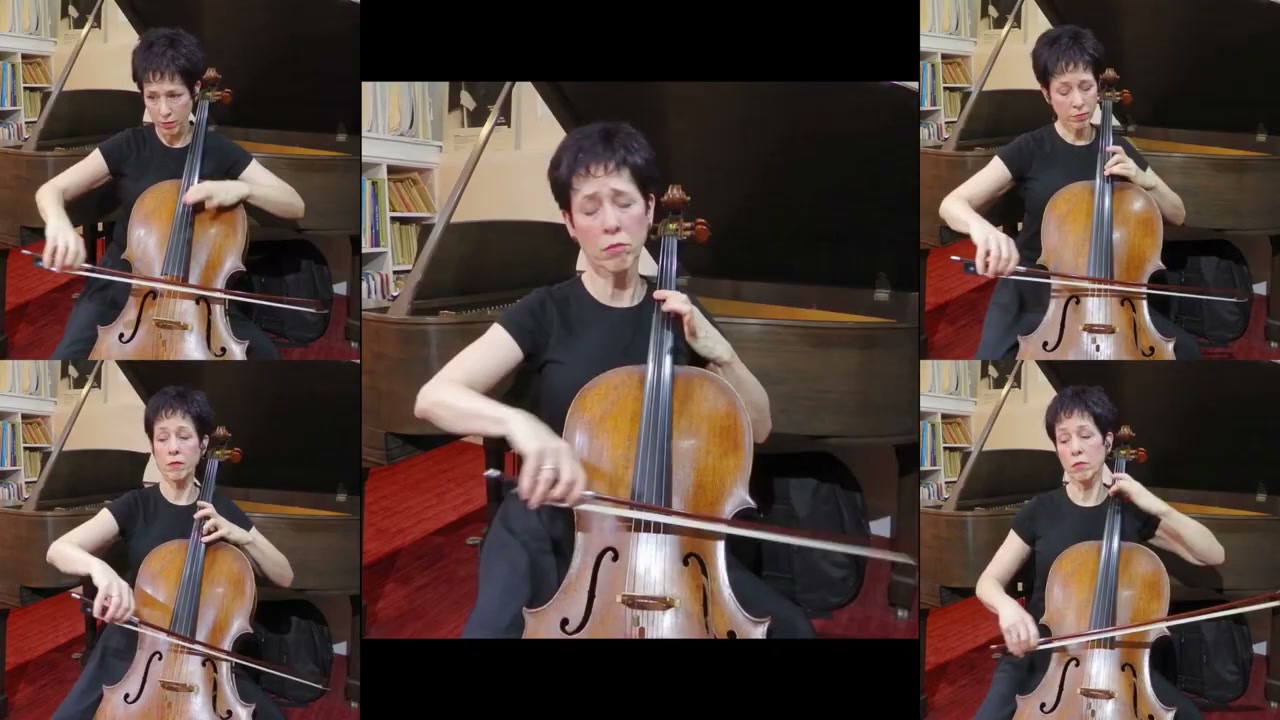
Diane teaches cello on Tunelark. View Diane’s profile
A rental from a good shop arrives playable. A cello bought used, or one that sat in a closet since a cousin quit, may not, and an unplayable cello makes a beginner feel like the problem. A teacher can run this check over video in the first lesson or from photos before it, and our guide to online cello lessons covers what a good cello teacher fixes first.
1. String height at the nut. The nut is the small ridge at the top of the fingerboard where the strings leave the pegbox, the hollow just below the carved scroll. Each string should clear the fingerboard there by about a millimeter, a credit card’s thickness or a little more on the C string, so the first finger presses it down without effort.
2. String height over the fingerboard. At the end of the fingerboard nearest the bridge, the C string clears the wood by around 8 millimeters and the A string by around 5. Much higher fights the hand, and a string that buzzes against the wood is too low. A luthier adjusts this at the bridge.
3. Pegs that hold. Each peg should turn smoothly and stay put. A peg that slips overnight or has to be forced sends the cello back to the shop.
4. Fine tuners present. Fine tuners are the small screws on the tailpiece, the piece below the bridge that anchors the strings, and they make the daily corrections that pegs are too coarse for. A student cello should have one on each string.
5. A bridge that stands straight. String tension alone holds the bridge in place. Its back face, toward the tailpiece, should be at a right angle to the top, and a bridge leaning toward the fingerboard is on its way to falling.
6. An endpin that locks. Its thumbscrew should hold the rod at the set height under the cello’s weight. A slipping endpin drops the instrument mid-phrase.
7. A bow that tightens and has hair. The screw at the end of the bow should tighten the hair to about a pencil’s width from the stick and loosen it after playing. Slack hair, or a ribbon missing a third of its hairs, needs a rehair, typically under $100 as of 2026.
8. Rosin on the bow. New hair has no grip and makes almost no sound until it is rosined. Score a new cake with a coin so it sheds, then draw the hair across it thirty or forty times.
Anything the student cannot fix in a minute goes back to the shop under the maintenance terms you asked about.
What the camera needs to show in the first online lesson
The teacher needs the whole seated player and the whole instrument at once: endpin on the floor, feet, knees, the cello on the sternum, the left hand on the fingerboard and the bow crossing the strings. Put the laptop or phone straight in front of the chair, at about the seated player’s chest height, and far enough back that the scroll and the feet are both in frame, six to eight feet in most rooms. A teacher may ask for a shift toward the player’s left to see the fingertips, or toward the right for the bow arm and where the bow meets the string.
The first lesson spends its opening minutes on setup, so the wide shot matters more than a close one. Our guide to what to expect from a first online music lesson describes that opening conversation, and for cello it is mostly about the chair and the endpin height. Turn on the original sound setting in the video app, because default speech processing filters low frequencies and the C string disappears into it. Light from the front, a firm chair without arms, and the rock stop already under the endpin. Our guide to setting up a home practice space covers the rest of the room.
How to Find a Cello Teacher on Tunelark
Tunelark connects you with deeply vetted teachers who teach online. Vetting is run by working musicians and music teachers, not a general recruiter, and every teacher sets their own rate and shows it on their profile. Scheduling, billing and support are handled for you.
- Browse teachers at tunelark.com/find-a-teacher, filter by instrument and watch their videos.
- Read bios for teachers who mention beginners, adult students or Suzuki, the parent-participation method for young children.
- Book a trial lesson at $25 off the teacher’s rate for the length you choose, and bring the rental so the teacher can run the playability check.
- A good first lesson changes something about the chair, the endpin height or the bow hold before it teaches a note.
Frequently Asked Questions
How much does it cost to rent a cello?
Roughly $30 to $80 a month as of 2026 for a student cello with bow, case and rosin, before tax, shipping and any damage waiver. Yearly contracts usually cost less than twelve monthly payments, and higher tiers add a better bow and a cello set up for a player past the first year.
Should a beginner rent or buy a cello?
Rent until the student has outgrown one size or, for an adult, until a teacher has heard six months of playing. Then compare the credit you have banked against the shop’s price on the cello you are renting. When the credit covers a third or more, buying that cello is often the better deal.
What size cello does a beginner need?
Most adults take a 4/4 and smaller adults a 7/8. Children move up roughly once every one to three years, and a child between sizes does better on the smaller one for a few more months, since a cello slightly too big costs more in tension than one slightly too small costs in reach.
Can a cello be sized without visiting a shop?
Yes, with care. Shops that ship rentals start from height and age, so the teacher runs the three seated checks in the first lesson, and a wrong size goes back under the size-change terms.
What accessories does a rental cello need beyond the outfit?
A rock stop or endpin strap, a firm armless chair, a music stand, a tuner app or clip-on tuner, and for apartment players a practice mute at $15 to $30 as of 2026. A case humidifier matters in a heated house in winter, since dry air is a common cause of cracks.
Keep reading
About Jennifer Heath
I'm Jennifer Heath, VP of Operations at Tunelark and a lifelong singer. I joined the company in 2020 and oversee much of what makes Tunelark work for students and teachers: hiring, training and supporting our instructors, student support, marketing and day-to-day operations. I started voice lessons at 7 and sang with touring choirs through my teens. Music belongs in every life, for the self-expression, the discipline, the comfort and the simple joy of it.