Why Won’t My Trumpet Sound Clear? A Troubleshooting Guide
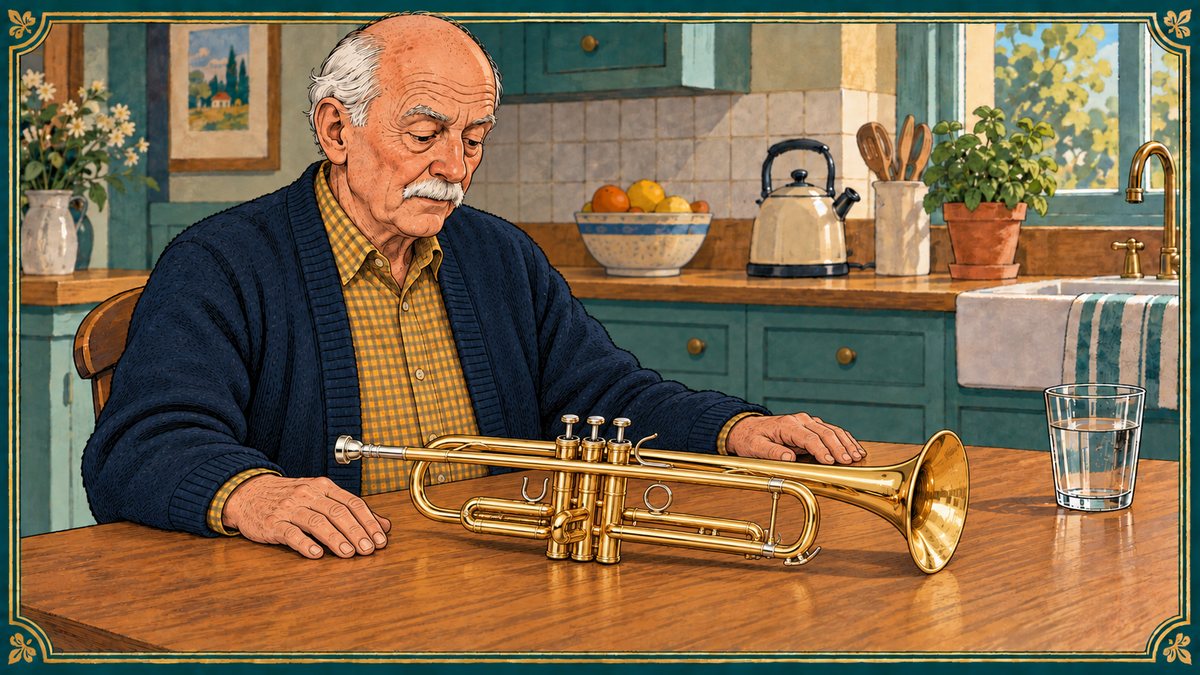
An unclear trumpet note usually comes from one of six places: the instrument, the air, the start of the note, mouthpiece pressure, lip speed, or tired lips. Check them in that order. The instrument takes two minutes to rule out and is the one cause no amount of practice will fix, and a quick test on the mouthpiece alone then tells you whether the problem is in you or in the horn.
The table below matches what you hear to where to look first. The sections after it explain each check and give a short exercise for it.
Match the Sound to the Likely Cause
| What you hear | Where to look first | First check |
|---|---|---|
| Almost nothing comes out, on every note | A valve in the wrong casing or turned the wrong way | Unscrew each valve cap and reseat it until it clicks |
| One fingering fails while the others work | That valve or its slide | Oil the valve, push its slide fully in |
| A gurgle or rattle in the sound | Water in the tubing | Open the water key and blow through without buzzing |
| Airy or hissy, with the pitch wobbling | Not enough air behind the buzz | The mouthpiece test, then a long tone |
| The middle of the note is fine, the start is not | Tongue timing | Start the note on air alone, then add the tongue |
| Thin and pinched, or a red ring on the lips afterward | Pressing the mouthpiece into the lips | Little finger out of the ring, mouthpiece set on, not pushed |
| A different note pops out, or the note cracks | Lip speed landing on a neighboring note | Slow slurs between open notes |
| Clear at first, fuzzy later in the session | Tired lip muscles | Rest, and stop for the day if the sound does not come back |
Check the Trumpet Before You Blame Yourself
A trumpet that is slightly out of order can sound like a player doing something wrong, and a beginner has no way to tell the difference by ear. Five checks cover the common faults.
1. Valves in their own casings. Each valve has holes, called ports, that line up with the tubing only in its own casing and only when it faces the right way. Brian Weidner’s open textbook Brass Techniques and Pedagogy says a valve “should return to the same valve casing” it came out of. Many trumpets have the number stamped on each valve. Turn a valve gently after dropping it in until it clicks into its guide. With all three valves up, the air passes through every one of them, so one wrong valve can stop the whole instrument.
2. Valve oil. A valve that comes up slowly sits partly closed and makes every note that uses it stuffy. Weidner’s method is a few drops of valve oil around the ports on the piston.
3. Slides pushed in. When you press a valve, the air takes a detour through that valve’s slide. If one fingering fails and the rest are fine, look at that slide and that valve before anything else.
4. Water. Condensation collects in the low points of the tubing. A gurgle means opening the water key, the small lever on the main tuning slide, and blowing air through without buzzing. Many trumpets have a second water key on the third valve slide.
5. The mouthpiece. Seat it with a gentle twist. Tapping it in wedges it, and a stuck mouthpiece is a job for a mouthpiece puller, a tool repair shops and many brass teachers keep, never for pliers.
If all five pass, the common faults are ruled out, and the mouthpiece test settles the rest.
The Mouthpiece Test: Is It You or the Horn?
Take the mouthpiece out and buzz into it alone, holding it lightly by the shank, the narrow end, between your thumb and first finger. Weidner calls the mouthpiece diagnostic because it gives “the purest presentation of the tone” the lips are making, with no trumpet in the way. A good buzz is rich and full of overtones, the higher tones that make a sound full rather than thin, and it can slide smoothly from low to high in a siren, a glide made by gradually speeding up the air.
A clean buzz with a stuffy trumpet points back at the instrument, so recheck the valves or take it to a repair shop. A fuzzy or broken buzz means the cause is the air, the lips or the pressure, and the trumpet was only amplifying it. Air hissing out at the sides of the mouthpiece means the corners of the mouth are too loose or the center is pinched.
The test is also quiet, which makes it the practical diagnostic for a session in an apartment or late in the evening.
Airy or Fuzzy: Usually the Air
The buzz is the lips vibrating, and the trumpet’s job is to amplify it. Air is what keeps the vibration going, so a weak breath gives a weak buzz. Weidner writes that with an under-supported exhale the “tone on the instrument will be very airy and pitch and tone will fluctuate.” His fix is a deep breath that lets the rib cage expand fully, followed by an exhale that starts immediately, without a pause at the top, and takes effort.
Puffed cheeks are the most visible sign of the same problem. Weidner ties them to poor tone, poor control and quick fatigue, because the corners of the mouth have stopped holding and the center of the lips takes the strain.
A long tone to test it. Set a metronome to 60. Breathe in for four clicks, then play written G on the second line of the staff, open (trumpet music is written a whole step above how it sounds, so this is the G in your book), at a comfortable medium volume, and hold it for eight clicks. Rest for eight clicks. Do four holds in total. The note should stay one steady color from start to finish. If it fades or wobbles near the end, the air ran out before the note did, so hold it for six clicks and build back up. Do this in front of a mirror or a phone camera and watch the cheeks.
Notes That Start Wrong: The Tongue
A note that is fine in the middle and messy at the front is usually a timing problem between the tongue and the air. The tongue releases the note by moving away from the spot just behind the top front teeth, as if saying “tu” or “du,” while the air is already pushing. Between repeated notes the tongue interrupts the air without stopping it.
Weidner names the two timing faults. If the tongue moves early, the start is “weak or non-existent followed by a wah,” the sound swelling in late as the air arrives. If it moves late, “the note will have a double attack,” one start from the air and a second from the tongue. A third habit is pushing the tongue out between the teeth with a “tha” syllable, which moves the jaw on every note.
Separate the two with one comparison. Play the long-tone G starting on air alone, as if saying “hoo.” Then play it again starting with “too.” If the air-only start is clean and the tongued one is not, the tongue is the fault, and the fix is slower, lighter tonguing on one note. If the air-only start is also messy, go back to the air section first.
Thin, Pinched or Cracking: Pressure and the Wrong Note
Pressing the mouthpiece harder into the lips does reach higher notes for a while, which is why beginners do it. Weidner’s tell-tale signs of too much pressure are “lingering pressure rings on the embouchure and thin tone.” The embouchure is the way the lips and the muscles around them hold their shape against the mouthpiece, and pressure squashes the part that is supposed to vibrate. He also points at the little finger: hooked through the ring on the lead pipe, the first stretch of tubing after the mouthpiece, it becomes a lever for pulling the trumpet into the face. Rest it on top of the ring instead, and set the mouthpiece on the lips without pushing it in.
A note that cracks, or a different note that pops out, is a separate fault. With any one fingering the trumpet can play several notes, and lip speed decides which one sounds. Weidner sums it up as “faster air produces a faster buzz, resulting in a higher partial,” a partial being one of those notes. Our guide to whether trumpet is hard to learn explains why the instrument works this way. For troubleshooting, the practical use is knowing which notes a missed one can land on.
Swipe sideways to see the whole diagram.
If you aim for the E in the fourth space with no valves down and get G or C, your buzz arrived at the wrong speed. The repair is the lip slur, which Weidner defines as moving between these notes “without altering fingerings” and without tonguing. Play second-line G, then slur up to third-space C and back, four beats each at 60, with no valves and no extra pressure. When that is reliable, slur from C up to E.
When It Is a Repairer’s Job, and When It Is a Teacher’s
Weidner lists dents, bent tubing and misaligned slide supports among the repairs that need professional service, and he advises checking a stuck slide for dents before trying to free it. A dent in the lead pipe can make a horn stuffy on every note, which the mouthpiece test catches. A valve that still sticks after oiling, or any slide or mouthpiece that will not come free, goes to a repair shop.
The embouchure is a teacher’s job. Weidner writes that there is not a single correct embouchure, though most successful players set the mouthpiece roughly centered and close to half on each lip, with the jaws even or a slight underbite. Teeth, lip shape and jaw vary from player to player, so a universal fix read online can make things worse, and the problem is happening in a place the player cannot see.
A teacher can see it over video. Set the camera at mouthpiece height, slightly to one side, so the lips, the cheeks and the angle of the trumpet are all visible, and turn on your video app’s original sound setting so the call does not filter the tone. Our guide to what to expect in a first online lesson covers the rest of the setup. If the student plays in a school band, our guide to private lessons alongside school band covers how the band director and a private teacher divide this kind of work.
The last row of the table needs no repair at all. Lip muscles tire, and once the sound starts to go, more playing that day builds fatigue rather than skill. Fifteen to twenty minutes a day, five or six days a week, is the beginner load, and our guide to how much to practice explains why short daily sessions work better than long ones.
How to Find a Trumpet Teacher on Tunelark
Every Tunelark teacher is vetted by working musicians and educators for teaching quality before they can list. Each teacher sets their own rate and shows it on their profile, and Tunelark handles scheduling, billing and support.
- Open the teacher list at tunelark.com/find-a-teacher and filter by instrument.
- Choose a lesson length of 30, 45 or 60 minutes.
- Book a trial lesson. The first lesson with a new teacher is that teacher’s rate minus $25, for whatever length you choose, so trials start at $14.
- Warm up before the lesson, then play one long note and one tongued passage with the camera at the side.
Frequently Asked Questions
Why is my low C fuzzy when the G above it is clear?
Weidner describes students over-relaxing the embouchure as they go lower, which gives an unfocused tone. Keep the corners of the mouth firm on the way down, so the low C gets the same support as the G.
My sound got worse after I got braces. Should I stop playing?
Usually not. Braces change what the lips rest on, and Weidner notes they can make trumpet painful. Orthodontic wax or a brass mouthguard over the brackets reduces that, and a teacher can help adjust the mouthpiece setting.
Is buzzing on the mouthpiece alone worth practicing every day?
In small amounts, yes. A few minutes of sirens and simple tunes is enough, because the buzz exists to drive the trumpet.
How should I wash a trumpet?
Use water about as warm as you would wash dishes in, according to Weidner. Afterward, grease the slides with slide grease and oil the valves before reassembling.
Why is my sound clear one day and fuzzy the next?
Weidner traces unstable pitch or tone to one of two causes, a shifting embouchure or inconsistent air. Leftover fatigue from a long session the day before is a third, and it clears with rest.
Keep reading
About Jennifer Heath
I'm Jennifer Heath, VP of Operations at Tunelark and a lifelong singer. I joined the company in 2020 and oversee much of what makes Tunelark work for students and teachers: hiring, training and supporting our instructors, student support, marketing and day-to-day operations. I started voice lessons at 7 and sang with touring choirs through my teens. Music belongs in every life, for the self-expression, the discipline, the comfort and the simple joy of it.