The Voice Lesson That Changes Every Day: How a Teacher Builds Around the Singer, Not the Curriculum

A lot of people picture a voice lesson as a fixed sequence. You warm up, you run your scales, you work the song you were assigned last week, and you leave with the next page of the book. It sounds orderly, and for some instruments it can almost work that way. The voice is different, because the instrument is not something you pick up and set down. It is part of you, and it walked into the lesson carrying whatever kind of day you had.
That single fact, that the voice is attached to a living body and a busy mind, is why many voice teachers rebuild the lesson each time, even for the same student. The plan that fit perfectly on Tuesday may not fit on Thursday, not because anything went sideways, but because the singer slept poorly, or flew across the country, or is holding tension in their shoulders they have not noticed yet.
Mary Beth S. builds her teaching around exactly that idea. She is a voice instructor at Tunelark with eleven years of teaching behind her and a 27-year performance career in front of audiences, and her whole approach starts from the belief that a real voice lesson has to be rebuilt, at least a little, every single time. The book is a resource. The student in front of her is the lesson.
Why a voice lesson cannot run on a fixed plan
Mary Beth learned this on day one, with her very first students. “When I was in college, the first two students I ever had made me go off-script immediately,” she says. They were sisters, one in middle school and one only four years old, and right after them came a man in his sixties. The range was almost comical, and it made the point instantly. “It was very clear to me that different ages needed different techniques to take into account the mind, the vocal agility, and the experience.”
What looks like a teaching problem is really a biology problem, and that is the part new singers tend to underestimate. “Because the vocal cords are a part of the body, we deal with biological differences from weather pressure, to muscle tension, to stress responses causing throat inflammation,” Mary Beth says. A pianist can have a rough week and still find the keys exactly where they were. A singer cannot, because the keys are inside them, and they move. Allergies, dehydration, a cold, a tense jaw, even dry indoor air or a change in humidity can shift what the voice is able to do on a given afternoon.
Then there is the layer on top of the physical one. “Singing is also a giant mental game,” she says. “If you are having an off day, your mind and nervous system know it, and that creates muscle tension as well.” A voice carries mood in a way few instruments do, which is why some days a student wants to sit with a melancholy song and learn to perform it, and other days they want to be thrown every technical exercise their teacher can think of. Those technical days have their own requirement: a mind clear enough to focus. Trying to drill precise coordination through a foggy, overloaded brain rarely sticks, and a good teacher can feel that wall before the student names it.
This is the difference between a lesson that is built around the singer and one that is run by the book. The book does not know the singer flew home from altitude yesterday. It does not know they are running on four hours of sleep, or that they are quietly thrilled about something and can barely hold still. The teacher who insists on the plan regardless will spend the whole lesson fighting the body. The teacher who reads the body first gets to work with it. If you have never taken one-on-one instruction before, this is a large part of what makes private lessons different from a class or an app: the lesson can bend to you in real time.
The five-minute check-in that decides where the lesson starts
Because no two days are the same, Mary Beth opens every lesson the same way, with a conversation rather than a scale. “Every day I start, I ask the students about their weeks, their day, and how singing is going to them,” she says. “That tells me in five minutes where we need to start that day.”
It sounds simple, and the simplicity is the point. Those five minutes are a diagnostic. A student who is buzzing and chatty might be ready for a heavy technical push. A student who is short and flat might need the lesson to begin with stretching and breath before a single note is asked of them. Someone describing a stressful week might genuinely need a few minutes of being heard before their throat will release enough to sing freely. The check-in is how Mary Beth figures out which of those rooms she has walked into, so the rest of the lesson, whether it runs 30, 45, or 60 minutes, lands instead of bouncing off.
This is also where personalization stops being a marketing word and becomes an actual practice. A truly personalized lesson is not a fancier curriculum. It is a daily reading of one specific human and a willingness to change course based on what that reading turns up. The teacher who does this well is doing real diagnostic work in those opening minutes, and it is one of the quiet markers of a great music teacher that students often do not consciously notice. They just know they leave feeling like the lesson was about them.
When going off-script means stretching, draining, or simply listening
A recent lesson shows how far this can go. Mary Beth ran her usual quick check-in, did some vocalizations, and started in on a song from the week before. Almost immediately, something was off. “I noticed there was intense tension and tightness in the body causing the voice to sound different than usual,” she says. This student is rarely pitchy, so when she heard it, she went looking for the cause rather than drilling the notes harder.
What followed looks more like bodywork than a music lesson, and that is exactly the point. In her account, she talked the student through a chest opener stretch, then guided them in gentle self-massage along the neck and shoulders while she watched on camera, and what they found was a person who had not checked in with their own body in quite a while and was carrying more soreness than they had noticed. She named the head, neck, and shoulder massage points one at a time, the student pressed on each one, and the breath stayed slow throughout. As they worked, the student remembered a weekend of travel and several elevation changes, and Mary Beth’s read was that the fatigue and tension left over from it were what she had been hearing in the voice. Whatever the precise cause, the release itself is what she reports changing the sound. “We returned to singing the song and the student immediately sounded less pitchy, more in tune with their voice, and started making the sounds I was listening for.”
No amount of pushing the song would have produced that result, because the song was never the problem. The body was, and the body needed tending before the voice could do what it already knew how to do. This is why Mary Beth treats off-script not as the exception but as the norm. “I find myself going off script more often than not,” she says, “because everybody’s day, location, body tension points, and weather are changing most of the time.”
And off-script does not always mean massage. “Usually going off script means stretching and massaging,” she says, “sometimes it means being a listening ear on a stressful day, and sometimes it means just talking because their mind feels burnt out that day.” Caring for the instrument sometimes means caring for the person carrying it, and a teacher who can tell which kind of day it is keeps the singing going on days that a fixed checklist would have spent fighting the body. Some of that care carries over into the week, too, which is part of why a steady daily vocal-health routine makes such a difference between sessions. For Mary Beth, that flexibility is not a compromise on rigor. It is the rigor. “Vocal teaching is a beautiful calling where we get to walk with people daily in the various stages life brings.”
A stretch for a day that calls for one: Mary Beth’s range exercise works from the breath and the imagination first, and if that does not move the top note, from a squat.
Skill video · Increase Your Range In 3 Minutes
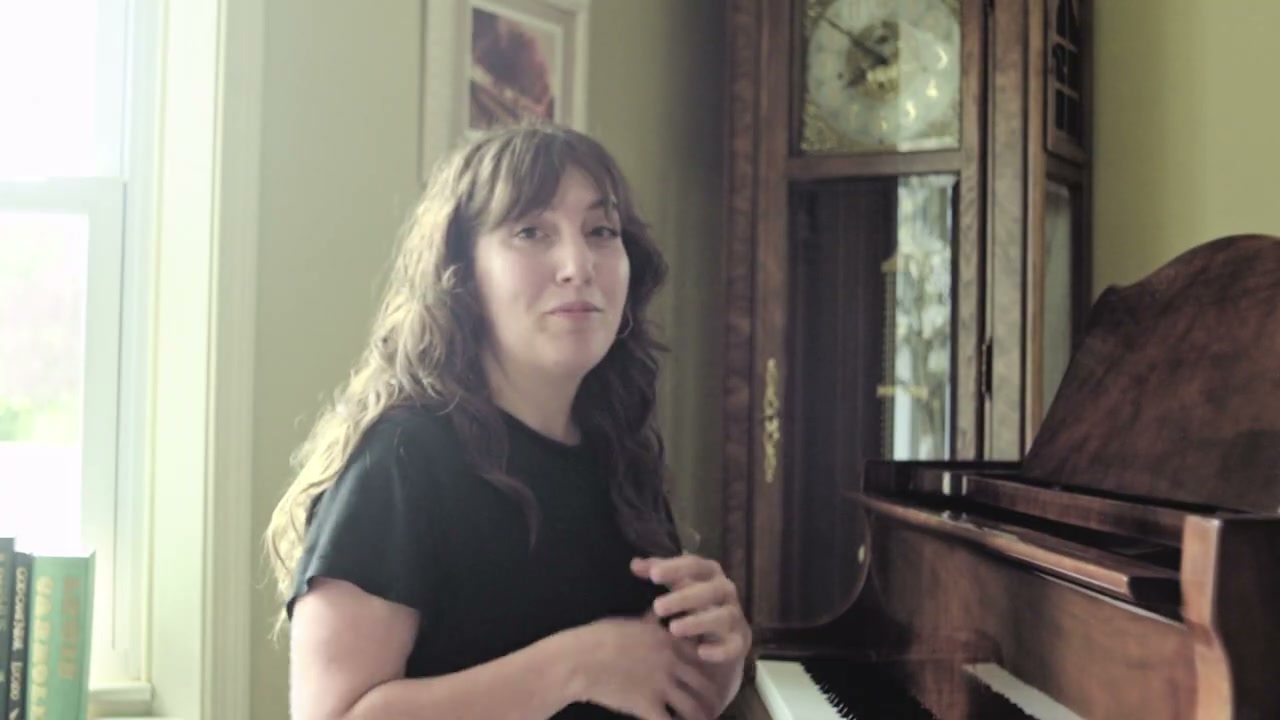
Mary Beth teaches voice on Tunelark. View Mary Beth’s profile
The goal underneath every personalized lesson
If lessons change every day, it is fair to ask what stays constant. For Mary Beth, the fixed point is the goal, and the goal is not a particular song or a graded exam. It is that the student falls in love with their own voice. The goal, she says, is for a student to fall in love with their own voice, because that is what makes them practice and get better, and the more they love it the further they get toward their own milestones.
This is why she reads the body and the mood so closely. A student who dreads lessons is far less likely to practice, and practice is what drives most of the improvement, however flawless the curriculum looks on paper. Joy is not a soft add-on to the technical work. It is the engine that drives the technical work, and protecting it is a teaching decision as serious as choosing the right exercise.
It also rests on a conviction Mary Beth holds without reservation, one that quietly changes who gets to call themselves a singer at all. Every person can sing, she says. It takes someone to teach you how to practice, and it is not something you have to be born with. She came to singing early, in a way that probably shaped the belief. “I grew up in a family of bluegrass singers,” she says. “I have been singing ever since I could talk.” But the through-line of her teaching is that the gift she grew up around is far less rare than most people assume. Pitch and vocal coordination are trainable for nearly anyone, and far more people can learn to sing than believe they can, given the right guidance and a willingness to keep showing up. If you are wondering whether that includes you, the honest starting point is just trying a first lesson and seeing what your voice does with someone reading it closely.
You can hear what that looks like in the moments that still make the job worth it for her after all these years. “It’s two moments,” she says. “The first is when someone feels heard and understood on a bad day. The second is when they say ‘I never thought I would ever be able to sing that.'” Both are downstream of the same approach. The student feels heard because the lesson started with them, and they surprise themselves because the lesson kept meeting them where they actually were.
About Mary Beth
Mary Beth teaches voice at Tunelark, and she teaches every age and every genre, from jazz and pop to musical theater, country, gospel, classical, R and B, and worship. She is an eight-time award-winning vocalist with a bachelor of arts in music from Friends University in Wichita, Kansas, where she focused on jazz and joined the school’s well-known jazz ensemble as a freshman, the start of a 27-year performance career that has included opening for Pentatonix. Her debut album is titled Discovering Home.
She has taught voice for eleven years, and she came to teaching with a specific mission: helping singers who were dealing with vocal pain and low confidence find their freedom again. That mission still shapes the studio she runs, where the priority is a safe space for each student to relax, fall back in love with music, and grow as an artist. She has worked with singers around the world, at every skill level, and the repertoire she reaches for again and again is anything by Tori Kelly. “There is so much vocal content and techniques to extrapolate,” she says, which makes a Tori Kelly tune both a joy to sing and a workout disguised as one.
Performance · Autumn Leaves

Mary Beth sings Autumn Leaves. View Mary Beth’s profile
Ready to find your voice with a teacher who reads the day?
If you have ever left a lesson feeling like you were being run through a plan that had nothing to do with how you actually felt that day, a different approach is possible. Mary Beth builds each lesson around the singer in the room, starting with a few minutes of listening and adjusting from there. Mary Beth is currently accepting new voice students at Tunelark. Come find out what your voice can do when the lesson is built around you.
Frequently Asked Questions
What does a personalized voice lesson actually look like?
It opens with a few minutes of conversation rather than a scale, and what you say in those minutes does most of the steering. Worth mentioning: how much you slept, whether you have traveled or been ill, where you feel tight, how practice actually went rather than how you meant it to go, and anything from the last lesson that stopped making sense once you were alone with it. A vague answer gets a vague plan. From there the lesson is shaped to the voice that turned up, rather than running a fixed sequence regardless of how you arrived.
Should I cancel my lesson if I am sick or hoarse?
If you are hoarse, do not sing through it, but you rarely need to cancel outright. Tell your teacher before the lesson starts and it can become breath work, posture, listening back to a recording, learning the words and the shape of a song, or planning what comes next, none of which asks the vocal folds to do anything. Cancel when you are running a fever or too unwell to sit up, and give as much notice as you can so the slot can be reused. The more common mistake is going quiet for a week and then arriving back with no plan.
Do I need natural talent to take singing seriously?
Almost certainly not, and the useful question is what the first months of training actually change. Two things, mostly. The first is pitch matching, which is a trainable skill rather than a gift: most people who describe themselves as tone deaf have never been shown how to hold a target note in their head and move their voice onto it deliberately. The second is breath and the tension riding on it, which is what makes a voice sound thin or effortful long before pitch is the problem. Both respond to guided practice, which is why Mary Beth puts the difference between people who improve and people who do not on having someone teach them how to practice.
Why does my teacher sometimes have me stretch or relax instead of singing?
Because tension in the body shows up directly in the voice. If your neck, shoulders, jaw, or breathing are tight, your voice will sound effortful or off no matter how hard you push the song. Releasing it first is part of the lesson rather than a detour from it. The version you can run on your own before you practice takes about three minutes: roll the shoulders back and down, open the chest by clasping your hands behind you and lifting slightly, let the jaw hang loose and massage the hinge just in front of each ear, then take four slow breaths low into the belly before the first note. If a spot is genuinely sore rather than tight, say so in the next lesson.
Can a busy or stressful week ruin a voice lesson?
Not at all, and a good teacher plans for it. Some of the most useful lessons happen on hard days, when part of the time goes to being heard or to calming an overloaded mind before singing. Naming what is going on lets the teacher adjust the plan so you still leave having made progress, even if the progress that day looks different than you expected.
Looking for an online voice teacher? See our full Online Voice Lessons page for everything you need to know about getting started.
Keep reading
About Jennifer Heath
I'm Jennifer Heath, VP of Operations at Tunelark and a lifelong singer. I joined the company in 2020 and oversee much of what makes Tunelark work for students and teachers: hiring, training and supporting our instructors, student support, marketing and day-to-day operations. I started voice lessons at 7 and sang with touring choirs through my teens. Music belongs in every life, for the self-expression, the discipline, the comfort and the simple joy of it.