What AI Can Actually Hear When You Practice

When a practice app tells you that you played something wrong, it is right more often than you might expect. When it tells you that you played something well, that is a narrower claim than it sounds.
The difference between those two sentences is most of what you need to know about practicing with technology.
What it hears reliably
A 2026 survey of the field maps AI in music education across four areas, learning and practicing, assessment, creation, and teaching, and reports that assessment systems handle objective technical parameters well while struggling with expressive qualities. The things that get measured well are the things that can be pinned to a number.
Pitch. Whether the note you played is the note on the page, and how far off you were if it was not. That holds for a single line. Chords and two hands on a piano are a much harder problem for any pitch tracker, so expect more missed and phantom notes there. Rhythm and timing. Whether you came in on the beat, whether you rushed the run, whether you are drifting ahead of the beat in the same bar every time. Note onsets and tempo drift are the reliable part here, while how long you actually held a note is measured much less reliably, especially on piano with the sustain pedal down.
This is genuinely useful, and it is the part people underrate. Most practice problems are boring and mechanical. You are consistently a little sharp on one note. You always speed up in the same two measures. You have been playing a dotted rhythm as a straight one for three weeks without knowing. A human teacher catches those in a lesson. A system can catch them on Tuesday, which is the point of practicing at home with any kind of feedback at all.
Being told the truth about your timing every day is worth something, even when the truth is unflattering.
What it can see
Audio is not the whole picture. A chapter in The Oxford Handbook of Artificial Intelligence in Music Education, published in August 2026, describes a violin platform built by Cornelia Fermüller and Irina Muresanu that combines computer vision with audio analysis to give feedback on posture and bowing motion.
Physical technique turns out to be more tractable than most people assume, because a camera can track where your arm is in space. Bow angle, bow speed, how straight the stroke runs, whether your wrist collapses at the frog. These are geometry, and geometry is measurable.
The same chapter frames all of this as a way to reduce the barriers that keep people from good instruction, and to extend what a teacher can do rather than to replace them. That framing matters, because it is the honest one.
Where it stops
Now the other side.
Tone. Whether the sound you are making is beautiful, or thin, or forced, or exactly right for this particular piece. Phrasing. Where the line breathes, which note carries the weight of the phrase, when to hold something back so the next thing lands. Style. What a piece needs to sound like given who wrote it, when, and for whom. Intent. Whether you meant it.
None of those choices registers as a wrong note. TJ F., who teaches voice on Tunelark, works on phrasing here: where a singer breathes, where they lean and where they leave space.
Skill video · Phrasing
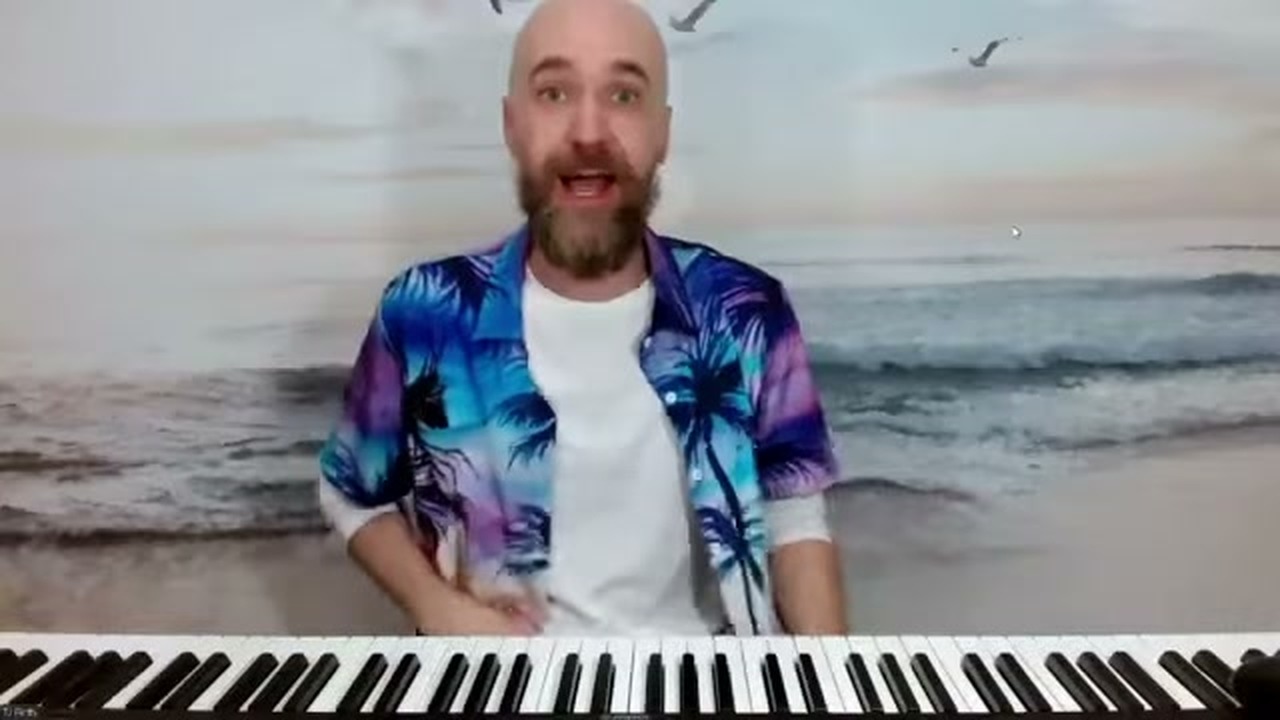
TJ teaches voice lessons online with Tunelark. View TJ’s profile
A 2026 review in Discover Education focused on instrumental teaching names constraints in expressive feedback among its open problems, alongside dataset bias and limited cultural sensitivity, meaning training data that does not represent every learner and systems that were not built with every musical tradition in mind. Its conclusion is that hybrid models combining human and machine instruction are the defensible ones.
The 2026 survey does describe assessment work beginning to move beyond pitch and rhythm toward more nuanced expressive qualities. Beginning to move is worth reading carefully. That is a research direction, not a product you can buy. A scoping review published in Research Studies in Music Education in June 2026, which screened 1,274 records to find 22 empirical studies, reports positive outcomes for motivation, self-efficacy, technical skill and aspects of creativity, alongside concerns about authenticity and emotional depth.
What a live readout costs while it is running
The obvious response is that some feedback beats none, so use the tool for what it does well and ignore the rest. That is mostly right. What the evidence adds is a caveat about when the readout should be on your screen, and it comes from the one randomized trial that has tested a live display on complete beginners.
A randomized controlled trial published in Frontiers in Psychology in 2021 randomly split 50 people with no previous violin experience into a group that got real-time visual feedback while they learned to produce a steady sound and a comparison group that was told verbally to focus on the same things instead of being shown them on a screen. The feedback came in separate blocks, one showing how their bowing was moving and one showing how their sound was behaving. During the practice sessions, the feedback group’s bowing motion improved. Their sound quality got worse, and it got worse under both kinds of feedback, including the blocks that were showing them their sound.
So this was not a case of a system watching the wrong thing. The researchers put the drop down to the visual feedback itself, which splits a beginner’s attention and adds to the mental load of a task that is already unfamiliar. At the retention test, with the display gone, the feedback group came out ahead on sound quality, but control of dynamics was the only measure on which the two groups differed significantly, and the pitch stability advantage did not reach it. So the one durable between-group difference runs in favor of the feedback, and the wider sound-quality advantage at retention is a direction rather than a result.
The narrower story is about where attention goes while the readout is running. A live display is not neutral. It pulls your eyes and a share of your concentration toward a screen, and while you are watching it you are listening less. That is a cost inside the session, and nothing in the trial suggests it hardens into a permanent habit. So the claim worth making is the modest one: do not leave the display on for everything. Turn it on for the passage you are drilling and off for the run-through, so that some part of every practice is you and your ear and nothing else.
Practicing with this in mind
None of this is an argument against using technology between lessons. It is an argument for knowing which job you have given it.
Let it own the mechanical layer. Pitch, timing, rhythm, the physical setup. That is real work and it is work you can do without supervision.
Keep the listening for yourself. Play a phrase and decide whether you liked it before you look at any score. Record yourself and listen back, which is the oldest feedback tool in music and still one of the best, because it hands the judgment to you instead of taking it away. When something sounds wrong and you cannot name why, that question is the most valuable thing you can bring to your next lesson.
And bring it to a person. What a great teacher does is almost entirely on the far side of what any system currently measures: hearing that a phrase is technically correct and musically dead, knowing which of your six problems to fix first, noticing you have stopped enjoying this and asking why.
Dr. Gino P., who teaches voice on Tunelark, was asked what he is actually hearing when he says a singer has good technique. He listens for a free sound in which the singer is no longer thinking about technique at all. The hours of specific work behind it are done out of sight so that they can disappear in performance, he says. That is a judgment about the whole sound, not any one measurement of it.
We use AI across our own daily operations at Tunelark. Our practice games are technology rather than AI, using structured progression and mastery checks to keep students moving between lessons, and AI features may join them in time. What is not changing is that a person is on the other end of the lesson, listening to the things a system cannot hear.
The bottom line
A practice app is a good judge of whether you played the right notes at the right time, and a poor judge of whether you played them well. Use it for the first thing. Do not let it answer the second one for you, and do not mistake a high score for a good performance.
If you want to know more about where the research lands overall, we covered whether AI can replace a music teacher in its own article.
How to Find a Music Teacher on Tunelark
Tunelark connects you with deeply vetted music teachers who teach online across piano, guitar, voice, violin, drums and more. Vetting is run by working musicians and music teachers, not a general recruiter, and every teacher sets their own rate and shows it on their profile. Scheduling, billing and support are handled for you.
- Browse teachers for your instrument at tunelark.com/find-a-teacher.
- Read their bios and watch their videos to see how they teach.
- Book a trial lesson with the one who sounds right for you. It is $25 off that teacher’s 30-minute rate.
- How you feel afterward is the thing no system can measure for you.
Frequently Asked Questions
Can AI tell if I sound good?
Not reliably. Automated assessment handles pitch, rhythm, timing and note accuracy well, and can track physical technique like bow motion through computer vision. Tone, phrasing, style and expressive intent are much harder, and a 2026 review of instrumental music education lists expressive limitations as one of the field’s main open problems.
Is AI pitch detection accurate?
For a single line played or sung into a clean microphone, yes, and that is the feature these tools do best. Pitch is among the most reliably measured elements in automated music assessment when one note is sounding at a time. Chords and two-hand playing are a much harder problem for any pitch tracker, so expect more missed and phantom notes on piano and strummed guitar, and expect fast passages and a noisy room to make it worse.
Can an app hear my tone?
It can measure some acoustic properties of your sound. Whether that sound is right for the music is a different question, and one that involves style, context and taste rather than measurement. A 2026 survey describes expressive assessment as an area still developing rather than one that works today.
Should I trust a low score from a practice app?
Treat it as information about one specific thing, usually your accuracy or timing, rather than a verdict on your playing. In a 2021 randomized trial sound quality dipped while the live display was running, but at the retention test the feedback group was significantly better on dynamics control. The cost sits inside the session, not after it.
What should I bring to my teacher instead?
The things the app cannot answer. A phrase that sounds wrong when you cannot say why, a passage that feels awkward under your hands, a piece you are not enjoying. Those questions are worth more lesson time than a list of missed notes.
Keep reading
About Jennifer Heath
I'm Jennifer Heath, VP of Operations at Tunelark and a lifelong singer. I joined the company in 2020 and oversee much of what makes Tunelark work for students and teachers: hiring, training and supporting our instructors, student support, marketing and day-to-day operations. I started voice lessons at 7 and sang with touring choirs through my teens. Music belongs in every life, for the self-expression, the discipline, the comfort and the simple joy of it.