Best Age to Start Violin Lessons for Kids: An Honest Guide
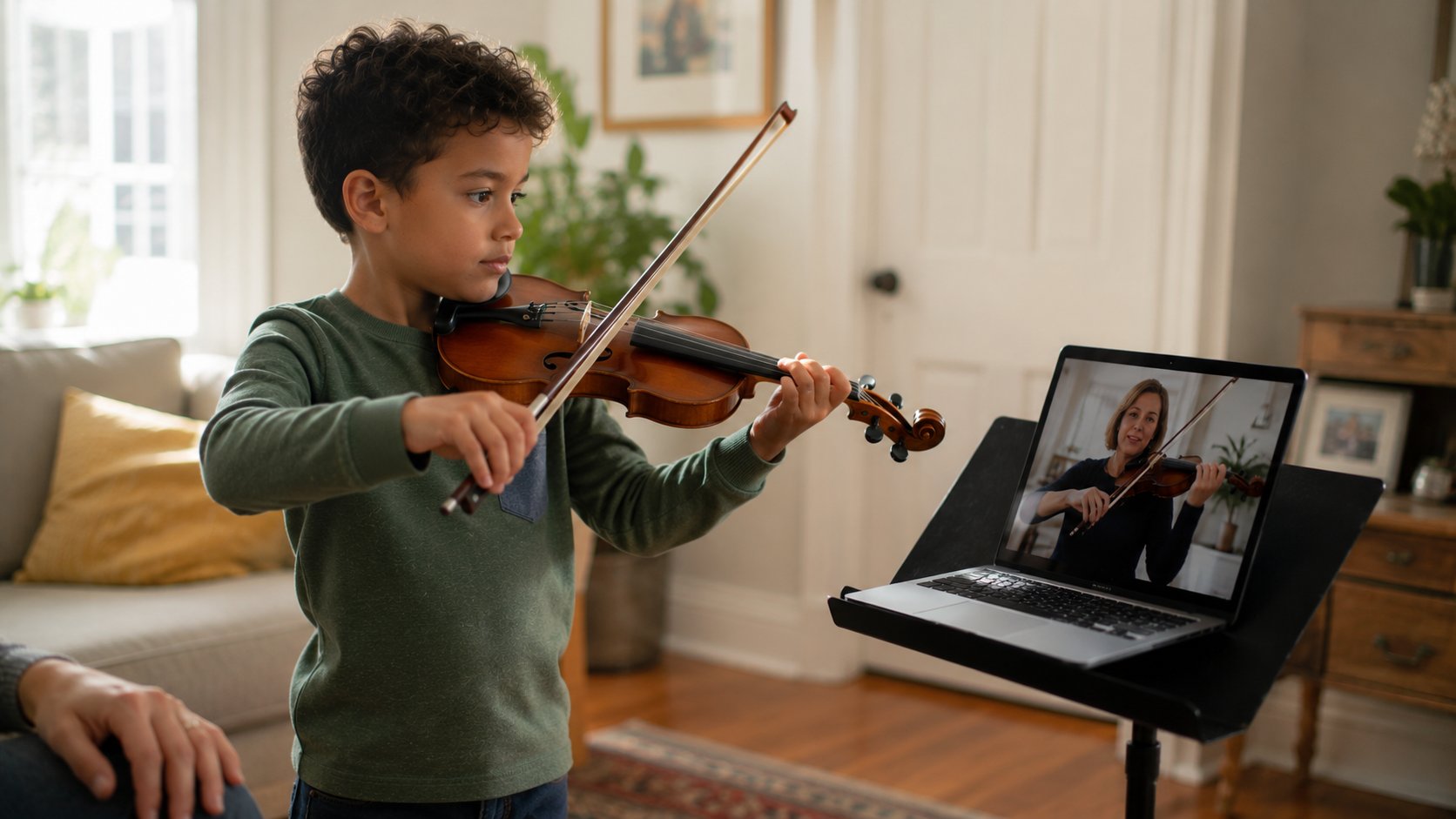
The Suzuki tradition, which has shaped how Western parents think about violin, holds that children can start as young as three or four. That’s true, but it requires a specialized teacher, the right method, and parental willingness to participate. For most families, the more common honest answer is that ages six to eight is the sweet spot for formal violin lessons.
Here’s a clear-eyed look at what’s possible at each age and what to actually consider.
What Children Need to Start Violin Lessons
Three readiness factors matter more than age:
Physical proportions. A child’s hands and arms need to fit a small enough violin to play comfortably. Violins run from 1/32, the size made for the youngest children, up to full size. A teacher or string shop measures arm length and fits the right one. Our guide to renting or buying a first violin shows how to take that measurement at home.
Attention span. Violin requires sustained focus on multiple physical elements at once. Children who can stay with one activity for about 15 to 20 minutes are usually ready. Younger than that, group classes work better than private lessons.
Parental commitment. Young violin students need a parent involved in daily practice for the first several years. Suzuki-trained teachers expect this and structure the program around it. Without parental support, very young students rarely progress.
What’s Realistic at Each Age
Ages 3-5. Suzuki-trained teachers can work with this age, using a tiny 1/16 or 1/10 size violin and a parent-participation model. Lessons are short, repetition-heavy, and parent-led at home. This isn’t right for every family, but for those who embrace it, the early start produces beautiful results.
Ages 6-8. The sweet spot for traditional violin lessons, and the window this guide recommends for most families. Most children can handle a 30-minute weekly lesson, learn to read basic notation by the end of year one, and play simple pieces in first position with recognizable pitch inside the year. Clean, ringing tone arrives in year two or three, so early scratchiness is normal.
Ages 9-10. Still an easy start. Children at this age can engage more independently with practice, follow instructions more reliably, and often progress through early material faster than younger starters. Don’t think of this age as “late.”
Ages 11-14. Completely viable. Pre-teens and teens often start violin with strong motivation and progress impressively. The trade-off is fewer years to reach advanced levels by adulthood, which matters mainly for a child aiming at conservatory auditions.
Ages 15+. Still possible. Late starts produce excellent musicians, especially with strong motivation. The instructional approach becomes more peer-like.
Suzuki vs Traditional: A Brief Note for Parents
Suzuki method assumes you’ll attend lessons with your child, practice with them daily, listen to recordings of the repertoire constantly, and follow a specific sequence of pieces. Traditional method assumes you’ll support practice without being the practice partner. Both produce excellent violinists. The choice depends on your family’s willingness to participate and your child’s learning style. Our guide to Suzuki or traditional violin lessons sets out what each asks of a family week to week.
For very young children (3-5), Suzuki is generally the better fit. From six on, either method works.
Readiness Signs to Look For
Age aside, the specific signs that suggest a child is ready for violin:
- Interest in music: singing along, dancing, asking about instruments.
- Enough coordination to hold a small violin against the collarbone while the left hand stays free.
- Willingness to follow specific physical instructions.
- A parent willing to commit to daily practice support for the early years.
- (Bonus) A musical home environment with regular listening.
What Happens in the First Year
A typical first year for a young violin student includes:
- Learning to hold the violin and bow properly.
- Open string bowing: long, slow, focused tone work.
- First finger placements and simple melodies in first position.
- Beginning to read music (often after a few months of by-ear playing).
- Performing one or two short pieces at a recital by the end of the year.
Skill video · Learning How To Name and Pluck Open Strings
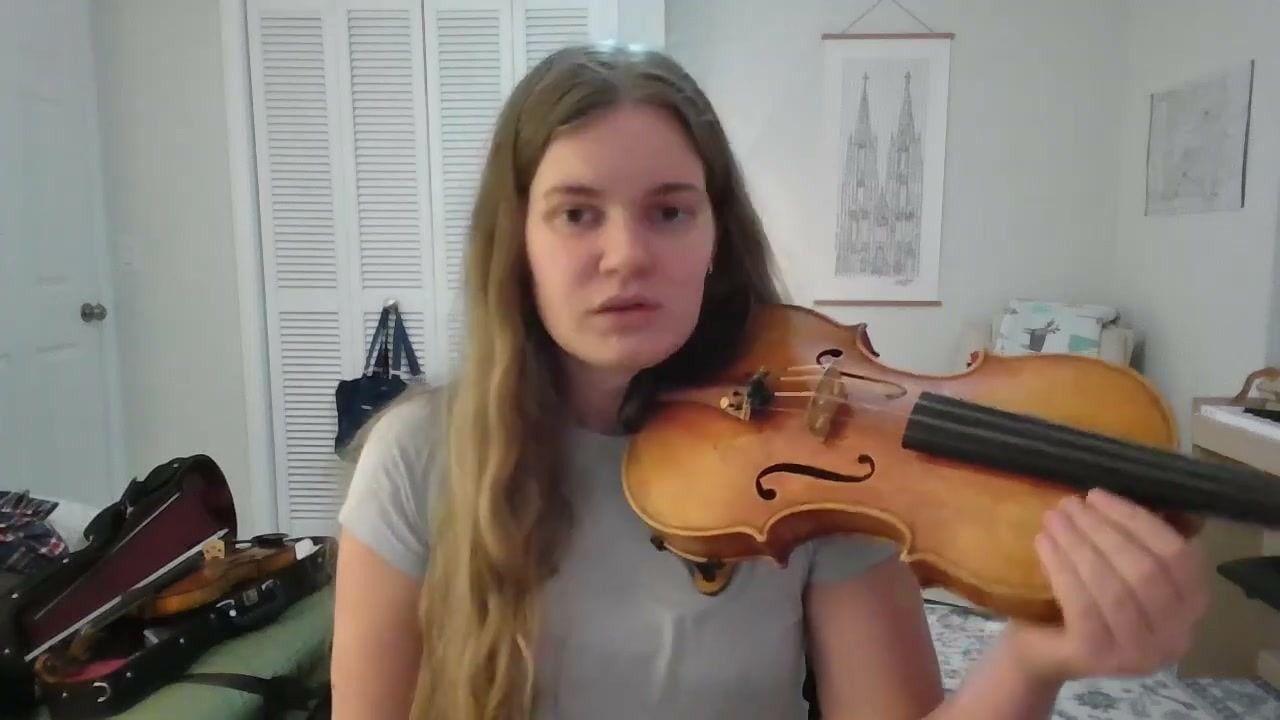
Jana teaches violin and viola on Tunelark. View Jana’s profile
Practice expectations: 10 to 15 minutes a day for ages 5-7 and 15 to 25 minutes for ages 8-10, with parental involvement, rising to 25 to 45 minutes once a student is eleven or older. This is small in time but huge in compounded progress.
What to Do If Your Child Is “Too Young”
Wait, but stay musical. Sing together. Listen to classical music regularly. Consider a group early-childhood music class, where singing, movement and simple rhythm work build steady beat, pitch matching and the habit of following a teacher through a task. Those are the things that make formal violin study much easier when the time comes.
Don’t push formal lessons too early. A bad early violin experience can sour a child on the instrument for years.
What to Do If Your Child Is “Too Old”
Start now. There is no age at which it becomes too late for a child or teenager to start violin. Some professional violinists started in their early teens, though most started younger. Motivation and consistent practice carry a late starter a long way, and late starters reach high amateur and sometimes professional levels. An early start still gives an edge at the very top of the profession. For almost every child, though, the goal is a lifetime of playing, and that is fully open at any starting age.
Who Teaches Young Violinists Here
Jana K. is a German-American violinist and violist holding bachelor’s, master’s and post-master’s violin degrees from McGill University and Indiana University, and she has played with the Greenville Symphony since 2024. A parent whose daughter studied with Nathan G. described him choosing carefully what she should practice between lessons, and said that watching him perform live online showed her daughter what was possible. That second half is what age charts leave out. Readiness is partly hands and attention span, and partly whether a child has watched someone play and decided they want that.
How to Find a Violin Teacher on Tunelark
Every Tunelark teacher is vetted by working musicians and educators for teaching quality before they can list. To find the right fit for your child:
1. Open the teacher list and filter by violin.
2. Read bios carefully. Look for teachers who specifically mention working with children, and whether they’re Suzuki-trained, traditional, or mixed-method.
3. Book a trial lesson with one whose approach matches your family’s needs.
4. After the trial, ask your child how it went. Their enthusiasm matters more than your assessment of credentials.
The best age to start violin is whenever your child is genuinely ready, physically, attentionally, and with adequate family support. That happens at different times for different kids.
Frequently Asked Questions
What’s the absolute youngest age to start violin?
About 3 with Suzuki-method instruction, parental participation, and tiny-fraction-sized violins. For traditional lessons, six is the practical youngest age for most children, and six to eight is the window where families find the start easiest.
Is starting at age 10 too late?
Not at all. A ten-year-old is old enough to take responsibility for daily practice, usually ready for a 1/2 or 3/4 violin with full size following once arm length allows, and old enough to choose the music they want to work toward. A teacher or string shop measures and fits the size. Advanced levels stay fully reachable from a start at ten with consistent practice.
Do I need to take lessons with my child if they start young?
For very young children (3-5) in Suzuki programs, yes: parental participation is built into the method. For older children, you don’t need to attend lessons, but you’ll need to support practice at home.
How much should young violin students practice?
Ages 5-7: 10 to 15 minutes daily, often broken into two shorter sessions. Ages 8-10: 15 to 25 minutes. Ages 11 and up: 25 to 45 minutes. Consistency matters far more than duration, and one or two rest days a week are part of the plan rather than a lapse.
What if my child wants to quit?
Pause before deciding. Most young violinists cycle through periods of resistance. Talk with the teacher about whether to push through or take a short break. A poor teacher-student fit is a common cause of quit-thoughts; address that first.
Looking for an online violin teacher? See our full Online Violin Lessons page for everything you need to know about getting started.
Keep reading
About Jennifer Heath
I'm Jennifer Heath, VP of Operations at Tunelark and a lifelong singer. I joined the company in 2020 and oversee much of what makes Tunelark work for students and teachers: hiring, training and supporting our instructors, student support, marketing and day-to-day operations. I started voice lessons at 7 and sang with touring choirs through my teens. Music belongs in every life, for the self-expression, the discipline, the comfort and the simple joy of it.