How to Help Your Child Practice Without the Battles
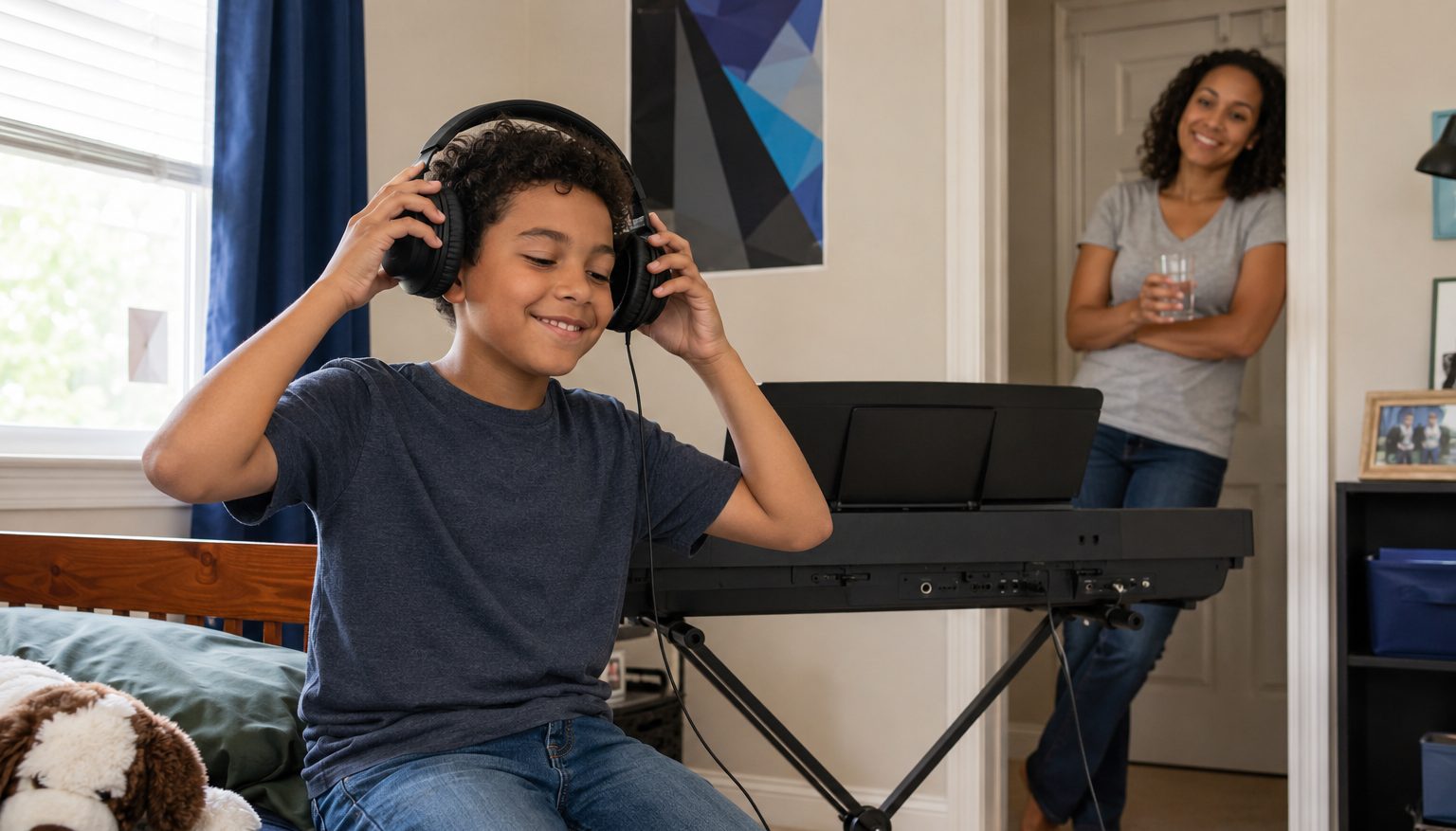
If you’ve ever found yourself locked in a battle of wills trying to get your child to practice their instrument, you are in very good company. The struggle is real, and it’s not because your child doesn’t like music. It’s because practicing takes sustained effort, and for most children the hardest part of that effort is not the work itself. It is the moment of starting, when something more comfortable has to be put down first.
Understanding why the battle happens is the first step toward ending it. Here is what tends to work, why it works, and how to use it to build the kind of motivation that makes music practice something your child actually does, without the drama.
Make Practice a Routine, Not a Decision
Every time your child has to decide whether to practice, they’re essentially being asked to choose discomfort over comfort. That’s a hard sell, especially after a long school day. The solution is to remove the decision entirely.
When practice happens at the same time every day (right after school, right before dinner, right after breakfast) it stops being a negotiation and becomes just “what we do.” Establishing it usually takes longer than parents expect, often a couple of months, and how long varies a lot from one child to the next. Once the routine is genuinely set, the nightly negotiation tends to fade, because there is no longer a decision left to negotiate. That is what a routine is really solving: not the practicing itself, but the transition into it from whatever came before.
Give a 5-minute warning before practice time. “In five minutes we’re going to piano practice” gives your child time to mentally transition. Teachers and parents generally find that an abrupt interruption (“stop what you’re doing right now!”) gets more pushback than a warning does.
Keep Sessions Short and End on a Win
Many parents make the mistake of pushing for longer practice sessions when they sense progress is happening. Resist this temptation, especially with young children.
For a beginner of any age, 15 to 20 minutes a day, five or six days a week, is plenty, and it beats one long weekly session. Once a child has been playing for a while, 20 to 30 minutes is a reasonable next step, and teens with specific goals may work up to 30 to 45 minutes.
More important than the length is how the session ends. Try to end every practice session on something your child can do well: a piece they like, a section they’ve mastered, something that feels like success. People tend to remember an experience by its most intense moment and by how it ends, a pattern psychologists call the peak-end rule. It was studied on short unpleasant episodes rather than on daily music practice, so treat it as a useful frame rather than a finding about children, but the teaching advice stands on its own. End practice on a positive note, and your child will approach the next session with a little more willingness.
Celebrate Progress, Not Perfection
One of the fastest ways to kill a child’s motivation is to focus on mistakes. Of course you want your child to improve, that’s the point, but children who feel criticized during practice start to dread it.
Shift your language from correction to curiosity: “That sounded interesting: what happens if you try that part again a little slower?” instead of “You keep missing that note.” Notice what’s going right, even when plenty is also going wrong. A simple “I heard you really nail that chord today” goes further than you might think.
A good teacher gives feedback in ways that encourage rather than deflate. Your job at home isn’t to be the teacher. It’s to be the supportive presence who shows up, keeps the routine, and cheers them on. To check whether the practice is adding up, our guide to telling whether your child is making progress covers a recording test you can run at home.
Connect Practice to What They Love
If your child loves a particular song or style of music, ask their teacher to incorporate it. A child who is practicing a simplified version of a song from their favorite movie is going to be more engaged than one working through exercises that feel arbitrary.
Tony G., who teaches guitar on Tunelark, starts new students by asking which songs they want to play, and teaches technique, rhythm and timing through one or two of them from the start. Neel S., who teaches guitar and voice on Tunelark, practiced piano as a child without finding it gratifying and gave it up. “I realize in hindsight that a large part of that was my inability to choose my own pieces,” he says. He went back to piano years later and enjoys it now.
This doesn’t mean practice should always be easy or fun every minute. But there should be something in every practice session that connects to the music the child actually cares about. That thread of personal meaning is the difference between a child who quits after six months and one who keeps going.
Know When to Back Off
Sometimes the battle isn’t worth fighting on a given day. A child who is exhausted, sick, or emotionally dysregulated is not going to have a productive practice session, and forcing one can backfire, creating a strong negative association with the instrument.
On those days, it’s okay to shorten the session, do something lighter (“just play something you like for ten minutes”), or, rarely, skip entirely. The goal is a sustainable habit over months and years, not perfect compliance on every single day. Pick your battles, protect the relationship, and trust the long game.
Learning how to get kids to practice music is ultimately about learning how to help them build a habit that serves them for life. With the right structure, the right encouragement, and a teacher they like, most children find their way to genuine enjoyment, even the ones who seemed to fight it hardest at the start.
How to Find a Good Music Teacher on Tunelark
When it comes to finding the right teacher for your child, fit matters more than credentials. Many Tunelark teachers specialize in working with kids and know how to make lessons engaging without losing structure.
1. Open the teacher list and filter by your instrument.
2. Read bios. Look for teachers who explicitly mention working with children in your child’s age range. Teaching a seven-year-old is a different skill from teaching a teenager.
3. Book a trial lesson with one whose profile resonates.
After the trial, ask yourself: did your child seem engaged and curious, or just polite?
The right teacher does more than teach the instrument. They build the relationship that makes a child want to keep showing up.
Frequently Asked Questions
How long should my child practice each day?
15 to 20 minutes a day, five or six days a week, for a beginner of any age. If your child is watching the clock every session, shorten it and tell the teacher; see Keep Sessions Short and End on a Win above.
Should I sit with my child during practice?
Sometimes yes for younger children (under 8), but always engaged and supportive: never as a practice cop. The goal is helping them build the habit, not policing it.
What if my child refuses to practice?
Talk to the teacher first. Resistance usually signals something specific: a piece they’re stuck on, lessons that aren’t engaging, or external life stress. Address the cause rather than escalating the conflict.
How do I make practice fun?
Vary the routine, let them pick some songs, use small games or challenges, and celebrate small wins. Avoid making practice feel like homework or punishment.
When should I let my teacher know about practice issues?
Right away. Teachers expect this and have many strategies. The earlier you raise it, the more options they have to help. Don’t wait until your child wants to quit.
Keep reading
About Jennifer Heath
I'm Jennifer Heath, VP of Operations at Tunelark and a lifelong singer. I joined the company in 2020 and oversee much of what makes Tunelark work for students and teachers: hiring, training and supporting our instructors, student support, marketing and day-to-day operations. I started voice lessons at 7 and sang with touring choirs through my teens. Music belongs in every life, for the self-expression, the discipline, the comfort and the simple joy of it.