Online Guitar Lessons for Teens: A Parent’s Honest Guide

If your teenager has asked for a guitar (or already has one sitting in a corner) you’re facing a specific parenting challenge: how do you support their musical interest without becoming the person they’re trying to get away from? Teens want autonomy. They also need structure. Guitar lessons sit right at the intersection of those needs, which is exactly why this can either go beautifully or fall apart by month three.
This guide is for parents who want online guitar lessons for teens to actually work, meaning the teen stays interested, makes real progress, and develops their own relationship with music. Here’s what we’ve seen work and what consistently backfires.
Why Teens Take to Guitar Specifically
Guitar fits the teenage stage of life unusually well, and it is one of the instruments teens most often ask our teachers for by name.
It’s social. Guitar shows up in nearly every genre of music teens listen to. Learning a few chords means being able to play songs they actually like, often within weeks. It’s also portable in a way piano isn’t. They can take it to a friend’s house, learn songs together, eventually play in a band.
It’s quiet enough for shared houses. Acoustic guitar at a reasonable strumming volume won’t disturb the rest of the family the way drums or amplified electric guitar can, and electric guitar has a quiet option of its own, covered in the setup section below.
It’s a credible identity. For many teens, the desire to play guitar is wrapped up in figuring out who they’re becoming. The instrument feels theirs in a way required school activities don’t.
The teens who succeed long-term tend to be the ones whose parents respected their autonomy from the start. If a teen feels like guitar belongs to them, they’ll stick with it. If it starts to feel like another thing their parents are making them do, motivation collapses fast.
What a Teen-Friendly Teacher Looks Like
Not every guitar teacher is the right fit for a teenager. The ones who work well share some specific traits.
They take teen interests seriously. A good teen guitar teacher will ask what music your teen actually likes and will teach with that music. If your teen is into a specific band, the teacher should be able to find songs by that band or in that style and work from there. Teachers who insist on starting with classical pieces, regardless of the student’s interests, tend to lose teens fast.
They speak to the teen as a near-adult. Teens are sensitive to being talked down to. The right teacher will treat your teen as someone capable of understanding real concepts, making real choices, and contributing to their own learning. The wrong teacher will use a tone that makes your teen roll their eyes within the first lesson.
They balance fun and rigor. Pure fun without structure produces fast initial progress and then a wall. Pure rigor without enjoyment produces a teen who quits. The right teacher finds songs the teen genuinely wants to learn and uses them to teach the technique and theory underneath.
They give specific, actionable feedback. Vague praise (“good job”) and vague critique (“try harder”) both fail with teens. Specific feedback (“your timing on the chorus is solid, but the chord change at bar 12 needs to land on the beat”) respects them and gives them something to work on.
For more on evaluating teachers across instruments, what to look for in a children’s music teacher covers similar ground for younger students, much of which translates upward.
What a Teacher Does With a Song That Is Too Hard
A teenager will ask for something years beyond them. Alex P. teaches guitar on Tunelark, and rather than talk them out of it he will play the thing, on purpose, knowing they cannot yet.
He has a name for those moments: glimpses into the future. He plays it. Then he hands over a piece of it, a riff or one section of the solo, small enough to be learned this month and close enough to the real thing that the student can hear how far away the rest is. In his experience that motivates students strongly. The goal stops being an idea and becomes a sound they have made with their own hands. A teenager who can hear the distance has a reason to close it.
If your teen comes out of a trial lesson having played eight bars of something they thought was out of reach, that was not the teacher showing off. That was the method.
The same step-by-step approach works on material a student can already play. Neel S., who teaches guitar on Tunelark, takes a plain chord progression and makes it more interesting one level at a time, so you can hear what each change adds.
Skill video · Spicing Up a Chord Progression
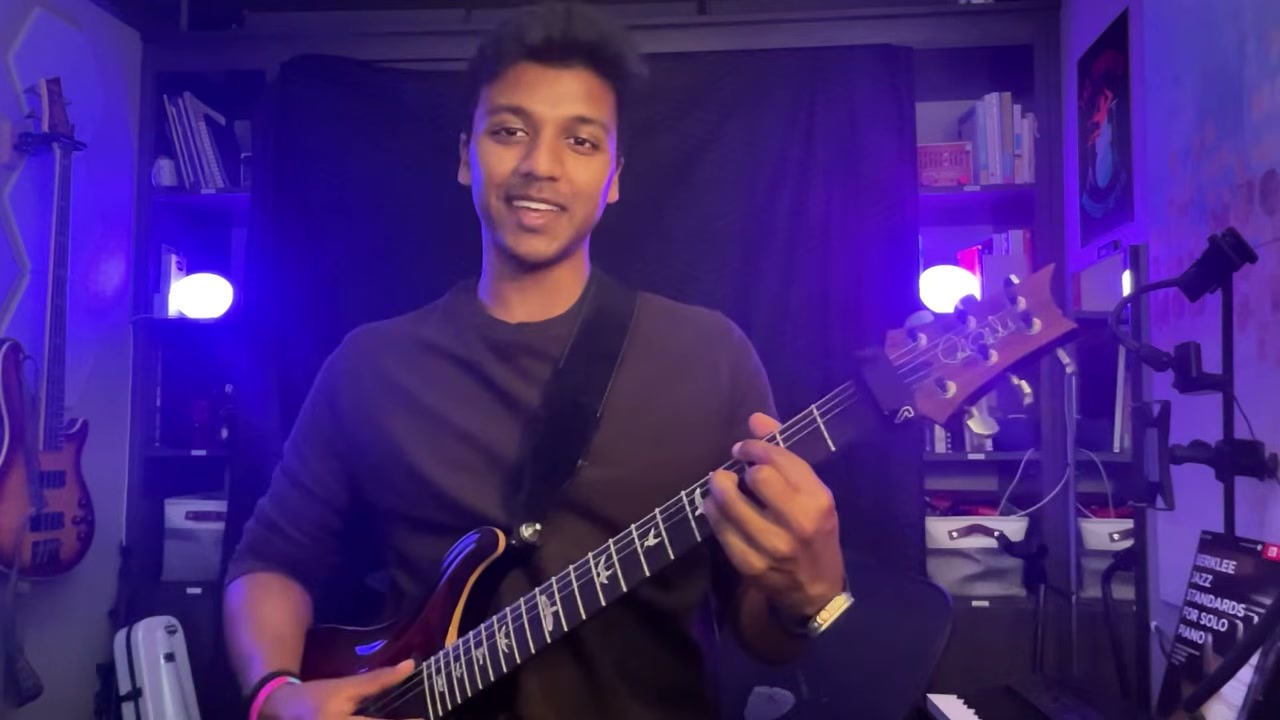
Neel teaches guitar and voice on Tunelark. View Neel’s profile
How to Set Up Their Space Without Hovering
A good practice setup makes practice easier and reduces friction. A bad setup makes practice feel like a chore even when motivation is high.
What helps:
- A consistent spot for the guitar that’s easy to grab. Guitars left in cases tend to stay in cases. A wall hook or a stand in their room means the instrument is visible and accessible.
- Decent lighting. Trying to read tab or chord charts in dim light is fatiguing. Make sure their practice spot has good lighting.
- A comfortable seat without arms. Armrests get in the way of holding the guitar. A simple desk chair or an armless dining chair works fine.
- A music stand or tablet stand at eye level. Looking down constantly at music on the floor or bed leads to neck pain and bad posture. A cheap music stand fixes this.
- Headphones for electric guitar. A small plug-in headphone amp (around $40 to $50 as of 2026) means they can practice loud without disturbing anyone.
What doesn’t help: making the practice space a big production. Don’t redesign their room around guitar. Don’t make a big show of buying a fancy setup. The goal is removing friction quietly, not creating an event.
The home music practice space setup guide covers more detail if you want it, but the basics above cover most of what matters for a teen.
Practice Without Battles
Here’s where most parents go wrong. They set a daily practice requirement, enforce it like homework, and within a few months their teen hates guitar.
A few things that work better.
Let the teacher set the expectation. When the teacher says fifteen to twenty minutes a day on five or six days a week, that’s coming from a respected outside authority. When the parent says it, it sounds like one more rule. Ask the teacher to set clear practice expectations directly with your teen.
Don’t ask “did you practice today?” every day. This signals that practice is your concern, not theirs. Once or twice a week is plenty. Better yet, ask how the song is coming. That is a question about the music, not about the duty.
Notice progress out loud. When you hear your teen playing something new or playing something old better, mention it. Not as a reward, just as honest observation. Saying that something sounded good and asking whether it is a new song goes a long way.
Let some practice be playing. Not every practice session needs to be focused work. Sometimes teens noodle around with songs they already know. That’s still useful. They’re internalizing the instrument, building muscle memory, deepening their relationship with playing. Resist the urge to call this “wasted” time.
Don’t catastrophize bad weeks. Teens will go through stretches where they don’t practice much. Don’t panic. Don’t issue ultimatums. Most stretches like this pass on their own, especially if you’ve avoided turning practice into a battleground.
If you want a deeper read on supporting teen practice, how to help your child practice music and how to help your child practice guitar at home both apply directly even though they’re framed for younger kids.
When (and How) to Step Back
In our teachers’ experience, the teens who keep playing into adulthood are usually the ones whose parents knew when to back off.
The natural arc: at the start, you handle logistics, buying the guitar, scheduling lessons, paying the teacher. As they progress, more of those responsibilities should shift to them. By the second year, they should be talking directly with their teacher about lesson schedules and goals, making most of the music decisions themselves, and choosing what to work on.
Signals you’ve stepped back too little:
- You can name every song they’re currently learning.
- You’re the one who emails the teacher when something needs to change.
- You feel personally invested in their daily practice habits.
Signals you’ve stepped back well:
- They know more about their lessons than you do.
- They have musical opinions you don’t share.
- They sometimes play stuff you wouldn’t have chosen.
- They occasionally surprise you with something new they’ve been working on.
Stepping back doesn’t mean disengaging. Keep paying for the lessons, keep showing genuine interest in what they’re playing, keep being available when they want to share. Just stop being the practice police.
How to Find a Guitar Teacher on Tunelark
Finding a teacher who works well with teens is mostly about reading profiles carefully.
1. Open the teacher list and filter by guitar.
2. Read bios. Look for teachers who mention teaching teens specifically, who name styles of music your teen likes, and who write in a tone that doesn’t talk down to younger students.
3. Book a trial lesson, and let your teen be the main participant. The fit they feel with the teacher matters far more than the fit you feel.
4. After the trial, ask your teen what they thought. Believe them. If they liked the teacher, book again. If they didn’t, try someone else.
You don’t need to find the perfect teacher on the first try. You need to find one whose approach works for your specific teen. That’s almost always possible, and the right teacher makes the difference between guitar lessons that fizzle in six months and guitar lessons that become part of who your teen becomes.
Frequently Asked Questions
What’s the right age to start a teen on guitar?
There is no minimum age. Children start guitar around 7 to 9 on fractional sizes, so for a teen the only question is body size. A 3/4 guitar suits a small 12 or 13 year old, and most full-size acoustics are manageable from about 12.
Should we buy an electric or acoustic guitar first?
Whichever style of music your teen actually likes. If they listen to rock, metal, or pop, electric guitar often keeps them more engaged. If they like folk, indie, or singer-songwriter material, acoustic makes sense. Don’t force acoustic “for discipline”. It tends to backfire.
How long should each lesson be?
30 minutes is typical for younger teens. 45 minutes works for most teens who are committed and progressing. Hour-long lessons are usually reserved for teens preparing for auditions or serious performance.
What if my teen wants to quit after a few months?
First, talk to the teacher. They may know what’s behind the dip. Sometimes it’s the teacher fit, sometimes it’s a rough patch in the learning curve, sometimes it’s an unrelated life thing. Quitting after one bad month is usually premature; quitting after several is worth respecting.
Will online lessons work as well as in-person?
For most teens, yes. Teens are generally comfortable on video calls, and the convenience of not commuting often improves consistency. The keys are a stable internet connection, a decent webcam angle, and a teacher who’s experienced with online instruction.
Looking for an online guitar teacher? See our full Online Guitar and Bass Lessons page for everything you need to know about getting started.
Keep reading
About Jennifer Heath
I'm Jennifer Heath, VP of Operations at Tunelark and a lifelong singer. I joined the company in 2020 and oversee much of what makes Tunelark work for students and teachers: hiring, training and supporting our instructors, student support, marketing and day-to-day operations. I started voice lessons at 7 and sang with touring choirs through my teens. Music belongs in every life, for the self-expression, the discipline, the comfort and the simple joy of it.