Beginner Violin Tips: What Every New String Player Should Know
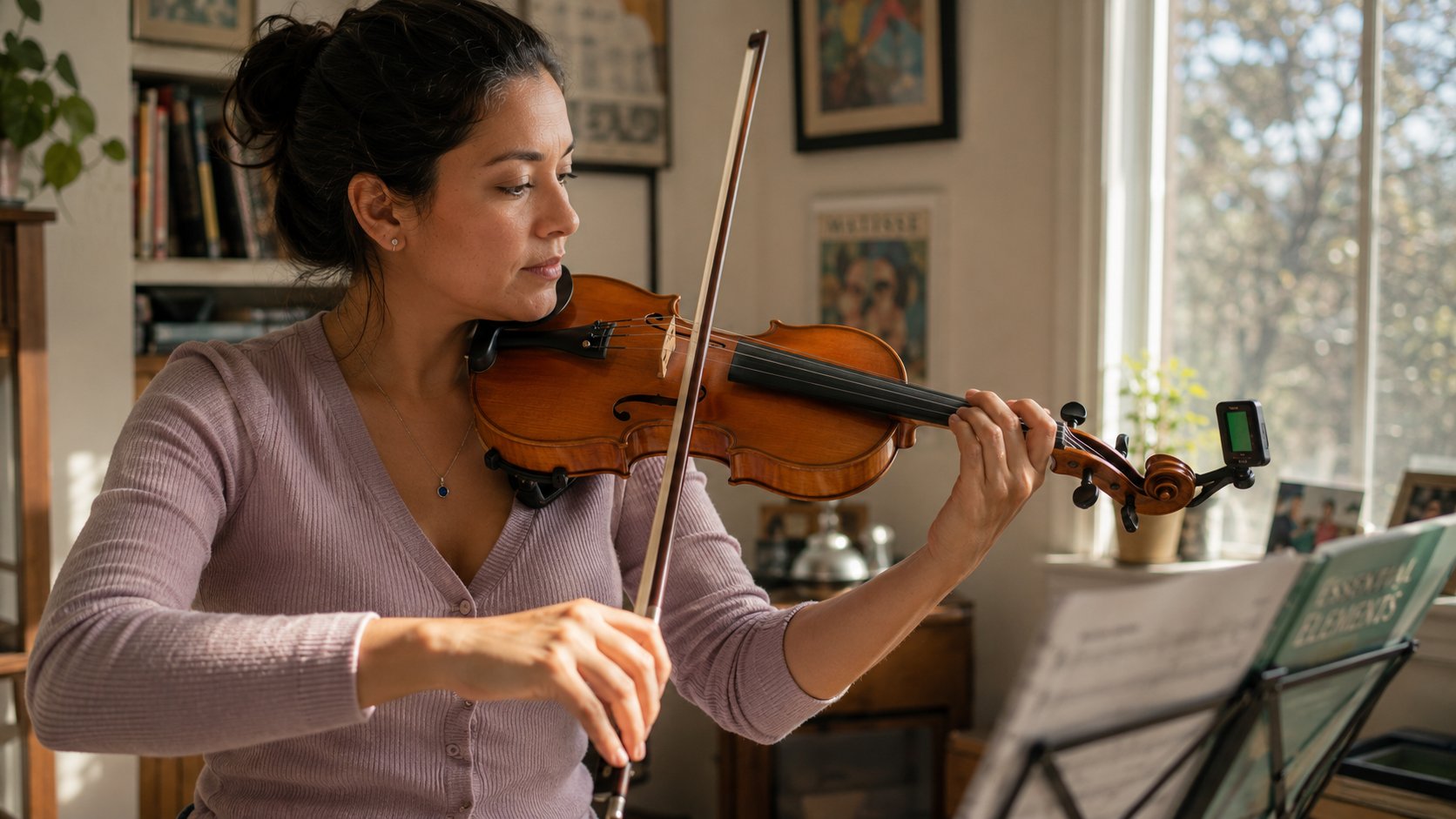
Violin has a reputation as one of the hardest instruments to start. Some of that is earned (the early months are genuinely demanding) but a lot of it comes from beginners learning bad habits from random internet videos. Approached the right way, with the right teacher, violin is achievable for nearly any adult or child willing to put in consistent, patient work.
Here’s what every new violin player should know before they start, and the early habits that make all the difference.
Set Up the Instrument Properly Before You Play
Most beginner violin frustration traces back to poor setup. A few things to address before you even play your first note:
Shoulder rest fit. The shoulder rest holds the violin in place under your jaw without your left hand. If it doesn’t fit your neck and shoulder properly, you’ll spend years compensating with tension. Brands like Kun, Wolf, and Bonmusica have different shapes, try a few in person at a string shop if possible.
Chin rest fit. Same logic. The standard chin rest doesn’t fit every face. A good string shop will let you try different shapes.
Bow rehair if used. If you bought a used or rental violin, get the bow rehaired (roughly $60-$80 as of 2026) if it hasn’t been done recently. Old, glazed bow hair fights you constantly. Our guide to renting or buying a first violin covers the rest of the setup check for a rental or a used instrument.
Strings. Cheap factory-installed strings sound bad. Replacing them with mid-range strings (Thomastik Dominant or Pirastro Tonica, roughly $40-$80 a set in 2026) transforms the instrument’s response.
These small setup issues are the most common source of beginner discouragement. Solving them up front saves months.
Posture Matters More Than You Think
The way you hold the violin determines what’s possible technically. Two habits to develop from day one:
Stand or sit tall, with weight balanced. Slumping or leaning to one side creates compensating tensions everywhere else.
Left arm under the violin, not gripping it. The violin should rest on the collarbone, supported by the shoulder rest. The left hand is free to play, not hold the instrument up.
A good teacher catches posture issues in the first lesson. Self-taught beginners often spend years working around posture problems that could have been fixed in week one.
Building the Bow Hold
Bow hold is one of the two things a first teacher works on, alongside how the instrument sits on the collarbone, and the two are built together because neither works without the other. In the first lessons, your teacher will spend serious time on:
- The right thumb’s bent position on the frog.
- The middle finger curving around the stick.
- The pinky balanced on top (not gripping).
- The index finger contacting the stick on the pad between its first and second joints, slightly separated from the middle finger.
- The ring finger curving over the frog, its tip resting near the pearl eye.
This sounds fussy because it is. A poor bow hold limits everything: tone, dynamics, expressive range. A good bow hold from the start makes everything else easier.
The Left Hand and Intonation
The violin has no frets, so every note is one you place, and your ear is what checks it. That is the defining difficulty of the instrument, and it is why left-hand work starts in the first weeks, alongside the bow hold.
The four strings, low to high, are G, D, A and E. Almost everything in the first year happens in first position, where the hand sits near the top of the fingerboard and the four fingers cover the notes between an open string and the next string above it. In the beginner keys of D, A and G the first finger goes a whole step above the open string, one pair of fingers sits a half step apart and touches, and the rest stay a whole step apart with daylight between them. On the A string in the key of D you play B, C sharp, D and E, so the second and third fingers touch. In a key that asks for C natural instead, the first and second fingers touch and the rest of the hand spreads out. A flat or natural just above the open string, F natural on the E string in C major for one, pulls the first finger back to a half step above it, and then no pair touches.
One intonation check you can run on your own, in any practice session: the fourth finger on a string sounds the same pitch as the next open string above it. Fourth finger on the G string is the same D as the open D string. Play the two together, listen for the slow wavering beat between them, and move the finger until the beat disappears and the two notes lock. Third finger on the D string gives the G an octave above the open G string, and when it is in tune the open G rings on its own in sympathy. Those two checks catch most first-position drift between lessons, and a teacher will add the rest.
Expect Three to Six Months of Rough Tone
The honest truth: even with great instruction and consistent practice, the worst of the scratchiness usually clears in three to six months, and consistently pleasant tone takes closer to a year. Squeaks, scratches, and uneven sound are normal during this phase. They’re not signs of failure. They’re signs your muscles are still learning what good tone requires.
Push through this phase. Students who quit during this window almost always do so because they didn’t realize it was temporary. In our teachers’ experience, students who get through the rough first six months usually keep going, and those who reach the end of the first year rarely stop.
Practice Habits That Pay Off
A few specific practices that compound over months and years:
Slow practice. Most beginner violin problems come from playing too fast before the muscle memory is reliable. Practicing slowly (much slower than performance speed) builds the cleanest technique.
Daily contact, even short. Fifteen to twenty minutes a day, five or six days a week, beats two hours on Saturday. Muscle memory consolidates with frequent contact, not long sessions.
Recording yourself. Listen back to recordings of your practice. The gap between what you think you sound like and what you actually sound like is one of the most useful learning tools available.
Working on tone production alone for part of every session. Long bow strokes, open strings, scales: boring on paper, transformative for tone.
What to Avoid
A few patterns to skip:
- Buying a cheap violin from a non-specialist online retailer. Poorly set up violins make learning harder. Buy from a string shop or a reputable music store.
- Learning fingering from YouTube without a teacher. Self-taught violinists often arrive with compensating habits that take longer to fix than to learn correctly.
- Skipping warm-ups. Five minutes of open-string bowing before serious practice protects your tone and reduces injury risk.
- Practicing through pain. Hand, neck, or shoulder pain is a signal to stop and reassess setup with a teacher.
What Our Violin Teachers Watch First
Every item above is something a teacher is checking in the first weeks, and the order they check them in is not obvious from a list.
Jana K., a Greenville Symphony violinist who teaches violin and viola on Tunelark, has a skill lesson on our channel on naming and plucking the open strings, the first thing a string player needs solid.
Skill video · Learning How To Name and Pluck Open Strings
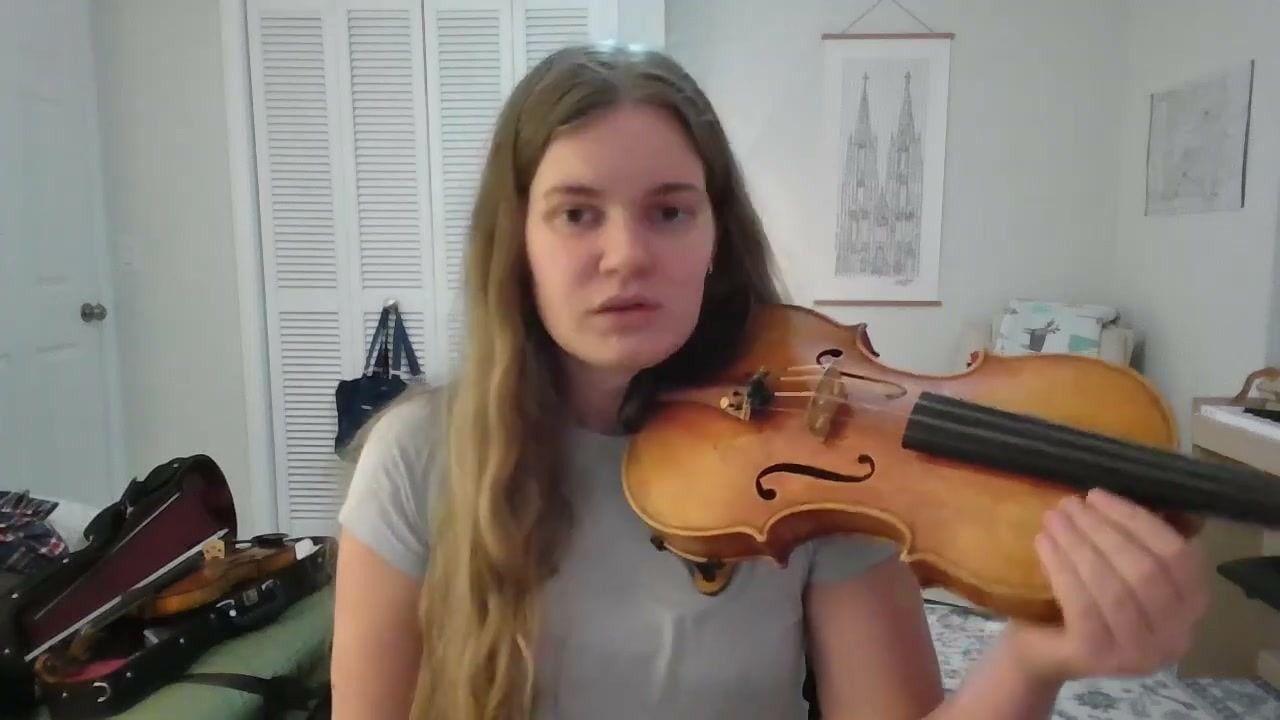
Jana teaches violin and viola on Tunelark. View Jana’s profile
Setup comes before intonation in this article because on a fretless instrument the hand shape you build in the first six months is the ceiling on how in tune you will ever play, and it is far easier to build than to rebuild.
How to Find a Violin Teacher on Tunelark
Every Tunelark teacher is vetted by working musicians and educators for teaching quality before they can list. To get started:
1. Open the teacher list and filter by violin.
2. Read bios. Look for teachers who specifically mention working with beginners (not all do).
3. Book a trial lesson with one whose approach feels right.
4. After the trial, ask yourself: did the teacher address setup, posture, and bow hold with care? Those are the early markers of someone who’ll set you up for long-term success.
Violin rewards patience like few other instruments. The first six months are the hardest. Everything after that is the payoff.
Frequently Asked Questions
Can adults really learn violin?
Yes. Adult violin beginners can absolutely reach satisfying playing levels with consistent practice and good instruction. The early months are demanding, but adults often progress faster than children in the conceptual aspects.
How long before I sound good on violin?
By the end of year one most students can play a simple piece for a sympathetic listener. A piece you would perform for a stranger, in tune and with phrasing, is usually a second-year milestone.
Do I need a real violin or can I learn on a cheap one?
A cheap violin will work against you in ways you won’t realize until later. Buy a properly set up instrument from a string shop, even at the entry level: roughly $200 to $500 for a playable student outfit, as of 2026, and rental from about $20 a month. The difference is enormous.
How often should I practice violin?
15 to 20 minutes a day, five or six days a week, is enough for a beginner, and 30 to 45 once you are past the first year and working on real repertoire. Less than that stretches every milestone. More than that doesn’t accelerate things as much as you’d expect. Consistency matters more than total hours.
Is violin harder than other instruments?
In the early months, yes: producing clean tone is harder than on most instruments. Long-term, all serious instruments require similar amounts of work. Violin’s steep entry phase is its main difficulty.
Looking for an online violin teacher? See our full Online Violin Lessons page for everything you need to know about getting started.
Keep reading
About Jennifer Heath
I'm Jennifer Heath, VP of Operations at Tunelark and a lifelong singer. I joined the company in 2020 and oversee much of what makes Tunelark work for students and teachers: hiring, training and supporting our instructors, student support, marketing and day-to-day operations. I started voice lessons at 7 and sang with touring choirs through my teens. Music belongs in every life, for the self-expression, the discipline, the comfort and the simple joy of it.