Best Age to Start Voice Lessons for Kids: What Teachers Say
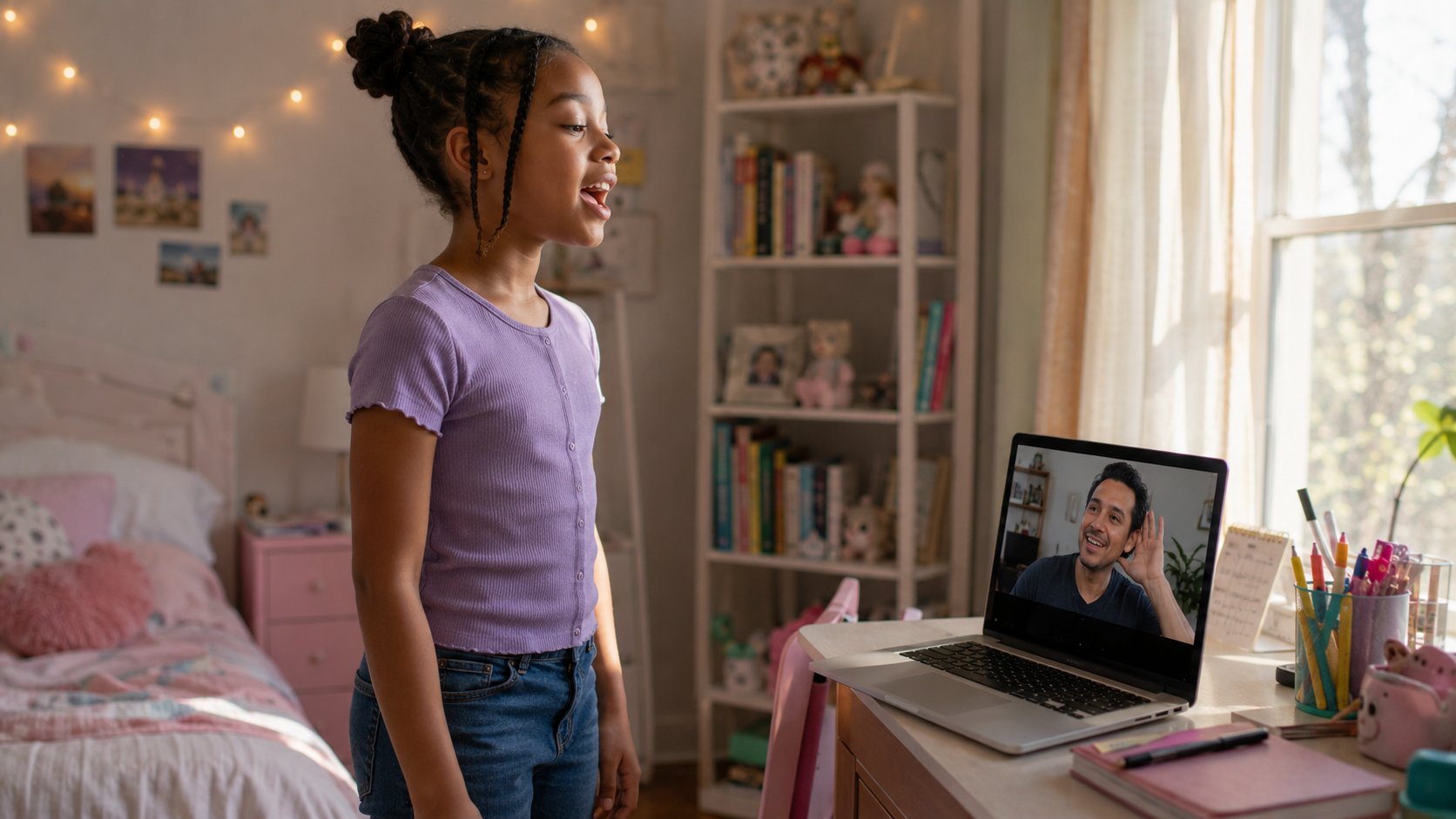
Voice is unique among instruments because the instrument itself is changing as a child grows. The vocal folds, the larynx, the resonating spaces in the head and chest: all of these develop substantially over childhood and through puberty. That makes the question of when to start voice lessons more nuanced than with other instruments.
Here’s what voice teachers actually recommend, and the developmental considerations parents should understand before signing up.
The Honest Recommendation
Most voice teachers start formal technique work around age 7 or 8. Below that age the usual recommendation is a group early-childhood music class or a children’s choir, and a teacher who has built a play-based singing approach for very young children is a reasonable alternative to it. What waits until 7 or 8 is the technique curriculum, not the singing. The reason isn’t that younger children can’t sing. They obviously can. It’s that one-on-one voice technique work requires:
- The ability to focus and follow specific physical instructions.
- Awareness of breath and body, which younger children typically lack.
- The capacity to practice deliberately, which requires a level of cognitive maturity.
Those three capacities are what a technique syllabus and a daily practice expectation rest on, and they are the reason the group class or the play-based teacher described above is the better use of a young child’s year. Both routes develop pitch, rhythm, and confidence without asking a child for any of the three. The same holds across instruments, and the general guidance on when children start music lessons lands in a similar range.
What’s Right at Each Age
Voice change typically begins around 10 to 12 in girls and 12 to 14 in boys, runs through the mid to late teens, and the voice keeps settling into the early twenties. There is no single year it happens in, which is why a teacher who checks range and stamina week to week matters more than the number on the birthday card.
Ages 3-6. Group music classes. Look locally for early-childhood group music programs and children’s choirs built for this age, where the singing is playful and the group carries a shy child along. These build foundational musical skills (pitch matching, rhythm, listening, confidence singing in groups) without the technical pressures of formal voice instruction.
Ages 7-9. Where formal technique work usually starts, with the right teacher. The focus at this age is gentle: breath awareness, easy range exploration, simple repertoire, and lots of enjoyment. A voice teacher who specializes in children’s voices is the key requirement.
Ages 10-12. A strong window for voice lessons. Children at this age can engage with technique meaningfully, learn breath support, work on tone, and prepare for choir or musical theater participation. For most boys the voice is still in its child-voice phase, so the work focuses on building healthy fundamentals before voice change arrives. For many girls, voice change begins in this window, with breathiness and an unstable range as the early signs, and a teacher should be watching for it and adjusting the work as it appears.
Ages 13-15. The middle of the change for most students, and lessons here need a teacher who understands what’s happening physiologically. Boys experience the largest changes: the voice can drop dramatically over months. Girls also experience changes, though less dramatic. A good teacher protects the voice during this transitional period and helps the student adapt to their changing instrument.
Ages 16-18. The voice is not finished at 16. Because the settling described above continues into the early twenties, many 16- and 17-year-olds, boys especially, are still in the change or only just out of it. Lessons at this age can take on more technique, repertoire, and stylistic work, and the one thing that should follow the individual voice rather than the birthday is intensity. Heavy repertoire waits until the voice can carry it through a full rehearsal without tiring, which is a judgment the teacher makes from what they hear week to week.
The Puberty Question
The biggest reason voice instruction is different from other instruments: puberty fundamentally changes the voice. A good voice teacher knows how to navigate this period, keeping the student singing safely, adjusting repertoire as range shifts, and protecting the developing instrument from strain.
Some specific considerations:
- Boys whose voices are actively changing should not be pushed to sing in their old soprano range. Their voice teacher should adjust repertoire to comfortable ranges, even if it means simpler music for a year or two.
- Girls’ voices still need attention: range and stamina can fluctuate during puberty.
- Forcing a “good” sound during puberty can cause long-term vocal damage. A patient teacher who understands physiology is essential.
If your child is in or approaching puberty, ask any prospective voice teacher specifically how they handle voice change.
Group Singing Before Lessons
For children under 7, group singing experiences (choir, school music programs, family singing) build the foundation that makes later voice lessons much more effective. Children who arrive at their first voice lesson with established pitch matching, comfortable singing-in-public confidence, and basic ear training usually progress faster than those starting completely fresh.
Group programs are often where a lifelong love of singing is born, and they do not stop earning their place once technique work begins at 7 or 8. Plenty of young singers keep a choir going alongside their lessons for years, and the two feed each other: the choir supplies the repertoire and the audience, and the lessons supply the technique to sing it.
What to Look For in a Children’s Voice Teacher
A few specific markers of someone who’s good with young singers, beyond the general checklist for a children’s music teacher:
- They specifically mention working with children in their bio, with relevant repertoire choices.
- They prioritize fun and engagement alongside technique.
- They understand vocal development through puberty (ask).
- They don’t push for premature adult-sounding technique.
- They handle young students’ shyness and confidence-building thoughtfully.
What to Avoid
A few patterns to watch for:
- Teachers who push young children into heavy, forced production before puberty. Supervised belting in musical theater training is a different thing. Unsupervised pushing can cause lasting strain.
- Teachers who treat children as small adults: using the same repertoire, same expectations, same intensity. Children’s voice work is its own specialty.
- Teachers who push competitive repertoire (musical theater auditions, high-level competition pieces) before the voice is ready. Pressure is the enemy of healthy young voices.
What the First Lessons Sound Like for a Child
Sydney H. describes her goal in the earliest lessons as helping a student give themselves permission to make sounds without judging whether they are good or beautiful yet. Much of a first lesson is spent on sounds that feel silly, and she listens to how a student speaks and uses that as the baseline, because singing framed as talking on pitch is far less frightening. Norwood works the same ground from the anxiety side, naming the nervousness out loud so it stops being the elephant in the room, and simplifying or swapping an exercise whenever one does not feel right.
This is the level a first lesson actually starts at. Stella B. walks through a simple breathing exercise, which is the kind of thing a six-year-old and a sixteen-year-old both begin with.
Skill video · A Simple Breathing Exercise
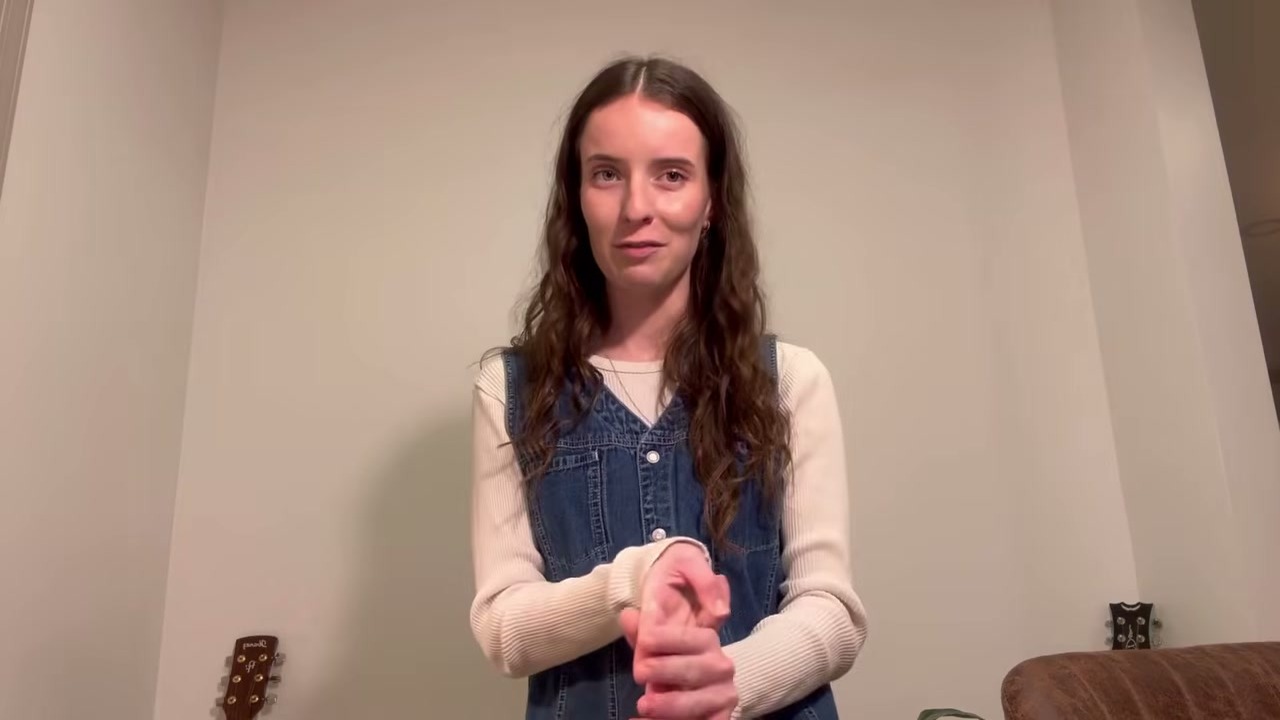
Stella teaches voice on Tunelark. View Stella’s profile
How to Find a Voice Teacher on Tunelark
Every Tunelark teacher is vetted by working musicians and educators for teaching quality before they can list. Many of our teachers specialize in working with young singers. To find your child’s teacher:
1. Open our voice lessons page.
2. Read bios. Look for teachers who specifically mention working with children or adolescents.
3. Book a trial lesson with one whose approach feels gentle and age-appropriate.
4. After the trial, ask your child if they had fun and felt comfortable. In our teachers’ experience, children who enjoy lessons keep going, and keeping going is what produces progress.
The voice is a uniquely intimate instrument. Starting at the right time, with the right teacher, sets up a lifetime of healthy, expressive singing.
Frequently Asked Questions
Why do most teachers wait until 7 or 8 to start technique work?
The capacities a technique curriculum rests on arrive around 7 or 8, as the section above sets out. If a five-year-old is already asking for lessons, the answer is a choir or a play-based singing teacher, not an early start on the syllabus.
Should my child stop voice lessons during puberty?
Not necessarily. A teacher who specializes in voice change can keep your child singing safely throughout puberty, adjusting repertoire and approach as the voice transitions. Stopping entirely isn’t required, and continuing with the right teacher can actually help the transition.
What about kid singers I see on TV?
Many are coached by specialists who understand young voices and protect them from strain. Some are pushed too hard and develop vocal problems. The visible success of child singers shouldn’t be the template for your own child. Focus on healthy long-term development.
Should my child join choir or take private lessons?
Both work and the two complement each other beautifully. Choir builds ensemble skills, pitch matching, and confidence. Private lessons build individual technique. Many young singers benefit from both.
What if my child is shy about singing in front of others?
A good voice teacher creates a safe, low-pressure space where shy singers can explore their voice without performance pressure. Many shy singers find that one-on-one lessons help them gradually build confidence to sing in larger settings.
Looking for an online voice teacher? See our full Online Voice Lessons page for everything you need to know about getting started.
Keep reading
About Jennifer Heath
I'm Jennifer Heath, VP of Operations at Tunelark and a lifelong singer. I joined the company in 2020 and oversee much of what makes Tunelark work for students and teachers: hiring, training and supporting our instructors, student support, marketing and day-to-day operations. I started voice lessons at 7 and sang with touring choirs through my teens. Music belongs in every life, for the self-expression, the discipline, the comfort and the simple joy of it.