How to Expand Your Vocal Range Safely

Almost every singer wants more range, and almost every singer goes about it the same way: pick a song with a note that is just out of reach, and push for it until it either arrives or the voice gives out. Sometimes the note arrives. It is rarely the same note twice, it usually costs the rest of the session, and it teaches the throat a habit that has to be untaught later.
Range does grow. It grows when technique grows, and it grows in a particular order. This article covers what actually sets the limits of a voice, why forcing them does not move them, and the three things that do, demonstrated by our voice teachers. If you have not yet found where your range sits, Get to Know Your Voice covers that first.
What actually limits your range
The pitch of a note is set by how fast the vocal folds vibrate, and that speed depends on how long, thin and taut they are. To sing higher, a small muscle in the larynx stretches the folds longer and thinner, and they vibrate faster. To sing lower, they shorten and thicken. Every voice has a physical ceiling and floor set by the size of the instrument. Almost nobody sings anywhere near the ceiling, and the floor moves very little with training, which is why the gains in this article are at the top.
What most singers hit long before the ceiling is a coordination limit. Somewhere on the way up, the folds are asked to stretch thinner while the singer keeps them thick and pressed, the way they are in the speaking voice, and the throat muscles step in to help. That help is the tightness, the strain and the crack. The note above it is not missing from the instrument. It is behind a habit.
That is the whole reason range work is technique work. The notes are already there. The job is to let the folds do the thinning, keep the air steady while they do it, and stop the throat from compensating. Breath Support for Singers covers the air in depth; here it appears as the place the effort goes instead of the throat.
Why pushing does not work
Pushing means sending more air and more pressure at a note that is not coming easily. It feels productive, because the note gets louder and sometimes it gets there. But pressure makes the folds press together harder, which is the opposite of the stretching and thinning a high note needs, and the throat tightens to hold the pressure back. A note reached that way sits on a locked throat. It cannot be sustained, it cannot be sung quietly, and it will not be reliable tomorrow.
Mary Beth S. starts her range work in a different place entirely, with the breath and the body. One hand on the chest and one on the belly, and the breath goes low and wide, into the sides and the back, with the chest not moving at all. Then the imagination: as the pitch climbs, the muscles of the back are pictured pulling apart, so the work moves away from the throat. And if the top note still will not come, she has the singer sit into a squat, or a wall sit, and sing the phrase again, because clenching at the top is harder when the body works underneath.
Skill video · Increase Your Range In 3 Minutes!

Mary Beth teaches voice on Tunelark. View Mary Beth’s profile
The video is called a three-minute range expansion, and she is careful to say that what it finds is the range you already have and were not using. That is the honest version of every quick result in this article: the fast gains are the notes the throat was blocking. The slow gains come after.
The three things that expand range
One: keep the top light
The single most useful change most singers can make is to stop treating the top of the range as the loud part. High notes learned quietly can be made loud later. High notes learned loud stay locked.
Jay H. builds his upper-range exercise on the “ng” sound, as in “sung,” because the back of the tongue closes against the soft palate, the palate lowers, and the sound leaves through the nose rather than the mouth. That narrow nasal outlet is the point of the exercise: it sends a little pressure back down to the folds, which lets them settle into an efficient position and project without effort. His comparison is a thumb over the end of a hose. The exercise is a five-note scale moving up by half steps and back down, kept so light it seems too easy, and his rule for the top is the rule for this whole article: if a note is not comfortable, drop out, and come back in when the scale returns to your range. Nine minutes, meant to be sung along with, and meant to be repeated daily.
Skill video · NG Exercise

Jay teaches voice and guitar on Tunelark. View Jay’s profile
Two: connect the registers with slides
A scale climbs in steps and lets the voice change gear between them without anyone noticing. A slide does not. Sirens, long continuous glides from the bottom of the voice to the top and back, force the folds to change from thick to thin gradually, and they are the fastest way to find out exactly where the voice wants to flip, and to smooth it.
Sami S. does hers on a lip trill, which adds back pressure at the lips so the folds can move through the whole range with less effort. She sirens deliberately through chest voice into head voice and back, and the reminder throughout is that when a squeeze appears at the throat, the effort goes back down to the breath and the shoulders and jaw let go. Once the big siren is easy, she narrows it to a structured pattern moving up by half steps, and then onto an “ee” vowel, which is the next level of difficulty.
Skill video · Lip Trill
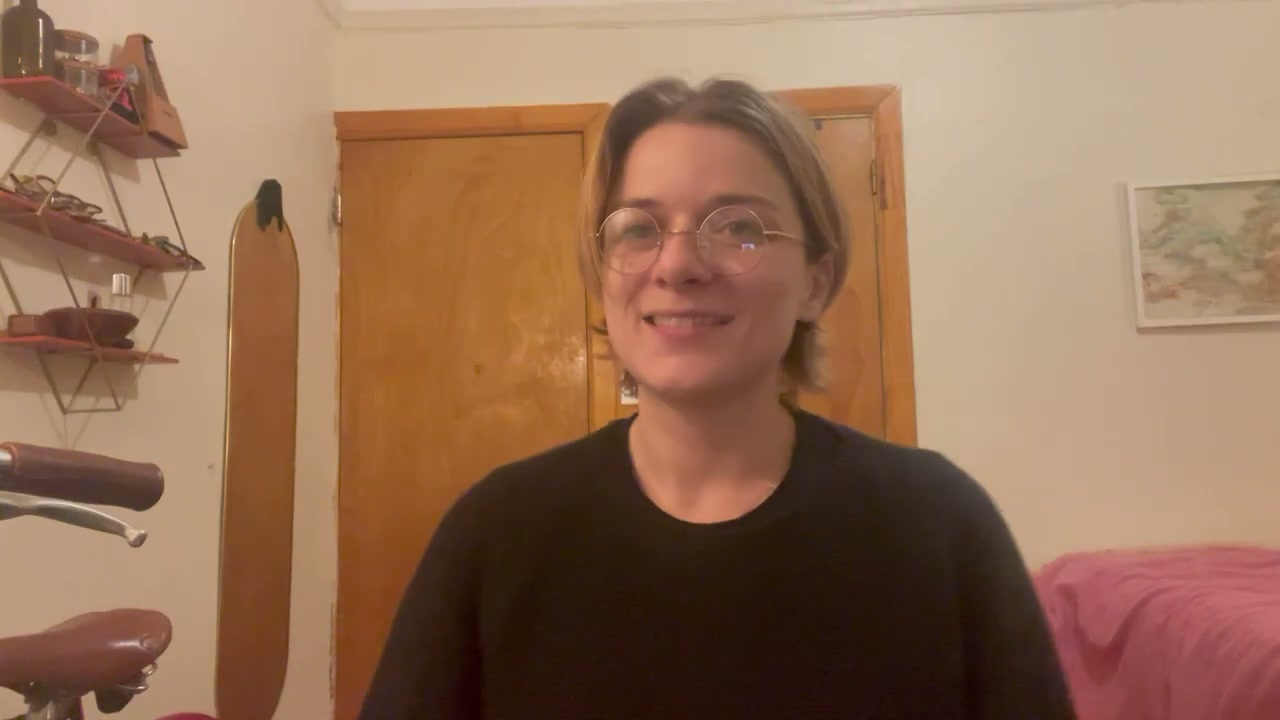
Sami teaches voice on Tunelark. View Sami’s profile
Samantha L. sirens on the same “ng,” as quietly as possible, with the back of the tongue at the soft palate and the tip down behind the bottom front teeth. The quiet is the point. If the slide has a gap or a bump, the fix is less air and a softer sound, not more, because the goal is one smooth instrument from bottom to top rather than a strong bottom and a strong top with a break in between.
Skill video · Siren Warm Up Exercise

Samantha teaches voice on Tunelark. View Samantha’s profile
Three: build the head voice, then bring the two together
Many untrained voices have a strong chest voice and an underused head voice, because the head voice is the part of the instrument few people use in daily life. Others, especially singers who grew up in choirs, have the reverse: a comfortable head voice and a chest voice they avoid. Either way, the top of the range lives in the head voice, and it is built by using it.
Stephanie D. pairs two exercises: a “ya” pattern, thinking of the word “yucky,” that brings the chest register forward and can be sharpened with staccato, and a “who” pattern that climbs into the top of the staff and invites the head voice in, opening the vowel as it rises. The pairing matters. A singer who only exercises the chest voice will keep dragging it upward; one who also exercises the head voice has somewhere for the top notes to go.
Skill video · Singing Exercises
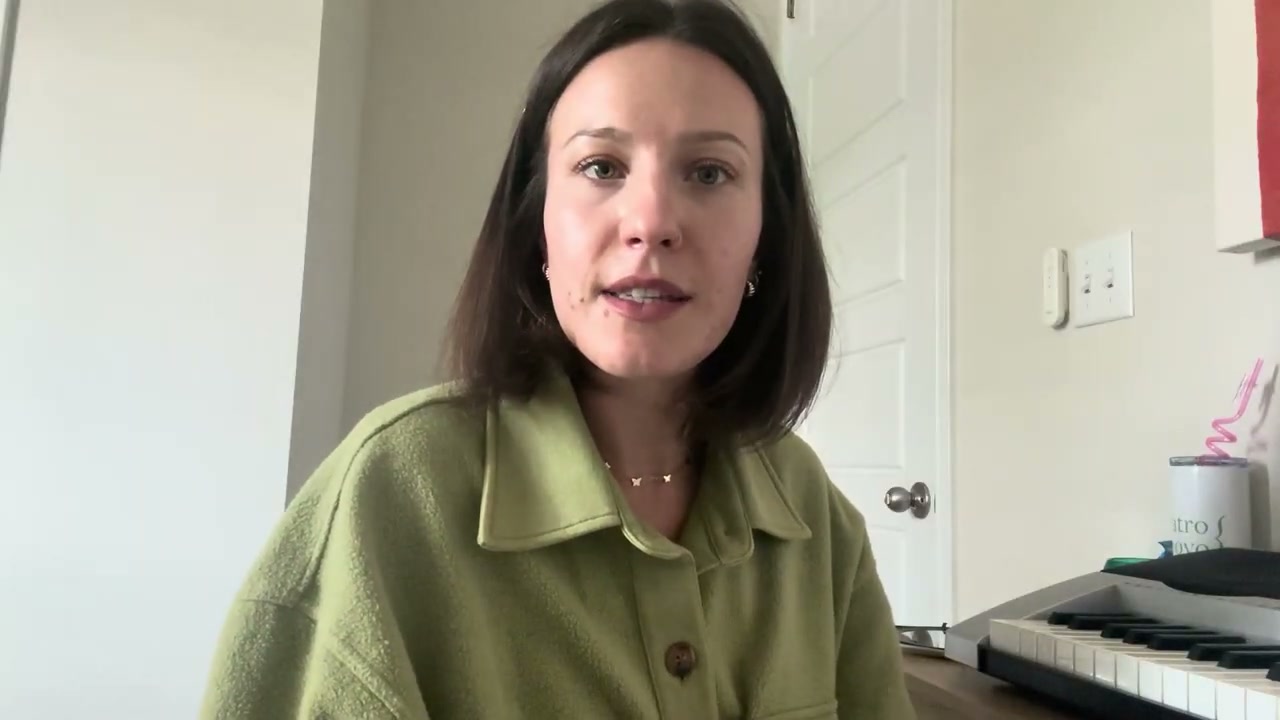
Stephanie teaches voice on Tunelark. View Stephanie’s profile
The last step is the mix, the way of singing through the upper-middle of the range that keeps some of the chest voice’s firmness while the folds thin toward head voice. It is what makes a trained singer sound like one instrument from bottom to top, and it is where the usable top of the range actually comes from. Claire C. finds it with a nasal “nyah” or a cat’s “meow,” placed forward behind the front teeth and carried up a short pattern until the sound changes. She demonstrates the mix and then the full head voice on the same pattern, so the difference can be heard.
Skill video · Teaching Demonstration

Claire teaches voice on Tunelark. View Claire’s profile
The rules that keep it safe
- Nothing that hurts. A tickle, a scratch or a sharp sensation is a stop, not a challenge. Pain is the muscles around the larynx telling you they are doing the folds’ job. The folds warn you afterward instead, as hoarseness or a breathy, unsteady quiet voice, and that is a sign to take an easy day.
- A half step at a time. Move exercises up by semitones and stop the moment the sound stops being easy. The note that is a struggle today is the one that will be easy in a few weeks if the one below it is solid.
- The top is quiet first. Volume comes last. If a high note only exists loud, it does not exist yet.
- Slides every day, songs on top. Ten minutes of sirens and light scales before any repertoire (Vocal Warm-Up Exercises has the full routine), and the repertoire sits in the comfortable range while the top is being built.
- Rest counts as practice. The folds are tissue. They swell with heavy use and recover with sleep and water, so a hard session is followed by an easy day, not another hard one. Vocal Health for Singers covers the daily care.
- Measure monthly, not daily. Range moves on a scale of weeks. Note the comfortable top and bottom once a month and compare then, not every session. A recording makes that comparison honest; Should You Record Your Singing Practice? covers how to do it without flinching.
What to expect
Singers often find their first few comfortable new notes at the top within a few weeks of light, daily work, because those notes were being held back rather than missing. After that the pace slows to what the folds and the coordination can actually build, which in our teachers’ experience is a semitone or two over a few months, and the bigger change is not more notes but more usable ones, sung in tune, at any volume, on any vowel.
That pace matches the longer arc in Developing Vocal Technique: The Honest Timeline. A wider range is also not the same as a higher one. Plenty of singers gain more from a solid, easy bottom octave and a reliable middle than from one more note at the top, and a good teacher will usually work on the middle first, because the top sits on it.
Norwood tells of an adult student who came to him after months with a teacher who had kept them mostly in head voice. The high notes were beautiful, and songs that sat lower left them frustrated. He worked the chest voice into their singing, and the sound took on a depth and power they had not been able to reach. The larger change, he says, was confidence: the student quit fighting the instrument and began to trust it.
How to Find a Voice Teacher on Tunelark
Range is the part of singing where an outside ear matters most, because the difference between a note that is supported and a note that is pushed is easy to hear from across a room and almost impossible to feel from inside. A teacher hears the throat step in before you do. To get started:
1. Open our voice lessons page.
2. Read bios. Look for teachers who describe how they build technique and registers, not only what they have performed.
3. Book a trial lesson with one whose approach makes sense to you. It is $25 off that teacher’s 30-minute rate.
4. In the trial, sing a phrase with a note that is just out of reach and ask what they hear. A good teacher will name the habit, not the note.
Most teachers in the videos take new students now, and each video links to the teacher’s profile.
Frequently Asked Questions
How much can I increase my vocal range?
Most singers gain several usable notes at the top through technique, and a little at the bottom through relaxation, over months of consistent work. The physical ceiling of the instrument rarely comes into it; what limits most voices is coordination, and that is trainable.
How long does it take to expand vocal range?
The first few notes often come within a few weeks of daily light work, because they were blocked by tension rather than missing. After that, in our teachers’ experience, progress is a semitone or two over a few months, with the bigger gain being reliability across the range you already have.
Can I expand my range without a teacher?
The exercises here can be practiced alone and will help most singers. What is hard to do alone is tell a supported high note from a pushed one, which is exactly the judgment that keeps the work safe. A teacher’s ear is the difference between building range and building strain.
Why does my voice crack when I try to sing higher?
The folds are switching suddenly from the chest-voice setup to the head-voice setup. Sirens teach that change to happen gradually, and mixed voice is how trained singers cross the same point without a break.
Is it safe to practice high notes every day?
Yes, if they are practiced lightly and stopped at the first sign of strain. Daily short sessions of quiet slides and scales are safer and more effective than occasional long ones spent pushing.
Does belting expand your range?
Belting carries chest quality into higher notes, but it is a separate skill built on top of a connected range, not a way to build one. Learn the mix first; belting is covered in What Belting Actually Is, and How to Do It Without Hurting Your Voice.
Looking for an online voice teacher? See our full Online Voice Lessons page for everything you need to know about getting started.
Keep reading
About Jennifer Heath
I'm Jennifer Heath, VP of Operations at Tunelark and a lifelong singer. I joined the company in 2020 and oversee much of what makes Tunelark work for students and teachers: hiring, training and supporting our instructors, student support, marketing and day-to-day operations. I started voice lessons at 7 and sang with touring choirs through my teens. Music belongs in every life, for the self-expression, the discipline, the comfort and the simple joy of it.