Developing Vocal Technique: The Honest Timeline From Beginner to Skilled Singer

Vocal technique is one of the slowest musical skills to fully develop, and one of the most rewarding once it does. Most instruments put something in your hands that you can see and adjust. The voice does not, which is why the work runs through breath, body and your perception of yourself instead, and why the timeline is longer and the work deeper than most beginners expect. If you want the shorter version aimed at your first year, we have a separate month-by-month guide to learning to sing.
This is the honest version of what developing real vocal technique looks like over months and years, and what each phase actually feels like from the inside.
The technical guidance below comes from Dr. Gino P., a voice teacher at Tunelark who has run his own private studio for more than fifteen years and has taken students from a first lesson through to advanced work in that time. He teaches musical theater, classical, jazz, and pop from a bel canto foundation, so his read on the timeline covers singers who want very different things from their voices. His full background is in the About section at the end of this article.
What “Good Technique” Actually Means
Before the timeline, it helps to know what the goal sounds like to someone who listens for a living. It is not a catalog of tricks. “No matter the genre, what I am listening for is an authentic, free sound in which the technique is not something the singer is actively thinking about,” Dr. Gino says.
That ease is earned quietly, long before an audience hears any of it. “Technique is built from hours of very specific, mindful work that is done behind the scenes,” he says. And the whole point of that work is to make it disappear. “The goal, for any performer, is a technique so solid that when it is finally time to perform, all of these pillars are in place and the singer can just communicate authentically with their audience. The technique should be invisible, allowing the singer to shine.”
Invisible technique is still observable from the outside. A singer who has it can:
- Sustain a clear, supported tone across their full functional range without strain.
- Move between chest voice and head voice without an audible break, blending the two through the middle of the range.
- Sing softly without breathiness and loudly without tension.
- Hit a note in tune, on demand, in any part of their range.
- Sing for an hour or two without losing their voice, which rests on daily vocal health habits as much as on technique.
- Sing the same passage the same way twice.
What is missing from that list is musical interpretation, emotional expression, and stylistic flair. Those are artistry rather than technique. Technique is the body’s reliable response to your musical intentions, and its job is to get out of the way so the artistry can land.
Months 0 to 3: Awareness Phase
The first three months of vocal training are mostly about learning what is actually happening in your body when you sing. Most untrained singers are unaware of their breath patterns, jaw tension, tongue position, and posture habits. The first phase of technique work is making the invisible visible.
“The first few months look different to each student,” Dr. Gino says, but there is a shape to them. What a new singer begins to build is “a better sense of the three main factions of singing: Respiration (basic understanding of the management of breath and airflow), Phonation (the creation of the primary acoustic sound of the voice) and Resonance (the systems that enrich and shape the sound of our voice).”
Three months is not enough to master any of those three, and it is not meant to be. It is enough to know they exist and to start feeling them work. Alongside them, he expects something more practical to arrive. “A student should also have a good handle on understanding their own voice, warming it up and general ideas about musical style, preparation and presentation,” he says. Warming up is its own skill, and our daily vocal care routine covers what a warm-up is actually for.
That is why his lessons usually run in two halves: a technical portion for warming up and working the finer vocal methods, and a repertoire portion for applying them to real music. The technical half builds the mechanism, the repertoire half proves it does something, and a beginner gets both from the first weeks rather than waiting months for the songs to start.
In practice you will spend time on:
- Diaphragmatic breath (low, slow, full).
- Releasing the jaw, tongue, and shoulders.
- Finding your speaking pitch and the easy notes around it.
- Hearing your own pitch accurately (harder than it sounds, and recording yourself is the fastest way to start).
Progress in this phase looks like awareness rather than polish. You start to catch your jaw when it locks. You feel where your breath goes. You hear, for the first time, that you have been pushing without realizing it. What does not arrive yet is a finished sound, and effort alone will not pull that forward. This phase is not glamorous, and it is the foundation everything else is built on.
Months 3 to 9: Building Phase
Now the technique starts to take shape. You are building reliable habits to replace the unconscious ones. This phase produces the first “wow, my voice sounds different” moments, both for you and for anyone who hears you.
The work includes:
- Extending range gradually, without straining.
- Finding head voice reliably, and for lower voices the upper part of chest register as well.
- Strengthening soft singing, which many beginners find the hardest thing technically at this stage.
- Working on specific vowel positions for clear tone.
- Beginning to coordinate breath with phrase length.
Setbacks are normal here. You will think you have conquered a problem, only to have it return next week. That is not failure. It is the brain refining the new pattern.
One building-phase skill in under two minutes: Dr. Gino on legato, the tied-together line that every style of singing depends on, and the loose jaw and moving air that produce it.
Skill video · Legato Sound

Dr. Gino teaches voice on Tunelark. View Dr. Gino’s profile
Months 9 to 18: Integration Phase
This is when scattered skills start to fuse into something coherent. You stop thinking about each technical element separately and start to sing, with the technique running underneath.
Specific milestones in this phase:
- The range you already had becomes usable end to end, and the top few notes turn reliable rather than occasional. Most untrained adults already have an octave and a half to two octaves to work with, so this phase is about quality across that range rather than width.
- The bridge between chest and head voice starts to smooth out.
- You can sing a song from beginning to end and have it sound mostly consistent.
- Dynamic range opens up, so you can sing quietly and intentionally loudly.
- You start to hear what other singers are doing technically and recognize it.
You cross over somewhere in here, usually late in the first year, and by the end of the phase you sound like a trained singer to most listeners. Not a polished professional, but clearly a singer rather than someone who likes to sing.
Years 2 to 4: Refinement Phase
This is the phase most amateur singers never reach, because most stop somewhere in the building or integration phases. Those who stay enter a long, rewarding period of refinement.
In this phase:
- Your range stabilizes at its mature width.
- The break between registers becomes seamless or nearly so.
- You develop stylistic vocabulary, including phrasing, ornamentation, and dynamics.
- You can sing in different styles convincingly, or commit deeply to one, which is exactly what a classical foundation buys a singer in any genre.
- Stamina grows, so a long rehearsal or a full set no longer wears the voice out.
- Your sense of pitch becomes precise enough to make small expressive choices around it.
This is when singing becomes enjoyable in a different way than the early excitement of “I can sing!” You are now an instrument whose responses are predictable and rich.
Years 5 and Beyond: Mastery Phase
There is no end to this phase. Singers keep developing for the rest of their careers. The work shifts from building technique to maintaining and refining it, and to deepening artistry. The voice keeps maturing well into middle age, long after the technique itself stops changing dramatically, and by that point technique is no longer the thing limiting a singer.
This is also when most singers find their distinctive sound. Not a generic “trained voice,” but a recognizable voice that is specifically theirs. That can only happen on a foundation of solid technique.
What Determines Where You End Up On This Timeline
Take two singers who start in the same place and put in the same hours, and two years later one is much further along. Dr. Gino has watched that happen often, and he starts from the observation that there is no single cause. “There are a myriad of factors that impact a student’s success,” he says.
The first one is not the number of hours. “The two students may have a different approach to practicing (it is not necessarily how much one practices, but the QUALITY of the practice),” he says. Twenty focused minutes on the thing that is actually broken will outrun an hour of singing through material you already sing well. Short daily practice is the version of that principle most adults can keep up, and our guide to fifteen minutes a day makes the case for it, while our practice routine template for adults turns it into something you can follow.
Then there is what a student does with correction. “The students could also differ in how they accept and apply feedback,” he says. Feedback that gets heard and applied in the same week compounds. Feedback that gets nodded at does not.
Body awareness matters too. Students “may have distinctive attentiveness to their breath coordination, resonance, articulation and posture,” he says, and a singer who can feel what their body is doing can change it much faster than one who cannot yet.
So do the ears. “These two students may have different listening skills, and process what sounds good and why it sounds good in different ways,” he says. Hearing that something sounds good is common. Hearing why is what lets a singer reproduce it.
And there is temperament. “Students can also have dissimilar emotional and psychological qualities, one may become frustrated with correction, while one may be more motivated to work through a correction,” he says. A correction is an opportunity or an indictment depending on who is receiving it, and that difference shows up in the two-year picture as much as anything else.
None of these are fixed traits. Practice quality, response to feedback, body awareness, and listening are all teachable, and a teacher who knows a specific student can work on them directly. That is how Dr. Gino approaches it. “This is why I develop personalised lesson plans for each of my students, to adjust my teaching style so that each of my students experiences exponential growth within the first few months,” he says.
The fast early gains a tailored plan produces are gains in awareness, in practice quality, and in a student’s grip on their own instrument. The finished sound still arrives on the slower schedule set out here, which is why good teaching speeds up the work without shortening the years.
For more on what to expect early, see our guide on singing tips for beginners. If you are coming to this as an adult and wondering whether you have left it too late, you have not, and online singing lessons for adults explains why.
About Dr. Gino
Dr. Gino is an Italian-American lyric baritone from Western New York, and a voice teacher at Tunelark. He holds a Doctor of Musical Arts in Voice Performance and Literature from the Eastman School of Music, where he studied with Robert Swensen, along with degrees from the Cincinnati College-Conservatory of Music and the Crane School of Music at SUNY Potsdam. He has performed across North America and Europe in roles including Count Almaviva in Mozart’s Le Nozze di Figaro, Valentin in Gounod’s Faust, and Pelléas in Debussy’s Pelléas et Mélisande.
Alongside his private studio he serves on the voice faculties of the Rochester Institute of Technology and the Eastman Community Music School. He teaches beginners through advanced singers in musical theater, classical, jazz, and pop, all from a bel canto foundation. He still performs, which is deliberate. After about a decade of singing professionally, he found that many of his own coaches and teachers were retired performers. He judged it more useful for his students to study with someone still singing, who knew the current audition and performance standards from the inside.
Performance · Trois Mélodies de Paul Verlaine
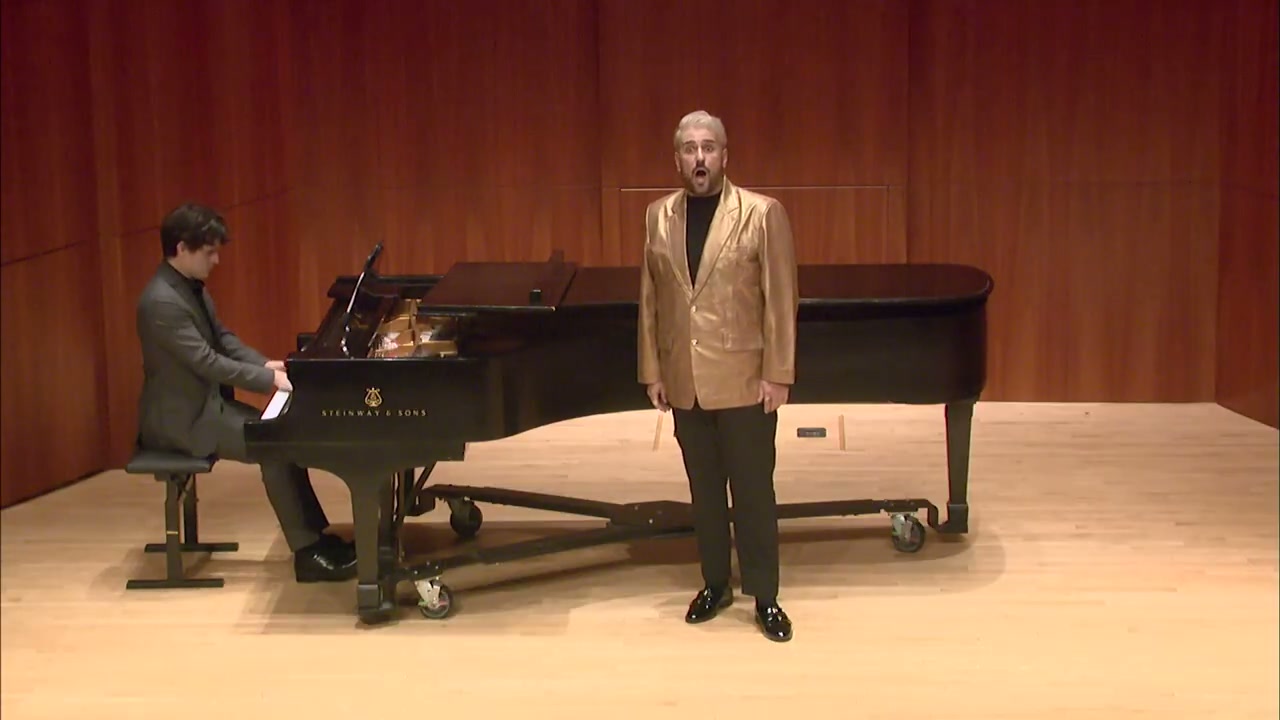
Dr. Gino performs Debussy’s Trois Mélodies de Paul Verlaine. View Dr. Gino’s profile
How to Find a Voice Teacher on Tunelark
Every Tunelark teacher is vetted by working musicians and educators for teaching quality before they can list. For technique work especially, the right teacher makes the difference between three years of steady progress and three years of guessing. To get started:
1. Open our voice lessons page.
2. Read bios. Look for teachers who describe their pedagogical approach, not just their performing credits. Our buyer’s checklist for an online voice teacher and our guide to what makes a great music teacher both go deeper on what to look for.
3. Book a trial lesson with one whose profile resonates.
4. After the lesson, ask yourself: did the teacher seem interested in the foundation of how you make sound, or only in what songs you want to sing? Foundation orientation is the marker of someone who will build real technique.
Good vocal technique takes years. That sounds daunting until you reframe it: it is a long, deeply interesting project that pays back for the rest of your life. The best time to start was years ago. The second-best time is today, fifteen minutes at a time.
Frequently Asked Questions
How long does it really take to develop good vocal technique?
Most students notice a change by about month 3, sound trained to most listeners somewhere between months 9 and 18, and reach solid foundational technique in 2-3 years of consistent lessons and practice. Polished, advanced technique takes much longer, and many singers describe ongoing refinement throughout their careers.
Can I speed up the timeline with intensive practice?
Only somewhat. The voice is a body, and pushing too hard creates strain and bad habits. The fastest reliable path is consistent moderate practice rather than occasional intensive bursts. As Dr. Gino puts it, what separates two singers over two years is “not necessarily how much one practices, but the QUALITY of the practice.”
Is voice harder to learn than other instruments?
Different. Voice has no external instrument to manipulate and no fingerboard to look at, so feedback is mostly auditory and kinesthetic: what you hear, and what you feel in the breath, jaw, and resonance. The instrument is also affected by sleep, hydration, and emotion. These factors make voice both more personal and more variable than other instruments.
How do I avoid developing bad vocal habits?
Work with a teacher trained in vocal pedagogy, not just performance. A vocal coach works on repertoire, style and audition prep, while a voice teacher builds the technique underneath, so for this work you want a voice teacher. A good teacher catches problems early and gives you clear physical feedback about what your voice is doing.
Will I lose technique if I take a break?
Some, yes. Vocal technique is partly physical conditioning. After a multi-week break, expect a few weeks to return to your previous level. Long-term technique returns faster than it built initially.
Looking for an online voice teacher? See our full Online Voice Lessons page for everything you need to know about getting started.
Keep reading
About Jennifer Heath
I'm Jennifer Heath, VP of Operations at Tunelark and a lifelong singer. I joined the company in 2020 and oversee much of what makes Tunelark work for students and teachers: hiring, training and supporting our instructors, student support, marketing and day-to-day operations. I started voice lessons at 7 and sang with touring choirs through my teens. Music belongs in every life, for the self-expression, the discipline, the comfort and the simple joy of it.