Choosing a Music Teacher for a Child With ADHD or Autism

A music lesson can be the best half hour of a neurodivergent child’s week or the worst, and the difference is usually the teacher. What separates the two is whether the teacher found out, before the first lesson, how this particular child takes in information, moves, focuses and handles correction, and then built the lesson around the child instead of around a method book.
Yousef S. teaches drums at Tunelark and lists special needs among their specialties. Their students have ranged in age from 4 to 67, including students with learning disabilities, ADHD and autism, and Yousef has worked as a public school educator. We asked them what they want to learn from a family before a first lesson, how they pace a drum lesson for a child who needs movement or short stretches of focus, and what a parent should look for when choosing a teacher.
This guide is for parents of children with ADHD, autism or both, and it covers the decisions that come before lessons start. It is not a treatment plan. The honest promise of music lessons is a skill your child owns and a lesson each week that belongs to them.
What a good teacher wants to know about your child
Before a first lesson, Yousef asks the family about how the child learns, not what the child can already play. “Some of the main things I’m looking for is: What is their learning style? What mediums work best for them? How can we motivate practice and accountability (again, without making it a chore).”
What the family tells them changes the materials. “For some folks that may be by sending videos versus sending sheet music, using shorthand notation or larger text,” Yousef says, or by building more play into the lessons themselves. A child who reads slowly, or who shuts down in front of a full page, can often learn a drum groove from a twenty-second video they can replay as many times as they like. A child who loves systems may want the notation, and may want it in large print with one pattern to a page. Neither child is behind. They need the same groove delivered in a different form, and a teacher who writes out their own exercises, as Yousef does for their students, can change the form without changing the goal.
So before you contact any teacher, write a short note that covers Yousef’s questions and a few more:
1. How your child learns best. By watching, by reading, by hearing it, or by doing it along with someone.
2. Which formats work. Videos they can replay, printed pages, large print, one instruction at a time.
3. How long they can stay with one activity they like, and what happens when they are asked to stop.
4. Sensory things that bother them. Sudden loud sounds, headphones, being watched on a camera.
5. How they take correction.
6. What motivates them, including the music they already love: a video game soundtrack, a film theme, one song on repeat.
A note built from those points might read like this: My child is nine and has ADHD. They learn fastest by watching and copying, and a full page of notation overwhelms them. They can stay with something they enjoy for about ten minutes, and stopping in the middle of a task is hard, so a one-minute warning helps. Sudden loud sounds upset them, but headphones are fine. They love the music from one particular video game.
That note is what you send ahead of a trial lesson, and a teacher who has worked with neurodivergent students will ask for this information if you do not offer it.
What patience looks like in a trial lesson
Asked what a parent should look for, Yousef names one quality first. “I think the most important thing, and my personal specialty, is finding a teacher who is patient,” they say.
Every teacher will say they are patient, so Yousef describes it as behavior a parent can see. “Patience looks like many things: Allowing a student to speak (within reason), being a good listener (attentive and asking clarifying questions), asking for feedback, checking in on physical comfort levels, being open to finding alternative teaching methods (creative and adaptable), and so much more.”
Each of those is something you can watch for in a trial lesson:
- Your child gets to talk. A teacher who lets a child tell them about a favorite band or game, within reason, learns what will motivate that child, and the child learns that the lesson has room for them.
- The teacher asks follow-up questions. Listen for questions that start from something your child said, such as which part felt hard, rather than the same instruction repeated louder.
- The teacher asks for feedback. Whether that was too fast, whether the video would help, whether they want to try it again. A child who is asked learns that the lesson can change.
- The teacher checks physical comfort. The height of the drum throne, how the sticks feel in the hand, whether the headphones are too loud, whether the camera is bothering them. For a child with sensory sensitivities this can decide whether they manage the half hour at all.
- The teacher has another way in. When something does not land, a patient teacher changes the method: a demonstration instead of an explanation, a video, fewer steps, a game. Saying the same thing more slowly is not a different method.
On Tunelark, teachers who have taught neurodivergent students can list “Special needs” among their specialties, and many describe that experience in their bios in their own words. The tag is a starting filter, not a guarantee, and the trial is where you see what it means for a given teacher. Our checklist for what to look for in a children’s music teacher covers the qualities every child needs on top of these.
How a lesson should be paced for a child who needs to move
Ask each teacher how they would structure a lesson for your child. Yousef’s first answer is that there is no single structure: “It is always different!” For some students they build a break into the middle of the lesson, and the break has its own timer. “I have various hourglasses for different amounts of time and I like to get the students to lead that time themselves,” they say.
A sand timer the child turns over does two things for a child who finds transitions hard. The child can see exactly how much break is left, and the end of the break is decided by the sand rather than announced by an adult, so going back to the drums is not a contest.
Movement is part of the plan rather than a reward for sitting still. “I teach almost all my students stretches and will often do that at the beginning or as a break as well,” Yousef says. Drumming works the wrists, forearms, shoulders and back, so a stretch has a physical purpose, and a child who needs to move gets to move without leaving the lesson.
So is conversation. “I think a big part of this is just about talking to each other. Asking about their day, music they’ve listened to, etc.” A few minutes of talk rests the kind of focus that playing takes, and it tells the teacher what the child is excited about this week.
Put together, Yousef finds the lesson changes length in the child’s experience. “When implementing all of these things in a lesson and focusing on 10-15 minute blocks of focus, an hour long lesson can feel more like half that.”
Tunelark lessons run 30, 45 or 60 minutes, and 30 minutes is the usual starting length for children aged 5 to 11. What Yousef describes is about how the time is divided: a 30-minute lesson becomes two blocks of focus with a stretch or a short break between them, and a longer lesson can work for an older child when it is built the same way. When you talk to a teacher, ask how they would break up a lesson for your child, and what they do when your child’s focus runs out before the block does.
Why online lessons often work
A screen helps many neurodivergent children, for reasons that have little to do with technology. The child is in their own room, with their own instrument and a noise level you control. There is no waiting room and no transition into a strange building, which for many autistic children is a hard part of any new activity, and a child who needs a break can step out of frame for a minute without the lesson ending.
Online lessons also make Yousef’s formats easy. A teacher can record a short video of the groove at the end of a lesson and send it the same day, which suits a child who learns by watching far better than a page of notes would.
The trade-offs are real. Screen fatigue adds up for children who already spend school hours on screens. Eye contact through a camera is easier for some autistic children and harder for others. And the teacher cannot move a hand into position, so they describe it, demonstrate it on their own kit and ask the child to show them. Our complete parent’s guide to online music lessons for kids walks through how a lesson runs over video.
Which instrument to try
No instrument suits every child with ADHD or every autistic child. A few patterns hold often enough to know.
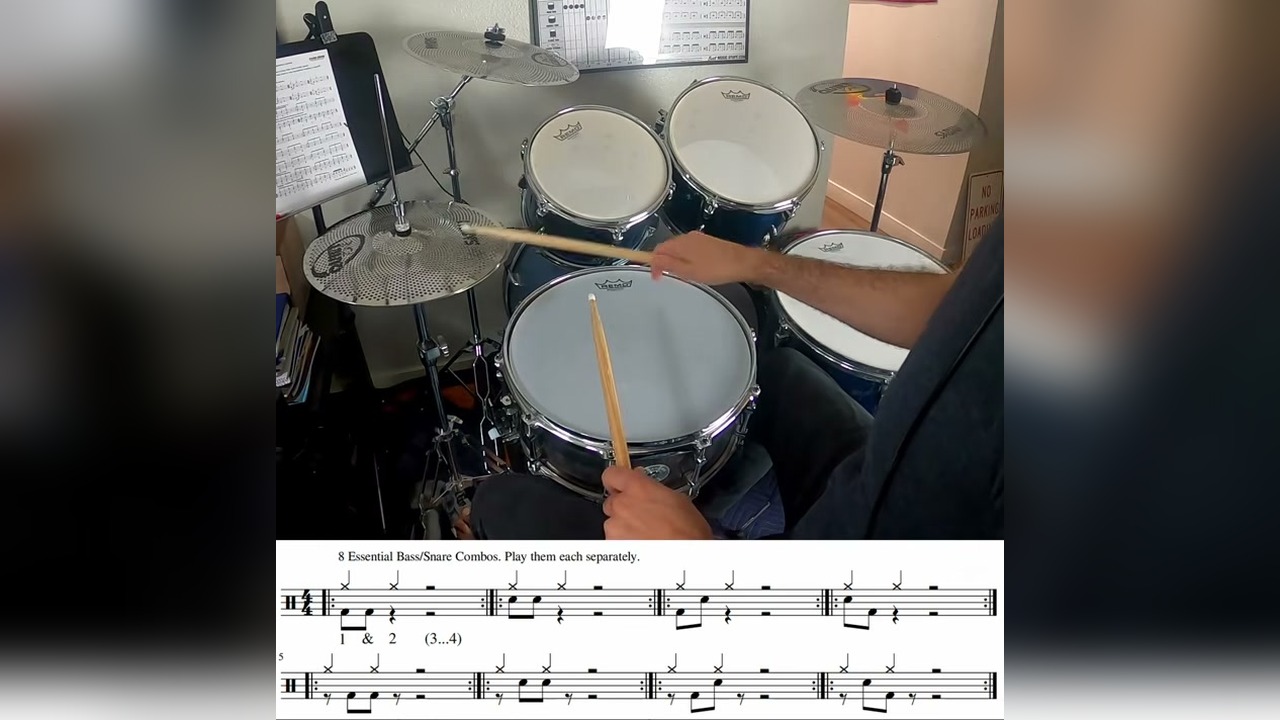
Drums give a restless child a reason to move and an immediate, physical result, and the early work comes in short loops that are finished in seconds. Yousef’s play-along lesson below shows the format: eight short bass drum and snare patterns, each played on its own against a click.
Skill video · Essential Patterns for 8th Note Independence
Yousef teaches drums on Tunelark. View Yousef’s profile
The drawback is volume. An electronic kit with headphones solves it for a child who tolerates headphones, and a practice pad solves it for a child who does not.
Piano is visual and orderly. The notes are laid out left to right, every pattern can be seen, and there is no tuning to fight. Children who like systems often love it, though it asks for sitting still, which short blocks help with.
Guitar and ukulele are portable, though sore fingertips in the first few weeks bother some sensory-sensitive children more than others.
Voice is the most personal instrument, and the one where a child’s confidence is most exposed. For a child who sings constantly anyway it is often the natural choice. Our guide to voice lessons for students with special needs covers what changes inside a voice lesson for a student who learns differently.
Our guide to choosing the right instrument for your child covers the general case. For a neurodivergent child, weight the sensory profile and the child’s own preference above everything else, and treat the first instrument as a first instrument rather than a life decision.
The trial lesson: what to ask and what to watch
Book a trial with two teachers if you can, and send each of them your note before the lesson. On Tunelark the first lesson with a new teacher is $25 off that teacher’s rate for the length you choose, so a trial starts at $14, there is no subscription, and switching teachers means booking with someone else. The right teacher for this child is worth two or three trials to find.
After each trial, ask yourself:
- Did the teacher ask about my child, or only talk about music?
- Did the lesson change shape when my child’s attention did?
- Did my child succeed at something in the first ten minutes?
- How did the teacher correct a mistake, and how did my child take it?
- Did the teacher ask my child how something felt, or whether it was too fast?
- Did my child want to go back?
The last question outweighs the others.
Practice at home without a fight
Yousef counts practice as one of the things to plan with the family from the start, and the same condition applies there as in the lesson: it should not turn into a chore. Most practice battles are a length problem. Start at a length your child can finish successfully, even if that is five minutes at first, and let the teacher and your child’s attention set the pace from there toward the 10 to 15 minutes a day that suits most younger children. Daily and short usually works better than occasional and long, and many teachers find that especially true for children with ADHD.
The format the teacher chose for the lesson carries over. A child who learns from video practices along with the teacher’s video. A child who likes a clear endpoint does well with a timer they can see, and the last thing they play should be something they can already do. For a child whose hard part is stopping, a two-minute warning or a one-more-time ritual works better than an abrupt bell.
Put the instrument where your child already spends time, and let the teacher set the practice rather than you: a task the teacher wrote down, in words your child uses, carries more weight than the same task from a parent. Our guide to helping your child practice without the battles covers the rest.
What lessons can and cannot do
Music lessons do not treat ADHD or autism, and a teacher who implies otherwise is one to avoid. What lessons can give a child is a skill that is entirely theirs, an adult on their side every week, and a place to show what they can do that school may not offer.
About Yousef
Yousef took up drums in high school, partly to play music alongside a brother who played guitar, and kept playing through university, where they majored in civil engineering. Their aggressive but tasteful playing became well known in the DC rock scene, and they are recognized for odd-time and displaced grooves and for music that crosses genres. They built their teaching practice at the start of the pandemic and found that teaching was mostly about communication rather than speed or power at the kit.
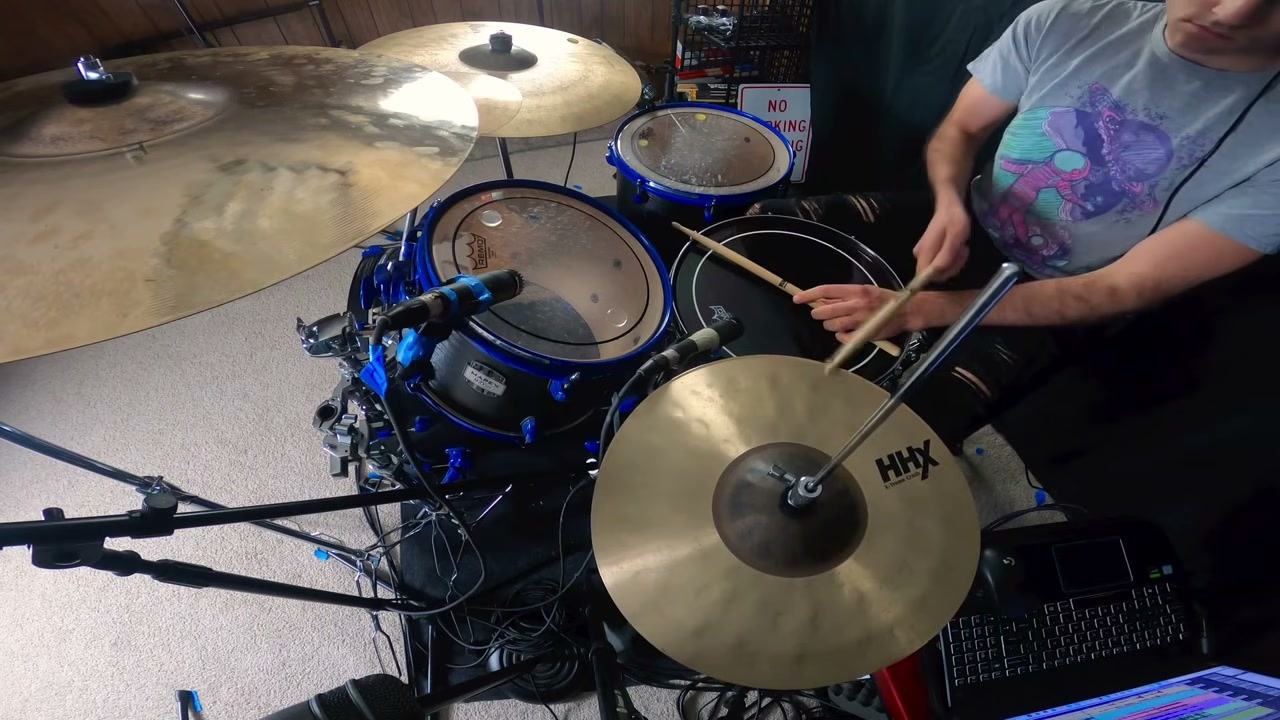
Yousef lives in Tacoma, Washington, and has worked as a public school educator. They have taught drums to students from ages 4 to 67, including students with learning disabilities, ADHD and autism and students whose first language is not English, and they regularly transcribe and notate music and exercises for their students. They spoke to us about odd meters for our guide to odd time signatures on drums. Here they are in performance, playing a drum cover of “Witches” by the Taiwanese math-rock band Elephant Gym.
Performance · Witches
Yousef teaches drums on Tunelark. View Yousef’s profile
Ready to book a trial lesson?
Yousef is accepting new drum students at Tunelark. The note you wrote for this guide is the thing to bring: send it to Yousef before the first lesson, along with the name of one song your child loves, so the lesson can start from how your child learns. If your child wants to play an instrument Yousef does not teach, you can find a teacher for it across the rest of the roster.
Frequently Asked Questions
Are music lessons good for kids with ADHD?
They can be, when the lesson is paced for the child: short blocks of focus, movement built in, and music the child chose. What to expect is a musical skill and a lesson of their own each week. Lessons are not a treatment for ADHD.
What instrument is best for an autistic child?
There is no single answer. A trial lesson on the instrument your child is drawn to is the cheapest real test, since how the instrument sounds and feels in their own room tells you more than any general pattern.
How do I tell a music teacher about my child’s needs?
Send a short note before the trial covering how your child learns, which formats work, attention span, sensory needs, how they take correction and the music they love. Update it after the first few lessons as you both learn more.
Do online music lessons work for neurodivergent kids?
For many children, yes. Ask the teacher whether they can send a short video recap after each lesson, which gives a child who learns by watching something to practice along with at home.
How long should a child with ADHD practice?
Start with a length your child can finish, even five minutes, and build from there. Most children aged 5 to 7 do well with 10 to 15 minutes a day, and children aged 8 to 10 with 15 to 25, often split into two short sessions.
Keep reading
About Jennifer Heath
I'm Jennifer Heath, VP of Operations at Tunelark and a lifelong singer. I joined the company in 2020 and oversee much of what makes Tunelark work for students and teachers: hiring, training and supporting our instructors, student support, marketing and day-to-day operations. I started voice lessons at 7 and sang with touring choirs through my teens. Music belongs in every life, for the self-expression, the discipline, the comfort and the simple joy of it.