What to Look For in an Online Piano Teacher: A Buyer’s Checklist
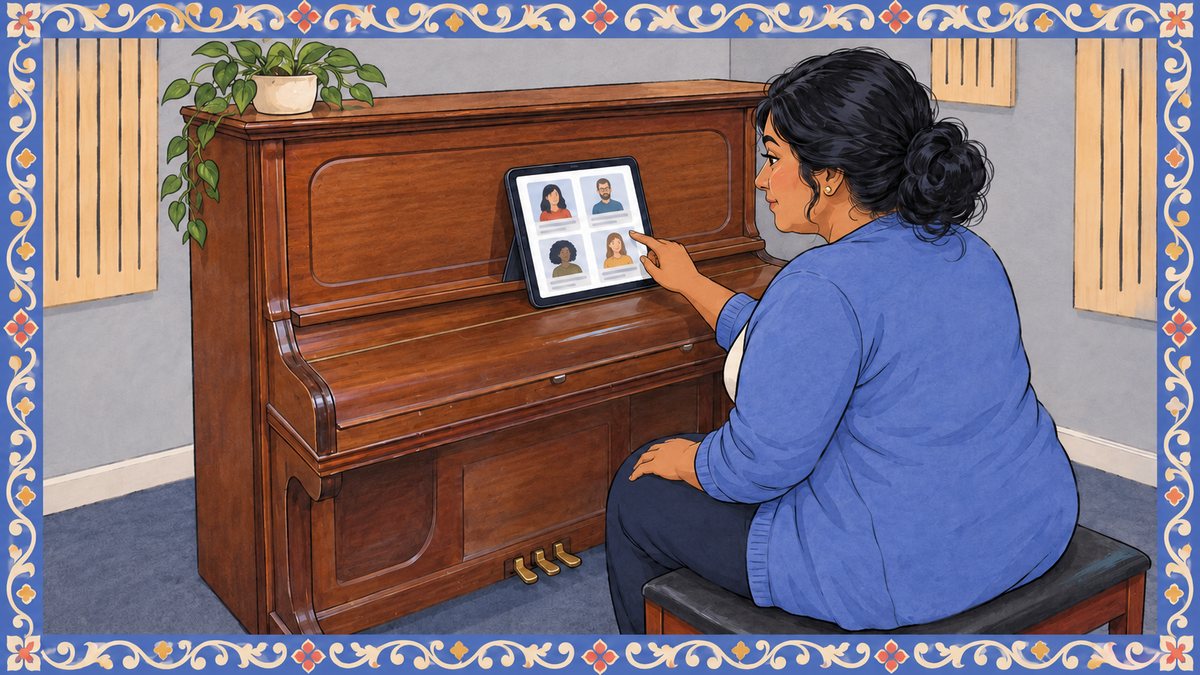
Thousands of piano teachers offer lessons online, and from the outside their profiles look alike: credentials, a smiling photo, a list of styles, a paragraph about teaching philosophy. So how do you pick one?
This checklist covers what to read for in profiles, what to test in the trial lesson, the checks specific to piano, and the red flags that should make you walk away.
Why Teacher Fit Matters More Than Credentials
Credentials matter less than fit. A master’s degree from a top conservatory doesn’t guarantee that the teacher is good at explaining concepts, patient with beginners, or warm in the lesson. Some of the best teachers have unconventional backgrounds. Some of the worst have impressive resumes.
What matters more is whether the teacher’s approach matches how you learn. Do they explain things clearly? Do they listen to what you want? Do they give you a sense that practice is interesting, not just a chore? You can have a teacher with two doctorates who makes you dread lessons, and a teacher with a bachelor’s who makes you fall in love with the instrument.
Credentials still reflect real training, so treat them as a starting filter, not the deciding factor. The what makes a great music teacher guide goes deeper on what to evaluate, and our guide to piano lesson costs shows what each lesson length runs.
What to Read in Their Profile
Here’s what is worth looking for in a bio.
Specificity about who they teach well. A great profile names the type of student the teacher loves working with: “adult beginners returning after a long break,” “young children just starting out,” “intermediate students breaking through to advanced repertoire.” A generic “I teach all levels” tells you nothing.
The styles they actually specialize in. A long list of styles tells you less than a teacher who names the one or two they teach most, such as “primarily classical with some jazz background.” Check too whether they teach from notation, chord charts or both. Pick a teacher whose specialty matches what you want to learn.
Teaching philosophy in plain language. Look for a paragraph that sounds like a real person wrote it. Phrases like “I meet students where they are” or “I focus on building both technique and musicality” can be templated. Phrases like “I think most students don’t practice slowly enough” or “my goal is to make you a more thoughtful musician, not a faster one” tell you something real.
Evidence of how they think about practice. Good piano teachers care how their students practice between lessons. A profile that mentions practice methods, weekly assignments or feedback between sessions is a good sign.
Tone, treated as a weak signal. Whether a profile reads warm or formal is the least reliable thing on the page, because bio prose is often templated and edited toward what students want to hear. An intro video, and then the first few minutes of the trial lesson, will tell you far more.
What to Notice in the Trial Lesson
The trial lesson is the real test.
Do they ask about you first? A good teacher spends the first few minutes asking about your goals, your background, what you’ve tried before, what you struggle with, and what you play on at home: an acoustic piano, a weighted digital piano or a smaller keyboard. A teacher who launches straight into a structured intro lesson without asking questions is delivering a generic curriculum.
Can they explain things multiple ways? Watch for moments where you don’t quite understand something. Does the teacher rephrase, find an analogy, demonstrate it differently? Or do they repeat the same explanation louder?
Travis S., who teaches piano on Tunelark, shows what a second way in can look like: instead of memorizing all 88 keys, he finds any note on the keyboard from the pattern of the black keys.
Skill video · Finding Any Note on the Keyboard
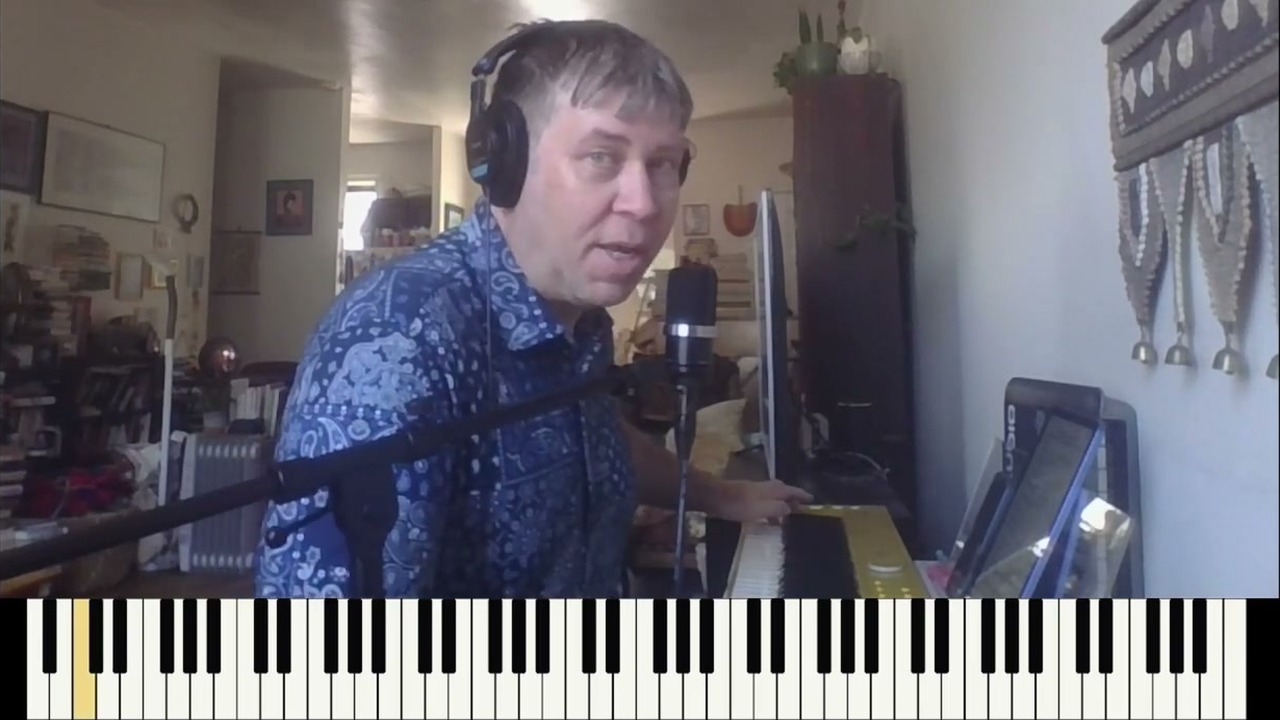
Travis teaches piano lessons online with Tunelark. View Travis’s profile
Are they actually watching you play? An engaged teacher notices specific things (a thumb position, a wrist angle, a rhythm tendency) and mentions them, and asks you to angle the camera so it shows both hands, plus your feet once you use the pedal. Generic feedback after you finish means they weren’t watching.
Do you feel encouraged or shamed? The best teachers find real things to be enthusiastic about even with beginners (“your timing on that section was solid”) and frame areas for improvement as opportunities, not failures. A teacher who corrects you in a way that makes you feel stupid will be a problem long-term.
Did they suggest a clear next step? At the end of the trial lesson, a good teacher tells you what they’d work on if you continued. Vague closings like “let me know if you want to book more” mean they haven’t.
Red Flags Worth Walking Away From
Some things in a trial lesson should make you say no thanks and find a different teacher.
They show up late or unprepared. Punctuality and preparation reflect respect for your time. If the first lesson starts ten minutes late with the teacher fiddling with their camera, expect that to continue.
They spend the lesson talking about themselves. Some self-introduction is fine. A trial lesson dominated by the teacher’s resume, past students, or musical accomplishments tells you the lesson is going to be about them, not you.
They push expensive add-ons aggressively. Books, methods, accessories, package deals: some recommendations are reasonable. But a teacher who pressures you to buy a specific method book before the trial lesson is even over is selling more than teaching.
They speak dismissively of your goals. If you say you want to learn pop songs and the teacher visibly winces or starts explaining why classical training is the only real foundation, you’ve found someone whose values don’t match yours. There’s nothing wrong with classical-only teachers, but they should be honest about that in their profile, not punish you for wanting something else.
They don’t actually play during the lesson. A piano teacher who demonstrates almost nothing (talks more than plays) is harder to learn from. You need to see and hear what good playing looks like.
For more general guidance on evaluating teachers across instruments, see our how to find a good music teacher article.
When the Fit Is Right (You Can Tell)
A trial with the right teacher feels like a conversation, not a presentation. You leave with at least one specific thing you didn’t know before, a technique or a piece of advice that lands, and you look forward to the next lesson.
If a trial leaves you unsure, that’s an answer too. Try another teacher.
How to Find a Piano Teacher on Tunelark
Every Tunelark teacher is vetted by working musicians and educators for teaching quality before they can list. That gives you a strong baseline. The fit work is still on you.
1. Open the teacher list and filter by piano.
2. Read bios. Look for the signals described above, specificity, honest specialties, real voice in the writing.
3. Book a trial lesson with one whose profile resonates. The first lesson with a new teacher is $25 off that teacher’s rate for the length you choose.
4. After the trial, ask yourself: did the teacher pay attention to me specifically, and did I leave with something concrete to work on?
For a broader read before booking, the best online piano lessons guide walks through what good lessons look like.
A teacher whose approach fits you is worth more than any equipment in your practice space.
Frequently Asked Questions
How many trial lessons should I take before deciding?
One trial with each candidate is usually enough. If you’re between two strong options, take a second lesson with each before committing. Trying more than three or four teachers tends to confuse rather than clarify.
Should I prioritize a teacher with a music degree?
Teachers joining Tunelark now need a music degree and at least two years of teaching experience before they can list. Past that baseline, fit decides, so look at the whole picture, not just the diploma.
Is it rude to leave a teacher after a few lessons?
No. You’re the client. If the fit isn’t working, end it professionally, thank them, say it isn’t quite the right fit, and move on. Most teachers prefer this to a student lingering unhappily.
Does the teacher’s location matter for online lessons?
Time zones matter for scheduling. Otherwise, location is irrelevant to lesson quality. Some of the best online teachers are based far from any major music scene.
How much should online piano lessons cost?
On Tunelark, teachers charge $39 to $65 for a 30-minute lesson with a typical price of $44, and $68 to $120 for an hour (rates current as of September 2026). Across the wider market, online 30-minute lessons run about $40 to $90 as of 2026, with most between $40 and $60, though that wider band is an estimate rather than a measured survey. For a beginner, a mid-priced teacher who lists beginners as a specialty usually serves better than a high-priced specialist, and every rate is shown on the profile before you book.
Looking for an online piano teacher? See our full Online Piano Lessons page for everything you need to know about getting started.
Keep reading
About Jennifer Heath
I'm Jennifer Heath, VP of Operations at Tunelark and a lifelong singer. I joined the company in 2020 and oversee much of what makes Tunelark work for students and teachers: hiring, training and supporting our instructors, student support, marketing and day-to-day operations. I started voice lessons at 7 and sang with touring choirs through my teens. Music belongs in every life, for the self-expression, the discipline, the comfort and the simple joy of it.