Singing Vibrato: What It Is and When Straight Tone Is Right
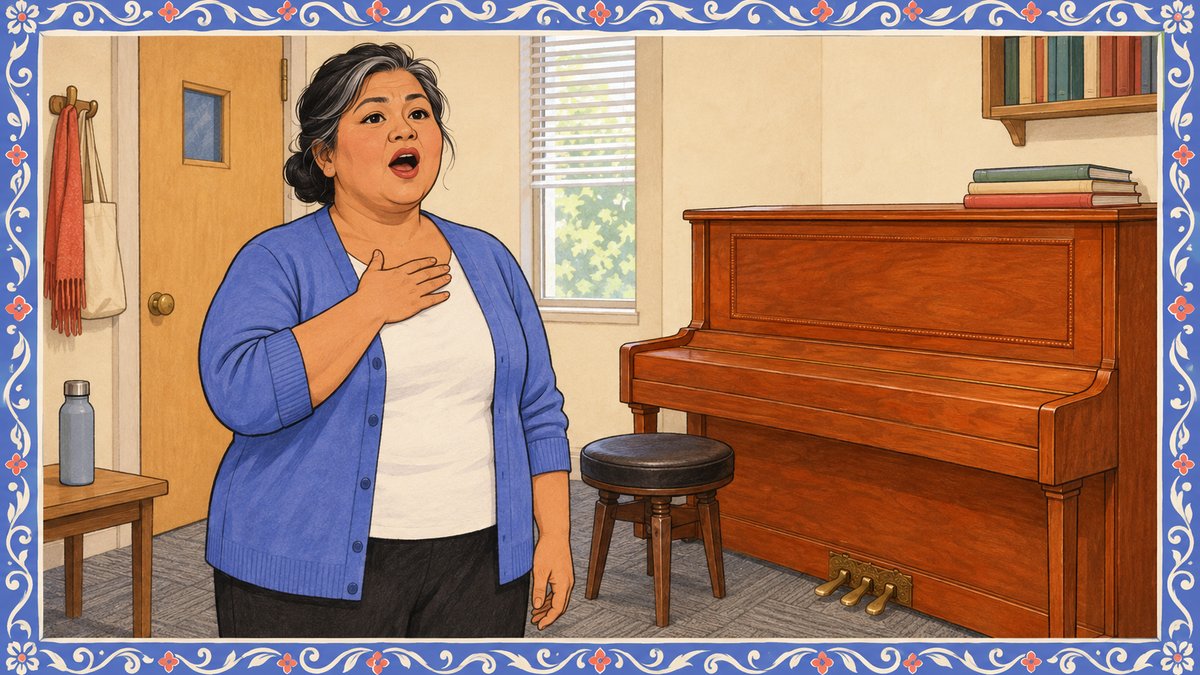
Vibrato is the gentle, regular wavering of pitch that a free, well-supported voice produces on a sustained note. Singers who do not have it usually want it, singers who have a lot of it are sometimes asked to sing without it, and both groups tend to ask the same two questions: can vibrato be learned, and when is a straight tone the better choice?
Kathryn Z. teaches voice at Tunelark. She is a classical soprano with a master’s degree from the Cleveland Institute of Music who sings as a soloist and ensemble member for several churches in Manhattan, and she also writes and performs indie music with her own band. She uses both sounds for a living, a full classical tone in one and a lighter, more conversational delivery in the other, so we asked her what vibrato is, whether it can be taught, and when to leave it out.
What vibrato is, and what it is not
A note sung with vibrato is not held at one fixed pitch. The pitch rises and falls a small amount around the note, several times a second, in a pattern so steady that the ear hears warmth and ease rather than movement. The oscillation comes from the small muscles in and around the larynx, and it shows up when the voice is free: steady breath under the note, the vocal folds vibrating without being squeezed, nothing in the throat, jaw or tongue clamping down.
Kathryn’s definition starts from that freedom: “vibrato is what may happen in your voice when everything is working in equilibrium, and then your voice is freed up to have vibrato,” she says. Equilibrium, in practice, means the breath is doing its share so the throat does not have to, the vowel stays open, and the singer is not pushing for volume. Take any one of those away and the vibrato usually goes with it. A held breath produces a straight, pressed tone. A throat that squeezes for a high note produces a tone that shakes unevenly or stops moving altogether.
That is also the difference between vibrato and the two things people confuse with it. A wide, slow wobble, or a fast flutter, is the sound of something other than the breath moving the pitch, often a jaw or tongue shaking, or breath pressure that is too high for the note. Both are signs to look at the technique underneath, and neither is something to practice making.
Some voices have more of it than others
Two singers with equally good technique can have very different amounts of vibrato. “The thing is, some people have more of it than others, so it’s one of those, you-gotta-just-fall-in-love-with-your-voice-whatever-it-is things!” Kathryn says.
How much a voice has depends on the voice. Age plays a part, since vibrato tends to arrive and widen as the instrument matures. So does the size and weight of the voice, and so does the music a singer grew up copying. A nineteen-year-old with a light, mostly straight sound is not doing anything wrong, and a forty-year-old with a generous vibrato does not need to apologize for it. Our guide to range, voice type and registers covers the other things about an instrument that a singer learns to work with rather than change.
Why manufacturing it goes wrong
Because vibrato is a result rather than a technique, the fastest way to get a bad one is to make it on purpose. “I think the important thing to keep in mind is, don’t force vibrato into your voice, don’t fake it. If it comes, fine; if it doesn’t, fine,” Kathryn says.
Manufactured vibrato usually comes from one of three places: pulsing the breath from the belly on every beat, shaking the jaw, or deliberately rocking the pitch up and down. Each of them produces something that reads as vibrato for a bar or two and then reveals itself, because it is the same width and the same speed on every note regardless of the phrase. Real vibrato changes with the music, narrowing on soft notes and short ones and opening on a long climactic note.
There is a longer-term cost as well. “If you try to manufacture vibrato, at a certain point your voice may mature and then you’ll have TOO MUCH vibrato!” Kathryn says. A manufactured pulse is a habit laid on top of the voice. When the natural vibrato arrives with maturity, the two stack, and the singer who taught themselves to wobble at nineteen can find at thirty that they cannot sing a straight note when the music asks for one. “It’s important to always sing with your voice,” she says.
One voice, different writing
Kathryn sings classical repertoire with a full, continuous vibrato and sings her own songs with much less of it, and she does not think of that as two techniques. She adds that the same rule applies when a singer moves between genres: “always use YOUR voice, don’t try to mimic someone else’s sound.”
What changes between her two worlds is the writing. “As far as my own singing between repertoires, frankly I just don’t think I write in a way for my singer-songwriter music that is as demanding of a classical sound as I’d use in classical music,” she says. “The writing demands different things.”
Classical writing asks for long sustained phrases, vowels held open so the tone carries without a microphone, and a vibrato that runs through the whole line. A song written for a band and a microphone asks for shorter notes, a delivery closer to speech, and straight tone on most of the line, with vibrato arriving at the end of a held note as a color rather than as the default. The instrument is the same. What it is asked to carry is different, and a singer who keeps their own voice through both sounds like one person in two settings instead of two impersonations. Our guide to singing different styles with one voice covers the other choices, in vowel, resonance and onset, that change between genres.
Can vibrato be taught?
A teacher cannot install vibrato. What a teacher can do is build the conditions it appears in, and that takes time. “If I have a student who wants a mature vocal sound with vibrato… well, I just tell them, you gotta be patient! Your voice will mature, your focus is just on getting your technique underneath it,” Kathryn says. “Patience is a virtue that we Americans don’t deal with very well.”
The technique underneath it is the ordinary work of voice lessons. Breath that stays low and steady from the start of a phrase to the end, instead of being spent in the first two notes. A vowel that stays open as the pitch rises, instead of narrowing and tightening the throat. An onset that starts the tone cleanly, without a push or a breathy leak. A jaw and tongue that let go of the note instead of gripping it. None of those exercises is about vibrato, and all of them are what vibrato waits for. When a student who has never had it notices one day that a sustained note has started to move on its own, that is the voice reporting that the balance has arrived.
How long that takes depends on where the student starts and how often they practice, and our month-by-month timeline for learning to sing sets out what the first year usually brings. For an adult beginner the answer is months to a few years, and for a young singer it is partly a matter of waiting for the voice itself.
Between lessons, the useful work is not trying to produce vibrato. It is sustaining comfortable notes with steady breath, recording them, and listening for whether the tone is free or held. A free tone will do what it is going to do.
When straight tone is the right choice
Vibrato is a feature of a free voice, and that does not make it right for every piece. “There are some kinds of repertoire that demand more of a straight tone (I’m thinking classical music here.)” Kathryn says. Her rule for deciding is to let the music decide. “The repertoire will always tell you what it needs,” she says, and it does so through its own shape: “it’ll tell you how much weight you can or can’t have in your sound by the movement of the notes, the length of the musical phrases, etc.”
Where that points toward a straighter tone:
- Early music and much choral singing. When a dozen singers each add their own vibrato to a chord, the center of each pitch blurs and the chord stops locking. A choir tunes by steadying the pitch, which is why straight tone is the default in a lot of church and chamber music, and why a soloist stepping into a choir has to adjust. Our guide to moving from choir to solo singing covers the same adjustment in the other direction.
- Fast-moving passages. In a run of quick notes there is no time for a full vibrato cycle on each one. The pitch has to land cleanly and move on, which is a lighter, straighter use of the voice than a sustained line.
- Most pop, folk and singer-songwriter delivery. A microphone picks up a conversational tone, and the writing usually does not hold notes long enough for vibrato to be the texture of the line.
- The shape of a single note. Many singers in every genre start a long note straight and let the vibrato in partway through. That is an expressive choice, and the music tells you where it belongs.
What all of these share is that the decision comes from the phrase in front of the singer, not from a preference about how they would like to sound.
Why straight tone is harder than it sounds
A singer with a natural vibrato often assumes that singing without it means doing less. Kathryn says the opposite. “I’d say it’s harder (for some) to sing with a straight tone, because you have to have your support working even harder, and have your breath moving even more so that your throat doesn’t tense up, etc.”
The easy way to stop a vibrato is to hold the throat still, and that is the version that tires a singer out and leaves them hoarse by the end of a rehearsal. The healthy version steadies the pitch from the breath instead. The air keeps moving, the throat stays free, and the muscles of the abdominal wall and the lower ribs meter the flow so evenly that the pitch has nothing to waver on. The diaphragm itself is the muscle of the inhale. It cannot push air out, so “support” means the breath being managed on the way out, not a muscle being squeezed. Our guide to breath support for singers explains how that coordination is built. In this lesson, Kathryn shows how she thinks about using the breath while singing.
Skill video · Using Breath While Singing
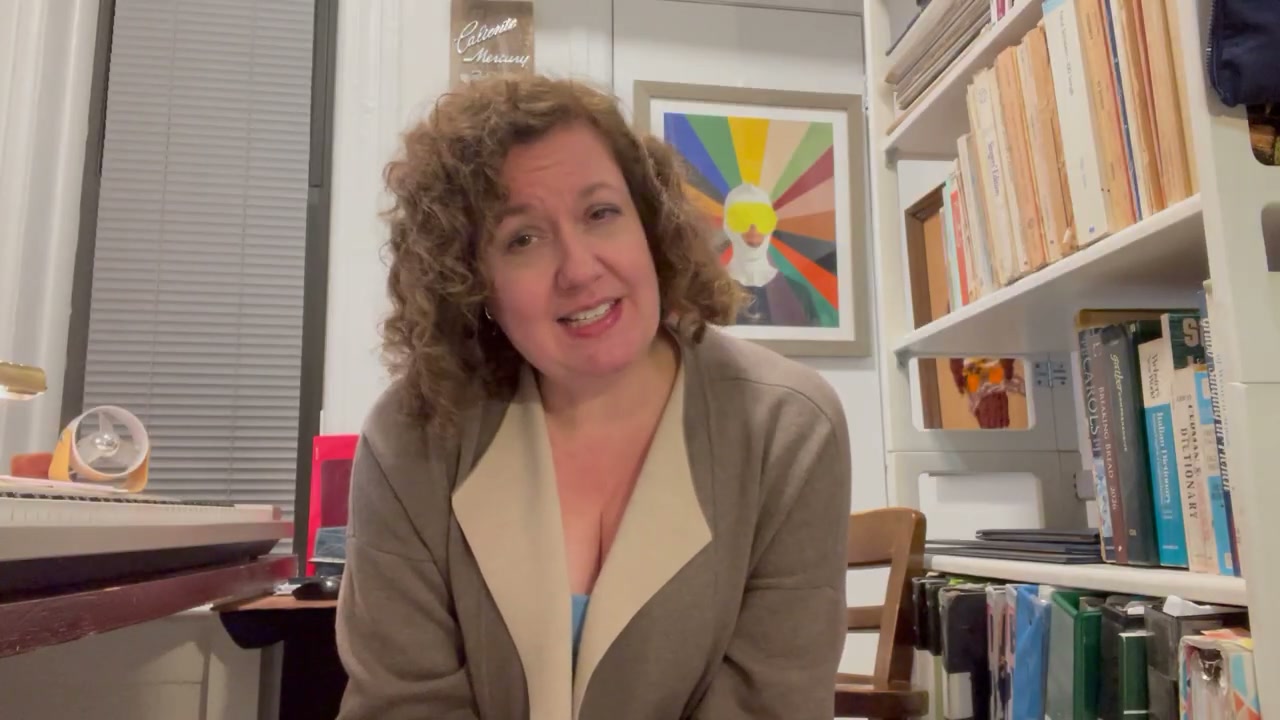
Kathryn teaches voice on Tunelark. View Kathryn’s profile
Moving between straight tone and vibrato on purpose starts in the same place. If the breath stays steady and the throat stays free, a singer can let the vibrato in on a long note or keep the pitch still for a choral chord without changing anything in the throat, because what changes is how the breath is managed. A singer who has to tighten something to make the switch has found the next thing to work on in lessons.
About Kathryn
Kathryn earned her undergraduate degree at the University of Nebraska and her master’s at the Cleveland Institute of Music. She has taught private voice lessons in New York City for more than ten years and sees her work as equal parts teacher and performer. Alongside her church work she leads a band that performs and releases new music, and she adapts how she explains technique to the person in front of her: a student who works in medicine gets the anatomy, an actor gets a visualization, and a first lesson starts with the question of what brought them to singing. She teaches students of all ages, backgrounds and levels. Here she sings “Butterfly”, one of her own songs.
Performance · Butterfly
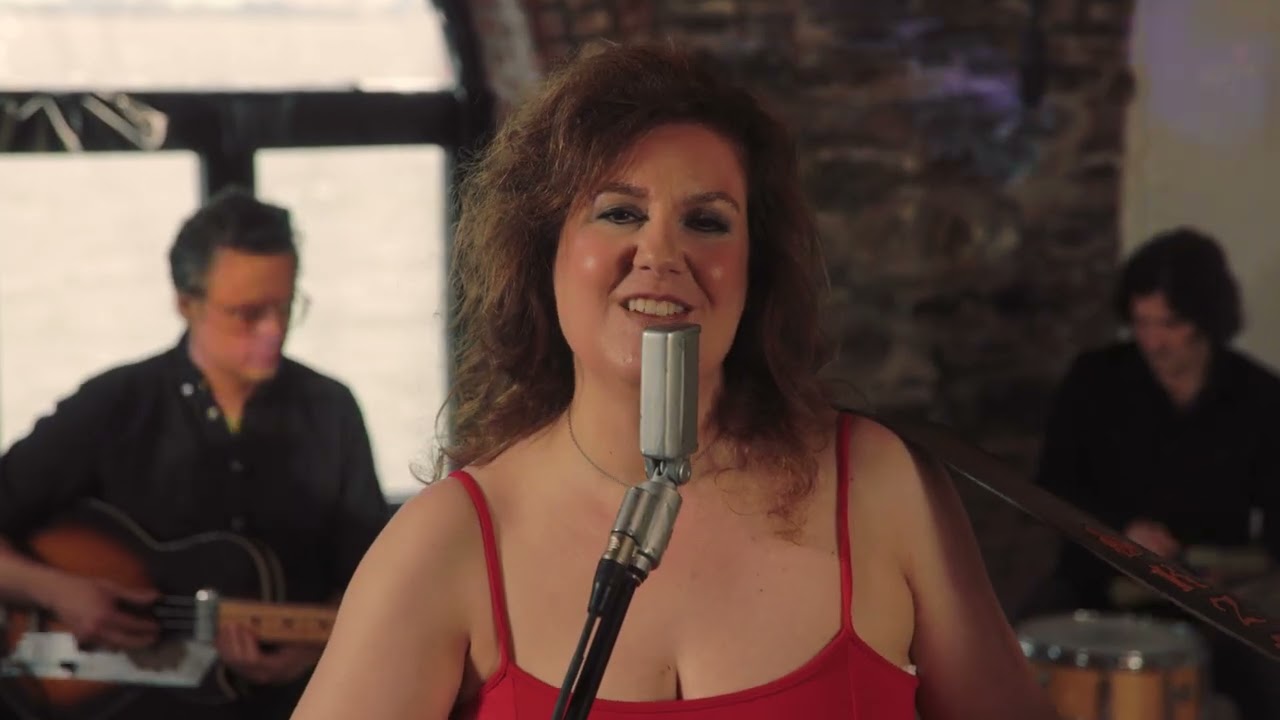
Kathryn teaches voice on Tunelark. View Kathryn’s profile
Ready to hear what your voice does on its own?
Kathryn is accepting new voice students at Tunelark, and a recording of yourself holding one comfortable note for as long as you can is a good thing to bring to a first lesson, along with a song you want to sing. You can also find a teacher for another instrument across the rest of the roster.
Frequently Asked Questions
Is vibrato natural or learned?
Both, in a sense. Vibrato appears on its own when the breath, the vocal folds and the throat are working in balance, so a singer learns the balance in lessons and the vibrato follows. Nobody learns vibrato as a separate skill.
Can you sing well without vibrato?
Yes. Straight tone is the right sound for a lot of choral and early music, for fast passages, and for most pop and folk writing. Singing it well takes more breath support, not less, because the pitch is steadied from the breath rather than by holding the throat.
Why does my vibrato sound shaky or too wide?
A wide, slow wobble or a fast flutter usually means something other than the breath is moving the pitch, such as a shaking jaw or too much air pressure. It is a reason to look at the technique underneath with a teacher, not a reason to practice a smaller wobble.
How long does it take for vibrato to appear?
It depends on the singer’s age and starting point. Adults who practice regularly often hear it within months to a few years of steady technique work. In a young voice it also waits on the instrument maturing.
Do pop singers use vibrato?
Many do, usually at the end of a held note rather than through the whole line. A microphone and conversational writing favor straight tone on most of the phrase, with vibrato as a color where the singer chooses it.
Looking for an online voice teacher? See our full Online Voice Lessons page for everything you need to know about getting started.
Keep reading
About Jennifer Heath
I'm Jennifer Heath, VP of Operations at Tunelark and a lifelong singer. I joined the company in 2020 and oversee much of what makes Tunelark work for students and teachers: hiring, training and supporting our instructors, student support, marketing and day-to-day operations. I started voice lessons at 7 and sang with touring choirs through my teens. Music belongs in every life, for the self-expression, the discipline, the comfort and the simple joy of it.