Vocal Stamina: What Singers Can Learn From Athletes

Singers are handed a great deal of advice about looking after the voice and very little about training it. The advice is nearly all protective: things to avoid, things to drink, things to do before you sing. Very little of it explains what the voice is physically doing, or why one singer can get through a two-hour set and a run of shows while another is hoarse by the third song. Jay H. teaches voice and guitar at Tunelark and is well placed to answer that. Alongside a B.A. in Music Education he holds a B.S. in Exercise Physiology, and he has played more than a thousand shows across the United States. What follows is his account of what preparation is actually for, which habits hold up, and what he would tell a singer who wants to still be singing in thirty years.
What a warm-up is physically doing
Most singers warm up without being told what the exercises are for, which is why a warm-up so often becomes a ritual rather than preparation. Jay’s description of it is anatomical.
“To very gently nerd out here for a second from the physiological perspective,” he says, warming up is “waking up and coordinating the nervous system with the intrinsic muscles of the larynx, reducing unnecessary involvement of the muscles surrounding the larynx, increasing blood flow to the tissues involved in singing, and getting the respiratory system ready to do its job efficiently.”
The small muscles inside the larynx are the ones that should be setting pitch and tension. The larger muscles around it are not, but a cold voice lets them help anyway, and a good deal of what a singer experiences as tightness is that borrowed effort. Much of warming up is the work of handing the job back to the muscles that should have it.
This is where the comparison with sport starts to earn its place. An athlete does not warm up to be able to move. They warm up so the movement costs less and lands where they intend. A singer’s warm-up is doing the same thing to a much smaller set of muscles, and the individual exercises and what each one trains are the mechanics of it.
The test for whether it worked
Jay has a test, and it is not how the last note sounded.
“A warm-up should make you feel good! Relaxed and energized,” he says. “When you perform, how you feel affects how you use your voice, and I know the audience feels that too.”
Then the part that says what the physical preparation was actually for. “For me, a successful warm-up gets you to the point where you can stop thinking about your voice and just make music. You’ve done the physical preparation, and now your voice is free to follow your heart and imagination.”
A warm-up that leaves you monitoring your own throat through the first song has not finished its job, however correct the exercises were. If anything, a long and effortful warm-up can arrive at the opposite of the goal, because it tires the instrument and leaves you listening to it.
Match the preparation to the work
The other consequence of treating preparation as training rather than ritual is that there is no single correct routine.
“Warm-ups should also match what you’re actually about to do,” Jay says, and his two examples sit at opposite ends of a singing life.
The first is five minutes before singing a few songs around the house. “You might spend a minute each on breathing, stretching, a lip trill or another SOVT exercise, vocal fold approximation, and a larger-interval exercise through your full range,” he says, “all of this while doing the dishes or walking the dog.” SOVT is semi-occluded vocal tract work, the family of exercises that partly close the mouth so the folds vibrate against a little back pressure and do less work for the same sound. Vocal fold approximation is the folds learning to meet cleanly rather than slam together or leak air. Neither needs a piano, and this version exists so that the first thing the voice does that day is not the singing itself.
The second is the evening of a first open mic, and it is barely a warm-up in the usual sense.
“You could warm up by singing your song a few keys lower at a comfortable volume and gradually moving it up in half steps until you reach the original key. Now you’re warming up your voice while also running the lyrics, melody, and structure of the actual song.”
The voice warms the way it would on scales, but each repetition lands on the material you are about to perform, so the song gets more secure while the instrument does. “Those extra reps on a song can really help calm the nerves too,” Jay says.
Jay demonstrates one of the gentler preparation exercises below. The ng is the sound at the end of “sung”, and it puts the folds in a position that is efficient and easy on the voice, which is what makes it a safe way to open the top of the range without pushing.
Skill video · NG Exercise

Jay teaches voice and guitar on Tunelark. View Jay’s profile
The habits that actually hold up
The daily habits that genuinely change how a voice feels are unexciting.
“Most people already know the boring stuff that works: drink enough water, get enough sleep, exercise, practice regularly, and generally take care of yourself,” Jay says. “The harder part is actually doing those things consistently.”
His own version of consistency is a single anchor at the start of the day. “I start every day with a huge glass of water,” he says, “one of those giant mason jars,” and he is clear about what it is and is not. “It’s nothing revolutionary. It’s just a habit, a reminder, and a little bit of momentum to do the rest of the healthy things for my voice that day.”
That is a more useful way to think about the morning glass than as a dose. Nothing about a large drink at eight in the morning reaches the vocal folds faster than the same water spread across the afternoon, because the folds hydrate through the bloodstream over hours. What it does is start the day with one thing already done, which makes the next one easier.
It also carries the part singers most often miss, which is the delay. “I’ve also learned that what I do today affects how my voice feels tomorrow.” An athlete accepts that today’s session shows up in tomorrow’s legs. A singer with a rough Tuesday usually goes looking for a cause on Tuesday.
What to stop worrying about
The corresponding question is which advice matters less than it is made out to.
“What matters less to me is obsessing over every little rule. Singers get told endless things they should eat, drink, avoid, or do before singing. I think consistently doing the basic healthy things matters a lot more than trying to perfectly engineer your voice every day,” he says, with water as the one thing he would hold to strictly.
Read the standard list that way and it sorts itself. Shouting, whispering through laryngitis, smoking and untreated reflux are not preferences, because they damage tissue, and our daily care routine covers those properly. Most of the rest is a question of what you can actually keep up. A singer who sleeps well and drinks steadily for a year is in better condition than one who followed a twelve-point pre-singing protocol for a month and then stopped.
The same applies to effort. Tension is the most common thing a singer needs to release before anything else improves, and Jay works on it directly in the exercise below.
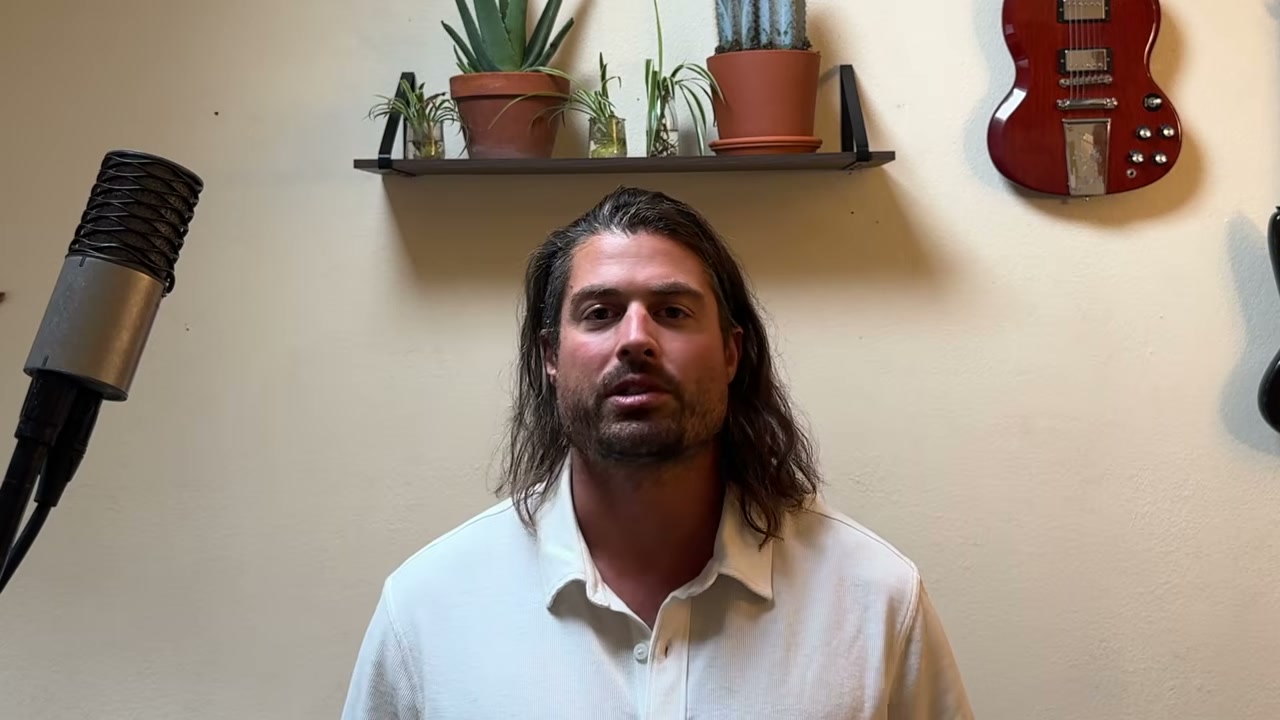
Vocal fry is the light creaky sound the voice makes on almost no air, and it is one of the quickest ways to feel what releasing tension is like. Jay works through the exercise and five things to keep in mind while practicing it.
Skill video · Vocal Fry
Jay teaches voice and guitar on Tunelark. View Jay’s profile
What a thousand shows teaches
A thousand shows is the kind of load most singers never put on the instrument, and it is a useful test of which advice survives contact with real use. Jay’s summary of what does is short.
“Develop good technique, take care of your body, and learn to use your voice efficiently. I think singers can learn a lot from athletes in that way. You want to train enough to prepare and improve gradually without injuring yourself in the process.”
The comparison names the half of vocal health that protective advice leaves out. Load matters as much as care. A voice that is not worked does not become durable, and a voice worked past what it is currently trained for does not either. Hydration, sleep and rest days are the recovery side. Technique, which is what makes the same phrase cost the voice less, is the training side, and a practice routine that builds rather than drains is where the two meet.
Two singers can produce the same note at the same volume, and one of them can do it for three hours. The difference is not effort or talent. It is how much of the work is being done by the parts built for it, which is also why breath support is the first thing a teacher tends to address.
The part that is not technique at all
Jay’s last point is not about the body.
“I’d also say keep enjoying it. If you want to sing for decades, hopefully singing is still something you’re grateful you get to do rather than something you’re constantly trying to conquer.”
The singers who are still singing in thirty years are not usually the ones who trained hardest. They are the ones who never stopped, and nobody keeps doing something for thirty years that they experience as a fight. Treating the voice as an opponent also tends to produce the exact physical habit that shortens a career, which is pushing.
About Jay
Jay teaches voice and guitar at Tunelark, from his studio in Colorado. He has been playing for more than 25 years and teaching for over 15, with more than a thousand shows across the United States behind him and an Americana roots band he still tours with. He holds a B.A. in Music Education from Fort Lewis College and a B.S. in Exercise Physiology, the second of which is what sits behind the anatomy above, and he is completing a master’s degree in songwriting at Berklee College of Music.
He teaches elementary students through adults, and connects especially with singers and songwriters drawn to folk, blues, Americana, gospel, country and pop. His lessons are deliberately relaxed, on the reasoning that people sing better when they are not being judged, which is the same principle as everything else here.
Ready to train your voice, not just protect it?
Most of what is above can be worked on alone. The part that is hard to do alone is telling a supported note from a pushed one, because the two can feel similar from the inside and only one of them is sustainable. That judgment is what a teacher’s ear is for, and it is the difference between building stamina and building strain.
Jay is accepting new voice and guitar students at Tunelark, and a first lesson is a good place to bring your questions about vocal anatomy, vocal health, and the habits that keep a voice working for decades. You can also find a teacher for any instrument across the rest of the roster.
Frequently Asked Questions
What is vocal stamina, and can it be trained?
Vocal stamina is how long you can sing well before the voice tires, and it is trainable in the same sense a runner’s endurance is. It improves through gradual increases in how much you sing, better technique so each phrase costs less, and recovery between sessions. It does not improve by pushing through hoarseness.
Why does my voice tire so quickly when I sing?
Usually because more effort is going into the note than it needs. When the muscles around the larynx take on work the small muscles inside it should be doing, the sound may be fine and the cost is much higher. Fatigue that arrives early is a technique signal before it is a health signal, though persistent hoarseness is worth a doctor’s opinion.
How long should a warm-up be?
Long enough to stop you thinking about your voice, and no longer. Five minutes is workable before casual singing, ten to fifteen before real practice, and twenty to thirty before a performance. A warm-up that tires the voice before the singing starts has overshot.
Do I need to drink a lot of water right before singing?
It does not work that way. The vocal folds hydrate through the bloodstream over hours, so steady drinking through the day and the days before matters far more than a glass beforehand. Steam is the exception, because it puts moisture onto the folds directly.
Can I sing for decades without damaging my voice?
Many people do. It takes technique that keeps the effort where it belongs, enough rest for the tissue to recover, and honesty about when to stop. The singers who last also tend to be the ones who still enjoy it, which is less sentimental than it sounds: nobody keeps up a thirty-year habit they experience as a battle.
Looking for an online voice teacher? See our full Online Voice Lessons page for everything you need to know about getting started.
Keep reading
About Jennifer Heath
I'm Jennifer Heath, VP of Operations at Tunelark and a lifelong singer. I joined the company in 2020 and oversee much of what makes Tunelark work for students and teachers: hiring, training and supporting our instructors, student support, marketing and day-to-day operations. I started voice lessons at 7 and sang with touring choirs through my teens. Music belongs in every life, for the self-expression, the discipline, the comfort and the simple joy of it.