What Great Music Teachers Actually Do Differently, From One Who’s Spent a Decade Finding Out
Almost everyone who has taken music lessons can sort their teachers into two categories. There were the ones whose lessons you looked forward to, who left you walking out with your instrument feeling like more was possible than when you walked in. And there were the ones who were perfectly competent, who knew the material cold, and who somehow still left you a little flatter than you arrived. The strange part is how hard it is to say what actually separated the two. Both groups knew their scales. Both could explain a chord. The difference lived somewhere harder to name.
That difference is worth naming, because it is the thing a student is really shopping for when they go looking for a teacher, and it is the thing most descriptions of teaching quietly skip over. Credentials and repertoire are easy to list. The actual texture of a great lesson is not.
Harry B., a guitar teacher at Tunelark, has spent ten years on the teaching side of that divide, and he has thought carefully about what puts a lesson in the first category rather than the second. What he describes has very little to do with how much a teacher knows, and almost everything to do with how a teacher pays attention. What follows is his working picture of what the best teachers actually do, drawn from a decade of lessons taught and a lifetime of lessons taken.
Teaching students how to learn, not just what to play
The first thing Harry names is, in a sense, the whole job. Knowing the material is the obvious sign of a good teacher, and it is the least of it, because the information is everywhere already.
“Another sign of a great teacher is when they are able to draw the answers out of their students,” he says, “teaching them how to learn rather than simply instructing them on what to do. There are plenty of online and print resources for instruction but only a human teacher can provide the personalized guidance and encouragement of a great lesson.”
A video can demonstrate a chord shape, a book can lay out a scale, and a student can follow either one without a teacher in the room. What those resources cannot do is draw an answer out of the particular person holding the instrument. They cannot notice that this student already half-knows the thing they are stuck on, and ask the one question that lets them find it themselves. That is also what teaches a student how to learn, and it is exactly what the printed and online resources cannot supply and a large part of what makes a great music teacher in the first place.
The skill that doesn’t show up on any resume
When Harry names the single most important skill he has built, it is not a musical one. It is not a faster way to explain modes or a clever drill for sight-reading. It is the quiet discipline of actually listening.
“I’ve been teaching music for 10 years now and the biggest skill I’ve developed is active listening,” he says. “When I showed up to teach my first lesson I had an itinerary and a neat and tidy plan on how my student would get from point A to point B in the 4 lessons she had booked. It only took me 10 minutes into the first lesson to realize this was an ill-fitted approach! Every student is different with unique learning style, interests, and strengths. As a teacher I find the most effective approach is to show up with an open mind and willingness to follow the questions and energy of my student. I always teach my students about technique, theory, and improvising, but the way we arrive at these things is unique with each person.”
What replaced that plan is the harder and far more useful skill. Active listening is what lets the structure bend on purpose rather than by accident. It is the teacher tracking, minute to minute, what is landing and what is not, where the curiosity is lighting up and where the eyes are glazing, and steering toward the live energy instead of the planned one. Harry does not abandon the material. He still teaches technique, theory, and improvising to everyone. What active listening changes is the path. The destinations are shared, but the way each student arrives at them is unique, and only a teacher who is genuinely listening can find that particular way for that particular person.
A lesson plan that can bend
Flexibility is also the first thing he names in the teachers he has studied with himself.
“The great teachers I’ve had are really flexible with understanding what I need,” he says. “Every student teacher relationship and every lesson needs structure but this structure needs to be able to bend. A rigidly conceived lesson plan can often miss the mark when it comes to what a student needs to hear.”
The usual picture of a good teacher is someone with a flawless curriculum, a fixed sequence of skills marched through in the correct order. Harry is not against structure. He is clear that every lesson needs it. His point is subtler: the structure is a frame, not a track. A frame holds a shape while leaving room for what shows up inside it. A track only goes one place, and a student who needs to be somewhere else is simply out of luck. A real student rarely arrives in the exact condition the lesson plan assumed. They had a hard week, or they got unexpectedly obsessed with a song the plan did not include, or the thing that was supposed to take two sessions clicked in five minutes and left the rest of the lesson open.
Love the instrument first, drill the fundamentals second
The last thing Harry points to is a piece of teaching orthodoxy he was handed early and has since turned almost upside down.
“I was always told to start with the fundamentals,” he says. “The fundamentals (playing with good technique, tone, and time) are very, very important but I think we need to start with learning to love our instrument first! I like to get my beginner students playing music as soon as possible and from that place of excitement, students feel more encouraged to put the work into developing their technique. I think that the concept of play and practice should exist at the same time.”
Harry flips the sequence. Get a beginner making actual music as soon as possible, and the excitement of playing a real song becomes the engine that powers everything afterward. A student who already loves the sound they are making has a reason to go back and refine their technique, because now the technique is in service of something they can feel. The discipline grows out of the delight rather than being demanded before it. The work and the joy are not separate stages, with the grim part front-loaded and the fun deferred. They run together from the first lesson, and the joy is what keeps the work alive long enough to pay off.
It is a through-line that connects everything else he believes. A teacher whose structure can bend, who draws answers out instead of dictating them, and who listens closely enough to follow each student’s energy is a teacher who can keep that early love intact while the skills get built. The flexibility, the listening, and the love-first sequence are not three separate tricks. They are one stance toward the student, which is to treat the person as the center of the lesson and the method as the thing that adapts.
Frequently Asked Questions
What makes a great music teacher different from an average one?
Great teachers adapt the lesson to the student instead of running a fixed script, draw answers out rather than only handing them over, and protect a student’s motivation. Deep knowledge matters, but attention and the ability to teach each person the way they learn matter more.
What should I look for when choosing a music teacher?
Look for someone who listens, asks about your goals, and shapes the lesson around you rather than a one-size-fits-all plan. A trial lesson is the best way to see whether they teach in a way that fits how you learn.
Does a music teacher need formal qualifications to be good?
Credentials can signal solid training, but the skills that matter most, like active listening, flexibility, and drawing out a student’s own understanding, never show up on a resume. Teaching ability and student fit count for more than a degree on its own.
Should beginners focus on fundamentals or on playing real music first?
Many teachers now start beginners on real music quickly, so the joy of playing fuels the work on technique. Fundamentals still matter a great deal, and they tend to stick better once a student already loves what they are playing.
Can a teacher really make a difference compared with apps and videos?
Yes. Apps can flag mechanical errors, but only a human teacher hears tone and phrasing, reads how you are doing, and teaches you how to learn so you can keep improving on your own.
About Harry
Harry’s path to the guitar was set before he ever held one. What first drew him to the instrument was the smell of mahogany and formaldehyde coming off his father’s guitar cases. The instrument was in the house, in the air, before it was ever in his hands.
Today Harry is a Nashville-based session guitarist, composer, and educator with over a decade of experience teaching, touring, and recording across North America. He holds a bachelor of music with honors, did graduate study in improvisation, and has shared stages with Grammy-winning artists. Much of his own playing is rooted in jazz and bluegrass, but his teaching deliberately centers on the things that serve any player at any level: learning music by ear, improvisation, music theory, reducing tension at the instrument, and the kind of student-led approach this whole article describes. He teaches online guitar lessons to everyone from total beginners to advanced players.
What still keeps the work fresh for him fits his philosophy exactly. The moment that makes the job feel worth it, he says, is a student challenging him with a question he cannot answer. The teaching never stops being a two-way street.
And the largest lesson the years have handed him is one any student would be glad to hear from the person guiding their practice: given the tools, anyone can make something original. The teacher’s job is to put the tools in reach and protect the spark long enough for the student to use them.
Performance · Time After Time
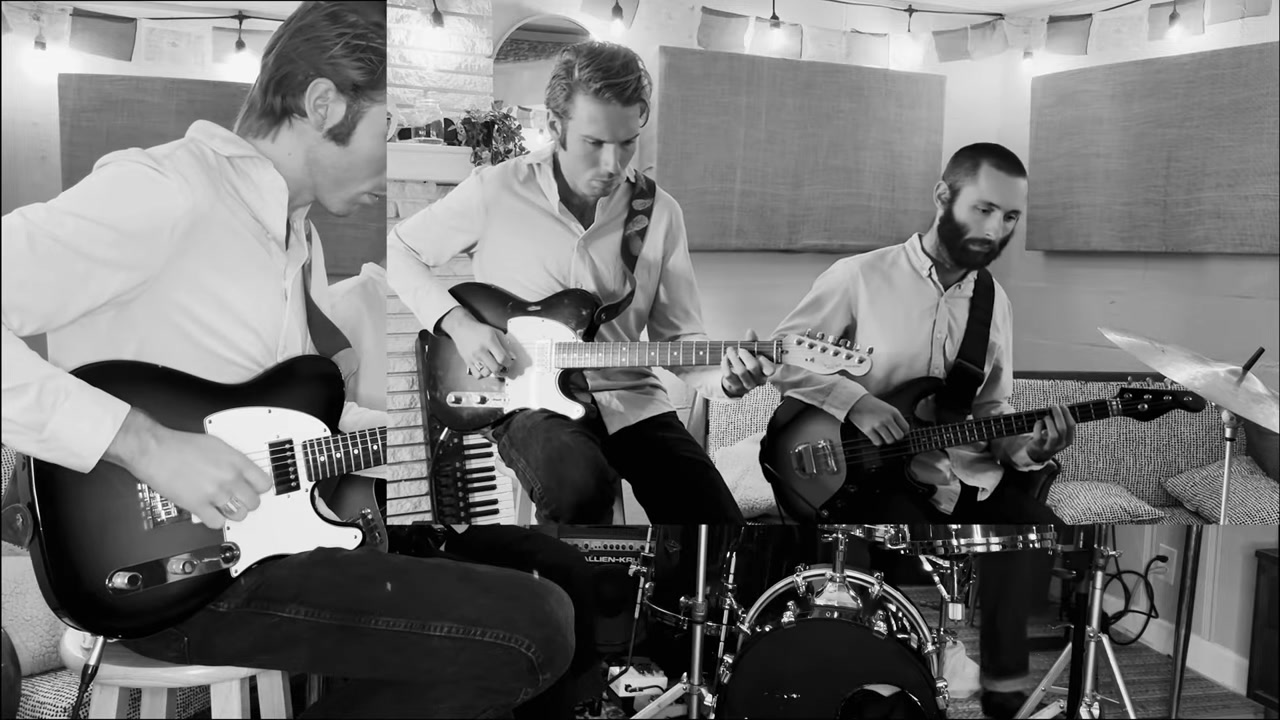
Harry teaches guitar on Tunelark. View Harry’s profile
Ready to learn with a teacher who actually listens?
If you have ever had a lesson that left you flatter than you arrived, the missing ingredient was probably not knowledge. It was attention: a teacher willing to bend the plan, draw the answers out of you, and keep the joy of playing alive while the skills come together. Harry is currently accepting new guitar students at Tunelark.
Looking for an online guitar teacher? See our full Online Guitar and Bass Lessons page for everything you need to know about getting started.
Keep reading
About Jennifer Heath
I'm Jennifer Heath, VP of Operations at Tunelark and a lifelong singer. I joined the company in 2020 and oversee much of what makes Tunelark work for students and teachers: hiring, training and supporting our instructors, student support, marketing and day-to-day operations. I started voice lessons at 7 and sang with touring choirs through my teens. Music belongs in every life, for the self-expression, the discipline, the comfort and the simple joy of it.