Beginner Guitar Tips: What Every New Player Should Know
Millions of people have picked up the guitar as beginners and hit the same questions and frustrations you’re facing now. Most of those hurdles are predictable, which means they have known fixes.
Whether you’ve just got your first guitar or you’ve been trying to learn for a few weeks, these beginner guitar tips will help you build a solid foundation and stay motivated.
Yes, Your Fingers Will Hurt, and That’s Okay
If you’ve been playing for even a few days, pressing down on the strings probably hurts. Your fingertips aren’t used to that pressure yet. This is normal, and the fix is time. Our two- and three-chord song list has a dozen songs to play while the fingertips toughen.
As you practice consistently, the skin on your fingertip builds a callus, a small patch of tougher skin that forms in response to repeated friction. Once those calluses develop, usually within 2-4 weeks of regular practice, the discomfort mostly goes away. Until then, practice in shorter sessions rather than pushing through long, miserable ones.
The dull ache of callus formation is different from sharp pain. If your wrist, elbow or hand hurts beyond normal finger soreness, talk to your teacher; technique adjustments often help quickly. If pain persists, see a doctor or physical therapist.
A lot of early soreness is tension, not calluses. Peter J. sets up the default fretting hand from scratch: where the thumb sits, why the palm stays off the neck, fingertips on their very tips, then a four-finger exercise with alternate picking to test it on every string. A lot of early frustration is an instrument slightly out of tune; our guide to tuning a guitar without guessing takes ninety seconds to fix that.
Skill video · Fretting Hand
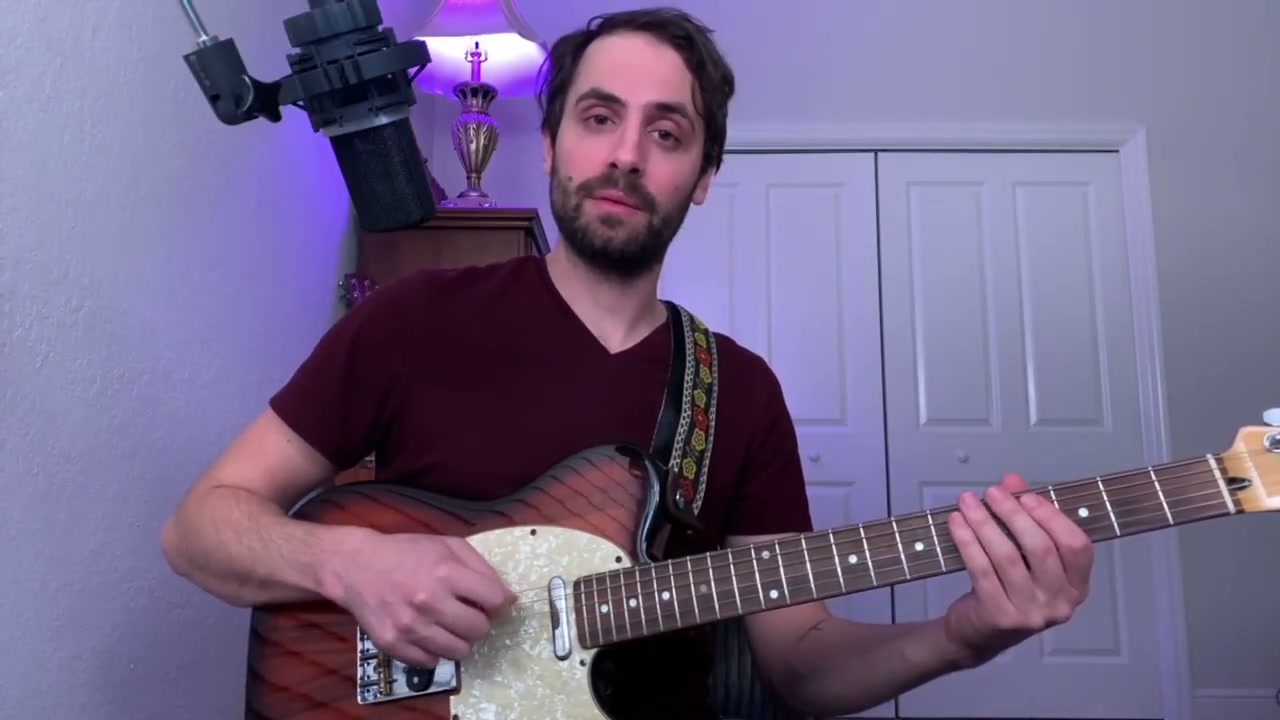
Peter teaches guitar and bass on Tunelark. View Peter’s profile
Learn a Few Chords and Play Real Songs
Learning the common chords and playing real songs early keeps many beginners going. With three chords (G, C and D) you can play dozens of popular songs, and adding E minor and A minor opens up many more.
Harry B., who teaches guitar on Tunelark, was told early in his career to start students with the fundamentals. He still treats technique, tone and time as essential, but he has beginners making music from the start, because a student who already loves the instrument is more willing to work on technique.
Ask your teacher to include real songs from the beginning. Playing something you recognize, even a simplified version, makes practice feel purposeful, and getting through a whole song shows you how far you’ve come. Many of the songs beginners want most are fingerpicked, and Fingerstyle Guitar for Beginners shows the patterns behind them.
Slow Down to Speed Up
This is one of the most counterintuitive lessons new guitarists learn: playing slowly and accurately gets you to speed faster than playing quickly and sloppily. Practice a chord transition or a riff at full speed before you’re ready and you cement the mistakes, which are harder to unlearn later.
Use a metronome (there are free metronome apps for your phone). Set it slower than you think you need. Play the passage cleanly at that tempo, then gradually increase the speed as accuracy improves. Slow practice often feels like it isn’t working at first, but it is.
Speed also comes from how far your fingers travel. Michael H. shows the habit that slows beginners down, fingers flying away from the strings between notes, and the one-finger-per-fret exercise that keeps them close and pressed down behind the note you are playing.
Skill video · Left Hand Exercise
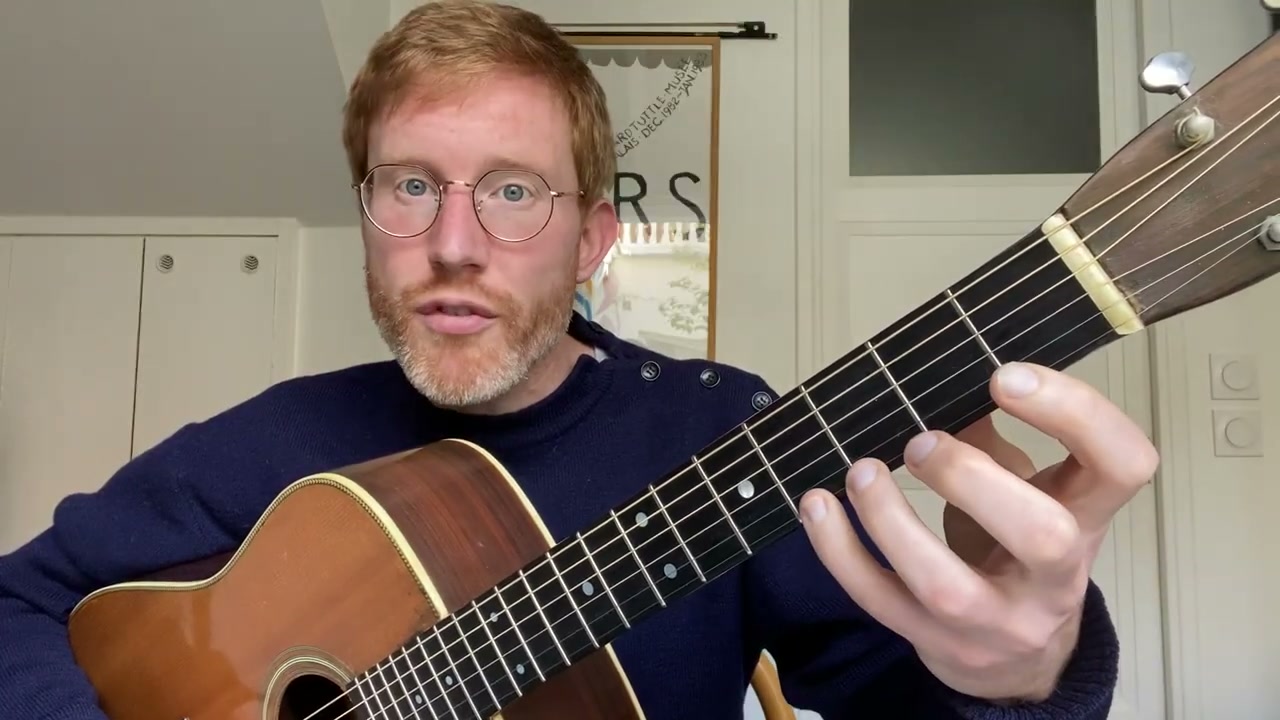
Michael teaches guitar and bass on Tunelark. View Michael’s profile
Practice Chord Transitions, Not Just Chords
Most beginners spend a lot of time getting their fingers into a chord shape, but not enough time practicing the move from one chord to another. In real songs, the challenge isn’t holding a G chord. It’s going from G to C smoothly without a gap in the music.
Isolate chord transitions in your practice. Switch back and forth between two chords for two minutes to warm up, keeping the changes as smooth as you can. Then set a timer for one minute and count the clean changes you make inside that single minute. Use the same one-minute window every day and write the number down, so you can watch it climb.
Stay Motivated by Playing What You Love
Guitar practice can feel like a grind if you’re always working on exercises and scales. Spend part of every session playing something you enjoy, even if it’s imperfect or simple. Remembering why you wanted to learn helps you stick with it.
Talk to your teacher about the music you love. Alex P., who teaches guitar on Tunelark, ties what he teaches to songs his students like, and moves them onto those songs once they have basic rhythm, strumming and two-chord progressions in hand. That connection keeps many students coming back long after the first weeks.
With consistent practice, a patient teacher and a willingness to enjoy the process, you’ll be playing songs you’re proud of sooner than you think.
How to Find a Guitar Teacher on Tunelark
Many Tunelark teachers specialize in working with new students at this stage.
1. Open the teacher list and filter by guitar.
2. Read bios. Look for teachers who explicitly mention working with beginners and who describe their teaching approach (not just their credentials).
3. Book a trial lesson with one whose profile resonates. It is $25 off that teacher’s rate for the length you choose.
After the trial, ask yourself: did the teacher meet you where you actually are, or were they running through a generic beginner curriculum?
The early weeks of any instrument are where habits get formed. A good teacher gets you started right.
Frequently Asked Questions
Should I start with an acoustic or electric guitar?
Either works. Acoustic is more portable and doesn’t require an amp. Electric is easier on the fingers (lighter strings) and many beginners find it more motivating. Choose what you’re drawn to.
How long does it take to learn the basic chords?
Most students learn the first 4–5 chords within a month. Smooth chord transitions take another 1–2 months. A simple two- or three-chord song is within reach in those first weeks, played slowly, and by three to six months most students can play a dozen of them comfortably and at full tempo.
Do I need a teacher to learn guitar?
Self-taught is possible but often slower and prone to bad habits. A few months with a teacher to establish good technique pays off for years. Many guitarists learn the basics with a teacher then continue independently.
What size guitar do I need?
Most adults use a full-size (4/4) guitar. Children need smaller sizes. Your teacher or a guitar shop can size you. Don’t buy a too-small guitar just because it seems easier.
Are calluses on my fingers normal?
Yes. Fingertips stay sore until the calluses form, and shorter, more frequent sessions get you through that stretch.
Looking for an online guitar teacher? See our full Online Guitar and Bass Lessons page for everything you need to know about getting started.
Keep reading
About Jennifer Heath
I'm Jennifer Heath, VP of Operations at Tunelark and a lifelong singer. I joined the company in 2020 and oversee much of what makes Tunelark work for students and teachers: hiring, training and supporting our instructors, student support, marketing and day-to-day operations. I started voice lessons at 7 and sang with touring choirs through my teens. Music belongs in every life, for the self-expression, the discipline, the comfort and the simple joy of it.