Best Online Violin Lessons: Finding the Right Teacher
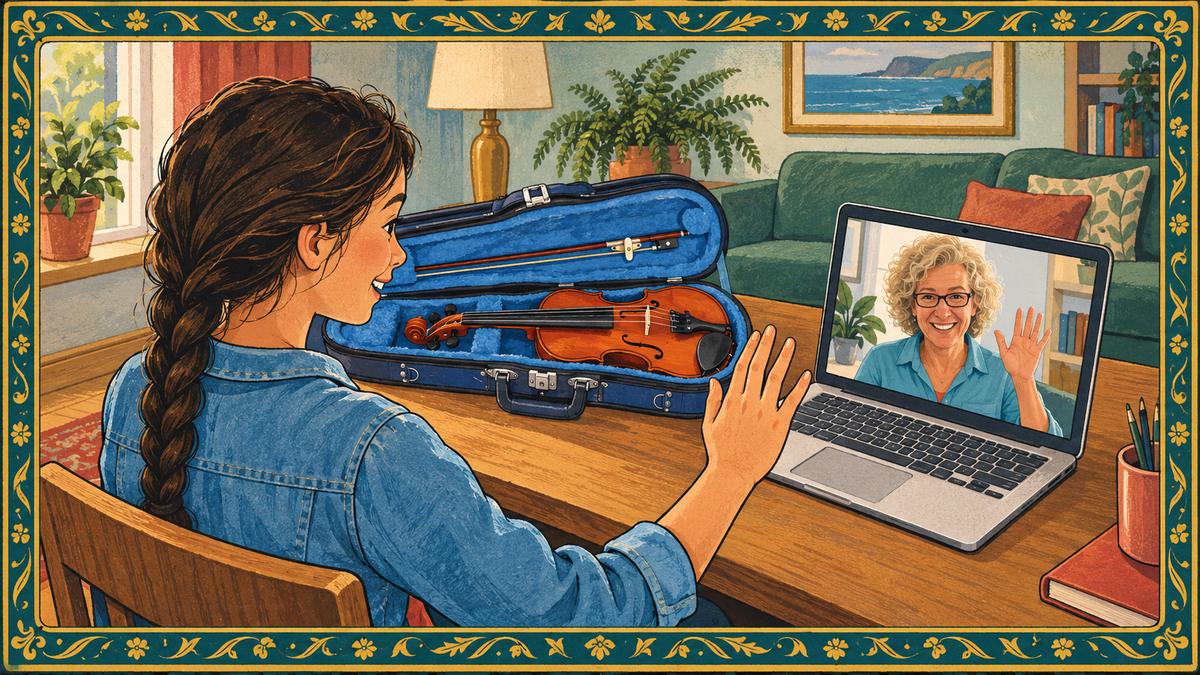
Violin is one of the most rewarding instruments to learn, and one of the most punishing if you start with the wrong teacher. The early posture habits (where your chin sits, how your bow arm moves, how relaxed your left hand is) get cemented in the first three to six months. If those habits are wrong, you’ll spend years undoing them. If they’re right, your progress accelerates from the very beginning.
The best online violin lessons, for a beginner, are about exactly this: building good fundamentals so that everything you learn later sits on top of a solid base. This guide walks through how to find a teacher who can do that, what online violin lessons can and can’t do, and what to set up on your end.
Can Violin Really Be Taught Online?
The short answer is yes, and there’s now a decade of working violin teachers and successful online students to prove it. The longer answer is that it depends on what kind of online teacher you’re working with.
Violin is, in some ways, harder to teach online than it would be in person, particularly for absolute beginners, where small hand and posture adjustments make a big difference. A great violin teacher knows how to compensate: where to position the camera, what to ask the student to do so they can see what they need to see, what to demonstrate from their own instrument, and how to give clear verbal cues for things they can’t physically adjust.
A teacher who has thought through this format will tell you, in the first lesson, where to set up your camera and what they need to see. A teacher who hasn’t will sometimes fumble through the first few lessons trying to figure it out. The first sort is who you want.
What to Look For in a Beginner Violin Teacher
Three things matter most:
Suzuki method or traditional method experience, or both. Both teaching traditions have produced thousands of excellent violinists. What matters is that your teacher has a clear methodology, not just “we’ll figure it out as we go.” Our guide to choosing between Suzuki and traditional lessons covers the questions that show which one a teacher actually uses.
Esther S. teaches violin on Tunelark and began at three. This is Caprice No. 15.
Performance · Caprice No. 15
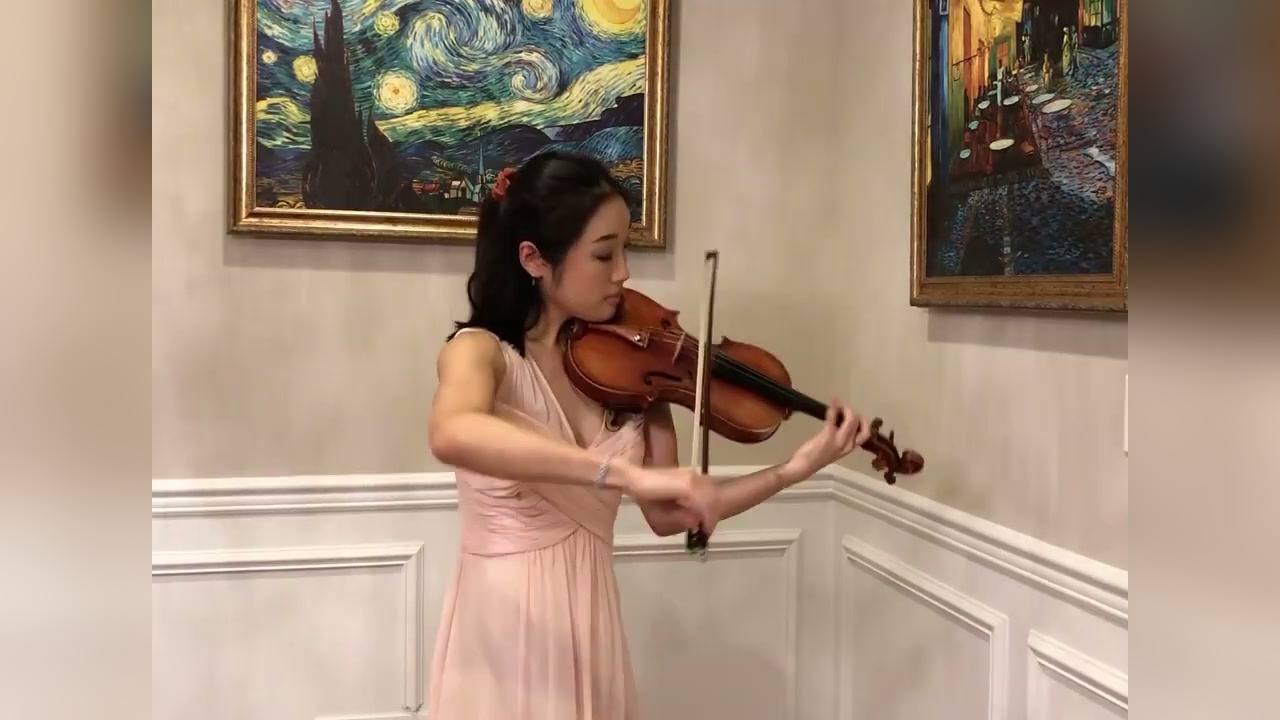
Esther teaches violin on Tunelark. View Esther’s profile
Comfort teaching beginners specifically. Some violin teachers love advanced students and find beginners frustrating. Others love starting from zero and watching a student build from nothing. You want the second kind. Read the bio. Ask about it directly.
Patience with posture and bow technique. The first six months of violin study are mostly about posture, bow grip, bow direction, and a relaxed left hand. A good teacher will spend significant lesson time on these things, even when the student wants to play “real songs.” Don’t push back. The technique work IS the path to the real songs.
What to Set Up at Home
A few small things make online violin lessons dramatically more effective:
The right size violin. This is non-negotiable. Children need a violin sized to their arm length, 1/16, 1/10, 1/8, 1/4, 1/2, 3/4, or 4/4. Your teacher should be able to tell you which size, and a local music store or online rental service can help. Playing on the wrong size violin is one of the fastest ways to develop bad habits. Our guide to renting or buying a first violin has the arm-length chart and the check that confirms the fit.
A music stand. Sheet music on a coffee table or propped against the wall is a posture problem waiting to happen.
Camera position. Your teacher needs to see your face (for jaw and chin position), your bow arm (for bow direction and parallel-to-bridge work), and your left hand (for finger position). The simplest workable setup is a laptop on a shelf or a second stand at about chest height, angled to capture you from the waist up, so the music stand stays free for the music.
A way to tune the violin. Beginners can’t tune their own violins reliably. A small clip-on tuner or a tuner app makes the start of every practice session smooth.
How Long Does It Take to See Real Progress?
Be patient. Violin is one of the slower instruments to feel comfortable on. The worst of the scratchiness usually clears in three to six months, and most beginners don’t sound “good” by their own ear until closer to a year of consistent practice.
That’s not a sign you’re doing it wrong. It’s a sign you’re learning an inherently difficult instrument. The students who stick with it are usually the ones whose teacher has set good expectations and helped them celebrate small wins along the way.
For more on the long view of music learning, our How to Stay Motivated During Music Lessons guide walks through the plateaus and breakthroughs you can expect.
The Traditions Our Violin Teachers Come From
The advice above is easier to act on with real names against it. Our violin teachers do not come from one school, and the differences are the thing worth choosing between.
Jana K. plays in the Greenville Symphony, teaches her younger students the Suzuki method, and lets adult students choose their genre, from classical and jazz to bluegrass. Brian S. is a member of the Venice Symphony, has played in theater pit bands, and holds a master’s in contemporary violin performance. Esther was concertmaster of the Oberlin Orchestra and has a particular love of teaching beginners.
A child starting at five and an adult who wants to play bluegrass at a jam are not looking for the same person. That is what choosing a violin teacher actually means, and it is why the filters matter more than a ranked list.
How to Find a Violin Teacher on Tunelark
Every Tunelark teacher is vetted by working musicians and educators for teaching quality before they can list. To find a teacher:
1. Open the teacher list and filter by violin.
2. Read the bios. Look for teachers who explicitly mention working with beginners.
3. Book a trial lesson with one or two whose profile resonates. A trial lesson is the teacher’s 30-minute rate minus $25, so you can test the fit before committing to a weekly slot.
4. If the first teacher isn’t quite right, switching is straightforward.
The right teacher pays for themselves many times over in the speed of your progress and in the foundations they help you build. Take the time to find the right one.
Frequently Asked Questions
Can adults learn violin online?
Absolutely. Many adults learn violin successfully online. With the camera where your teacher asks, they can see your bow grip, posture and left hand well enough to correct them in real time.
What size violin do I need for online lessons?
Adults typically use a full-size (4/4) violin. Children need smaller sizes based on arm length. Your teacher can help measure. Most beginners rent first to avoid buying the wrong size.
How long until I can play a recognizable song on violin?
Most students play simple recognizable melodies within 2–3 months of weekly lessons and daily practice. Playing with confidence and good tone takes longer, typically a year or more.
Do I need to read music to learn violin?
Not at first. Many teachers start by ear for the first few weeks, then introduce notation within the first few months, so that by the end of year one you are reading basic music in first position.
What’s a reasonable budget for a beginner violin?
Rental from about $20 a month is ideal for beginners. If buying, expect roughly $200 to $500 for a playable student outfit from a reputable string shop, as of 2026. Avoid very cheap violins. They’re often unplayable.
Looking for an online violin teacher? See our full Online Violin Lessons page for everything you need to know about getting started.
Keep reading
About Jennifer Heath
I'm Jennifer Heath, VP of Operations at Tunelark and a lifelong singer. I joined the company in 2020 and oversee much of what makes Tunelark work for students and teachers: hiring, training and supporting our instructors, student support, marketing and day-to-day operations. I started voice lessons at 7 and sang with touring choirs through my teens. Music belongs in every life, for the self-expression, the discipline, the comfort and the simple joy of it.