How to Help Your Child Practice Piano Without Daily Battles
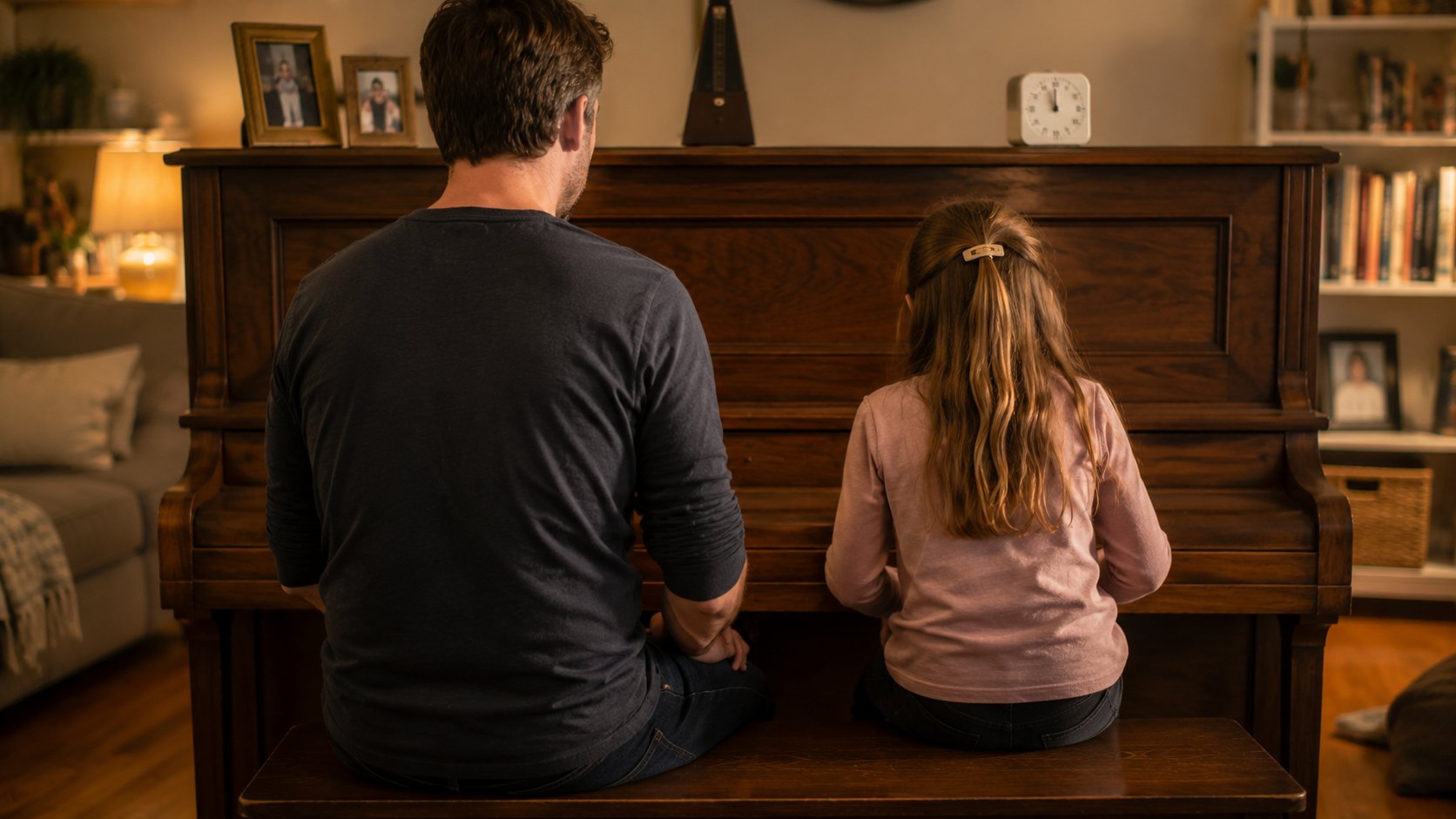
If practice has become a daily fight, you’re not failing as a parent. You’re encountering one of the most common dynamics in children’s music education, and one that has specific, fixable causes. Piano practice in particular tends to produce these battles because the instrument is highly visible at home, the practice expectations are clear, and the gap between practice and progress can feel slow.
Here’s what’s actually causing the battles, and how parents successfully navigate them.
Why Piano Practice Becomes a Fight
A few patterns recur in households where piano practice has become contentious:
The child doesn’t know what to practice. Vague instructions from the teacher (“practice your pieces”) leave kids overwhelmed. A child who can’t decide where to start usually doesn’t start at all.
The practice expectation feels enormous. Thirty minutes looks like forever to a seven-year-old. Forty-five minutes looks like a punishment. The right duration matters more than parents realize.
There’s no clear endpoint. Open-ended practice (“just keep going”) has no built-in reward. Concrete goals (“play through the first eight measures three times in a row, then you’re done”) give kids something to aim at.
Practice is the only time they touch the piano. Children who only play during scheduled practice develop an antagonistic relationship with the instrument. Children who also play for fun (improvising, making up songs, plinking around) develop affection for it.
The pressure is too visible. Correcting in real time turns practice into a performance, and a child who feels judged does not relax into the work. Sitting with an under-seven is a different thing and it helps: you are there to keep them on task and to read the assignment out loud, not to fix their playing. From about seven, listening from the next room works better than sitting at the bench.
What Actually Works
A few strategies that consistently reduce friction:
Sit with the teacher’s practice notes weekly. Take five minutes after each lesson to understand what your child should work on. Write it down. Reference it during practice. Specificity dissolves overwhelm.
Set a timer and respect it. Tell your child the number their teacher recommended, 10 to 15 minutes for a young beginner, and end the assigned work there. Anything after that is free playing, not more practice.
Break practice into chunks. Two 10-minute sessions are easier than one 20-minute session for most children. Some teachers recommend three 7-minute sessions for very young children.
Use specific, concrete goals. “Play the right hand of measures 1-8 three times in a row” beats “practice your piece.” Concrete completion is satisfying. Open-ended grinding isn’t.
Let them play for fun, too. Encourage messing around on the piano outside practice time. A child who plays for love of the sound will practice with less resistance.
Keep your reactions to a minimum. Resist the urge to correct, suggest, or even praise while they are playing. That holds whether you are sitting beside a six-year-old or listening from the kitchen. Let it be their work. Your job is to make it possible, not to coach.
What the Teacher Is Actually Asking For
Most practice arguments in a house are about content. Did you do the scales. Did you do them properly. Did you do all of it. Tony G. teaches on Tunelark and has taught full time for over a decade, and content is the part he cares about least.
“The specific exercise matters less than the mindset behind it.”
What he wants instead is small and hard to argue about:
“If you approach practice with focus, intention, and a clear goal, you can make real progress in a short amount of time.”
That is worth knowing before the next standoff, because it moves the thing you are enforcing. You are not the guarantor that the whole assignment was completed. That is the teacher’s to sort out at the next lesson, and they will. You are the person who makes a focused ten minutes possible: the bench free, the light on, nobody talking, the timer visible, and a specific small thing to aim at.
“At the end of the day, consistency and quality are what really move the needle as a musician.”
Neither of those is something a child can be argued into on a Wednesday evening. Both are things a household can make easier.
If you have never watched a teacher break a piece down, this is what “a specific small thing to aim at” looks like from the other side. TJ works from the sheet music into three note groupings, so each measure becomes something a student can finish rather than something they can only fail at.
Skill video · Learning “A Thousand Miles”
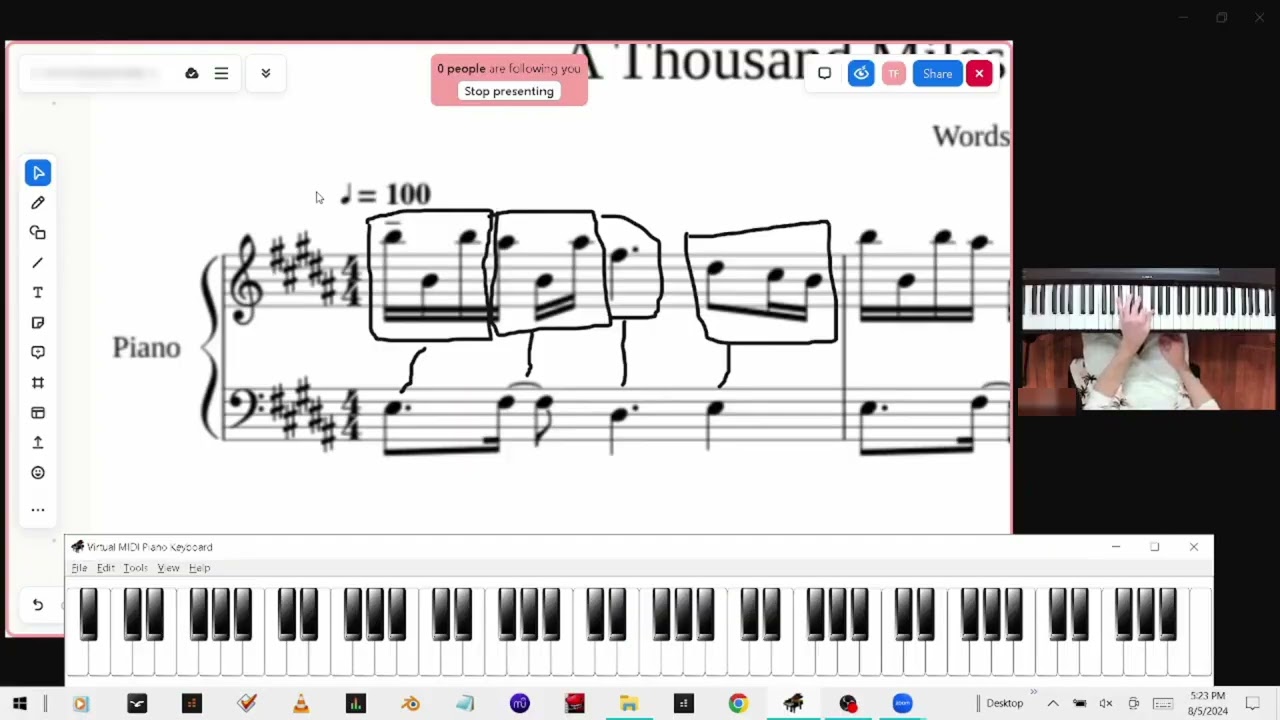
TJ teaches piano, voice, guitar and bass on Tunelark. View TJ’s profile
The “Bad Practice Day” Problem
Some days the practice just doesn’t happen. The child is tired, dysregulated, or genuinely opposed. Pushing hard on these days does long-term harm to the practice relationship.
A workable rule: if practice goes sideways, cut it short with no drama. “Let’s try again tomorrow.” Don’t lecture about consistency. Don’t withdraw privileges. The cost of one missed practice is much smaller than the cost of poisoning the long-term relationship with the piano.
For chronic problems (not occasional bad days), bring it to the teacher. Often the issue is something specific, a piece that’s too hard, a fingering that hurts, boredom with the current repertoire, that the teacher can address quickly.
When to Push and When to Back Off
A judgment call most parents face: when is the child genuinely resistant, and when do they just need a nudge?
Push gently when:
- They’re complaining but engage once they start.
- The resistance is general “I don’t feel like it” energy.
- They’ve made progress recently and you can name it specifically.
Back off when:
- Practice is producing tears or genuine distress more than occasionally.
- The child is articulating specific frustrations (a piece is too hard, they don’t understand an instruction).
- The relationship with the instrument is visibly souring.
The goal isn’t perfect adherence to a practice schedule. It’s a sustainable long-term relationship with the piano. Short-term consistency that destroys long-term love is a bad trade.
How to Talk With Your Child’s Teacher
A few questions worth asking your teacher every few months:
- “What should daily practice actually look like at this stage?”
- “Is the current repertoire well-matched to my child’s level?”
- “Are you seeing the kind of progress that says we should keep doing what we’re doing?”
- “What should I notice or not notice during home practice?”
Teachers appreciate engaged parents. They also appreciate parents who don’t try to teach during home practice. The line is helpful enabling without becoming a backseat instructor.
How to Find a Piano Teacher on Tunelark
Every Tunelark teacher is vetted by working musicians and educators for teaching quality before they can list, and many describe their work with children and parents in their bios. To get started:
1. Open the teacher list and filter by piano.
2. Read bios. Look for teachers who specifically mention working with children and how they support parents.
3. Book a trial lesson with one whose approach feels right.
4. After the trial, ask your child how they felt about the teacher. The relationship between child and teacher matters more than credentials for daily practice motivation.
Practice battles aren’t a sign you’re doing something wrong. They’re a sign that something specific needs adjusting. With clearer goals, gentler structure, and the right teacher, daily piano time can become something your child actually looks forward to.
Frequently Asked Questions
How much should my child practice piano each day?
Ages 5-7: 10-15 minutes. Ages 8-10: 15-25 minutes. Ages 11+: 25-45 minutes. The right number is the one they will do daily, which is why the duration matters.
Should I sit with my child during practice?
For very young children (under 7), often yes: close enough to keep them on task and to read the assignment, with the correcting left to the teacher. For older children, less is more. Be available, but let practice be their work, not a parent-led activity.
What if my child wants to quit piano entirely?
Talk to the teacher first. Most quit-thoughts have specific causes (a hard piece, a poor teacher fit, life stress) that can be addressed. If after addressing the issue your child still wants to stop, consider a planned pause rather than a permanent quit.
How do I motivate practice without bribes?
Bribes can work short-term but tend to undermine intrinsic motivation. Better: connect practice to specific musical goals your child cares about. “If we practice this section three more times, we can play through the whole song” works better than “if you practice, you get screen time.”
What if practice is producing real distress?
That’s a signal to stop and reassess with the teacher. Daily distress around piano isn’t sustainable and isn’t healthy. Find out what’s actually wrong, usually it’s something specific and fixable.
Looking for an online piano teacher? See our full Online Piano Lessons page for everything you need to know about getting started.
Keep reading
About Jennifer Heath
I'm Jennifer Heath, VP of Operations at Tunelark and a lifelong singer. I joined the company in 2020 and oversee much of what makes Tunelark work for students and teachers: hiring, training and supporting our instructors, student support, marketing and day-to-day operations. I started voice lessons at 7 and sang with touring choirs through my teens. Music belongs in every life, for the self-expression, the discipline, the comfort and the simple joy of it.