The Voice Practice Routine That Actually Keeps You Singing
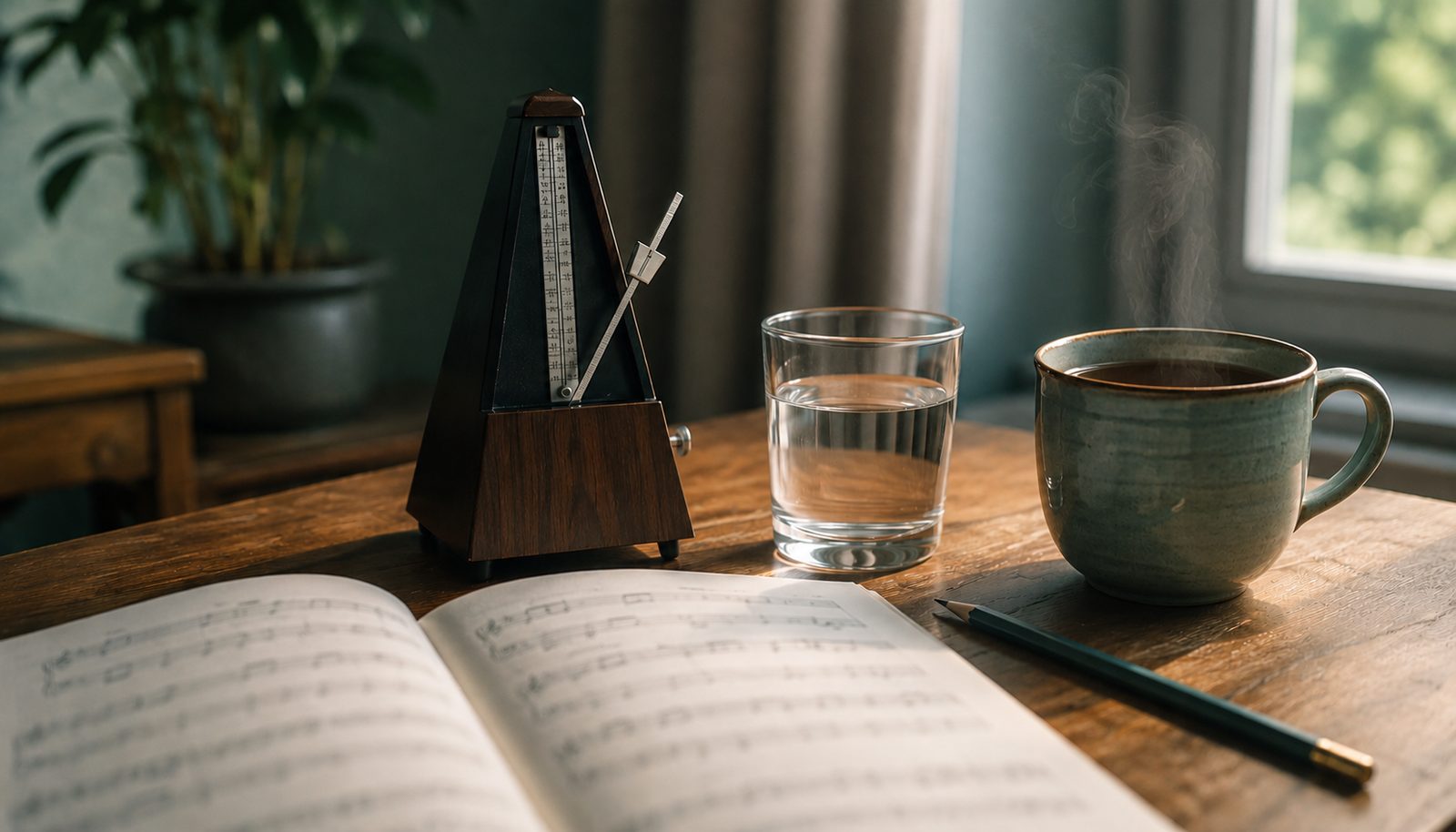
Most advice about practicing rests on a hidden assumption: that the hard part is discipline. Sit down, put in the hours, push through the boring parts, and progress will follow. It’s an appealing story, and for the voice it’s also an incomplete one. What we know about how expertise is built, across music, sport, and skilled performance generally, points somewhere more interesting. What separates people who keep improving from people who plateau or quit isn’t raw hours. It’s the quality of those hours, and whether the routine is one a person can sustain physically and mentally over the long run.
Alawna M., a voice teacher at Tunelark with a BFA in musical theater, has built her entire approach to practice around exactly that distinction. She isn’t interested in the most demanding routine a student can tolerate. She’s interested in the one they’ll actually return to: the one that protects the instrument and keeps the singer genuinely curious. The result is practice that is individualized, vocally healthy, and built to produce a small amount of high-quality effort rather than a large amount of strain.
For singers in particular, this matters more than it does for almost any other musician, because the instrument is living tissue. A pianist’s keys don’t get tired. A singer’s vocal folds do. Practicing the voice well is as much an exercise in physiology and pacing as it is in musicianship, and that reality runs through everything Alawna recommends.
A routine built for one singer, not for everyone
Ask Alawna for the ideal practice routine and she’ll gently decline the premise. There isn’t one. “I personally curate a unique practice routine for every student,” she says, and she means something more thorough than swapping out a few exercises.
Her routines reach well beyond scales and song repetitions. “Usually, these practices include targeting vocal health and agility, technique-based vocal exercises, general health recommendations like a good sleep schedule and nutrition, studying (homework, rehearsing, journaling) and so much more.” For Alawna, sleep and hydration aren’t separate from singing: they are part of maintaining the instrument, every bit as much as a warm-up, because the vocal folds depend on systemic hydration and rest to function and recover. And she places journaling alongside rehearsing, treating reflection as a form of practice in its own right.
Vocal stamina, tone, and agility are downstream of physical condition. A tired, dehydrated, or run-down singer is working with a compromised instrument no amount of drilling can fully overcome. By folding rest and nutrition into the practice plan, Alawna is treating her students the way a good coach treats an athlete: as a whole person whose performance depends on more than reps. A voice teacher with an exercise physiology degree takes that further in what singers can learn from athletes.
But the deepest organizing principle behind her routines isn’t physiology. It’s ownership. “I want to be sure that the student is excited and inspired to work on their materials outside of our session, and to feel they can trust themselves to be their own teacher as well.”
Being their own teacher is where her instinct meets the research on how skill is built. A lesson is thirty to sixty minutes a week, and the rest of the week belongs to the student. In Gary McPherson and Barry Zimmerman’s 2002 chapter on self-regulation of musical learning, the students who progress most are typically the ones who set their own practice goals, watch what each attempt actually produces, and change the plan themselves rather than waiting to be told what to fix. The difference shows up in what a singer does when something is not working, not in how long they are willing to sit at it. A routine that only functions when the teacher is in the room has failed at the one thing practice is supposed to develop, the singer’s capacity to guide themselves. Alawna designs for that independence, and she designs for desire, because a routine a student is genuinely excited to do is the only kind that survives a busy week.
The step almost everyone skips, and why the voice pays for it
If there’s one part of practice Alawna wishes more singers respected, it’s the part that happens after the singing stops.
A full warm-up and cool-down sequence, with every exercise from lip trills to the final wind-down demonstrated by one of our teachers, is in Vocal Warm-Up Exercises. The cool-down half is the part this section is about. Beginners are at least told to warm up, and plenty of them skip it anyway. Almost nobody mentions the cool-down at all, which is how it goes missing even from practice that is otherwise careful.
Most students skip the cool-down after practicing, rehearsing or performing, she observes, and in her view it is one of the most consequential omissions a singer can make. Cooling the voice down, resetting it and resting it are what keep it healthy and working.
Cool-downs are widely recommended by voice teachers and clinicians, and the early research on them suggests they help the voice recover. Singing is athletic work performed by small, delicate muscles and tissues. During a demanding session, the vocal folds collide hundreds of times per second and the surrounding musculature works hard to sustain that effort; afterward, like any worked muscle, they benefit from a gentle wind-down rather than an abrupt stop. Voice professionals often ease the instrument back to baseline with light, low-effort sounds (gentle humming, lip trills, or phonating through a straw) that let the system recover without strain. Athletes cool down. Dancers cool down. Singers, perhaps because the voice feels so effortless in ordinary life, tend to close their practice the instant the last note lands and walk away while the instrument is still warm and working.
Alawna makes the point stick with an analogy any driver understands. After a two-hour drive with the tank near empty, you stop, switch the engine off for a while and refill before going on. The voice, like the car, can’t keep running on fumes. Cooling down and resting are how a singer refills the tank. Skipping that step leaves the voice tired today, and fatigue and tension that aren’t released tend to carry over from one session to the next, quietly undermining tone, range, and stamina over time.
This is also where Alawna’s two priorities, vocal health and staying interested, reveal themselves as the same priority. A singer whose voice is chronically tired and strained won’t stay excited about practice for long; effort that hurts is effort you avoid. A singer who treats the instrument with care, the heart of any daily vocal health routine, stays comfortable, stays capable, and stays motivated. Protecting the voice is protecting the habit.
Put the hard part on a clock
When Alawna is asked for the single small adjustment that makes the biggest difference, she does not say practice more. For the most demanding material, she says practice less, and more deliberately. Her tweak is simply “setting time limits for practicing.”
The problem she’s solving is one nearly every ambitious singer will recognize. You’re working a song with a high belt, you can’t quite land the note, so you go after it again. And again. And again. It feels like dedication. Alawna sees what it actually produces: “it can cause strain, tension, frustration, and overall dissatisfaction with the piece.” This is the trap of high-intensity repetition for the voice: each effortful attempt on a tired instrument is lower in quality than the last, which fuels more frustration, which provokes still more strained attempts. The effort works against itself, and the voice absorbs the cost.
Her structure breaks the loop. “I recommend students practice for about 30 minutes to an hour” (roughly the length of a typical voice lesson), beginning with functional work: “rehearse functional exercises (warm-ups, vocal techniques, trying out different vocal qualities and exploring registers safely, etc.), then attempt to sing the song they are working on up to 3 times max.” That thirty to sixty minutes is the whole session, warm-up and cool-down included, and a beginner can start at fifteen to twenty minutes a day, five or six days a week, lengthening it as stamina builds.
Three attempts is the cap on the hardest material, which runs against the instinct of every motivated student. The logic works on two fronts. Physiologically, a properly warmed-up voice gets a few high-quality cracks at the challenging passage and then stops before fatigue and tension set in. And in terms of how skills are actually learned, more massed repetition in a single sitting yields diminishing returns; durable progress comes from distributed practice, focused high-quality reps spread across many days, far more than from hammering the same phrase into submission in one marathon session. The spacing between practice days is not lost time. It’s part of how the learning consolidates.
The three-attempt rule teaches a mindset, too. Alawna is showing her students that mastering a difficult passage isn’t a battle to be won today through sheer persistence. It’s the product of showing up consistently, with a healthy and ready voice, over many days. The time limit isn’t a restriction on ambition. It’s the structure that keeps ambition from burning itself out. Just as importantly, it lets a student leave the session with the song still feeling exciting rather than exhausting, which is exactly what brings them back to it tomorrow.
The hard part that ends up on the clock is often the register flip. This is how Alawna teaches it: find the chest voice, find the head voice, then crack between them on purpose until the crack is yours to control.
Skill video · Vocal Flips
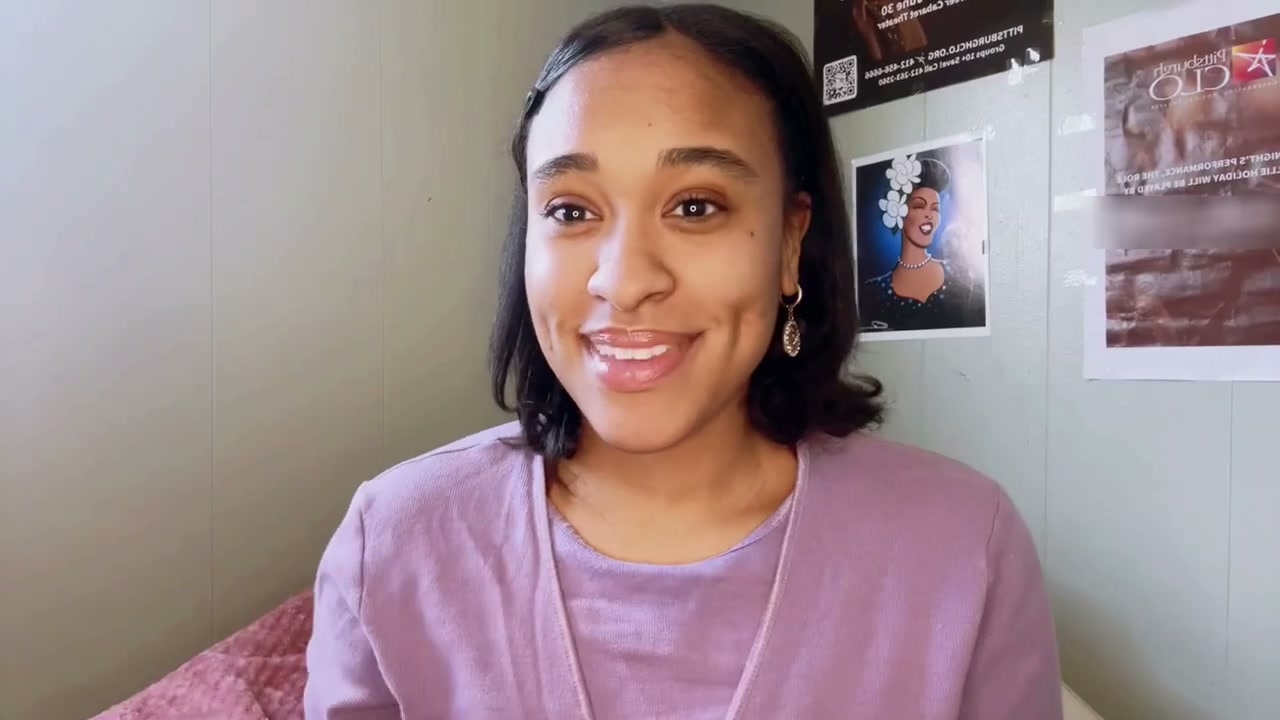
Alawna teaches voice on Tunelark. View Alawna’s profile
How to build a routine you’ll actually keep
If one thread connects Alawna’s advice, it’s that a good practice routine is engineered to be sustainable, for the voice and for the singer’s motivation, which turn out to be the same thing. A routine that leaves you strained and discouraged won’t survive the week, however disciplined you are. A routine that keeps your instrument healthy and your interest alive is one you’ll still be doing months from now, and months of consistent, quality practice is where real progress actually lives.
So when you sit down to shape your own practice at home, borrow her three moves. First, make it yours: a plan copied wholesale from someone else rarely sticks, while one built around what excites you and what your voice specifically needs that week becomes something you want to return to. Treat practice as a chance to coach yourself, to notice, experiment, and adjust, rather than a list of orders to obey.
Second, never skip the cool-down. It’s the least glamorous part of practice and the easiest to drop when you’re tired and ready to be done. But it’s the difference between a voice that’s ready to sing again tomorrow and one quietly stockpiling fatigue. Ease the instrument down gently, and refill the tank before you park the car.
Third, put the hard material on a clock. When a passage isn’t cooperating, more repetition is rarely the answer; it usually just layers on tension. Warm up well, explore your range safely, give the challenging song a small number of focused attempts, and then stop while it still feels good. You’ll come back tomorrow eager rather than discouraged, and that eagerness, repeated across many days, carries a singer further than any single heroic session ever could.
Frequently Asked Questions
How should I structure a singing practice routine?
Begin with gentle warm-ups, move into technical exercises, then work on songs, and finish with an easy cool-down. A consistent order helps your voice respond well and protects it from strain.
How long should I practice singing each day?
Alawna recommends about thirty minutes to an hour, warm-up and cool-down included, and fifteen to twenty minutes a day is a fine place for a beginner to start. The voice is a physical instrument, so shorter, regular sessions are safer and more effective than long, occasional ones.
Do I need to warm up before every singing practice?
Yes. Even a few minutes of lip trills and gentle scales prepares your voice, improves how it responds, and lowers the risk of strain.
How often should I practice singing to improve?
Most singers progress well practicing on most days of the week. Consistency matters more than length, and rest days give your voice time to recover.
Why isn’t my singing improving even though I practice?
Unfocused repetition is a common reason. Practicing with a clear goal, good technique, and feedback from a teacher tends to produce faster progress than simply singing through songs.
About Alawna
Alawna’s relationship with singing began almost by accident. She joined the choir in fourth grade, initially to get out of math class, and found her love of singing there. That early spark grew into a career: musical theater in high school, followed by a BFA in the field, and eventually teaching.
Her favorite material to share reflects a performer’s ear for what makes a voice come alive: a unit on pop and rock technique built around riffing, runs and vocal flips, the devices that color a song and make a student’s version of it their own. It’s the same instinct that runs through her practice philosophy: singing should be expressive, individual, and genuinely enjoyable, not a grind.
What keeps her grounded is a sense that she’s still learning, too. She says the skills she prizes most came from her students rather than from her degree or professional experience, and she is glad to still be a student herself. And she has come to believe there is no single formula that fits everyone, because each student arrives with their own profile and learning style.
Performance · Don’t Dream It’s Over

Alawna sings Don’t Dream It’s Over. View Alawna’s profile
Want a practice routine you’ll actually look forward to?
If your practice has started to feel like a chore, or if you’ve ever worn your voice out chasing the same note over and over, Alawna’s approach may be the reset you need. She builds routines around vocal health, smart pacing, and the kind of curiosity that keeps you coming back, all while teaching you to become your own best coach in the hours between lessons. If a sustainable, genuinely interesting practice routine sounds like what you’ve been missing, Alawna is currently accepting new students at Tunelark and works with singers who want to build habits that last.
Looking for an online voice teacher? See our full Online Voice Lessons page for everything you need to know about getting started.
Keep reading
About Jennifer Heath
I'm Jennifer Heath, VP of Operations at Tunelark and a lifelong singer. I joined the company in 2020 and oversee much of what makes Tunelark work for students and teachers: hiring, training and supporting our instructors, student support, marketing and day-to-day operations. I started voice lessons at 7 and sang with touring choirs through my teens. Music belongs in every life, for the self-expression, the discipline, the comfort and the simple joy of it.