Music Practice Routine: A Realistic Template for Adult Learners
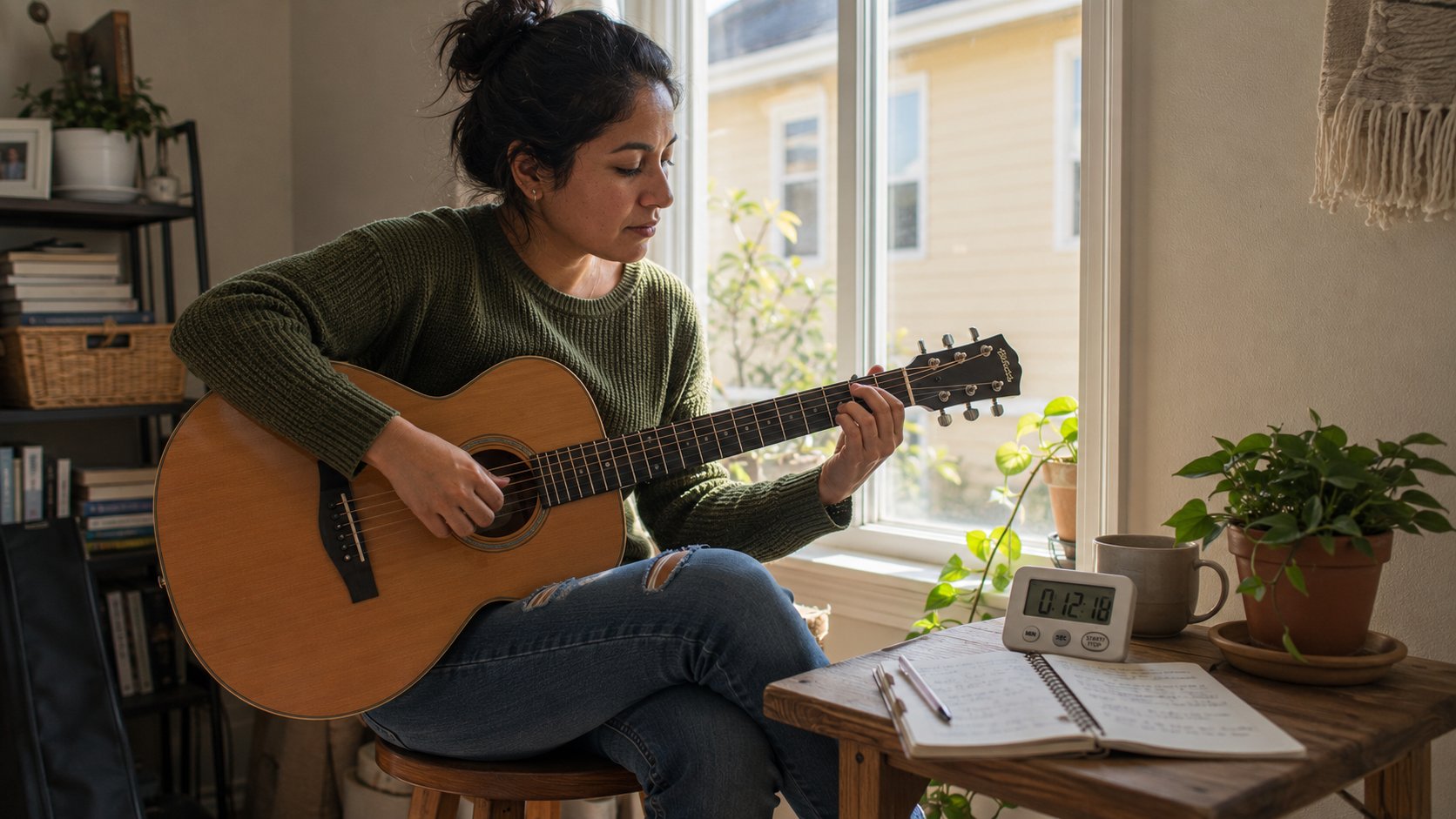
The advice most adult music students get about practice is built for the wrong audience. “Practice an hour a day” assumes you have an hour. “Practice in the morning when your mind is fresh” assumes your mornings aren’t already triple-booked. “Focus deeply for the whole session” assumes you can isolate from a household, work pings, and the rest of life.
Here’s a practice template designed for the actual lives most adult learners are living, broken into 20-minute blocks that fit into a working life and produce steady progress.
The Core Principle: Frequency Over Duration
The single most important rule of adult practice: short daily contact beats occasional long sessions. A night of sleep, and not simply the passing of a day, is part of what turns a session into a lasting gain. In a 2002 Neuron study by Walker and colleagues, people who had learned a finger-tapping sequence were about 20 percent faster after a night of sleep, with no loss of accuracy, while an equal stretch of time awake produced no significant gain. That was a laboratory task rather than a sonata, but it is one reason practice spread across more days tends to hold better than the same minutes crammed into one sitting.
Twenty minutes a day, six days a week, comes to about two hours, roughly what one long Sunday session would give you. The daily version produces more progress, because each short session gets consolidated overnight before the next one, while a week is long enough for the edge to come off whatever you gained last time. Distributed practice is retained better than the same total time massed into a single sitting, and that gap is what this routine is built around.
If you can only do 15 minutes most days, that’s still better than 75 minutes on Saturday. If you can do 30 minutes most days, even better. But the floor of “anything daily” is more important than the ceiling of “long sessions when possible.”
The 20-Minute Practice Template
A workable 20-minute session, applicable to most instruments:
Minutes 0-3: Warm-up. Whatever’s appropriate for your instrument, scales, long tones, finger exercises, a simple piece you know cold. The goal is to ease in physically and mentally, not to push.
Minutes 3-8: Technique focus. A specific technical thing your teacher has you working on. Often this is the hardest five minutes of practice. The work that’s not fun but builds the foundation everything else stands on.
Minutes 8-15: Repertoire work. The piece or pieces you’re learning. Focus on small sections: eight measures at a time, repeated until they’re solid, then moving on. This is where most real progress happens.
Minutes 15-20: Free play. Improvise, play a piece you love, mess around. This is the reward, the part that reminds you why you started. Don’t skip it.
This template handles instruments from piano to guitar to voice with minor variations. Your teacher can customize it for what you’re specifically working on.
The technique block is where a metronome earns its place, and the useful version is not the one that clicks on every beat. Lucas, a saxophone teacher, recorded this exercise for the Tunelark channel: the click sounds only on the first beat of every other measure, so you have to hold the tempo yourself in between, which is the skill you are trying to build. Nothing about it is specific to saxophone.
Skill video · Practicing with a Metronome
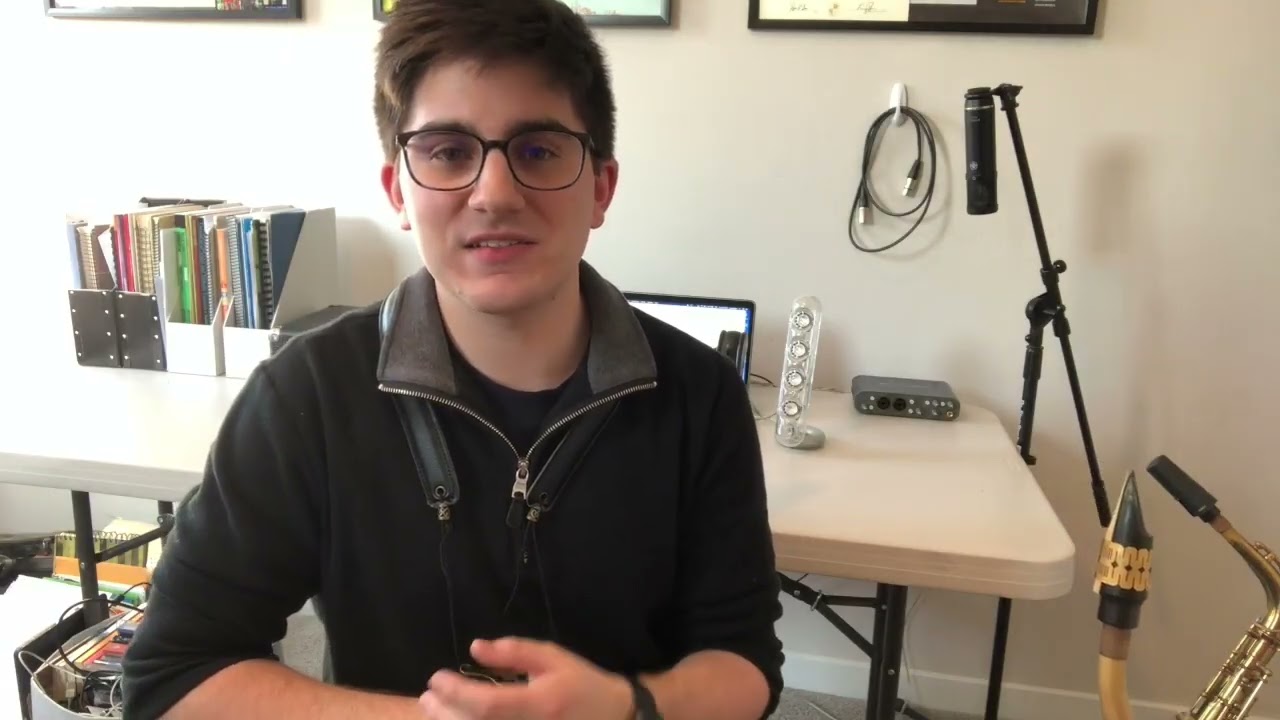
Lucas recorded this lesson for the Tunelark channel.
What to Do When You Have Less Time
Real life will sometimes give you less than 20 minutes. Two viable shortened templates:
The 10-minute version: Two minutes warm-up, six minutes on the hardest part of your current piece, two minutes of free play. This is enough to maintain progress on a busy day.
The 5-minute version: Pick one tiny thing, one technique exercise, one short passage you’re working on, one chord transition, and do it well. Five focused minutes beats no practice at all.
Don’t skip practice entirely on busy days unless you genuinely have nothing. Even a few minutes maintains the daily rhythm that compounds.
What to Do When You Have More Time
On days when you have more than 20 minutes, the question is how to use it well. What follows is the pattern teachers typically see in adult students rather than a set of measured thresholds, because where your own attention gives out depends on the person, the task and the day:
- 20 minutes: high-quality focused practice.
- 40 minutes: still very productive if you take a short break in the middle.
- 60 minutes: workable, and most adult amateurs get more out of the same hour split into two blocks with a break between them.
- 90+ minutes: past the point where most adult amateurs hold their focus, so returns fall off and tired practice starts baking in the errors it was meant to fix. Split it into two sessions across the day.
If you have an hour, do two 25-minute sessions with a 10-minute break, rather than one 60-minute push.
When to Practice
Less important than people assume. The best time to practice is the time you’ll actually do it. A few patterns that work for different adult schedules:
Morning before work. Pros: fresh mind, quiet house, builds momentum for the day. Cons: requires early waking, can crash if the rest of the day is intense.
Lunch break. Pros: forced mental reset from work, daylight energy. Cons: requires private space and time, can feel rushed.
Evening before dinner. Pros: transition ritual between work and family, mentally available. Cons: fatigue may have set in already.
Late evening. Pros: quiet, no interruptions, often the only available window for parents. Cons: easy to skip when tired, possible noise issues for shared walls.
Most adult students find one window that works for their specific life and stick with it. Consistency of timing helps build the habit.
What Quality Practice Actually Looks Like
A few markers of effective practice, each paired with the habit it replaces:
- You know what you’re working on before you start. Showing up without a plan is half-practice at best, so take 30 seconds at the start to decide.
- You’re working slower than performance tempo for hard sections. Speed mistakes get baked in. Slow work transfers up to tempo cleanly.
- You’re repeating small chunks, not whole pieces. Start-to-finish run-throughs rehearse everything you can already do at the expense of the parts that need work.
- You stop when something is right, not when you’ve used up your time. End sessions on a small success.
- You take real breaks when concentration breaks, and you stop for pain. Pushing through fatigue builds bad habits, and pushing through pain invites injury.
- Your phone is in another room. A single notification can cost you several minutes of refocusing, and a short session cannot afford that.
Tony G., who teaches guitar on Tunelark, was asked what makes a short session productive.
“What matters most is the quality of the practice, not the length of the practice.”
In practical terms, he says, that means deciding on one thing before you start, whether a chord change, a strumming pattern or a hard passage, and staying fully on it. Quality practice is a learnable skill in itself. Your teacher can help you develop it over time.
How Often to Reassess
Every few weeks, ask yourself:
- Am I actually practicing the amount I said I would?
- Is the template working for me, or do I need to adjust it?
- Am I making the kind of progress I’d hoped for?
- Is something not working that I should bring to my teacher?
Practice routines need to evolve. A template that works for month one may not work for month six. Stay responsive.
How to Find a Music Teacher on Tunelark
If you’re starting from scratch and want a teacher to design your practice routine with you:
1. Open the teacher list and filter by your instrument.
2. Read bios. Look for teachers who specifically mention working with adults.
3. Book a trial lesson with one whose approach feels practical and realistic.
4. After the trial, ask: did the teacher seem like they understood adult life and built realistic expectations around it?
The right practice routine, combined with the right teacher, makes progress feel less like a grind and more like a habit. Twenty minutes a day, most days, year after year. That’s what builds real musicians.
Frequently Asked Questions
What if I can only practice three or four days a week?
Better than nothing, and real progress still happens, but slower than five or six days a week would produce. Aim for five or six days even if some of them are only 10 minutes. Consistency matters more than duration for the brain’s motor learning systems.
Should I always practice at the same time?
It helps build the habit if you can. But the right time is the time you’ll actually do it, if your schedule varies, varying practice times is better than skipping days.
Do I need to practice on weekends?
Five or six days a week is the target, so one or two rest days fit inside it. If you need a weekly day off for sanity, take it, and treat it as a planned rest day, not a missed day.
How long should I expect to practice to make real progress?
15-20 minutes a day, five or six days a week, produces steady progress for a beginner on most instruments, and 30-45 minutes suits most adults after the first year. 45-60 minutes accelerates things, but with diminishing returns. Quality and consistency matter more than total time.
What’s the most important thing to focus on if I only have a few minutes?
The hardest part of whatever you’re currently working on. Tackle the most difficult section for those few minutes, not the easy stuff you can already play.
Keep reading
About Jennifer Heath
I'm Jennifer Heath, VP of Operations at Tunelark and a lifelong singer. I joined the company in 2020 and oversee much of what makes Tunelark work for students and teachers: hiring, training and supporting our instructors, student support, marketing and day-to-day operations. I started voice lessons at 7 and sang with touring choirs through my teens. Music belongs in every life, for the self-expression, the discipline, the comfort and the simple joy of it.