Singing Is Just Talking on Pitch: How One Voice Teacher Helps a Self-Conscious Singer Let Go
Almost everyone who signs up for their first voice lesson arrives a little tense. They have rehearsed an apology in their head, something like “I’m probably going to be terrible,” and they are ready to deliver it the second they are asked to make a sound. That nervous tension is so common that experienced voice teachers expect it. What separates a good first lesson from a discouraging one is what the teacher does with it, and whether they understand where it actually comes from.
Sydney H. teaches voice at Tunelark, and she has thought carefully about why the first time someone sings for another person can feel so exposed. It is a question she gets to test constantly, because a good share of her students arrive having not sung in front of anyone in years. Her experience is useful precisely because she does not treat the nervousness as a character flaw to be talked out of. She treats it as information about how human beings are built, and then she has a specific, practical way of helping a singer move through it.
The fear is older than the singing
Sydney starts somewhere unexpected, not with breath or posture but with a fact about people. “We humans are extremely sensitive to rejection,” she says. “It’s an understandable survival instinct, and it can be very useful in lots of situations.” One common explanation is that being cast out of the group was dangerous for most of human history, so we are wired to watch closely for any sign that we are being judged or pushed away.
That instinct, useful as it is, does something particular to singers. “When it comes to singing,” Sydney says, “that rejection sensitivity can often hold us back.” And it holds singers back more than it holds back, say, a beginning pianist, for a structural reason she describes clearly. “When you’re playing an instrument, you can kind of hide behind it a little bit.” The instrument makes the sound, not the player. A guitarist can blame a buzzing string or an unfamiliar fret. The instrument absorbs some of the exposure.
A singer has no such buffer. “With singing, it’s very different,” Sydney says. “The sound is coming directly from you. You are the instrument.” There is nothing between the singer and the listener, no wood, no strings, no keys to point to. That is why, in her experience, “singing can feel much more vulnerable than playing an instrument” for a great many people, and why she calls it more intimate.
What makes Sydney’s framing distinct is her insistence that this vulnerability is not something we are born with. It is learned, and usually learned young. “Most children will sing for fun without a care in the world,” she points out. “But all it takes is one perceived rejection in response to our singing,” even a tiny one like a facial expression or a snide remark, “to make many of us feel like singing isn’t safe. And this is especially true when it happens as we’re growing up, as it so often does.” A single discouraging moment in childhood is often enough to install a lifelong flinch.
And the flinch is not only emotional. It shows up in the body, which is the part that matters most for actually singing. “As soon as we learn that singing isn’t safe, we immediately treat it that way,” Sydney says. “And that almost always involves tension. We brace our bodies to protect ourselves, and in the process, we prevent our voices from being free.” Then the cycle closes on itself: the tense voice wobbles, the wobble confirms the fear, and the singer tightens further. Understanding that loop is the first step out of it, and it reframes what a nervous new student is really dealing with. The problem is not a lack of talent. It is a protective habit, and habits can change. It is a different starting line than most people picture when they imagine what beginning music lessons are really like.
Permission to make an ugly sound
If the trouble starts with self-judgment, Sydney’s first move is to take judgment off the table entirely. “One of my goals in the earliest lessons,” she says, “is to help students give themselves permission to make sounds without immediately judging whether they’re ‘good’ or ‘beautiful.'”
In practice that means the opening lesson can sound, to an outsider, faintly ridiculous. “We usually spend much of the first lesson making sounds that, for many people, feel extremely silly, and maybe even ugly,” Sydney says. This is deliberate. A student who is allowed to be silly, who is in fact encouraged toward it, cannot simultaneously be guarding against imperfection. The silliness is the off-ramp from self-consciousness. By the time a singer has made a few cheerfully ugly sounds and the room has not ended, the question of whether they sound good has quietly lost its grip.
From there she anchors the singing to something the student already does effortlessly all day long: talking. “I listen to the way a student speaks, and I try to help them use that as their baseline, especially in contemporary styles,” she says. “It can feel much less scary to think about singing as simply talking on pitch, at least at first.” It is a small reframing with a large effect. A student who believes singing is a separate, special skill they have to switch on tends to clench, performing an idea of how a singer is supposed to sound. A student who believes they are just talking, only on pitch, tends to relax into something that is already theirs.
Sydney sees a lot of new students arrive carrying exactly that first belief. “So often, new students come into lessons with the idea that their singing needs to be radically different from their speaking, and I try to remove that,” she says. Most of us are already expressive when we talk: we get louder when we are excited, we soften when we are tender, we land on the words that matter. That expressive instinct is most of what good singing needs. “If we can harness that in singing,” Sydney says, “a lot of the time our muscles already know what to do.”
The result of taking that pressure off is what she finds genuinely exciting to watch. “When we free ourselves from the idea of ‘I’m turning on my singing voice now,’ and instead focus on using natural expression as a window into free sound, it’s amazing to hear the ease and discoveries that start to show up.” And it reshapes what a lesson even is. “That helps students learn that lessons aren’t a place where they have to prove they can sing,” she says. “They’re a place where we can safely explore what their voice already knows how to do.” For anyone wondering what those first low-pressure sessions actually involve, it helps to know what to expect from a first online voice lesson before you start.
The ugliest permitted sound is also one of the most useful. Sydney’s twang exercise starts from a baby’s cry, a loud sound the body makes without straining, and then dials it back until it is just enough to carry.
Skill video · Twang
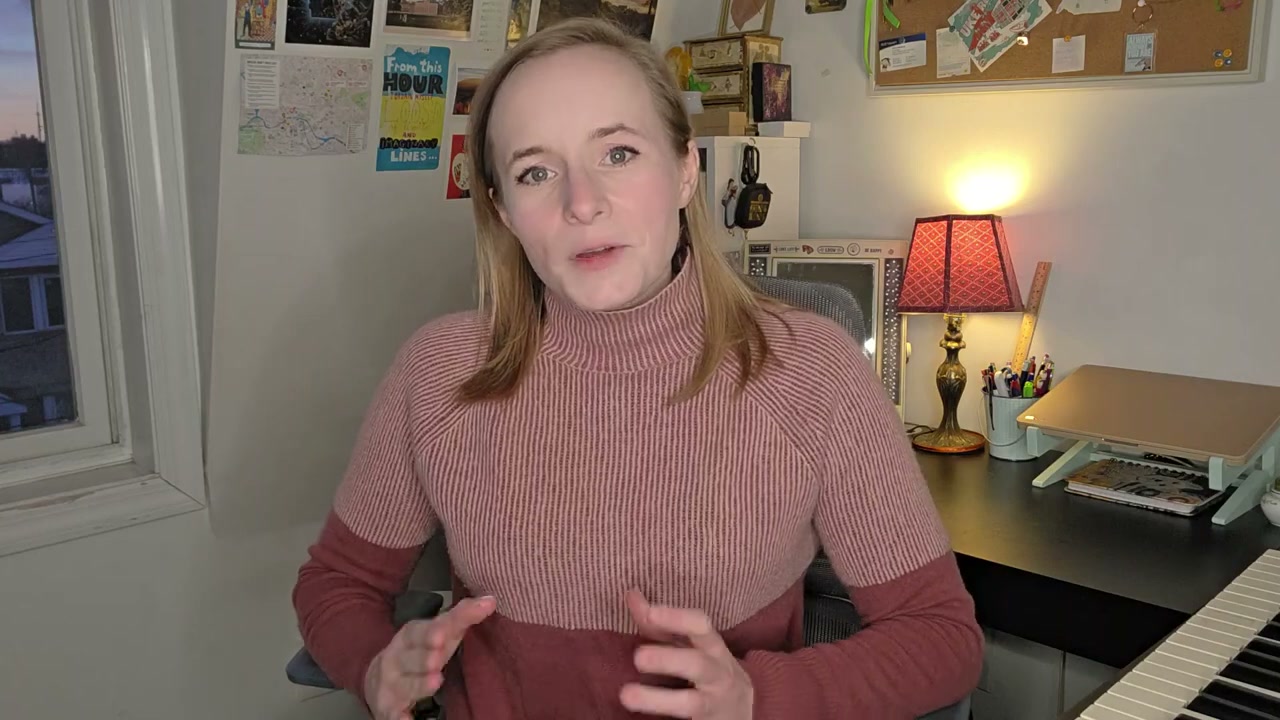
Sydney teaches voice on Tunelark. View Sydney’s profile
When the focus shifts from sounding good to meaning it
The deepest part of Sydney’s approach shows up with the students who have been away from singing the longest, the ones who carry the most history. She has worked with many of them. Some stopped because their voice changed dramatically in their teens and they never got the chance to get reacquainted with the instrument their body had become. Others stopped after a single discouraging encounter with someone who told them they were not good enough, and they simply did not sing in front of anyone again, sometimes for years, until one day they worked up the nerve to sign up for lessons.
Those first sessions are tender. “In those first lessons, they’re understandably very nervous,” Sydney says. “Those earlier experiences can leave a real mark, and as a result, they may sing with a lot of tension, sing very quietly, and try so hard to sound ‘perfect.'” And here the tension loop she described earlier does its damage in real time. “Of course, with tension comes instability, and each time their voice wobbles, they can retreat further into self-judgment.”
The way out, in her studio, is not to attack the nerves head on. It is to change what the singer is paying attention to. “We might be exploring acting, intention, and emotion as a method for finding freedom,” Sydney says, “and at a certain point, the student finally releases the need to sound good and instead focuses on the meaning behind what they’re singing.” A singer who is busy communicating something real, telling the story of the song, meaning the words, has no spare attention left for monitoring their own performance. The self-judgment goes quiet because the singer is, for the first time, somewhere else.
When that shift lands, Sydney watches the whole instrument change at once. “Their voice gets more resonant, vibrato starts to creep in, their whole body relaxes, and their eyes widen,” she says, “because they discover that their body knows what to do if they let go and simply focus on communicating instead of ‘singing.'” The capability was there the whole time. It was only being held down by the tension.
She is honest that this balance is the hard, lifelong art of singing rather than a one-time trick. “Singing is super paradoxical, because it asks us to find an ideal balance between being in control and letting go,” she says. “Often, a singer needs someone to help them discover that balance, and once they do, the possibilities expand exponentially.” That is, in the end, a fair description of what a voice teacher is for: not to hand you a voice, but to help you stop standing on the one you have.
What this means if you have been afraid to sing for someone
If you have wanted to take voice lessons but stalled at the thought of opening your mouth in front of a teacher, a few things in Sydney’s approach are worth holding onto.
The first is that the fear you feel is normal, learned, and not a verdict on your ability. It is rejection sensitivity attached to the one instrument that has nowhere to hide. Nearly everyone who starts voice lessons feels some version of it, and a good teacher expects it rather than being surprised by it.
The second is that the earliest lessons should make you feel safer, not more tested. With the right teacher, you are allowed to make imperfect, even silly sounds on purpose. You are allowed to think of singing as talking on pitch rather than as a high-wire act. If a first lesson instead leaves you feeling judged, that is useful information about the teacher, not about your voice. It can be worth reading up on how to find a good music teacher before you try again.
The third is the most freeing: your voice very likely already knows more than you think. The work is less about building a new ability from scratch and more about releasing the tension that has been masking what is already there. If you are just getting started, a handful of singing tips for beginners is plenty to begin with, and you may find, as Sydney’s students do, that the moment you stop trying to sound good and start trying to mean it, the sound takes care of itself. Another Tunelark teacher, Norwood, talks about the same threshold in the particular vulnerability of singing for someone, if you want a second voice teacher’s take on that first brave step.
Frequently Asked Questions
Why does singing feel more vulnerable than playing an instrument?
Because you are the instrument, so there is nothing to hide behind. Sydney traces that exposure to rejection sensitivity, which the opening section covers.
How do I get over feeling self-conscious about my singing voice?
It eases when you stop trying to sound perfect and start focusing on expression. Permission to make imperfect sounds, anchoring singing to your natural speaking voice, and putting your attention on the meaning of the song all help the tension release.
Is it really true that singing is like talking?
For many beginners, yes, as a starting point. Sydney uses it to take the pressure off early on, then builds technique from the speaking voice.
I haven’t sung since I was a kid and someone discouraged me. Is it too late?
No. Many of Sydney’s students return to singing after years away, often after a discouraging early experience. With a patient teacher and low-pressure first lessons, the old habit of tensing up can be unlearned, and the voice frees up.
What does a first voice lesson with a nervous student look like?
Low-pressure and exploratory. Expect deliberately silly sounds and work from your speaking voice, not a test you have to pass.
About Sydney
Sydney is a New York City based vocalist, actor, and voice teacher with over four years of private teaching experience. She holds a bachelor of music in music theater from the Baldwin Wallace University Conservatory of Music and studied Complete Vocal Technique in Fredericia, Denmark. She works regularly in the New York theater scene and has performed lead roles at regional theaters around the country. She teaches voice across musical theater, pop, rock, folk, and classical styles, emphasizing healthy, sustainable technique while empowering students to make their own artistic choices.
Her love of singing started before she can remember it starting. “My mom is a professional singer, so she sang to me constantly growing up,” she says. “I was singing before I could walk, and I never stopped.” What keeps the work meaningful is watching a student step past an old fear: “When a student feels empowered to do something they had previously felt too scared to do,” she says, whether that is singing karaoke with friends, auditioning for a show, or finally performing in a band. And after years of teaching, the thing that still surprises her is how differently every person learns. Everyone is intelligent in their own way, she says, and adapting to each one is the part of the job she enjoys most.
Performance · Live Performance Reel
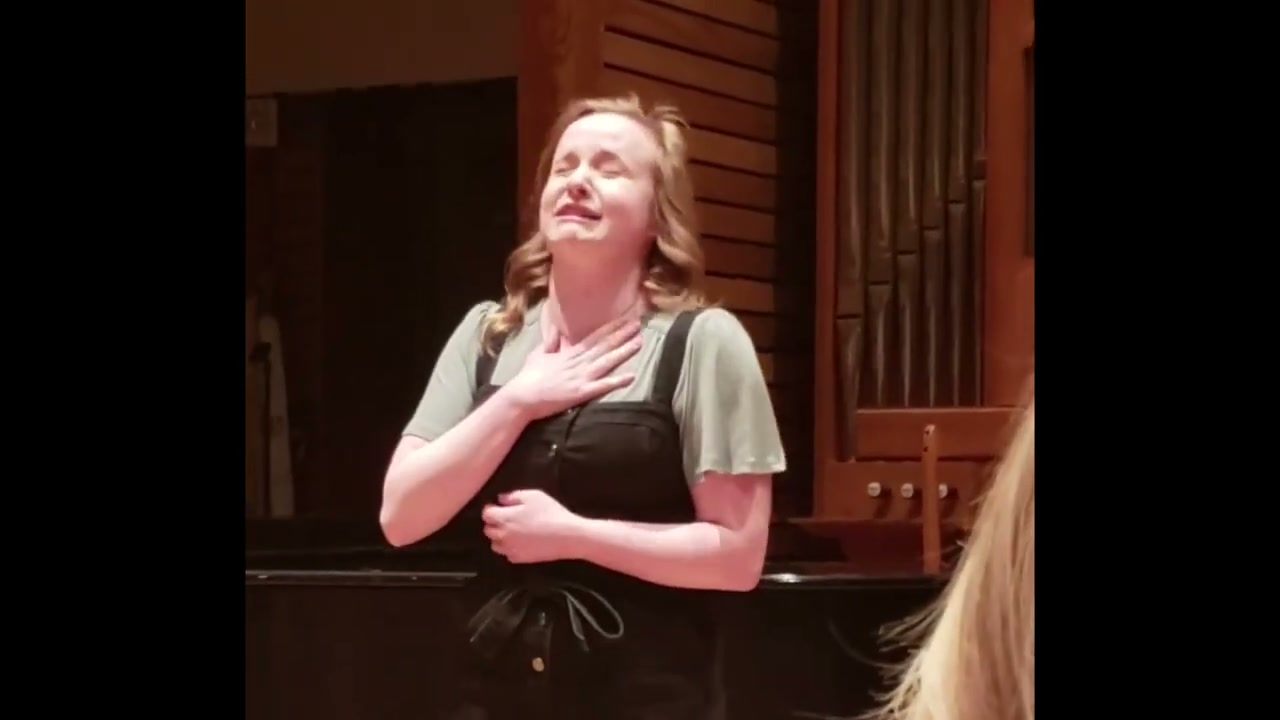
A reel of Sydney’s live theater performances. View Sydney’s profile
Ready to sing freely?
If the thought of singing for someone has kept you from starting, Sydney’s lessons were built for exactly that hesitation. She does not ask you to arrive confident. She helps you take the pressure off and work from the voice you already use every day. Sydney is currently accepting new voice students at Tunelark, and she welcomes singers at every level, including the ones who have not sung in front of anyone in years.
Looking for an online voice teacher? See our full Online Voice Lessons page for everything you need to know about getting started.
Keep reading
About Jennifer Heath
I'm Jennifer Heath, VP of Operations at Tunelark and a lifelong singer. I joined the company in 2020 and oversee much of what makes Tunelark work for students and teachers: hiring, training and supporting our instructors, student support, marketing and day-to-day operations. I started voice lessons at 7 and sang with touring choirs through my teens. Music belongs in every life, for the self-expression, the discipline, the comfort and the simple joy of it.