Get to Know Your Voice: Range, Voice Type and Registers

Most people who start singing lessons have never been told what their voice actually is. They know the songs that feel easy and the notes that do not, they may have been called an alto in a school choir once, and they have a private theory about why the high notes crack. That is usually the whole map.
This article draws the rest of it. What the voice is doing mechanically when it makes a sound, how to find your range and what it does and does not tell you, what a voice type is and why teachers are slow to assign one, and what the registers are: chest and head, the break between them, the mixed voice that joins them, vocal fry below and whistle above, and the bright edge called twang. Voice teachers demonstrate each part in the videos, and every exercise can be done at home.
How the voice makes a sound
Ted D. starts new singers with the mechanics, because a little understanding makes everything after it easier to feel. The voice has three parts: a power source, which is the breath; a vibrator, which is the two vocal folds in the larynx; and a resonator, which is the throat and mouth above them. His comparison is a trumpet player. The lips buzz, the horn shapes the buzz, and the air drives it.
Skill video · How the Voice Works

Ted teaches voice on Tunelark. View Ted’s profile
The first part, the breath, has its own article: Breath Support for Singers. Everything in this article lives in the second and third parts. Range and registers are about how the folds vibrate: how long and thick they are, how firmly they close. Voice type is partly that and partly the resonator, the size and shape of the space the sound passes through, which is why two singers with the same notes can sound nothing alike.
Finding your range
Range is the span of notes your voice can produce. The useful version of it is narrower than the extreme version: not the lowest note you can growl or the highest you can squeak, but the stretch where the voice is comfortable, steady and sustainable.
Elspeth C. finds it with a five-note pattern, “mm” on the way up and “ah” on the way down, starting at the bottom of the bass range and climbing to the top of the soprano range. The instruction is to join in where it feels good and drop out where it does not, and to pay attention to where the comfortable middle is rather than the edges. Along the way she names the neighborhoods: bass, baritone and tenor for the lower voices, alto, mezzo and soprano for the upper ones, with plenty of voices sitting across a line, like mezzo-soprano or bass-baritone. As rough neighborhoods rather than a verdict, comfortable spans tend to run around C4 to C6 for soprano, A3 to A5 for mezzo-soprano, F3 to F5 for contralto, C3 to C5 for tenor, A2 to A4 for baritone, and E2 to E4 for bass. Baritone and mezzo-soprano are the most common types, so most readers land in the middle of that list rather than at either end. Alto is the choral part name for the lower female line, and the solo classification for the same voice is contralto. Write down where your own comfortable span lands and hold it next to those loosely, because plenty of trained voices sit outside the usual box for their type.
Skill video · Find Your Vocal Range
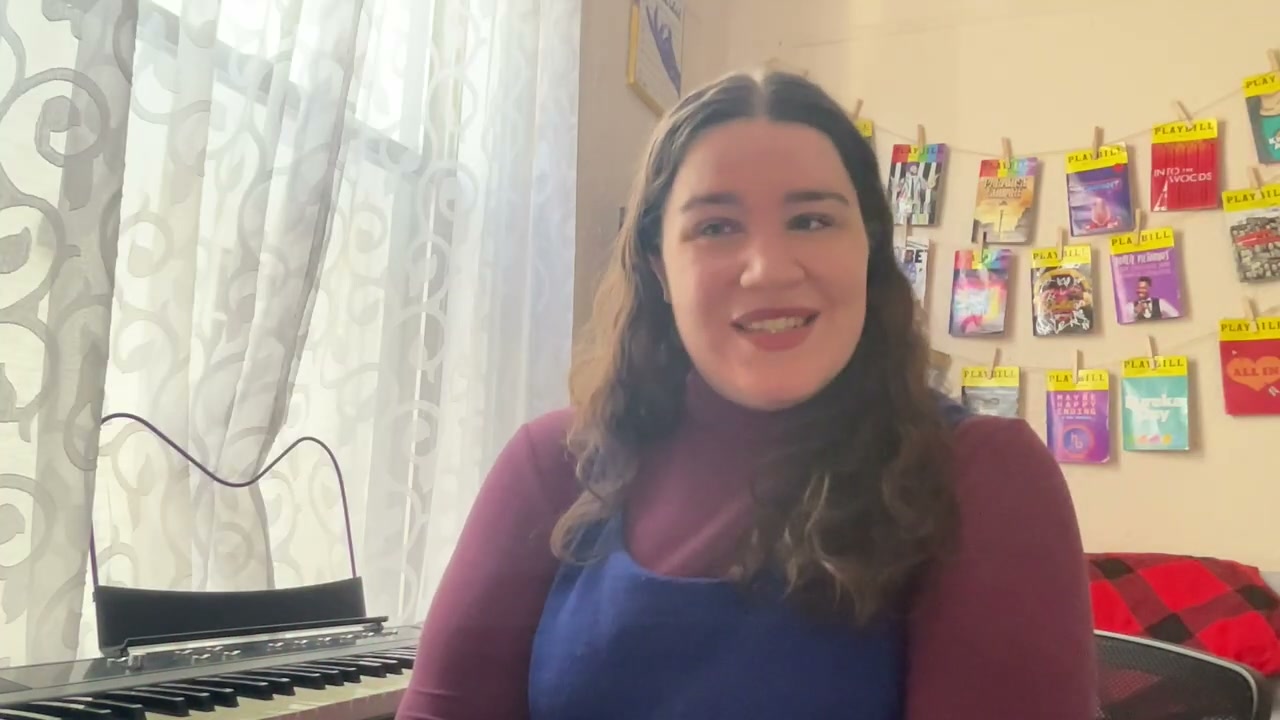
Elspeth teaches voice, piano and drums on Tunelark. View Elspeth’s profile
Two things to hold onto. First, the range you find today is a starting point, not a verdict; range grows with technique (How to Expand Your Vocal Range Safely covers how), and singers who avoid the top of their voice for years often have more up there than they think. Second, the comfortable middle is the part worth knowing. That is where repertoire should sit while the rest is being built, and it is the single most useful thing to tell a new teacher. Singing outside it is also one of the common causes of pitch trouble covered in How to Sing in Tune.
Voice type, and why not to decide too early
Voice type is the label people want most and the one teachers hand out most slowly. It is not the same as range. Two singers can share almost the same notes and be different types, because type is decided as much by where the voice is strongest, where it changes gear, and what it sounds like as by how high or low it goes.
Becky O. shows how she approaches it in a first lesson: a “lou” down a scale, moving up by half steps until the top runs out, then down from the middle until the bottom does, listening the whole time to the quality of the sound rather than counting notes. The label comes from that quality. What she does with it is more interesting than the label itself: she spends almost none of the lesson on the chest voice, which is the speaking voice and is always there, and most of it on bringing the head voice down to meet it, so the two blend into one instrument from bottom to top.
Skill video · Vocal Range and Voice Type

Becky teaches voice on Tunelark. View Becky’s profile
There are good reasons not to settle a type early. The voice keeps changing into the mid twenties, and a voice that has only ever sung in one register has not shown its full shape yet. Untrained singers usually sound lower than they are, because the top has never been developed. And in most contemporary music the classical labels matter far less than knowing your own comfortable range and what your voice does well. A teacher will name a type when the voice has earned one. Until then, “my comfortable range is here and I am working on the top” is a more honest description than any label.
The registers: chest, head, and the break between them
A register is a stretch of the range where the folds vibrate in the same way and the sound has a consistent quality. There are two main ones, chest and head, with vocal fry below chest and whistle above head. Whistle is the highest of them, a small flute-like sound made with only a short section of the folds vibrating while the rest stays closed. Some singers reach it easily and most never use it, which is why the rest of this section stays with the two registers every voice has. In chest voice the folds are shorter and thicker, they close firmly, and the sound is full and grounded; it is the voice you speak in. In head voice the folds are stretched thinner and vibrate mostly along their edges, and the sound is lighter and rings higher in the skull. The break is the point between them where the folds have to change from one setup to the other. Untrained, they change suddenly, and the sudden change is the crack.
Alawna M. teaches the crack on purpose. First find the two voices with a word: “hey” called across a room is chest voice, “hey” said softly and high, as if across a library, with a little air in it, is head voice. Then alternate them. Then try to do both inside one note, which will crack badly at first, and keep doing it, because a singer who can produce the flip at will is a singer who can control it. Her demonstration ends on a pop song where the flip is the point of the phrase.
Skill video · Vocal Flips

Alawna teaches voice on Tunelark. View Alawna’s profile
That is the reframe worth taking from her: the crack is not a flaw to be hidden but a gear change to be learned. Once it is learned, it can be smoothed over, used as an effect, or avoided entirely by the register described next. Belting, which is chest quality carried up into head-voice territory, is its own skill and has its own article: What Belting Actually Is, and How to Do It Without Hurting Your Voice.
Mixed voice
Between chest and head there is a way of singing that borrows from both, where the folds keep some of the chest voice’s firmness while thinning toward the head voice’s stretch. That is mixed voice, or mix, and it is what most trained singers are using through the middle and upper-middle of their range. It is why a good singer does not seem to have a break.
Claire C. finds it through the front of the face. A whining, nasal “nyah,” or a cat’s “meow,” is placed forward, behind the two front teeth, and then carried up the range on a short pattern. There is a point where it stops feeling comfortable, and on the next repetition the top note changes: that change is the voice moving from mix into full head voice, and she demonstrates both so the difference can be heard side by side. Mix, in her description, sits forward in the roof of the mouth; head voice sits higher, in the temples and cheekbones.
Skill video · Teaching Demonstration

Claire teaches voice on Tunelark. View Claire’s profile
Mixed voice is guess-and-check work, in her words, and it is the part of this article most singers will need a teacher’s ear for. What can be done alone is the awareness: knowing that a register exists between the two obvious ones, and listening for the moment the sound changes as the pitch goes up.
Vocal fry and the onset
Below chest voice is a register of its own, the creaky, popping sound the voice makes with very little air: vocal fry. Singers use it less as a place to sing than as a tool, because in fry the folds are loose and close gently, which is the opposite of the pressed, effortful start that causes so much tension.
Simona D. uses it to teach the onset, the way a note begins. Start in a light fry, then let the sound open smoothly into an “ah” without any push or burst of air. Her video makes the target audible by contrast: the gentle onset, then the two wrong versions, breathy and hard. The same exercise opens the onset section of Vocal Warm-Up Exercises.
Skill video · Soft Onset with Vocal Fry

Simona teaches voice on Tunelark. View Simona’s profile
Jay H. builds a daily exercise from the same sound: fry, then “ooh” and “ee” sliding down and back into fry, repeated for a few minutes wherever in the range is comfortable. The folds close cleanly at the bottom of each slide, and that clean closure is what carries into every other register. He adds the habits that make it work: a great deal of water, the day before as much as the day of, and some exercise before singing.
Skill video · Vocal Fry

Jay teaches voice and guitar on Tunelark. View Jay’s profile
Twang and ring: the sound that carries
Some singers fill a room with no apparent effort, and others push hard and still get stuck in their own mouth. The difference is usually not volume. It is a narrowing in the throat just above the folds that brightens the sound and gives it an edge that cuts through a band or a hall. Voice teachers call it twang, and every style uses some of it, not only country.
Sydney H. finds it at the extreme, with a baby’s cry on “wah”: loud, resonant, and physically easy, because the body was built to make that sound. The exercise is to make it in different parts of the range, then dial it back, twenty or thirty percent at a time, until what is left is the amount of edge the song needs. Her point is that the full cry is a tool, not a sound anyone performs with; the useful version is the diluted one.
Skill video · Twang
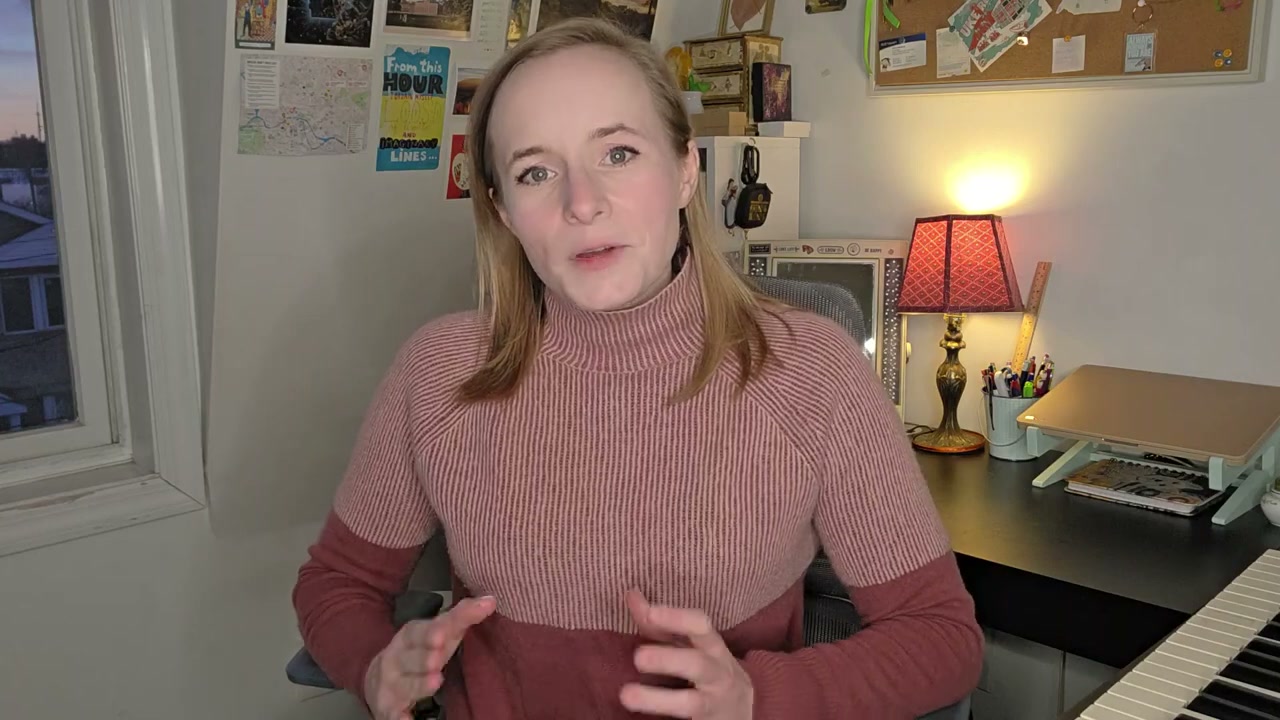
Sydney teaches voice on Tunelark. View Sydney’s profile
Anthony B. shows the same quality from a quieter starting point. Agree with someone, “mm-hmm,” hold the m for a few seconds, and feel the buzz in the lips and cheeks. Keep that buzz and open to an “ah” without getting louder, then sing a simple word like “home” the same way. The buzz is the ring, and if it disappears when the vowel opens, that is the thing to chase.
Skill video · The “Mm to Ah” Instant Ring Trick

Anthony recorded this for Tunelark’s channel.
What to do with all of this
A month of self-study on this material looks like this. Find the comfortable middle of the range with Elspeth’s pattern and write the notes down. Practice Alawna’s “hey” until the flip is on demand rather than by accident. Add Jay’s fry slides to the start of every practice, and Simona’s gentle onset to the first note of every song. Try Claire’s “nyah” through the middle of the range once a week and listen for the change. Leave the voice-type question alone.
What that month will not do is settle the questions that need an outside ear: which register a given note should live in, where the mix actually sits for your voice, and whether what feels like effort is support or tension. Those are the questions the first few lessons are built around, and How Long Does It Take to Learn to Sing sets out what the months after them usually look like.
How to Find a Voice Teacher on Tunelark
Most teachers in the videos take new students now, and each video links to the teacher’s profile. To get started:
1. Open our voice lessons page.
2. Read bios. Look for teachers who talk about registers, range and technique, not only repertoire.
3. Book a trial lesson with one whose approach makes sense to you.
4. In the trial, ask where your comfortable range is and which register you tend to sing the top of it in. A good teacher will have an answer within a few minutes of hearing you.
Frequently Asked Questions
How do I find my vocal range?
Run the five-note pattern in Elspeth’s video above through the whole span, joining in where it feels good and dropping out where it does not. A keyboard or piano app gives you the note names, and your comfortable middle matters more than either end.
What is the difference between vocal range and voice type?
Range is the span of notes you can sing. Voice type is a classification that also takes in where the voice is strongest, where its registers change, and its color. Two singers with the same range can be different types, and a range can grow with training while the type stays the same.
What are the vocal registers?
Chest voice and head voice are the two main registers, with vocal fry below them and whistle above, and each is a different way the vocal folds vibrate. The break is the transition between chest and head voice. Mixed voice is the coordination that blends the two across it, and it is how trained singers cross it smoothly.
Why does my voice crack when I sing high?
Because the folds are switching suddenly from the chest-voice setup to the head-voice setup. It is a gear change, not a defect. Learning to produce the flip on purpose, then to smooth it with mixed voice, is standard voice-lesson work.
What is mixed voice?
A way of singing through the middle of the range that keeps some of the firmness of chest voice while the folds thin toward head voice. It is what lets a trained singer move from low notes to high ones without an audible break.
Should I know my voice type before I start lessons?
No. A teacher will assess it in the first lessons and will usually hold off on a firm label until the whole voice has been developed. Knowing your comfortable range is far more useful to bring to a first lesson than a type.
Looking for an online voice teacher? See our full Online Voice Lessons page for everything you need to know about getting started.
Keep reading
About Jennifer Heath
I'm Jennifer Heath, VP of Operations at Tunelark and a lifelong singer. I joined the company in 2020 and oversee much of what makes Tunelark work for students and teachers: hiring, training and supporting our instructors, student support, marketing and day-to-day operations. I started voice lessons at 7 and sang with touring choirs through my teens. Music belongs in every life, for the self-expression, the discipline, the comfort and the simple joy of it.