College Piano Auditions: What Wins a Music Scholarship
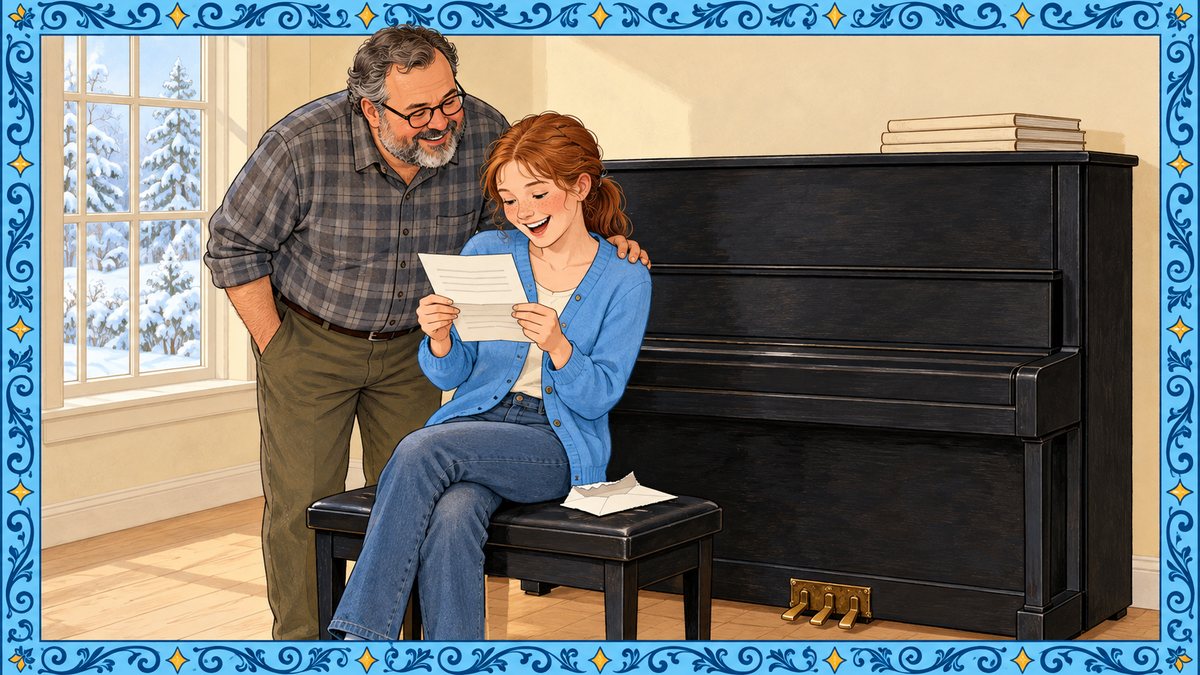
A college piano audition asks a student to perform memorized solo repertoire from contrasting periods for a faculty panel, and many schools add scales, sight-reading and a recorded prescreen in the fall. The details vary from school to school. What does not vary is that the audition shows years of daily work, and the students who earn scholarships, rather than only an acceptance, are the ones whose technique, control and feeling for the music come through in a few minutes at the piano.
Robin W. teaches piano at Tunelark and prepares high school students for college auditions. He won a full scholarship to study piano performance at Truman State University, through a piano competition he entered with a week’s notice, and later earned a Master of Music at Berklee College of Music’s campus in Valencia, Spain. We asked him what the audition consists of, how to choose the program, and what the panel is weighing beyond the right notes.
What a college piano audition asks for
Each school publishes its own requirements, and they range from short to demanding. Three examples show the spread:
- Truman State University asks piano majors to perform one or two solo pieces, preferably from memory, and sight-read accompanying excerpts.
- The University of Illinois asks Bachelor of Music piano performance candidates to play all repertoire and scales from memory: a work by J.S. Bach such as a prelude and fugue, one movement of a Classical-era sonata, a piece by a composer of the 19th, 20th or 21st century, a major and a harmonic minor scale over four octaves chosen by the panel, a short sight-reading example, and harmonizing a familiar melody.
- Carnegie Mellon asks for a prescreen recording of 15 to 20 minutes, uploaded by December 1, then a live audition across five categories, including a polyphonic work, a Classical sonata movement and a fast étude by a composer such as Chopin, Liszt or Rachmaninoff.
Robin’s summary of the common core is two memorized classical pieces. A prescreen is a recording the school reviews before deciding whom to invite to a live audition, and where a school asks for one, its deadline sets the real calendar: a December 1 upload in the senior year means the program has to be learned, memorized and recorded by the fall.
Scholarships come out of the same audition at most schools. At Truman, for example, auditioning majors are considered for music scholarships automatically, and the Piano Festival competition, held October 30 to November 1 in 2026, awards one scholarship covering full tuition, room and board.
Robin’s audition, with a week’s notice
Robin’s own audition did not follow a calendar. “My College piano audition for Truman State University was wildly unexpected and very last minute,” he says.
He had just finished joint classical and jazz piano auditions at the University of Louisville, Missouri State University and Southern Illinois University Edwardsville. Truman was on his list, but his family had not thought much about it until the head of piano studies, Dr. David McKamie, called to say Robin had a real chance at the school’s classical piano competition, “where students from around the State and country would compete for the Full Fellowship Scholarship to Truman State University.” The call came a week before the competition.
The requirement was two classical pieces, memorized, from the Baroque, Classical or Romantic eras. Robin had been studying classical piano throughout high school and already had two hard pieces in his hands: Chopin’s Fantaisie-Impromptu, Op. 66, and the third movement of Beethoven’s “Moonlight” Sonata. About half of each was still unmemorized. He practiced more than four hours a day that week to finish them.
“I remember arriving to Truman and being incredibly nervous. We walked into a big long white corridor that echoed if you so much as whispered,” he says. His hands felt weak while he warmed up, and his competitor was about to play.
In the room, Dr. McKamie and Dr. Lok Ng asked him to play his two pieces. “To my surprise, I played both of the pieces with no memory slips and with strong emotion for both of them,” Robin says. He believes the audition was meant to include sight-reading, but after the two pieces it was not needed. Afterward they talked about his background, and Dr. Ng told him she could feel the way he played.
How far ahead to start
A week was enough for Robin because the real preparation had happened over four years. He practiced two hours a day, every day, through high school, without always knowing what it was for.
For a student aiming at college auditions, “I would say that what helped me the most was CONSISTENT preparation,” he says. “I did not take a day off in High School practicing scales, repertoire and learning minimal theory. I just practiced.”
For a student planning ahead, that points to two timelines. The skills a panel hears, finger strength, evenness, control and secure memory, are built over years of daily practice. The specific audition program is a shorter project, but on a December 1 prescreen calendar it needs to be chosen by the end of the junior year so there is time to learn, memorize and perform it before recording. A student who has never played a piece from memory for an audience also needs a few low-stakes performances first; our guide to preparing for a music recital covers how to build those in.
He had help: his father pushed him to practice when he did not want to. “I hope whoever is reading this is lucky enough to 1) enjoy the music and the craft enough to actually enjoy practicing (I did) and 2) to have a parent or a supporter in their life to push them past their limits of wanting to quit early or not practice that day or what have you,” he says. For parents, our guide to helping a child practice piano without battles covers the younger years that lead up to this.
Choosing the audition program
Robin’s rule for repertoire starts with the student. “You should choose repertoire that you love playing and that moves you. You should also choose repertoire that shows off your finger strength and CONTROL,” he says.
That can mean one fast, brilliant piece paired with one that shows how the student shapes a melody. His example of the second kind is a Chopin nocturne, “where the challenge there is to really shape the melody line in your RH pinky finger while keeping the tempo and showing weight and control in your other fingers.” In a nocturne the right hand’s outer fingers carry the tune over an accompaniment in the same hand and the left, so the pinky has to sing louder than the notes around it. For the fast piece he names a fiery Chopin étude, or the third movement of the “Moonlight” Sonata that he played himself.
He tells students who are serious about classical piano to keep three or four pieces ready at all times, each showing something different:
- A technically demanding étude. An étude is a concert piece built around one technical problem. He suggests the Chopin études, and calls the “Winter Wind” étude, Op. 25 No. 11, a great start. It is also one of Chopin’s most demanding.
- A Bach fugue. A fugue sets one melody against itself in several overlapping voices, which tests a different kind of control: every voice has to stay clear at once, and a memory slip is hard to cover. Played well from memory, he says, a fugue impresses a faculty panel.
- A piece that shows everything together. His example is Chopin’s Fantaisie-Impromptu, which also shows a student’s memory.
- A bonus lyrical, melodic piece, such as one by Ravel.
That list lines up with what the stricter schools ask for. Carnegie Mellon’s live audition includes a polyphonic work and a fast étude, and Illinois asks for Bach, a Classical sonata movement and a later piece. A student who keeps a fugue, an étude, a sonata movement and a lyrical piece in their hands can usually build any school’s program from them.
What separates a scholarship from an acceptance
Robin believes two things set him apart from his competitor. “I did the work. It was obvious I had already put hours into the piano. That comes through in your technique, not your words,” he says.
The second was the remark that stayed with him: the panel could feel the way he played. He took it to mean he had shown both what the composer wrote and his own interpretation of it.
“They want you to win, they want to see your drive, and they want to share this common LOVE of music with you. The difference maker is the student who loves it the most and who wants it the most,” he says.
The last few months: don’t change your swing
Robin is a baseball fan, and his advice for the final months is a baseball line: never change your swing. “If you are in the room, if you have a call-back on the line, then your ‘swing’ is what got you into ‘the big leagues’ in the first place.”
In practice that means the work stays the same. “In the months before, we do what we have been training for. We do the same scale exercises, the same repertoire, same finger positionings that we have always done,” he says. Changing a fingering or reworking an interpretation weeks before an audition puts a new, untested habit under the most pressure it will ever face.
What does change is mental preparation for the nerves. Robin works on memory slips and nerves with students well before that point, so that in the last months the job is to perform the program as it already is. Running the whole program from memory for a family member, a teacher or a phone camera, start to finish without stopping, is a common way to rehearse the conditions of the room. Our guide to helping young performers overcome stage fright covers what nerves do to the body and how to practice performing through them. It also helps to know the timeline from the start: our guide to how long it takes to learn piano sets out the years of foundation that come before an audition program.
About Robin
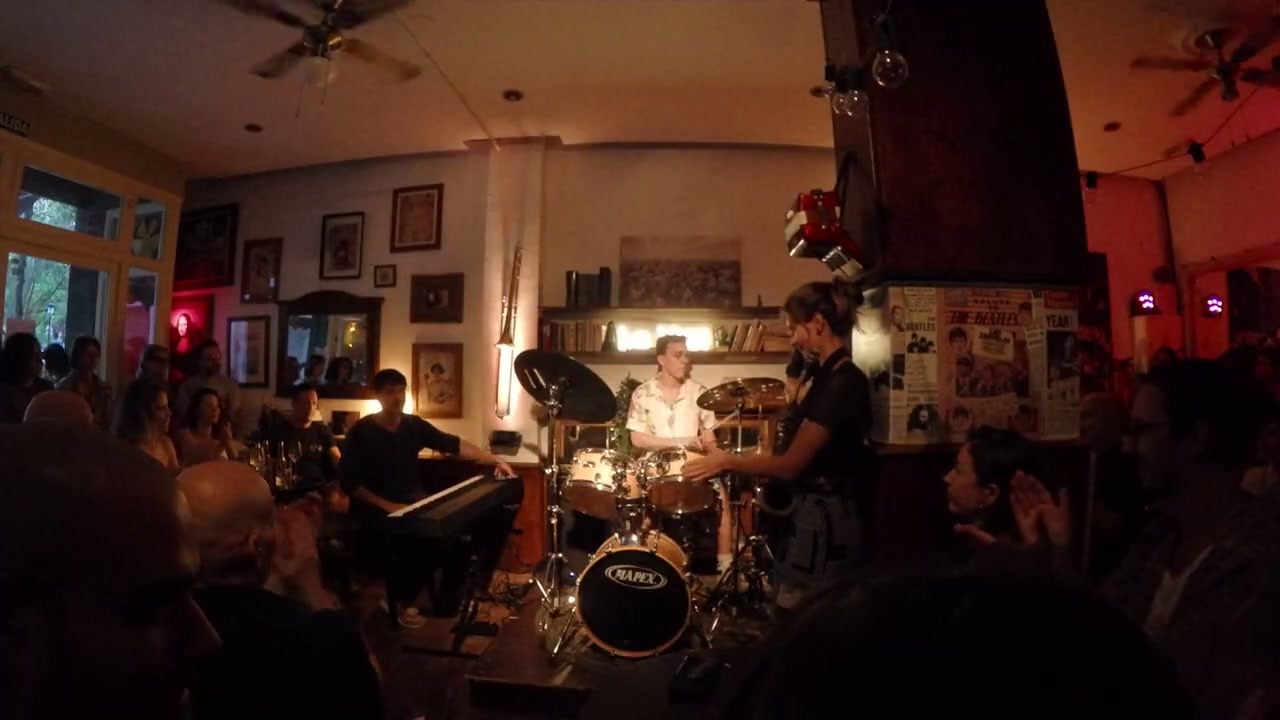
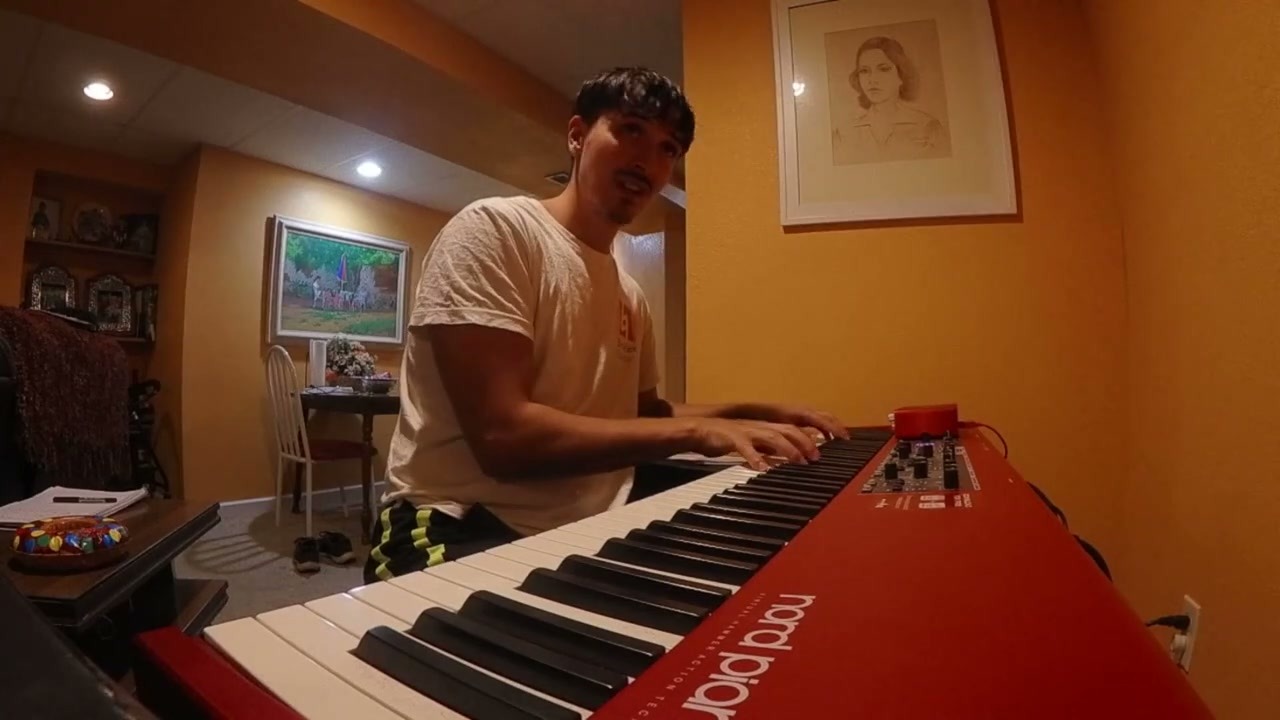
Robin has played piano for more than 21 years and taught for more than ten. He studied classical piano at Truman State University on a full scholarship, then earned a Master of Music in contemporary performance and music production at Berklee Valencia, and he teaches classical and jazz side by side. He has performed throughout Spain and the Netherlands, including at CaixaForum and the City of Arts and Sciences in Valencia, Blackbird Rockbar in Madrid and The Wolfhound in Haarlem. Alongside his classical training he plays jazz, and here he plays keys with a jazz trio, live at a club.
Performance · Jazz Trio, Live Set
Robin teaches piano on Tunelark. View Robin’s profile
In this lesson he teaches the C blues scale and how to practice it over a left-hand groove, the kind of work that sits alongside his classical teaching.
Skill video · The C Blues Scale and How to Practice It
Robin teaches piano on Tunelark. View Robin’s profile
Preparing for a college audition?
Robin is accepting new piano students at Tunelark, and the list of schools you are applying to, with their audition requirements, is a good thing to bring to a first lesson. You can also find a teacher for another instrument across the rest of the roster.
Frequently Asked Questions
Do college piano auditions have to be memorized?
Usually, though it varies by school. Illinois requires all repertoire and scales from memory for piano performance; Truman asks for pieces preferably from memory.
What is a prescreen for a piano audition?
A recording the school reviews before inviting a student to a live audition. Carnegie Mellon, for example, asks for 15 to 20 minutes uploaded by December 1.
How many pieces do I need for a college piano audition?
Anywhere from one or two to five, depending on the school. Robin suggests keeping three or four contrasting pieces ready so any school’s list can be built from them.
When should I start preparing for a college piano audition?
The program should be chosen by the end of junior year if a school has a fall prescreen. The technique behind it takes years of daily practice.
Can I play jazz or pop at a classical piano audition?
Not usually for a classical piano major, which asks for classical repertoire. Jazz programs set their own requirements, so check each school’s audition page.
Looking for an online piano teacher? See our full Online Piano Lessons page for everything you need to know about getting started.
Keep reading
About Jennifer Heath
I'm Jennifer Heath, VP of Operations at Tunelark and a lifelong singer. I joined the company in 2020 and oversee much of what makes Tunelark work for students and teachers: hiring, training and supporting our instructors, student support, marketing and day-to-day operations. I started voice lessons at 7 and sang with touring choirs through my teens. Music belongs in every life, for the self-expression, the discipline, the comfort and the simple joy of it.