Digital Piano or Keyboard: Which Should a Beginner Buy?
If you’re standing in a music store or scrolling through a long list of black instruments online, the choice between a digital piano and a keyboard can feel impossible. The labels blur together. The prices range wildly. And the salespeople (online or in person) rarely tell you the one thing that actually matters for a beginner.
This guide cuts through the marketing language. If you’re trying to decide between a digital piano vs keyboard for beginners, here’s what you actually need to know before you spend $200 or $700.
The Real Difference (Not Marketing Speak)
A “keyboard” and a “digital piano” can sit side by side at the same price, but they’re built for different jobs. A keyboard is a portable, lightweight electronic instrument designed to imitate many sounds (piano, organ, strings, synths) usually with unweighted or semi-weighted keys and often only 61 keys. A digital piano is built specifically to feel and sound like an acoustic piano, with 88 weighted keys and a much narrower focus on piano tone.
The hands of a beginner are forming habits from the very first lesson. The fingers learn the resistance of the key. The wrist learns how much weight to drop. The ear learns what a real piano sounds like. A keyboard with springy plastic keys teaches different muscle patterns than a weighted-key instrument, and those patterns have to be unlearned later if the student moves to an acoustic piano.
So when someone asks which to buy first, the honest answer depends on one question: is this person planning to take piano seriously, or are they exploring a general interest in making music?
Hammer Action: Why It Matters More Than Anything Else
Hammer action matters more than every other feature combined.
Weighted keys matter because of what you eventually ask the hands to do. Heather D. teaches piano on Tunelark and works through the major scales.
Skill video · Major Scales
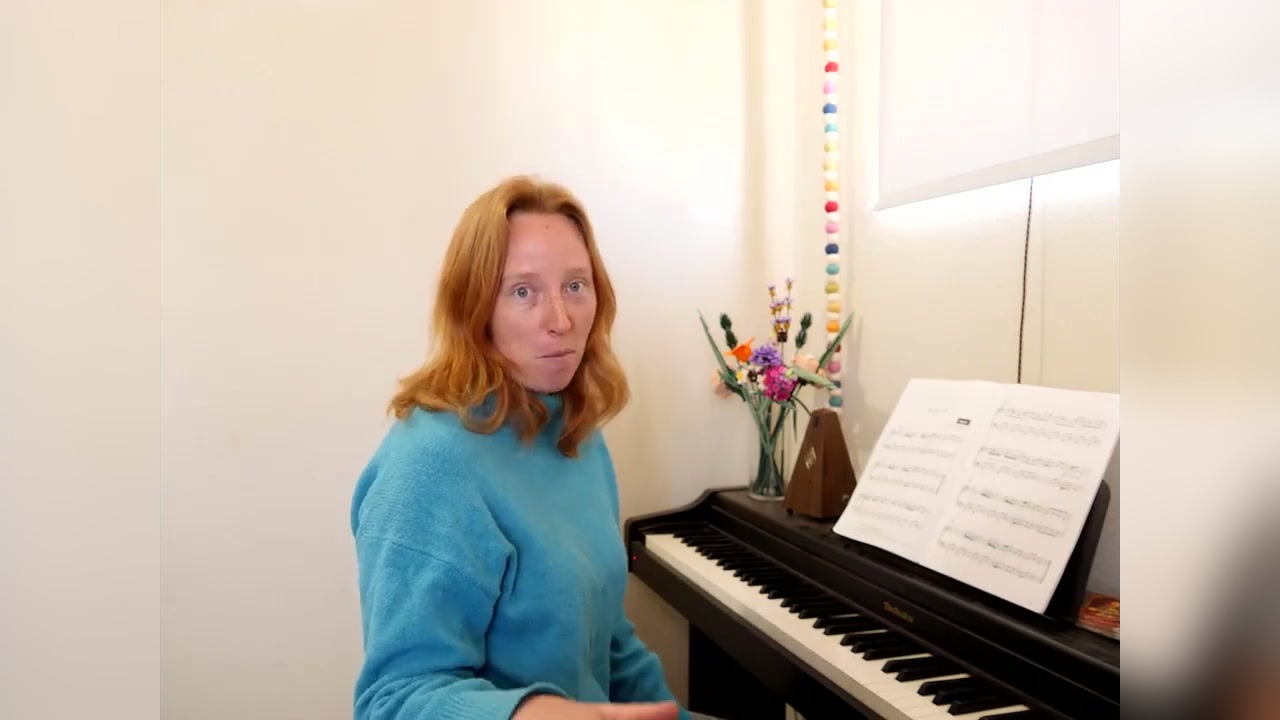
Heather teaches piano on Tunelark. View Heather’s profile
Weighted and hammer action are not the same claim, and the difference is where the marketing hides. Unweighted keys use a light spring return, and weighted on a box can mean anything from a heavier spring to a full hammer mechanism, which is why the word alone tells you little. Hammer action is a specific mechanism that reproduces the way an acoustic piano’s action moves under the finger, and graded hammer action goes further again, making the bass keys heavier than the treble keys the way a real piano does. What you want printed on the box is hammer action, not weighted on its own. With hammer action under the finger there is real resistance, the same kind your finger feels on an acoustic piano. This trains the hand to control dynamics (soft vs. loud), use arm weight instead of finger force, and develop the control and dynamic range that make piano playing musical rather than mechanical.
Unweighted keys feel like springy plastic. Most of them do respond to touch and play louder or softer with the stroke, but they offer almost no resistance, so you never learn the arm weight and control an acoustic piano demands. Toy and mini-key instruments often have no touch response at all, and every note comes out at the same volume. Unweighted keys are fine for casual noodling. They’re not fine for serious piano study. A student who practices on unweighted keys for a year will struggle the first time they sit at a real piano because their hands haven’t learned that control.
Semi-weighted keys are a middle ground, better than unweighted, not as good as fully weighted hammer action. They show up from about $250 to $450 as of 2026, and if you can save for the next tier, do.
If your student is going to take real lessons, prioritize hammer action over every other feature. Skip the 200 built-in sounds, the auto-accompaniment, the recording functions. Read the spec sheet for those two words, and for graded hammer action if the budget stretches that far.
When a Keyboard Is Actually Right
There are honest cases for buying an unweighted or semi-weighted keyboard over a digital piano.
You’re buying for a young child (under 8) who’s never touched an instrument and you genuinely don’t know if interest will last. A $200 keyboard is a reasonable trial run. If they fall in love with playing, you upgrade to a digital piano.
You want to explore many sounds, not just piano. Some students are drawn to electronic music, synth sounds, or songwriting with built-in beats. A versatile keyboard is the right tool for that path.
You have a strict space or noise constraint. Some 61-key keyboards fit on a small desk and weigh under 10 pounds. A full 88-key digital piano with a stand takes real floor space.
You’re a complete beginner who genuinely just wants to play around for a few months before deciding. That’s a valid use case. Just be honest about it, if you find yourself committed three months in, plan to upgrade.
For everyone else who’s planning to take lessons and stick with piano, skip the keyboard tier. You’ll outgrow it within six months to a year and resent the money you spent. For more on choosing a first instrument as an adult, see our guide on choosing your first instrument as an adult beginner.
What to Avoid Buying
A few categories of instrument that look like good deals but will frustrate a serious beginner:
- Mini-key keyboards, at any price. The disqualifier is the key width, not the sticker. A standard white key is about 23mm across, and anything narrower teaches your hand a spacing that does not exist on a piano. Keys with no touch response are the other disqualifier. Both are most common on toy instruments and on the cheapest gift-aisle boards, so check the key width and the touch response before you check the price. Full-size keys and a keybed that answers to how hard you strike it are the two things no accessory can add later.
- 61-key keyboards with no weighted-key option, marketed as “learn piano” packages. The package looks complete because it includes a stand, bench, headphones, and stickers for the keys. But it’s still 61 unweighted keys. A student taking regular lessons outgrows it fast, often before the included beginner book is finished.
- Used digital pianos with broken keys. A dead or sticky key on a mainstream Yamaha, Roland, Casio or Kawai is usually repairable, but the repair can cost more than the discount you got, and parts for off-brand or long-discontinued models may not exist at all. Test every key before buying used.
- Off-brand digital pianos at suspicious prices. If a “full 88-key weighted hammer-action digital piano” is selling for $250 brand new, something’s wrong. Likely the key action is poor, the sound samples are thin, or the build will fail within a year.
Budget Recommendations by Price Tier
Here’s an honest breakdown of what to expect at common price points. Prices are approximate US street prices as of 2026, and model names change every few years, so treat the tiers as the guide and the names as current examples.
Under $250: Entry keyboard. A 61-key Casio CT-S or Yamaha PSR gives you basic piano sounds, dozens of other voices, and unweighted or lightly touch-sensitive keys. Some sell new under $100, and a touch-sensitive one is a fair start. Fine for a young child or casual exploration, not for serious lessons past the first few months. From $250 to $450 you are in semi-weighted territory, better than unweighted and worth passing if you can save for the next tier.
$450-$700: Entry weighted 88-key digital piano. This is the sweet spot for committed beginners on a budget. Models like the Yamaha P-145, Casio CDP-S110 and CDP-S160, and Roland FP-10 deliver 88 keys with graded hammer action, decent piano tone, and built-in speakers. Your student can take real lessons on this and stay on it for years.
$700-$1,200: Solid mid-range digital piano. Yamaha P-225, Roland FP-30X, Kawai ES-120, and similar instruments offer better key action, more nuanced piano samples, and better speakers. If you can stretch the budget here, you’re set for the long haul, many advanced students continue to use these.
From about $1,200 up: console-style digital piano. These look like furniture, with a cabinet, three pedals, and more refined key actions. Worth it if you have the budget and the space, especially for a household with multiple players.
For an adult beginner specifically, our beginner piano tips article covers what to focus on once you’ve got the instrument set up. And before you decide where to put your new piano, the home practice space setup guide walks through lighting, seating, and sound considerations.
How to Find a Piano Teacher on Tunelark
Once you’ve got the instrument, the next step is finding a teacher who works well with beginners and can guide your equipment choices as you grow.
1. Open the teacher list and filter by piano.
2. Read bios. Look for teachers who mention working with beginners and adapting their approach to home setups.
3. Book a trial lesson with one whose profile resonates.
4. After the trial, ask yourself: did the teacher pay attention to your setup, your goals, and how you actually play, or did they run through a generic intro lesson?
A good teacher will tell you honestly if your instrument is holding you back. The right setup plus the right teacher will get you further in three months than the wrong combination will in a year.
Frequently Asked Questions
Can I really learn piano on an unweighted keyboard?
You can start, but you’ll hit a wall fast. Unweighted keys don’t build the arm weight or dynamic control that piano playing requires, and When a Keyboard Is Actually Right above says how soon most students upgrade.
Do I need all 88 keys to start?
For the first few months, no: most beginner repertoire stays in the middle two octaves. But you’ll grow into the full range within a year, and starting on 88 keys avoids an early upgrade.
Is a digital piano good enough, or do I eventually need an acoustic?
A good mid-range digital piano is enough for most students through intermediate levels. Some advanced students prefer to move to an acoustic eventually, but it’s not required for serious study.
How long will an entry-level digital piano last me?
A decent $450-$700 digital piano with 88 fully weighted hammer-action keys can take you through several years of lessons comfortably. Most students don’t outgrow it until they’re well into intermediate playing.
Should I buy used to save money?
Used digital pianos can be a great deal if you test every single key, listen for buzzing or odd sounds, and verify the pedal works. Avoid used unweighted keyboards. They’re cheap enough new that the savings aren’t worth the risk.
Looking for an online piano teacher? See our full Online Piano Lessons page for everything you need to know about getting started.
Keep reading
About Jennifer Heath
I'm Jennifer Heath, VP of Operations at Tunelark and a lifelong singer. I joined the company in 2020 and oversee much of what makes Tunelark work for students and teachers: hiring, training and supporting our instructors, student support, marketing and day-to-day operations. I started voice lessons at 7 and sang with touring choirs through my teens. Music belongs in every life, for the self-expression, the discipline, the comfort and the simple joy of it.