Beginner Piano Tips: Getting Started on the Right Note
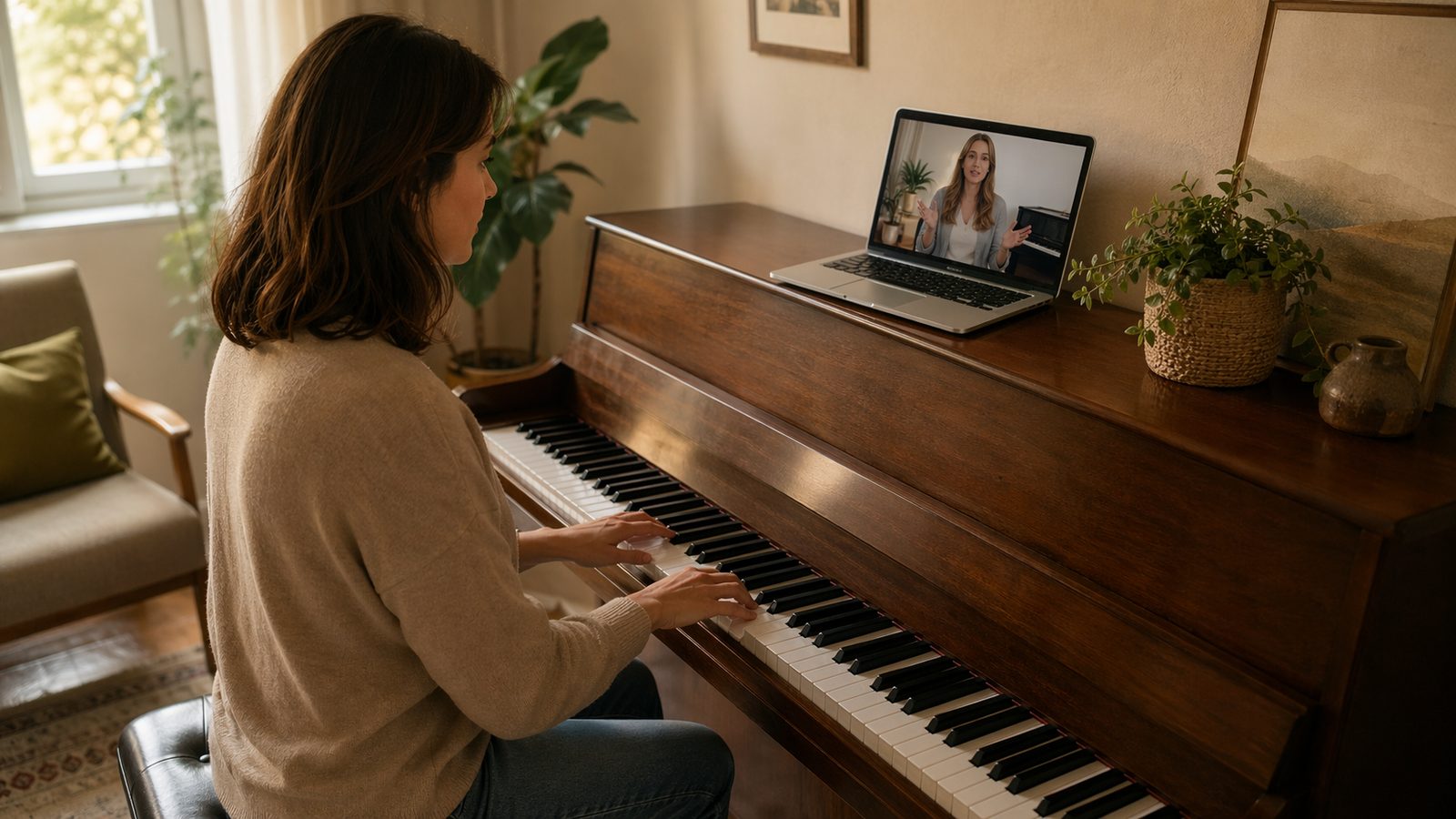
The piano is one of the world’s most beautiful instruments, and one of the most learnable, even as a complete beginner. If you’re just starting out, you may be wondering how to approach those 88 keys, whether you need to learn to read music, or how to make your hands do different things at the same time.
These beginner piano tips will help you understand what to focus on first, build good habits from the start, and set yourself up for the kind of steady progress that keeps learning rewarding. When you want repertoire to practice them on, our easy piano songs sorted by skill is the list.
Set Up Your Instrument Properly
Before you play a single note, make sure your setup is right. Proper posture and positioning have an outsized effect on how quickly you progress, and on whether you develop any bad habits that are hard to undo later. The four things to check are bench height, distance from the keyboard, foot position and hand shape, and each one takes seconds to correct once you know what you are looking for.
Bench height: When you sit at the piano, your forearms should be roughly parallel to the floor. If you’re too low, you’ll strain your wrists. If you’re too high, your shoulders will rise and create tension. Adjustable piano benches are ideal; for kids, a firm cushion or two can work in a pinch.
Distance from the keyboard: Sit close enough that your upper arms hang at your sides, not reaching forward. Your elbows should be roughly even with the keyboard.
Foot position: Both feet flat on the floor (or on a footrest for smaller players). This gives you a stable base.
Hand shape: Your fingers should be gently curved, not flat, in the shape your hand makes when it is loosely holding a small orange. The knuckles stay gently arched rather than collapsed. This position gives you control and helps you avoid tension.
Reading Music vs. Playing by Ear
One of the first questions beginners ask is whether they need to learn to read sheet music. The honest answer is: it depends on your goals, and a good teacher will help you figure out the balance that works for you.
Reading music opens up an enormous repertoire and gives you independence as a musician. You can learn new pieces on your own without relying on someone to show you. For younger students and anyone with classical goals, reading music is typically prioritized from day one.
Playing by ear, reproducing music you hear, is a natural skill that some students have more strongly than others, and it is a route to real music in its own right. An adult who mainly wants to play songs can start from chord shapes and a good ear, reach music they enjoy quickly, and pick reading up later or keep it light. A student aiming at written repertoire needs the staff early, because that is where the repertoire lives. Neither one is the serious path and the other the shortcut. The order you take them in is what your goals decide.
Many great pianists do both, and the two skills feed each other: reading opens music you have never heard, and a trained ear tells you when what you played is not what is on the page. As a beginner, the useful move is to start on the path that matches your goal and let the other one in as it becomes useful.
What to Learn First
The piano is wonderfully logical. The same twelve notes repeat across the keyboard in a consistent pattern, which means once you understand one octave, you understand them all. Here’s a loose order of what most beginner piano students work on:
1. Finding your way around the keyboard: understanding where middle C is, how the black keys create patterns that help you navigate, and how notes are named
2. Basic hand position and posture (covered above)
3. Simple five-finger exercises: moving each finger independently, building coordination
4. Basic rhythms: quarter notes, half notes, and whole notes, counted out loud and clapped before you play them
5. Reading notes in treble and bass clef: most teachers start with one hand, then the other, then both together, and the rhythms you counted in step four are what you clap through each new line before you play it
6. Simple pieces and songs: even beginners can play recognizable music quite early, which is highly motivating
Step one can start today. Travis S., who teaches piano on Tunelark, shows how to find any note on the keyboard from the pattern of black keys instead of memorizing all 88.
Skill video · Finding Any Note on the Keyboard
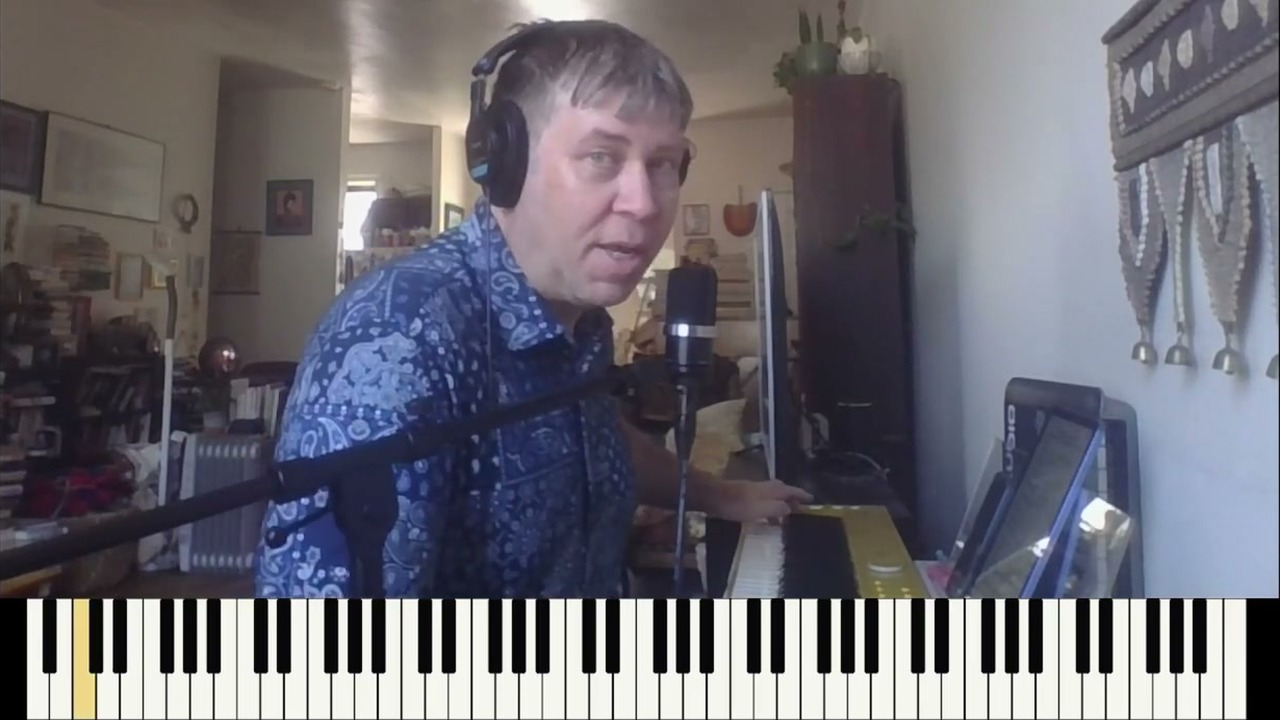
Travis teaches piano lessons online with Tunelark. View Travis’s profile
Your teacher will sequence this in a way that makes sense for your age and learning style. Trust the process, even when it feels slow. If songs are what you are after, the six chords most songs use fit in alongside steps five and six, and they are worth adding early, because chords are where a tense hand shows up first.
The Hardest Part: Two Hands Doing Different Things
There’s no sugarcoating it: coordinating both hands independently is the biggest challenge most piano beginners face. The right hand typically plays melody while the left plays bass notes or chords, and they’re often doing completely different things rhythmically.
The key is patience and isolation. Learn each hand alone first. Play the right hand until it’s comfortable. Learn the left hand until it’s comfortable. Then combine them much more slowly than feels necessary. This method works, even when it feels awkward in the moment. Every pianist you’ve ever admired went through this exact process.
Heather D., who teaches piano on Tunelark, works through hand independence at the keys, and how to get each hand to hold its own line while the other does something else.
Skill video · Hand Independence
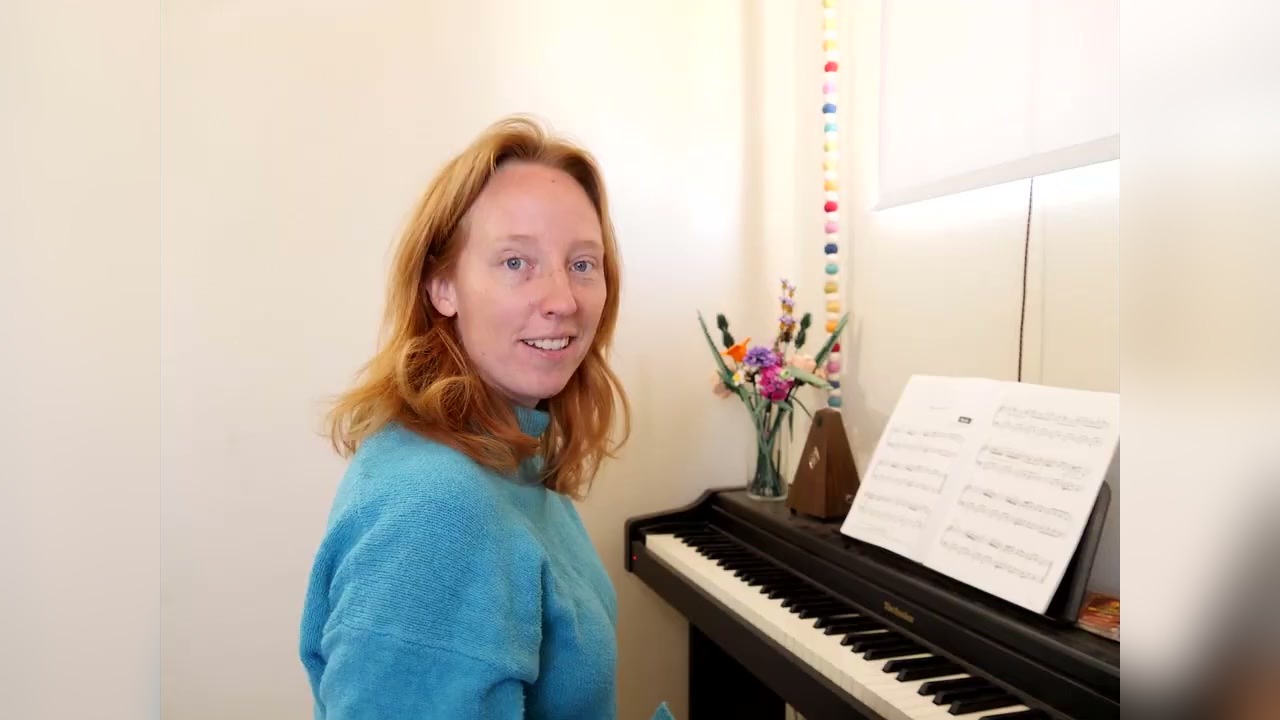
Heather teaches piano lessons online with Tunelark. View Heather’s profile
Stay Consistent, Even When Progress Feels Slow
Progress on piano follows a classic learning curve: some things click quickly, others take much longer. There will be weeks where it feels like you’re not improving at all. Those weeks are often followed by a breakthrough, a moment when something you’ve been struggling with suddenly feels natural.
Consistent daily practice (even 15 to 20 minutes, five or six days a week) reliably outperforms one long weekly session. Keep your expectations realistic for where you are in your journey, celebrate the small wins, and lean on your teacher for encouragement and direction when you feel stuck.
The piano rewards every bit of effort you put in. These tips are just the start. The real learning happens at the keys, one session at a time.
How to Find a Piano Teacher on Tunelark
Once you’re ready to start, the right teacher makes the difference between fast progress and slow frustration. Many Tunelark teachers specialize in working with new students at this stage.
1. Open the teacher list and filter by piano.
2. Read bios. Look for teachers who explicitly mention working with beginners and who describe their teaching approach (not just their credentials).
3. Book a first lesson with one whose profile resonates. It is $25 off that teacher’s 30-minute rate.
After the trial, ask yourself: did the teacher meet you where you actually are, or were they running through a generic beginner curriculum?
The early weeks of any instrument are where habits get formed. A good teacher gets you started right.
Frequently Asked Questions
Can I learn piano without a teacher?
You can learn basics from apps and videos, but progress is slower and you’ll likely develop habits that limit you later. In our teachers’ experience, even a few months with a real teacher improves your odds of still playing a year from now.
Do I need an acoustic piano or is a keyboard okay?
A digital piano is fine for beginners and most intermediate students. Hammer action matters most, and 88 full-size keys is the ideal. Weighted on a box can mean semi-weighted, so look for hammer action by name. Acoustic pianos sound and feel better but cost much more.
How many keys does a beginner need?
A full 88-key piano is ideal. 76 keys is acceptable for early beginners. 61 keys works for a very young child or a few months of exploring, but a student taking regular lessons outgrows it once pieces reach the low bass or the top octave, usually inside the first year.
How long until I can play simple songs?
Most beginners play simple recognizable melodies within a few weeks. Playing both hands together fluently takes a few months of consistent practice.
Is music theory essential to learn piano?
Basic theory makes piano dramatically easier. Understanding scales, chords, and rhythm reading shortens the path to real fluency. Your teacher will integrate theory into lessons naturally.
Looking for an online piano teacher? See our full Online Piano Lessons page for everything you need to know about getting started.
Keep reading
About Jennifer Heath
I'm Jennifer Heath, VP of Operations at Tunelark and a lifelong singer. I joined the company in 2020 and oversee much of what makes Tunelark work for students and teachers: hiring, training and supporting our instructors, student support, marketing and day-to-day operations. I started voice lessons at 7 and sang with touring choirs through my teens. Music belongs in every life, for the self-expression, the discipline, the comfort and the simple joy of it.