Giving a Guitar as a Gift? What to Pair With It
Giving a Guitar as a Gift? What to Pair With It
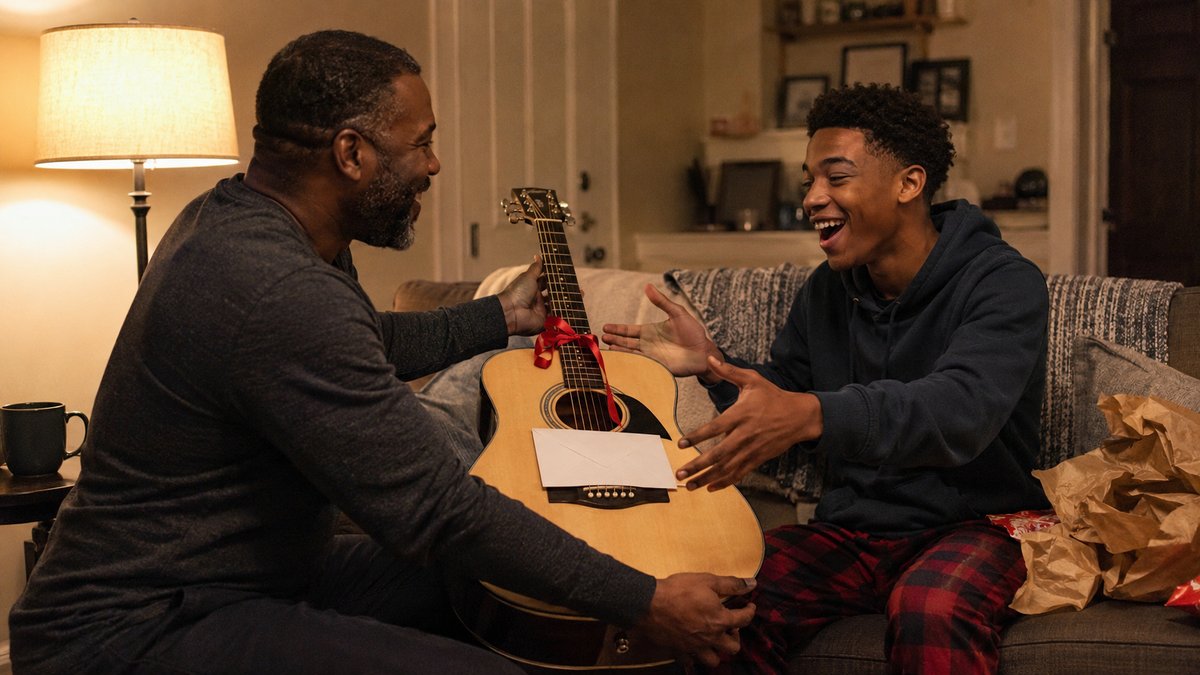
A guitar is one of the most exciting things a person can unwrap. It is also one of the most commonly abandoned. Walk into almost any house and there is a decent chance you will find one in a closet or under a bed: a gift from a few birthdays back, played hard for two weeks and then quietly retired.
That is not because a guitar is a bad gift. It is because a guitar, on its own, is only half a gift. The recipient strums it a few times, discovers it sounds nothing like what they imagined, and has no idea what to do next. The strings hurt, the tuning drifts, the free tutorials contradict each other, and within a month frustration beats novelty.
The encouraging part: this is fixable, and fixing it costs far less than the guitar did. If you are giving a guitar as a gift this year, whether for Christmas, Hanukkah, a birthday, or a graduation, what you pair with it matters nearly as much as the instrument itself. Here is an honest rundown, starting with the pairing that changes the odds most.
Why So Many Gifted Guitars End Up in Closets
Fender, the guitar maker, has estimated that as many as 90 percent of new players quit within their first year, and most of those in the first few months. That window is exactly when a gifted guitar lives or dies.
The problem is rarely talent or desire. It is that the early weeks of guitar are genuinely uncomfortable (fingertips get sore, chords buzz, hands feel clumsy), and a guitar gives no feedback about whether you are doing it right. A beginner working alone cannot tell “this hurts because I am learning” from “this hurts because my thumb is in the wrong place.” So bad habits set in, progress stalls, and the guitar starts spending more time in the corner than in their hands.
Self-teaching does work for a small, unusually disciplined slice of people. We have written honestly about when self-teaching works and when it does not. But for most beginners, the biggest predictor of whether a gifted guitar gets played in year two is whether somebody helped its owner through months one through three. Which brings us to the pairing that matters most.
The One Pairing That Actually Matters: Lessons
A good teacher does three things in the first month that no accessory can. They set expectations honestly, so sore fingers feel like a milestone instead of a warning sign. They catch small physical mistakes, like a collapsed wrist or a death grip on the neck, before those harden into habits that take months to undo. And they get the new player to an actual song quickly, because nothing keeps a beginner going like playing something recognizable.
That is why, if you are buying someone a guitar, the strongest thing you can put beside it is a Tunelark gift card. Cards start at $100 (you can choose $100, $500, or any custom amount of $100 or more), and the full value becomes lesson credit the recipient can spend with any Tunelark teacher. Lessons are one-on-one over video chat, so a teenager in Ohio can study with a guitarist who trained at Berklee without anyone driving anywhere. Teachers are vetted, and if the first one is not the right personality fit, the recipient can simply choose a different teacher and try again until it clicks.
Two numbers worth knowing. If the recipient is new to Tunelark, they get an extra $30 in lesson credit when they use the gift card to book their first lesson, so a $100 card becomes $130 of credit. At the most common price of $44 for a 30-minute lesson, that stretches further than it might sound: new students get $25 off their trial lesson, so the trial costs $19 from the card, two more full lessons cost $88, and about $23 is left toward a fourth. Call it almost four lessons, or about a month of weekly lessons with a head start on the next one. A month of real instruction is, not coincidentally, about how long it takes to get past the worst of the sore-finger stage. (Curious about the longer arc? Here is our honest take on how long it takes to learn guitar.)
For the full picture of how lesson gifting works, including for instruments other than guitar, see our complete guide to giving music lessons as a gift.
The Accessories Actually Worth Adding
None of these rescue a guitar by themselves, but each removes a specific, predictable point of failure. All of them together run roughly $80–150.
A clip-on tuner ($15–25)
The most important small item in the bundle. An out-of-tune guitar sounds bad even when played correctly, and beginners cannot yet hear the difference, so they just conclude they are terrible. A clip-on tuner removes the question entirely.
Picks and a strap ($10–25)
Get a variety pack of picks in thin and medium gauges; beginners drop and lose them constantly. A strap lets the player practice standing and makes the guitar easier to grab casually.
A guitar stand ($15–25)
Quietly the highest-leverage item on this list. A guitar sitting on a stand in the living room gets picked up for five minutes here and ten there. A guitar zipped in a case in a closet does not. If you add only one accessory, make it this one.
Spare strings ($10–15 a set)
Strings break at the least convenient moment, and for a beginner a broken string can mean two weeks of not playing. A spare set turns a quitting hazard into a ten-minute fix, or a question for their teacher.
A gig bag ($25–60)
If the guitar did not come with one, a padded gig bag protects it from door frames and car trunks. Less critical for online lessons, since the guitar never leaves the house, but worth it the first time it does.
A capo ($10–20)
Not essential on day one, but it unlocks easy-chord versions of a surprising number of popular songs, which means more early wins. Cheap, small, and it tucks into the case pocket.
One practical note for the weeks after the unwrapping: our beginner guitar tips cover what those early practice sessions should look like, if your recipient wants a head start before their first lesson.
Getting the Guitar Itself Right
A short, honest sizing guide, since the wrong guitar can sabotage everything else.
For kids, size matters more than brand. Half-size guitars generally fit ages 5–8, three-quarter size fits roughly 8–11, and most kids can handle a full-size guitar somewhere around 12. Nylon-string (classical) guitars are noticeably gentler on small fingers than steel strings. And resist the toy-aisle guitar: an instrument that will not hold its tuning teaches a child that they are bad at guitar, when really the guitar is. If you are still weighing whether guitar is the right instrument at all, our guide to choosing an instrument for your child can help.
For teens and adults, match the guitar to the music they actually love. Someone with acoustic singer-songwriters on repeat wants an acoustic; someone with rock posters wants an electric. Electrics are slightly easier on beginner fingers, but they need an amp, which adds cost. Either way, a $30–50 professional setup at a local guitar shop (lowering the string height, checking the neck) makes any budget guitar dramatically easier to play. It is one of the best-kept secrets in guitar gifting.
And do not assume the lessons half of the gift is just for kids. Adult beginners are one of the fastest-growing groups taking online guitar lessons, and a guitar-plus-lessons bundle lands just as well at 45 as at 15.
How to Give Guitar Lessons as a Gift on Tunelark
The whole process takes about two minutes:
1. Choose an amount at tunelark.com/gift-cards: $100, $500, or any custom amount of $100 or more. Custom amounts can go above $500 too, so someone who wants to fund a whole year of weekly lessons can do exactly that.
2. The card arrives by email within minutes of purchase. Print it and tuck it into the guitar case, slip it behind the strings if you want a moment, or simply forward the email.
3. The recipient picks their teacher and books a first lesson. If they are new to Tunelark, an extra $30 in lesson credit is added when they book that first lesson with the card.
4. The credit applies automatically to their lessons until it is used up.
And the reassurances, because gifts like this come with what-ifs: the credit never expires, so there is no deadline pressure. It works with any teacher and any of 45+ instruments, so if guitar turns out to be a gateway to bass or voice, the credit follows. And if the first teacher is not quite right, nothing locks the recipient into that first choice: they can simply pick a different teacher and try again, and trial lessons with a teacher they have not worked with before are $25 off.
Frequently Asked Questions
Does a Tunelark gift card expire?
No. Gift card credit never expires. If the recipient does not book a lesson until next summer, or the summer after that, the full balance will still be on their account. That makes it a safe pairing even when you are not totally sure about the recipient’s enthusiasm.
What if the person already takes lessons on Tunelark?
The card still works exactly as you would hope: the full face value becomes lesson credit on their account, usable with their current teacher or any other, for any lesson length, applied automatically to upcoming lessons. The one difference is that the extra $30 bonus is only for recipients who are new to Tunelark and use the card to book their first lesson.
How many guitar lessons does a $100 gift card cover?
The most common price for a 30-minute lesson is $44. A new student turns a $100 card into $130 of credit thanks to the $30 new-student bonus, and they also get $25 off their first lesson, which is Tunelark’s standard trial discount, paid from the card balance. So the trial costs $19, the next two lessons cost $88, and about $23 remains toward a fourth. In practice that is three 30-minute lessons with a good chunk of a fourth covered: about a month of weekly lessons, enough to carry a new guitarist through the hardest stretch.
Should I give an acoustic or an electric guitar?
Match the music the person loves rather than following a rule of thumb. Acoustics are simpler: no amp, no cables, lower total cost. Electrics are a little easier on beginner fingers and the obvious pick for rock-minded players, but budget for a small practice amp too. For young kids, a nylon-string classical guitar in the right size is usually the kindest place to start.
If I can only afford one, should I buy a nicer guitar or add lessons?
Lessons, almost every time. A modest, properly set-up guitar plus a gift card for lessons gets played for years; a beautiful guitar with no support faces long odds of surviving the first three months. The honest hierarchy is playable guitar first, teacher second, accessories third, guitar upgrades a distant fourth. The upgrade makes a great gift next year, once the calluses are earned.
Looking for an online guitar teacher? See our full Online Guitar Lessons page for everything you need to know about getting started.
Keep reading
About Jennifer Heath
I'm Jennifer Heath, VP at Tunelark and a lifelong singer. I joined the company in 2020 and oversee much of what makes Tunelark work for our students and our teachers. That includes hiring, training, and supporting our instructors, customer and student support, marketing, and the day-to-day operations of the business.
I started voice lessons at age 7, sang with professional choirs that toured internationally through my teens, and performed solo at competitions and community events across Texas before stepping away in my twenties to study other interests, including business management. I haven't performed professionally in years, but I'll happily take the microphone at a karaoke night. Music has been in me every day of my life. Being able to spend the last six years working inside an online music education company, while traveling the world full-time, has been a perfect fit.
I believe deeply that music belongs in every life. For the self-expression, the discipline, the comfort, and the simple joy of it.
The Tunelark blog is where we share what we've learned about online music lessons: how to choose an instrument and a teacher, what to expect from your first lesson, how the major platforms compare, and how to keep music going through the busier seasons of life. Practical, honest writing you can act on.
Who we are
Tunelark provides virtual 1-on-1 music lessons to learners
of all ages.
We remove the barrier of geography and connect learners and teachers — wherever they are. Our growing community of vetted, experienced music educators have expertise in a wide variety of instruments, genres, and skill levels. We are passionate about connecting each student with the perfect instructor.