How Long Does It Take to Learn Guitar? A Realistic Timeline

Almost every adult who picks up guitar wants to know the same thing in the first month: how long is this actually going to take? The honest answer is more useful than the marketing answer. So if you’ve been wondering how long to learn guitar (not in the abstract, but with real milestones you can hold yourself to), here’s a realistic breakdown.
This isn’t meant to discourage anyone. It’s meant to set expectations so you don’t quit at month three thinking something is wrong with you. Guitar learning follows a fairly predictable arc. Knowing the shape of it helps you stay in the game. Every milestone below assumes one practice load, the one that works for most beginners: 15 to 20 focused minutes a day, five or six days a week. More time speeds things up, but only if the sessions stay regular.
The First 3 Months: From Zero to Real Chords
Months one through three are humbling for almost everyone. Your fingertips hurt. Your chord changes are slow. Songs that sound easy on a recording feel impossibly hard under your fingers.
By the end of month one, on that 15 to 20 minutes a day, you should be able to play a few basic open chords, usually some combination of E minor, A minor, D, G, C, and E. Your transitions between them will be slow and choppy, and that’s normal. Your fingertips have started to toughen too: calluses form in two to four weeks of regular playing, and the soreness fades with them.
By month two, the chord transitions get faster, and you’ll likely be able to strum along to a simple two-chord or three-chord song at a slow tempo. Genuine three-chord songs open up here: “Three Little Birds,” a basic 12-bar blues on I, IV and V, and a great deal of folk and country. “Knockin’ on Heaven’s Door” is close behind, though it takes four chords rather than three, since every other line ends on C instead of A minor.
By month three, you’ll have a small repertoire of beginner songs, basic strumming patterns, and fingertips that have mostly stopped complaining. The guitar has stopped being something you put down because your hand hurts. You can probably play a recognizable version of three to five simple songs from start to finish.
What slows people down in this phase: practicing without structure, skipping days, using a guitar that’s hard to play (high action, dead strings), or trying to learn complex songs before they have the foundation. For ground-level advice on this phase, see our beginner guitar tips article.
Months 4-12: Songs You Recognize
This is the most rewarding stretch for most students. The early survival phase ends, and the real fun begins.
In months four through six, you’re consolidating open chords, starting to use a pick fluently, and learning your first barre chord, usually F or B minor. Barre chords are the gateway to playing in any key, and they’re physically demanding at first. Most students struggle with the F chord for weeks. That’s normal.
Asher N. teaches guitar on Tunelark and walks through how to approach the shape most beginners stall on.
Skill video · Barre Chords
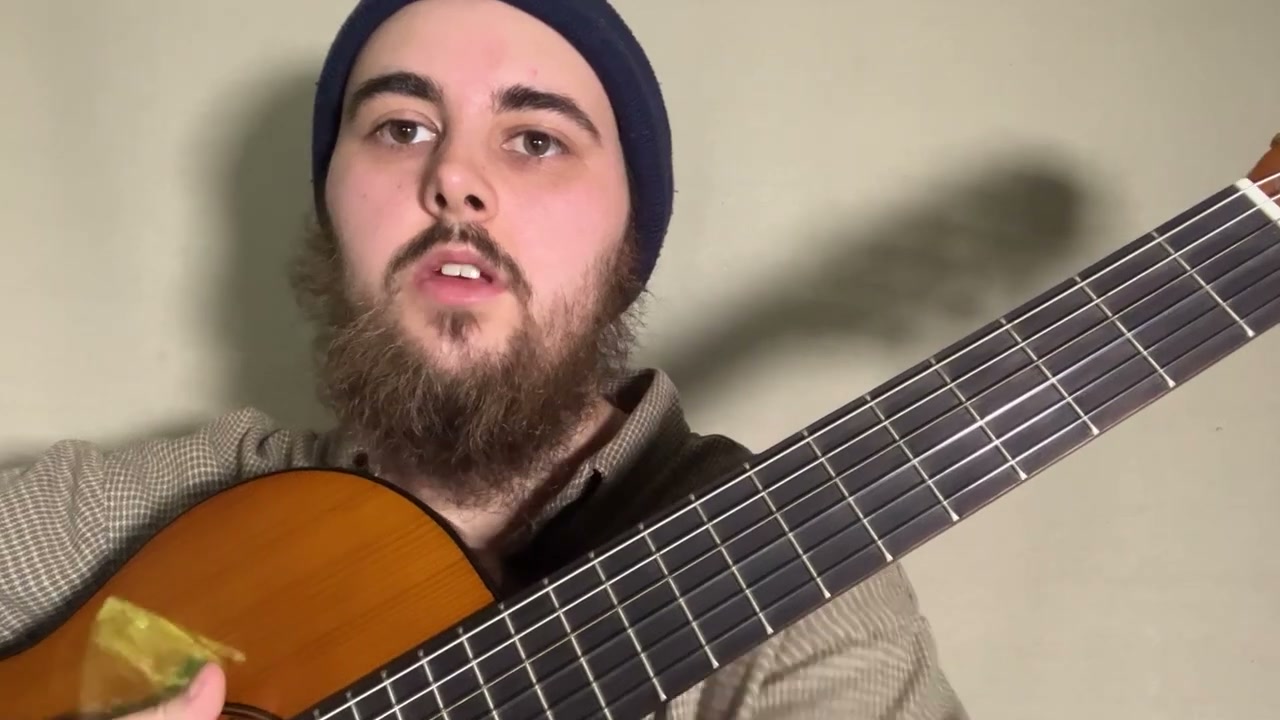
Asher teaches guitar, music theory and composition on Tunelark. View Asher’s profile
By month six, students who practice consistently can usually play a dozen or more recognizable songs at full tempo. Strumming patterns become more varied. You start hearing rhythm rather than counting it. You can play with another musician without losing your place.
Months seven through twelve are where you start to feel like a guitar player rather than someone learning guitar. You’re picking up new songs faster. You can probably play a basic blues solo, a simple fingerstyle arrangement, or both. Reading guitar tabs becomes second nature. If you’re not already comfortable with them, our guitar tabs guide covers the basics.
By the end of year one, with steady practice, you should have a working repertoire of 15 to 30 songs, which is the range teachers typically see, comfortable use of barre chords, basic music theory awareness (major and minor keys, the I-IV-V progression), and a sense of your own preferred style.
Year Two: Real Repertoire
Year two is where guitar starts to feel like a real musical voice rather than a list of exercises.
You’ll be working on more complex songs, songs with multiple sections, key changes, and varied rhythms. You can sit down with a chord chart for a song you’ve never played and have it sounding decent within an hour. You’re developing fingerstyle technique alongside strumming, or focusing in on one direction.
Many students in year two start exploring solos and lead playing. Pentatonic and blues scales become familiar tools. You can improvise a basic solo over a 12-bar blues without freezing. How that first solo actually comes together is the subject of How to Start Improvising on Guitar, and the scale work behind it is in Guitar Scales and the Fretboard.
This is what the year-two roadblock usually looks like: five pentatonic boxes learned up and down, and no way across the neck. Matt S. shows the shift that connects them, sliding on one chosen string from the second note of one box into the next, and builds it up to three octaves.
Skill video · Connecting Pentatonic Boxes
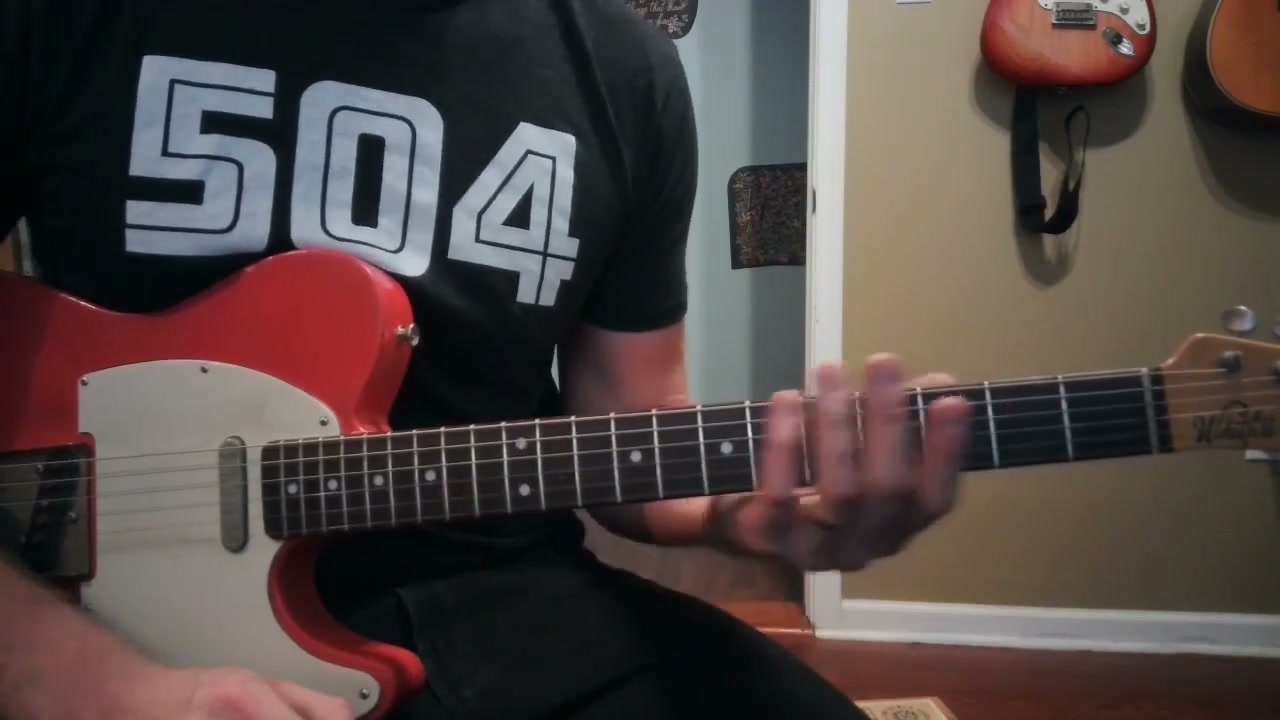
Matt teaches guitar on Tunelark. View Matt’s profile
This is also when most students develop a clearer sense of where they want to take their playing. Some lean into singer-songwriter territory. Some go deeper into blues and rock. Some pivot toward fingerstyle, jazz, or classical guitar. The direction often emerges naturally from what songs you find yourself returning to.
By the end of year two, with consistent practice, you’re a capable amateur guitarist. You can play with other musicians, learn new songs efficiently, and contribute musically to almost any casual setting.
The Intermediate Plateau (And How to Get Past It)
Somewhere in year two or three, almost every guitar student hits the intermediate plateau. The dramatic month-to-month progress of the first year slows down. New songs are easier to learn, but you don’t feel like a fundamentally better player than you were six months ago.
This is normal, and it’s where many students quit thinking they’ve lost their potential. They haven’t. The intermediate plateau happens because the easy gains are behind you, and the next level of progress requires more deliberate work, better practice quality, deeper theory understanding, focused technique work on specific weaknesses.
A few things that help break through:
- Working on specific weaknesses rather than just playing songs you can already mostly play.
- Adding theory study: understanding why songs work the way they do unlocks faster learning.
- Recording yourself and listening back. The gap between how you think you sound and how you actually sound is the most useful information available.
- Taking lessons (or going back to lessons if you stopped). A teacher will identify weaknesses you can’t see in yourself.
For a deeper look at this particular wall, see when your guitar playing stops improving, where Harry B. sets out why going sideways works better than grinding. The broader version of the same problem, across every instrument, is in what to do when you plateau in music lessons.
What Speeds Things Up
A few factors consistently accelerate progress for serious learners.
Daily practice over long sessions. Fifteen to twenty minutes every day beats two hours once a week. The likely reason is that motor skills consolidate in the hours and the sleep between sessions, so more sessions means more chances for that to happen. That is an inference from how motor learning works rather than a measured comparison of practice schedules, and it matches what teachers watch happen with their own students.
A teacher who gives honest, specific feedback. Self-taught players can plateau early because they don’t know what they don’t know. A good teacher shortens the timeline by spotting issues before they become habits, which is what teachers and returning students consistently report rather than something anyone has measured, and the best of them build the whole path around the music you actually want to play, which is the case made in why the best guitar lessons do not follow a lesson book.
Slow practice with a metronome. Most students play too fast and too sloppily. Playing slowly enough to get every note right, then gradually speeding up, builds skill far faster than rushing through.
Recording yourself. Few students record themselves regularly, and the ones who do tend to improve faster because they hear what a listener hears. Your ear hears more than your hands realize.
Real music goals. Vague goals (“get better at guitar”) produce vague progress. Specific goals (“play this song through cleanly by next month”) produce real results.
If you’re an adult getting back into guitar or starting fresh, the online guitar lessons for adults guide covers what good adult-focused lessons look like.
When Ten Minutes Is All You Have
Every timeline on this page assumes you practice. The harder question is what to do on the days when there is almost no time, because those days decide whether the timeline holds.
Tony G. has taught guitar full time for over a decade. We asked him what a student with ten minutes a day should actually do with them, and he started with approach before content. Let go of the wish for more time before you sit down, he says, and work with the minutes you have.
A short session you enter resentfully teaches your hands very little. Ten unhurried minutes on one thing keeps the clock running on everything above.
How to Find a Guitar Teacher on Tunelark
A good teacher accelerates every phase of this timeline. To find one:
1. Open the teacher list and filter by guitar.
2. Read bios. Look for teachers who specialize in the kind of music you want to learn and who describe their approach in real, specific language.
3. Book a trial lesson with one whose profile resonates.
4. After the trial, ask yourself: did the teacher diagnose your current level honestly and lay out a realistic path forward?
Guitar takes longer than most beginners expect and shorter than most quitters fear. With consistent practice and the right guidance, you can be a real guitar player within a year or two, and there’s almost no limit to how far you can go after that.
Frequently Asked Questions
How long does it take to play guitar well enough to enjoy it?
Most students enjoy playing within the first three to six months, as soon as they can strum recognizable songs. Real proficiency (being able to play with others, pick up new songs quickly, and improvise a bit) usually takes one to two years of consistent practice.
Can I learn guitar in 30 days?
You can learn the basics of a few chords and one or two simple songs in 30 days. You won’t be a guitarist yet, but you’ll have started the journey. Beware programs that promise more than that. They usually skip over the foundation you need.
How many hours a day should I practice guitar?
Fifteen to twenty minutes a day of focused practice, five or six days a week, is what the timeline above assumes and is plenty for most beginners. One or two rest days a week are part of the plan rather than a lapse. More is fine if you have the time and your fingers can handle it, but consistency matters more than total hours.
Is it harder to learn guitar as an adult?
Adults often pick up the concepts faster and can direct their own practice, while children tend to have more patience for repetition and absorb what they hear more readily. Neither group is reliably faster overall, and consistency matters more than age either way. The main challenge for an adult is finding the time and being patient with the physical learning curve.
Will my fingers always hurt?
No. The fingertip soreness of the first few weeks fades as calluses form, usually within a month of regular practice. After that, occasional soreness only returns after long sessions or breaks.
Looking for an online guitar teacher? See our full Online Guitar and Bass Lessons page for everything you need to know about getting started.
Keep reading
About Jennifer Heath
I'm Jennifer Heath, VP of Operations at Tunelark and a lifelong singer. I joined the company in 2020 and oversee much of what makes Tunelark work for students and teachers: hiring, training and supporting our instructors, student support, marketing and day-to-day operations. I started voice lessons at 7 and sang with touring choirs through my teens. Music belongs in every life, for the self-expression, the discipline, the comfort and the simple joy of it.