How Long Does It Take to Learn Clarinet? A Realistic Timeline
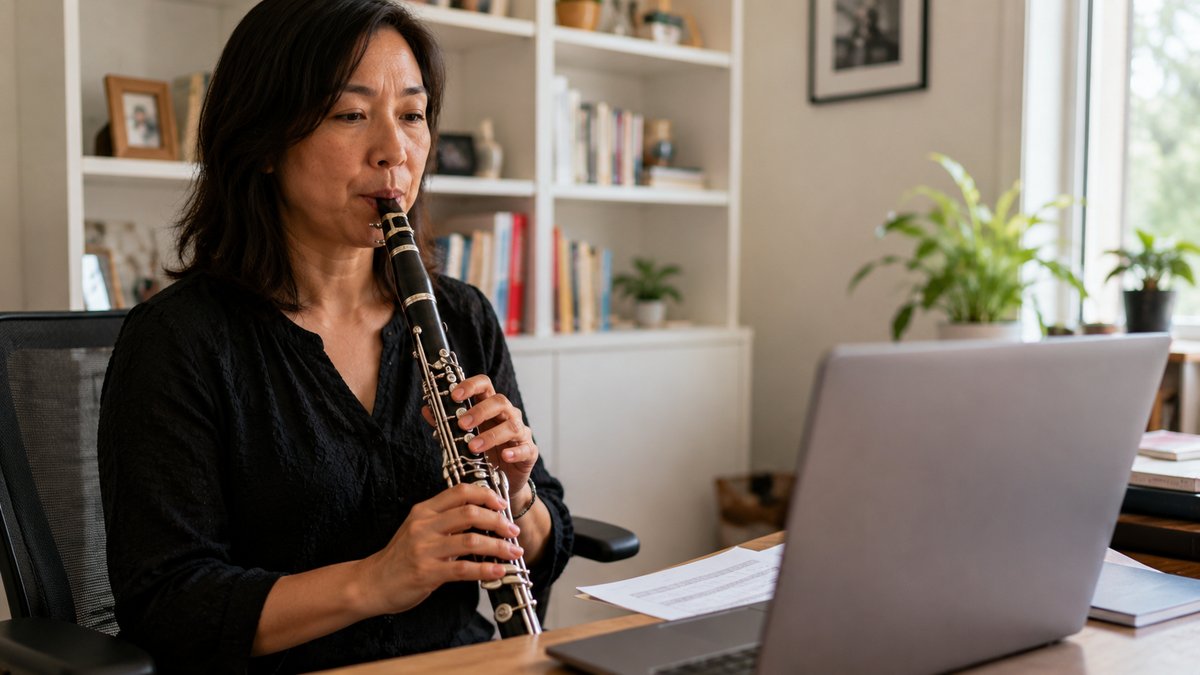
The clarinet really is harder than most instruments at the start, and that phase passes quickly: most beginners play simple tunes within the first month and sound genuinely musical within a year. If you’re asking how long it takes to learn clarinet, the real answer comes down to consistency, instruction, and what you want to play.
Here’s a realistic timeline for adult and teen beginners.
The First Weeks: Embouchure and First Notes
Your earliest challenge is the embouchure (the way your mouth shapes the reed and mouthpiece) plus getting comfortable with reeds themselves. Most students get a first real note within the first week or two and play their first simple melodies shortly after. A tone you can rely on across a whole phrase takes longer, usually two to three months of short daily practice. Squeaks are normal at this stage, and they do not vanish overnight. With a teacher watching, they taper over the first two to three months, and a squeak-free practice session in the second month is a real milestone.
A teacher is especially valuable here, and a first lesson on a reed instrument usually opens with exactly these fundamentals. Reed setup, embouchure, and air support are subtle, and a clarinet teacher watching closely on camera will fix small issues before they become ingrained habits. Our roster of clarinet teachers taking new students shows who is available now.
Months 2-6: Reading and Range
By month two, most students read basic notation and play across the chalumeau register and the throat tones. Crossing the “break” from the throat tones into the clarion register (a rite of passage on clarinet) usually clicks somewhere in months three to six with steady practice. The clarion notes use the same fingerings as the low register with the register key added, so the break is a coordination problem rather than a new set of fingerings. This is where regular lessons keep momentum high and frustration low.
A Realistic Practice Week
Fifteen to twenty minutes a day, five or six days a week, is the right shape for a beginner. Start with two or three minutes of long tones, move to whatever your teacher assigned, and finish on a tune you like so the session ends somewhere good.
Long tones are not a warm-up ritual. They are the exercise that builds the steady air and relaxed embouchure everything else depends on, and they are the first thing most students cut when a session is short, which is exactly backwards. Two minutes of long tones and eight minutes of music will beat ten minutes of music.
Record yourself every four to six weeks. Tone changes slowly enough that you stop hearing your own progress, and one clip from a month ago will show you how much steadier the sound has become.
Months 6-18: Real Repertoire
After about six months of regular instruction, the clarinet feels much more under control. You’ll play longer pieces, improve intonation, and develop a fuller tone. By 12-18 months, committed students handle intermediate repertoire and often play in a band or ensemble.
What Your Teacher Watches at Each Stage
In the first month it is embouchure and air: whether your chin stays flat, whether enough of the mouthpiece is going in, and whether your fingers are sealing the tone holes with the pads rather than the tips.
Around the break, months three to six, the watching shifts to the right hand. A clarion note usually fails because fingers lift off the lower joint at the moment the register key goes down. The step that fixes it is holding the right-hand fingers down through the throat tones, so that crossing the break asks only the left hand and the thumb to move, and a teacher catches the stray fingers on camera long before you feel them lifting. Our practice guide to crossing the clarinet break builds that right-hand habit into a six-bar study.
After that it is intonation, articulation and phrasing, the things that turn correct notes into music. Lessons on Tunelark run 30, 45 or 60 minutes, and a weekly 30-minute lesson is enough to keep a beginner moving. Our guide to how online clarinet lessons work walks through what fills those 30 minutes.
Reeds, and Why They Decide Your First Six Months
More beginner clarinet trouble comes from reeds than from players. Most students start on a strength 2 or 2.5 reed and move up only when the sound starts to feel thin and uncontrolled, never because a higher number sounds more advanced. A reed that is too hard makes the tone stuffy and the upper notes nearly impossible, and one that is too soft buzzes and squeaks no matter how good your embouchure is.
Rotate three or four reeds rather than playing one until it dies. Wet the reed in your mouth for about a minute before you play, line its tip up exactly with the tip of the mouthpiece, and store it flat in a reed case so it dries evenly. A reed played daily usually lasts a couple of weeks before the sound goes dull, and swapping it is often the whole fix for a week of bad practice.
The rest of the maintenance is short. Swab the instrument after every session so moisture is not sitting on the pads, and use cork grease on the tenon corks when the joints start to feel tight.
What Affects Your Progress
Practice frequency, instruction quality, and goal clarity matter most, and the right teacher makes the clarinet’s learning curve feel manageable rather than discouraging.
Some things speed the timeline up. Reading music already, from piano or a school band, removes a whole layer of work in months two and three. A weekly lesson keeps small errors from setting into habits. And playing with other people, in a community band or with one friend, forces you to keep going after a missed note, which is the single habit that separates students who sound musical from students who sound careful.
Other things slow it down, and most of them are fixable. An instrument that has not been serviced will leak, and leaking pads make the low notes refuse to speak no matter how well you are blowing. Practicing without a specific task turns into playing through the pieces you can already play. And cutting the long tones, as above, is what keeps a tone thin months after it should have filled out.
Who Teaches Clarinet at Tunelark
The squeak phase ends faster with someone listening who has heard every version of it.
Sara M. has taught privately since 2009 alongside her orchestral career, and her students have ranged from beginners and high school players to retired adults picking the clarinet back up after years away. David W. has been a working freelance musician for more than four decades, in orchestras, chamber groups, Broadway shows and jazz ensembles, and builds his lessons on the fundamentals.
Both have spent years listening to students, and a practiced ear is what the first three months need.
How to Find a Clarinet Teacher on Tunelark
Tunelark connects you with experienced clarinet teachers who teach online. Browse vetted profiles, find a teacher whose style fits your goals, and book a discounted first lesson. From your first squeak to advanced repertoire, the right instructor keeps your progress steady.
Frequently Asked Questions
Is clarinet hard to learn?
Clarinet is harder at the start than most instruments, mostly because of embouchure, reeds and the squeak phase. Most beginners get a first real note within a week or two, squeak less and less over the first two to three months, and have a tone they can rely on across a whole phrase at around the three-month mark.
How long until I can play real songs on clarinet?
Most students play simple, recognizable melodies within the first month and pieces that sound genuinely musical within the first year.
How much should I practice clarinet?
Fifteen to twenty minutes of focused daily practice is ideal for beginners. Consistency matters more than session length.
Can adults start clarinet from scratch?
Absolutely. Adults bring focus and clear goals that often help them progress quickly, and clarinet is a rewarding instrument at any age.
Keep reading
About Jennifer Heath
I'm Jennifer Heath, VP of Operations at Tunelark and a lifelong singer. I joined the company in 2020 and oversee much of what makes Tunelark work for students and teachers: hiring, training and supporting our instructors, student support, marketing and day-to-day operations. I started voice lessons at 7 and sang with touring choirs through my teens. Music belongs in every life, for the self-expression, the discipline, the comfort and the simple joy of it.