First Saxophone, Flute or Clarinet Lesson: What Goes Wrong
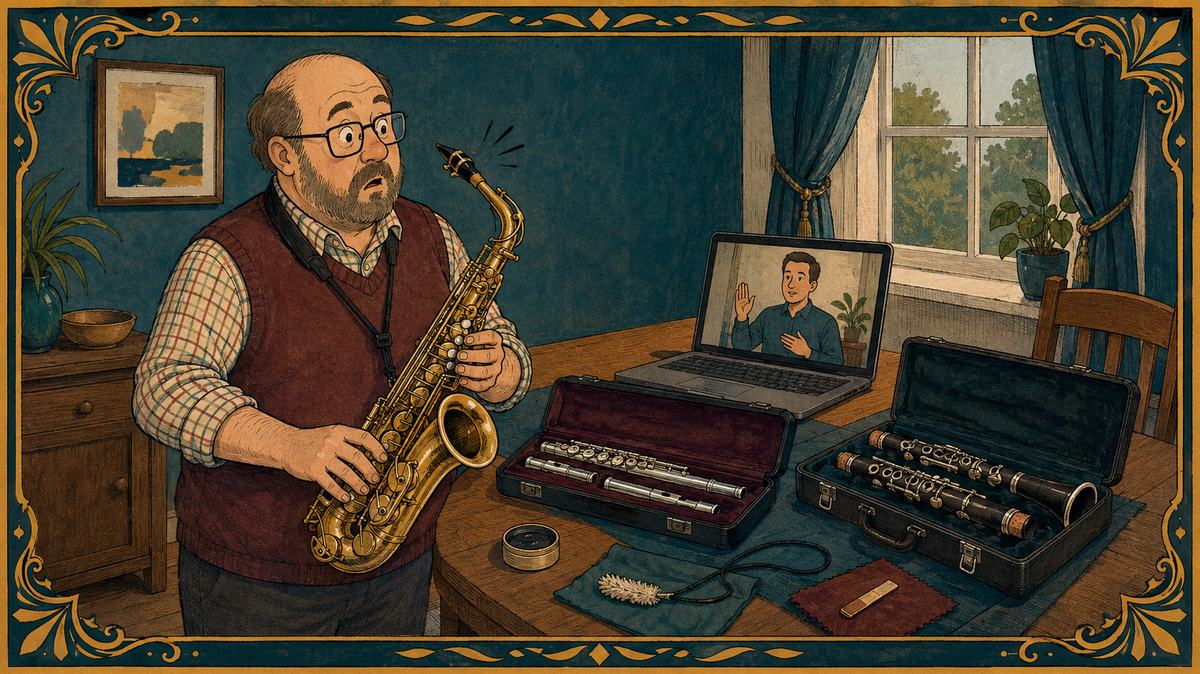
The first lesson on a wind instrument is different from the first lesson on anything else. A beginner at the piano can press a key and hear a note. A beginner with a saxophone, a flute or a clarinet can do everything right and hear nothing, or a squeak, or a sound like a goose. That is normal, it is not talent, and a good teacher expects it. This guide walks through what goes wrong in the first week on each instrument, why, and what the fix usually is, so that when it happens to you, you know it is supposed to. Which of the three a child ends up on is usually settled at a band fitting, and our guide to choosing a band instrument explains what that fitting is checking.
What all three have in common
Assembly is a skill. Pieces go together with a twist, not a push. Cork grease goes on cork only: the clarinet’s corked tenons and the saxophone’s neck cork under the mouthpiece. Flute tenons and the saxophone’s neck-to-body joint are bare metal and are never greased, because grease traps grit that scores the fit and leaves a sticky film. A metal tenon that sticks is wiped clean with a lint-free cloth. Forcing a dry cork joint is the most common way a beginner damages a new instrument in week one.
Breath is the instrument. On all three, the sound comes from a steady column of air, not from blowing hard. Beginners run out of breath, get dizzy, and blow harder to compensate. The fix is slower, fuller breathing from low in the body and long, unhurried notes.
Posture decides the sound. Sitting up on the front half of the chair, shoulders down, instrument brought to the mouth rather than the head brought to the instrument. Most first-week tone problems are posture problems.
Long tones are the first exercise. One note, held as long and as steady as you can, at a comfortable volume. On every wind instrument this is the practice that builds the sound, and it is what the teacher will ask you to practice. Later skills sit on top of it. When Max S., who teaches saxophone on Tunelark, introduces tonguing, his students hold a steady long tone first and then add the tongue to it. Our guide to what to expect in your first online lesson covers the parts of the first lesson that have nothing to do with the instrument.
That lesson is on our channel. Max covers what articulation does to a phrase, and how to touch the tongue to the reed lightly enough that the tone never changes.
Skill video · Tonguing
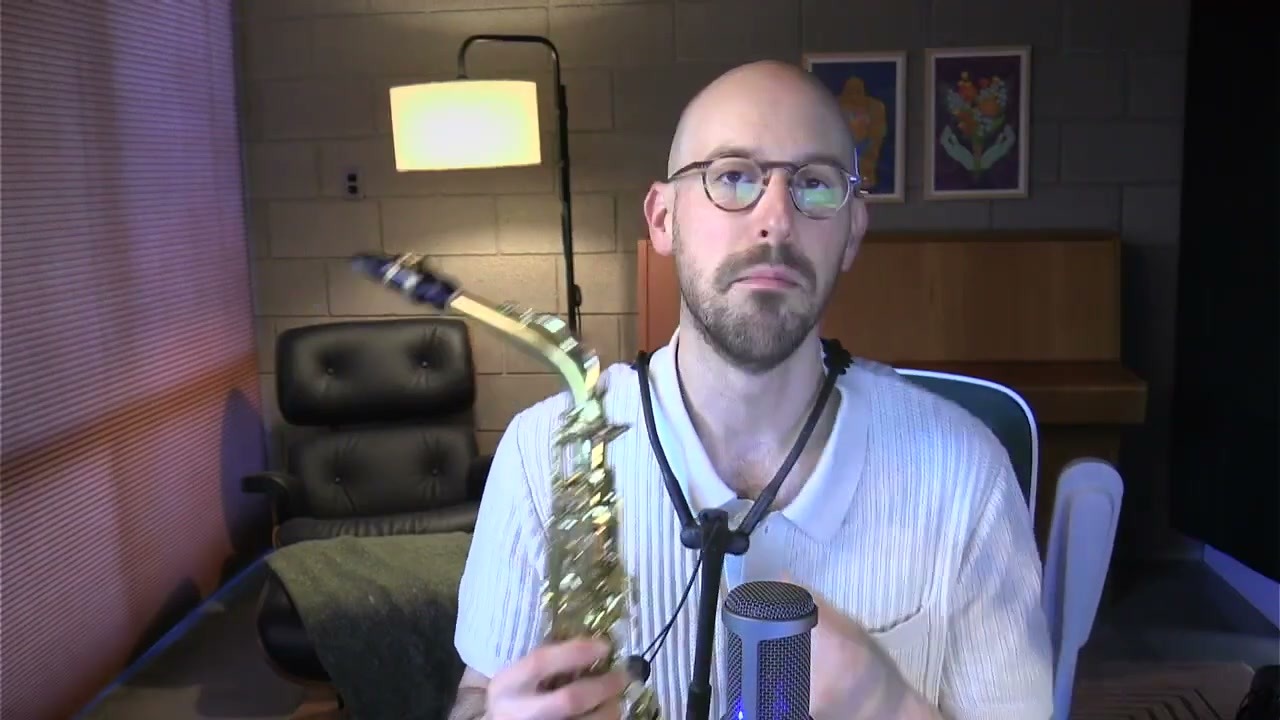
Max teaches saxophone lessons online with Tunelark. View Max’s profile
Saxophone
The squeak. Almost always too much mouthpiece in the mouth, or biting. Take in less mouthpiece (roughly to where the reed separates from the mouthpiece), keep the bottom lip cushioned over the bottom teeth rather than clamped, and let the top teeth rest lightly on top.
The airy, weak sound. Not enough air. The saxophone wants a lot of air moving slowly, and beginners give it a little air moving fast. Fill up, then push from the belly.
The reed. A 2 or a 2.5 strength for a beginner, never harder. Reeds are cheap and they fail: a chipped, warped or waterlogged reed sounds bad no matter what you do. Wet the reed for a minute before playing, and keep two or three in rotation.
Neck strap height. The mouthpiece should come to your mouth with your head level. If you are reaching down or craning up, adjust the strap, not your neck. A sore neck after ten minutes means the strap is wrong.
Right thumb pain. The thumb hook takes the instrument’s weight when the strap is too loose. Tighten the strap until the thumb is only steadying, not lifting.
Sax is the friendliest of the three to a beginner’s first note, which is why our piece on whether saxophone is hard to learn gives the honest answer that the first week is the easy part and the tone takes a year. Our overview of how to find online saxophone lessons covers what a sax teacher can see and hear over video.
Flute
No sound at all. The most common first-lesson experience on flute, and the most discouraging. The fix is to start with the headjoint alone, without the rest of the instrument. Rest the lip plate under the bottom lip, cover about a quarter of the hole, and blow across the hole the way you would blow across the top of a bottle, not into it. Aim the air at the far edge of the hole. Move the jaw forward and back until a note appears. Some students find the note inside the first lesson. Others need a week or two of short daily attempts on the headjoint before it appears, and both are normal. Keep the attempts short and come back to them the next day rather than blowing until you are lightheaded.
Dizziness. Flute uses more air than most wind instruments because much of the air misses the hole and there is no reed or mouthpiece to resist it. Sit down, play for shorter stretches, breathe between phrases, and know that it eases over the first weeks as the aperture tightens and less of the air is wasted. How quickly that happens varies from student to student.
Rolled in or out. The flute rolled too far in sounds stuffy and goes flat, because the lip covers too much of the hole. Rolled too far out it sounds airy and goes sharp. The lip plate sits so the hole is roughly in line with the lips. A teacher will adjust this on camera in the first lesson.
Hand position. The flute balances on three points: the base of the left index finger, the right thumb underneath, and the lip. Beginners grip. The fingers should curve over the keys without pressing the flute into the face.
The left wrist. Bent sharply under the flute, it hurts within days. Bring the elbow slightly forward and the wrist straightens.
Our beginner flute tips go deeper on the first month, and how long it takes to learn flute is the realistic calendar. Our roster of flute teachers taking new students shows who can hear all of this over video.
Clarinet
The squeak. Clarinet squeaks are louder and more mortifying than saxophone squeaks, and they have the same causes plus one the clarinet adds: a finger that is not sealing an open tone hole. Saxophone keys close pads for you, while the clarinet leaves several holes to your fingertips, and a hole that is nine tenths covered squeaks. Beyond that, too much mouthpiece, biting, the top teeth slipping, and a reed of the wrong strength in either direction, or one that is chipped or warped, are the usual suspects. Start on a 2 or 2.5 and change one thing at a time. A reed that is too hard also makes the horn resistant and stuffy, with notes that are hard to start. Our clarinet teachers taking new students check the causes in order in the first lesson.
The embouchure. Chin flat and pointed down, corners of the mouth firm and drawn in, bottom lip cushioned over the bottom teeth, top teeth resting on the mouthpiece. The clarinet embouchure is more precise than saxophone’s, and the first lesson is largely about finding it. Expect the teacher to have you hold a note and adjust one thing at a time.
The break. Somewhere in the first few months, once the low register is secure, you will learn the register key and meet the break: the jump from the throat tones, where almost no fingers are down, to the first clarion notes, where every finger is down plus the register key. The clarion register repeats the low-register fingerings with the register key added, so nothing changes completely. The break is the reason clarinet has a reputation for being hard, and it is a coordination problem, not a new fingering system and not a talent problem. It usually clicks somewhere in months three to six, and every clarinetist has crossed it. Our honest guide to whether clarinet is hard to learn puts it in perspective.
Right thumb pain. Same as saxophone, without the strap to blame. A thumb rest cushion costs a few dollars, and a beginner who plays in short sessions builds the strength within weeks.
Moisture. A clarinet collects condensation that gurgles through the tone holes. Swab after every session, and blow the water out of a gurgling hole rather than playing through it.
What your teacher needs to see and hear
For all three instruments the camera should show your face, your hands and the instrument together, from slightly to one side, so the teacher can see the embouchure and the fingers at once. A laptop on a stack of books at chest height does it.
Turn on the original sound setting in your video app before the lesson. Video software is built to suppress sustained sounds as if they were noise, and a long tone is exactly that. With original sound on, your teacher hears the actual tone and can help you improve it.
Keep a swab, a spare reed, cork grease if you play a reed instrument, and a pencil beside the instrument. Every first lesson has a minute of “let’s fix the reed,” and the students who have a spare within reach get the minute back.
The first week, honestly
Fifteen minutes a day, not an hour on Sunday, and ten focused minutes still beats the hour on the weeks when that is all you have. Long tones first, every day. The headjoint alone for flute until the note is reliable; the mouthpiece and neck alone for saxophone and the mouthpiece and barrel for clarinet until the sound is steady, before the whole instrument. And a rest day if the lips are sore, because the small muscles that make the embouchure are being asked to do something new.
Most beginners have a real, if wobbly, note on all three instruments by the end of the first week. What they do not have is a tone they like, and that takes months. Knowing that in advance is most of what keeps people going.
How to Find a Saxophone, Flute or Clarinet Teacher on Tunelark
Every Tunelark teacher is vetted by working musicians and educators for teaching quality before they can list. Tunelark connects you with woodwind teachers who teach online, and every teacher sets their own rate and shows it on their profile. Scheduling, billing and support are handled for you.
- Browse teachers at tunelark.com/find-a-teacher and filter for your instrument.
- Read bios and watch videos to hear the teacher’s own tone; you will be learning it.
- Book a trial lesson at $25 off the teacher’s 30-minute rate, with the instrument assembled and the reed wet.
- Ask yourself afterward whether one specific thing about your sound got better in the lesson. On winds, that is the whole test.
Frequently Asked Questions
Why does my saxophone squeak?
Too much mouthpiece in the mouth, biting the reed, or a reed of the wrong strength in either direction, chipped or warped. Take in less mouthpiece, cushion the bottom lip over the teeth, and start on a 2 or 2.5 reed. A reed that is too hard also feels resistant and stuffy.
Why can’t I make a sound on the flute?
You are blowing into the hole instead of across it. Start with the headjoint alone, cover about a quarter of the hole with the bottom lip, and aim the air at the far edge, like blowing across a bottle. Some students find it inside the first lesson and others need a week or two of short daily attempts on the headjoint. Both are normal, so keep each attempt short and come back to it the next day.
Why is clarinet so hard at first?
The embouchure is more precise than saxophone’s, the fingers have to seal open tone holes completely, and the break asks the hands to go from nearly open on the throat tones to nearly closed on the first clarion note in a single step. All three are learnable in the first months with a teacher watching, and a reed of the right strength in good condition removes one more variable.
What reed strength should a beginner use?
A 2 or 2.5 for both saxophone and clarinet. Harder reeds are for developed embouchures: on a beginner they feel resistant and stuffy, and they can squeak as readily as a too-soft or damaged reed, so keep a spare in rotation.
Can you learn a wind instrument online?
Yes. A teacher can see the embouchure, hand position and posture on camera and hear the tone once original sound is switched on in the video app. Woodwind lessons over video work well for beginners because so much of the first months is about watching and adjusting one thing at a time.
Keep reading
About Jennifer Heath
I'm Jennifer Heath, VP of Operations at Tunelark and a lifelong singer. I joined the company in 2020 and oversee much of what makes Tunelark work for students and teachers: hiring, training and supporting our instructors, student support, marketing and day-to-day operations. I started voice lessons at 7 and sang with touring choirs through my teens. Music belongs in every life, for the self-expression, the discipline, the comfort and the simple joy of it.