How to Choose Songs for Your Voice: What a Teacher Looks At

Most singers choose songs the way listeners do. They pick the ones they love, and then find out halfway through the second chorus whether their voice agrees. When it does not, the usual conclusion is “I can’t sing this,” and the usual next step is either to force it or to give up on it.
Voice teachers choose differently, because a song is also a training plan. A song asks a voice to spend time in certain parts of its range, to hold certain vowels, to breathe in certain places and to repeat its hardest moment a certain number of times. The right song for this month builds exactly what a singer is ready to build. The wrong one teaches tension.
Louise G. teaches voice at Tunelark and has spent more than fifteen years choosing songs for singers from first-time beginners to aspiring professionals. She holds a bachelor of music in vocal performance, completed a voice pedagogy certification, and received a NATS Joan Frey Boytim Award for Independent Teachers, which helps independent voice teachers attend the national conference. We asked her how she decides whether a song fits a voice, what she looks for in the music itself, and how a singer’s songs change as the voice grows.
Why the highest note is the wrong place to start
The first thing most people check is whether they can reach the top note. Louise looks well past it. “I look beyond whether the student can technically hit the highest and lowest notes,” she says. “I want to know where most of the song sits, how often they have to sustain difficult parts of their range, what kind of registration or vocal quality the song requires, and whether they can sing it without repeatedly compensating with tension.”
That last test is the one a singer can run on themselves. Compensating means the body is doing extra work to get the note out: the jaw clamps, the neck tightens, the chin lifts toward a high note, the shoulders rise on the breath. Any singer does some of that on a hard day. A song that asks for it every few bars, every time through, is not a stretch. It is practice at tensing.
Range and fit are different questions. A singer may be able to touch a note in a warm-up and still not be ready to live near it for three minutes. If you want to know what your range actually is, and what the registers inside it are, our guide to range, voice type and registers walks through it. Choosing songs is about what happens after you know.
Tessitura: where a song lives
The word Louise uses for “where most of the song sits” is tessitura, the part of the range a piece of music spends most of its time in. It is a different measurement from range, which only records the lowest and highest notes.
“Tessitura is often more important than absolute range,” she says. “A song may contain only one or two high notes but spend almost all of its time in an area that is tiring for that particular singer. That can be much harder than a song with a wider range that moves through the voice more naturally.”
Two songs can share the same highest and lowest notes and be completely different to sing. In one, the melody sits comfortably in the middle of the voice and touches the top once, on the last chorus, for a single beat. In the other, the verse, the chorus and the bridge all hover a few notes below that top, so the voice never gets a rest. The first song has the same range and is far easier. Tessitura is why a song that looked fine on paper can leave a singer exhausted by the end, and why a song with a scary-looking top note can turn out to be comfortable.
For singers who are working on their upper notes, the difference matters for pacing too. Building range is gradual work, and our guide to expanding your vocal range safely explains why. A song with a high tessitura asks a voice to use its newest notes over and over before they are secure.
What else is in the music
Tessitura is where Louise starts. It is not where she stops. “I also look at phrase length, opportunities to breathe, vowel choices on sustained or higher notes, registration demands, dynamics, and how repetitive the difficult passages are,” she says. Each of those is something a singer can learn to read in a song before committing to it.
Phrase length and breaths. A long phrase with nowhere to breathe asks a developing singer for more breath management than they may have yet. A song with natural breaks between lines gives the voice time to reset. Our guide to breath support for singers explains what that management involves physically.
Vowels on the hard notes. Some vowels are easier than others to sustain high in the voice. A high note on an open “ah” is usually friendlier than the same note on a closed “ee”, and a singer who tightens the jaw or pulls the tongue back to shape a vowel will feel it most on the notes that are already hard. Louise demonstrates an exercise below for releasing the jaw and the tongue, the two places that tension around vowels tends to hide.
Skill video · Jaw and Tongue Release

Louise teaches voice on Tunelark. View Louise’s profile
Registration demands. Registration is which coordination of the voice a passage calls for: chest voice, head voice, or a mix between them. A song that sits right on a singer’s break, the area where the voice shifts from one register to another, is harder than one that stays clearly on one side of it.
Dynamics. Singing softly high in the range is often harder than singing loudly, and so is sustaining a very loud passage. A song marked to be sung quietly on its highest phrase is a different task from one that asks for full voice there.
How often the hard part comes back. A difficult passage sung once is a moment. The same passage in every chorus, and then twice at the end, is most of the song. Louise counts repetitions, because the voice has to survive every one of them.
The aim behind all of these checks is balance, not ease. “For a developing singer, I want enough challenge to encourage growth without making the entire song an exercise in survival,” she says.
Why enjoying the song counts
A song can pass every one of those tests and still be the wrong choice. “I also think enjoyment matters,” Louise says. “A song can be technically perfect on paper, but if the student doesn’t connect with it, it may not be the best teaching piece for that student.”
This is a practical point as much as a kind one. Singers practice the songs they love. A technically ideal song that bores a student gets sung twice a week, and a slightly harder one they care about gets sung every day. Connection also changes the sound itself, because a singer who means the words is doing the storytelling that most of the work in a song is for. When a teacher and a student choose together, the question is which song the student loves that also teaches what their voice needs next.
“We’re not there yet”
Sooner or later a student brings a song that does not fit. Louise does not treat that as a verdict on the singer. “If a song isn’t a good fit right now, I don’t necessarily want the student to think, ‘I can’t sing this,'” she says. “Sometimes the answer is simply, ‘We’re not there yet.'”
She has three ways forward. “We might transpose it, modify a section, or find another song that works on some of the same skills at a more manageable level.”
Transpose it. Moving a whole song up or down into a different key keeps the melody’s shape and shifts where it sits in the voice. If a song’s tessitura is the problem, a key a few half steps lower can move its busiest passages out of the tiring zone, as long as the lowest notes stay in reach. Many backing tracks and practice apps can change key, and printed songs are often published in more than one.
Modify a section. Sometimes one moment is the obstacle: a single held high note, a run, a phrase with no breath in it. A singer can take a lower harmony note for that moment, add a breath, or simplify a run, and sing the rest as written.
Find a sister song. If the song is simply too far off, a teacher can choose another that works the same skill at a lower level, a similar style or a similar register shift, so the student is building toward the original rather than setting it aside.
And the first song does not go away. “I like keeping the original song as something we can come back to later,” Louise says. It becomes a goal with a name on it.
A worked example: checking one song before you learn it
Applied to a single song, those questions run in this order, with a recording and the sheet music or lyrics.
1. Sing along quietly with the whole song once, without trying to perform it. Mark every place you had to strain, even slightly.
2. Look at where the marks cluster. If they sit on one or two notes, the problem is range. If they are spread across the chorus, the song’s tessitura is too high or too low for your voice right now.
3. Find the breaths. Mark where the singer on the recording breathes. If a phrase left you gasping, note how long it was.
4. Check the vowels on your marked notes. Say the word on each one. Is the vowel open or closed? Does your jaw tighten as you say it?
5. Count the repeats. How many times does the hardest passage come back?
6. Decide. If the strain is on one or two notes, a modification may be enough. If it clusters in the high or the low part of the song, try it a few half steps lower, or higher if the strain sits low, and check the new top and bottom notes. If it is in both high and low passages, or in breaths and vowels too, the song goes on the “later” list.
A teacher does this far faster and hears things a singer cannot hear in their own voice, which is why choosing songs together is such a large part of lessons. But a singer who has run the check once starts to hear songs differently, and brings better choices to the next lesson. Once a song passes, our guide to learning a song the way singers do covers the steps from first listen to performance.
How a singer’s songs change as the voice grows
It is easy to assume that progress in singing means more high notes, so the songs simply get higher. Louise sees it differently. “As technique develops, students usually gain more options rather than simply gaining higher notes,” she says. “They may have better stamina, more reliable registration, greater dynamic control, more stylistic choices, or the ability to sing through a difficult passage without creating unnecessary tension.”
Each of those opens up songs that were closed before. Stamina opens songs with a high tessitura. Reliable registration opens songs that cross the break again and again. Dynamic control opens the quiet high phrase. None of them shows up as a new top note, and all of them change what a singer can choose. Our honest timeline of vocal technique describes how long each kind of progress usually takes.
Knowing when to go back to the song you set aside
The song on the “later” list is not a vague someday. Louise has a specific signal. “I know we’re ready to revisit a song when the skills it requires are beginning to show up consistently in exercises and easier repertoire,” she says.
The word that matters is consistently. A skill that appears once in a good warm-up is still arriving. When it turns up reliably, in exercises and in other songs, the song that demanded it is back on the table.
Going back is also how a singer hears their own progress. “Sometimes returning to an old song is one of the best ways for a student to recognize their own progress,” Louise says. “Something that once felt impossible can suddenly feel surprisingly manageable.” Progress in singing is gradual and hard to hear from the inside. The song that beat you a year ago is a fixed point to measure against.
About Louise
Louise has sung since she was small, from school chorus and solos through leading roles in musicals from the age of twelve, choral and concert work, and a competitive musical theater intensive at NYU. She holds a bachelor of music in vocal performance from Emmanuel College and a master’s in special education from Liberty University, and she has taught in a special education classroom and directed a choir. Alongside a NATS Joan Frey Boytim Award for Independent Teachers, she completed a 50-hour voice pedagogy certification through New York Vocal Coaching. She was also interviewed for our guide to voice lessons for students with special needs.
At Tunelark she teaches voice to students of every age and level, from enthusiastic beginners and students with special needs to singers preparing for auditions, with a focus on healthy technique and stylistic versatility. She spends much of a first lesson listening, both to the voice and to why the student has come, and she aims for a student to leave it having sung something that felt easier than when they arrived. Here she is in performance, singing “Maybe This Time.”
Performance · Maybe This Time
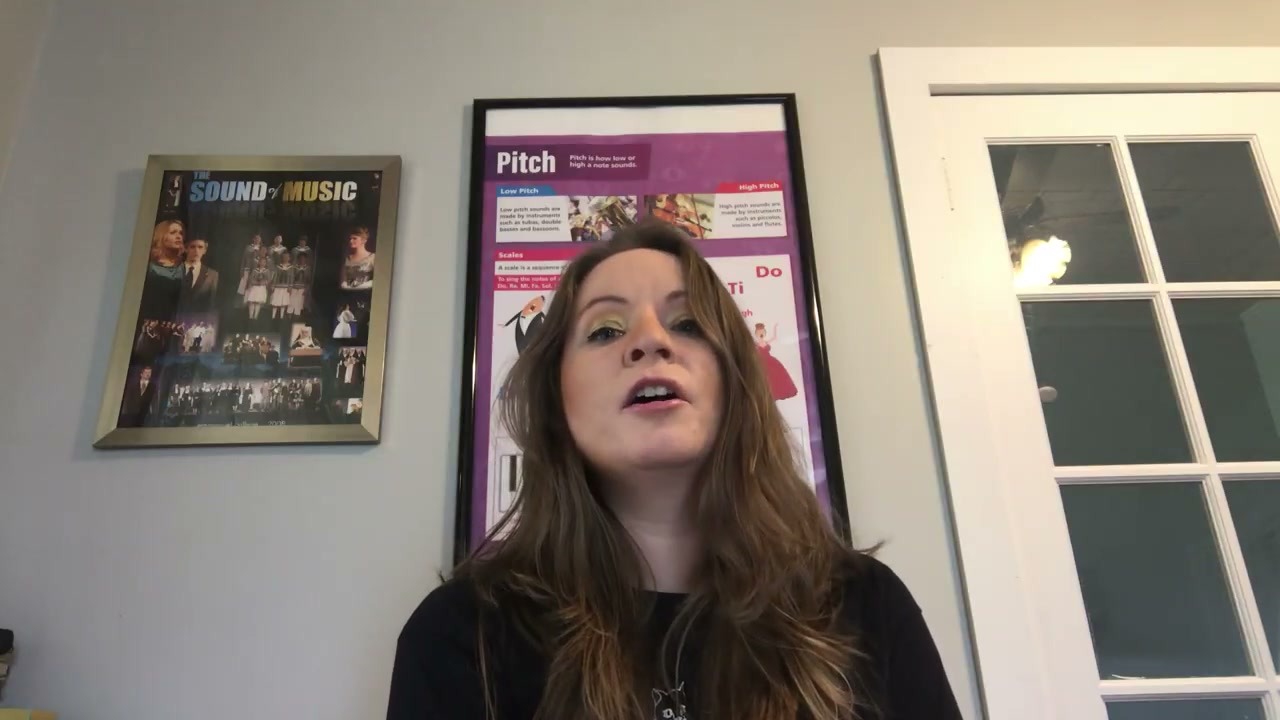
Louise teaches voice on Tunelark. View Louise’s profile
Ready to find songs that fit your voice?
The right song for a developing voice sits mostly where the voice is comfortable, gives it places to breathe, asks for its hardest moment a manageable number of times, and is a song the singer actually loves. A song that fails those tests today is not a closed door. It is a song for later.
Louise is accepting new voice students at Tunelark, and a song you love that feels just out of reach is a good thing to bring to a first lesson. You can also find a teacher for another instrument across the rest of the roster.
Frequently Asked Questions
What is tessitura in singing?
Tessitura is the part of the range where a piece of music spends most of its time. Range records only the lowest and highest notes, so two songs with the same range can have very different tessituras and feel completely different to sing.
How do I find songs in my vocal range?
Start by finding your comfortable range, then check where a song sits most of the time rather than only its highest note. Songs are often published in several keys, and many backing tracks can change key, so a song slightly outside your range can often be moved into it.
Is it bad to sing songs that are too high for me?
Occasionally stretching for a note is part of learning. Singing a song that sits high throughout, and strains every time through, trains tension instead of technique, and a tired voice needs rest.
Should beginners sing songs they love or easy songs?
Ideally both at once. A teacher can usually find a song the student loves that also sits in a manageable part of the voice, or adapt the one they chose with a key change or a modified section.
What does it mean to transpose a song?
Transposing moves every note of a song up or down by the same distance into a new key. The melody keeps its shape and the song sits higher or lower in the voice, which is the simplest fix when a song is almost right.
Looking for an online voice teacher? See our full Online Voice Lessons page for everything you need to know about getting started.
Keep reading
About Jennifer Heath
I'm Jennifer Heath, VP of Operations at Tunelark and a lifelong singer. I joined the company in 2020 and oversee much of what makes Tunelark work for students and teachers: hiring, training and supporting our instructors, student support, marketing and day-to-day operations. I started voice lessons at 7 and sang with touring choirs through my teens. Music belongs in every life, for the self-expression, the discipline, the comfort and the simple joy of it.