How to Practice With a Metronome When You Lose the Beat

If you keep losing the beat against a metronome, the click is usually set faster than you can play the hardest bar, or you are waiting for each click instead of counting the space between them. The fix comes in four steps: set a tempo you can actually play, count the smaller notes inside each beat, loop the exact beat where it breaks, and then take the click away in stages to find out whether the time is yours.
Three Different Ways to Lose the Beat
“Losing the beat” covers three problems that need different fixes, and one recorded pass tells you which one you have. Set the metronome, prop your phone up to record, play the passage once without stopping, and listen back.
- You fall behind at the same spot every time. A hard chord change, a shift (moving the hand to a new position) or a run of fast notes takes longer than the beat allows. This is a technique problem that shows up as a timing problem, and the cure is the isolation work further down.
- You slowly pull ahead of the click, or slowly fall behind it, through easy music. That is drift. Your own sense of the pulse is moving, and without the click you would not hear it.
- You come back in early or late after a held note, a tie or a rest. A tie is a curved line joining two notes into one held sound. You stopped counting while nothing was happening, and the cure is counting the subdivisions, the shorter notes inside each beat.
The recording also shows whether you stopped and restarted when you slipped. In tapping experiments, Bruno Repp’s review of the research describes staying with a beat as two running corrections: one adjusts when your next note lands, the other adjusts your sense of the tempo itself. The review covers tapping, not practice habits, but a player who stops at every slip skips the moment those corrections would happen. Keep going, get back on the click within a beat or two, and finish the passage.
Set a Pulse You Can Actually Play
Set the metronome by the hardest bar, not by the passage as a whole. A tempo that suits seven easy bars and wrecks the eighth one gives you eight bars of practice at falling behind.
To find it, play only the hardest bar, five times in a row, and lower the click until at least four of the five come out with the right notes in time. That tempo is your floor for the whole passage today.
There is research behind setting it low enough to be right most of the time. The music education researchers Duke, Simmons and Cash observed 17 graduate and advanced undergraduate piano majors practicing a hard three-measure passage from a Shostakovich concerto, then tested them the next day. How long each pianist practiced and how many times they played the passage did not predict how well they played it the next day. The share of their practice attempts that came out correct did, and pianists who played it wrong more often during practice ranked lower. It was a small study of advanced pianists with a next-day test, and it measured a link rather than a cause, but it points the same way as the tempo floor: practice at the speed where most attempts are right.
Slow tempos bring their own problem. At 60 beats per minute the clicks are a full second apart, and at 50 they are 1.2 seconds apart, a gap long enough to drift inside. At about 70 and below, set the metronome to click on the eighth notes instead: for a beat of 50, set it to 100 and treat every second click as the beat. Most metronome apps have a subdivision setting that does this for you, often with an accent on the beat.
Count the Smaller Notes Inside Each Beat
Subdividing means counting the shorter notes inside each beat, so the space between clicks has landmarks. Eighth notes split a beat in two and are counted “1 &”. Sixteenths split it in four, “1 e & a”. Triplets split it in three, “1 trip let”. When the click is set to the beat, it falls only on the numbers, and the syllables between them are yours to place.
Swipe sideways to see the whole diagram.
Count at the level of the shortest note in the passage. A line of eighth notes is counted in eighths. A bar with one sixteenth-note figure in it is counted in sixteenths for the whole bar, so the figure does not arrive as a surprise. Our guide to reading sheet music covers how note values and time signatures turn into counts, if the syllables above are new.
Out loud is better than in your head, because a spoken count is something you can hear drift. Pianists, guitarists and drummers can count aloud while they play. Singers and wind players cannot, so they speak the count once through with the click, then play while counting silently, and tap the beat with a foot if that helps. A foot only helps if it stays on the beat; if it starts following the rhythm, it has stopped being a pulse.
Yousef S., who teaches drums on Tunelark, treats counting and subdividing as tools to use however they help, and expects a trained drummer to end up hearing where the guitar or piano puts the main hits rather than counting each one. Their approach to odd time signatures shows the same tools at work in 5/4 and 7/8.
Isolate the Exact Beat Where It Breaks
Once the recording has shown you where you fall behind, shrink the problem to its smallest size. The loop starts one beat before the trouble and ends on the first beat after it. That landing beat is part of the exercise, because a slow change usually shows up as a late arrival on the next beat rather than as a wrong note.
1. Set the click to your floor tempo, clicking eighth notes if it is 70 or below.
2. Play the loop: the beat before, the hard spot, and the landing beat. Stop there.
3. Repeat it until it comes out right three times in a row, counting aloud if your instrument allows.
4. Add one beat on each side and repeat until that is clean three times in a row.
5. Keep growing the loop a beat or a bar at a time until it joins the passage on both sides.
Our article on ukulele strumming and chord changes shows this kind of drill on one instrument: two chords, a steady strum, and no stopping at the seam where the hand has to move.
A Tempo Ladder From Playable to Target
When the loop is clean at the floor, climb toward the tempo the piece is meant to go. The ladder below assumes a passage marked at 96 beats per minute and a floor of 60. Move up one rung after three clean passes in a row. If two passes in a row fall apart, drop back two rungs, play three clean passes there, and climb again. End the day on the highest clean rung, and start the next day two rungs below it.
| Beat tempo | Set the metronome to | What the click marks | Move on when |
|---|---|---|---|
| 60 | 120 | Every eighth note | Three clean passes in a row |
| 64, then 68 | 128, then 136 | Every eighth note | Three clean passes at each |
| 72 to 92, in steps of 4 | 72, 76, 80, 84, 88, 92 | Every beat | Three clean passes at each |
| 96, the target | 96 | Every beat | Three clean passes, then start the tests below |
| 96 | 96, with beats 1 and 3 muted | Beats 2 and 4 only | Three clean passes |
| 96 | 24 | Beat 1 of each bar | Three clean passes |
| 96 | 24, with every other bar muted | Beat 1 of every other bar, one click every eight beats | You land with the click every time it comes back |
The steps are 4 beats per minute because a small step keeps each rung close to one you have already played cleanly. The switch from eighth-note clicks to beat clicks happens at 72, where the clicks are 0.83 seconds apart and short enough to hold.
Take the Click Away in Stages
Playing in time with a click and keeping time yourself are different skills. The bottom three rows of the ladder test the second one by giving you less and less click to lean on. On beats 2 and 4, the click sits where the snare backbeat falls in pop and rock, and where the hi-hat closes in swing, so you supply beats 1 and 3. On beat 1 alone, you supply three beats out of four. On every other bar, you supply seven beats out of eight.
In a lesson on the Tunelark channel, Lucas plays saxophone first against a constant click, the setting for working a piece up to speed, then against one set as slowly as he can manage while staying in time, filling the long gaps with subdivisions. Each time a sparse click returns, it tells you how far your own pulse has wandered.
The exercise is on saxophone, and nothing in it depends on the instrument: set the click as slowly as you can and still stay in time.
Skill video · Practicing with a Metronome
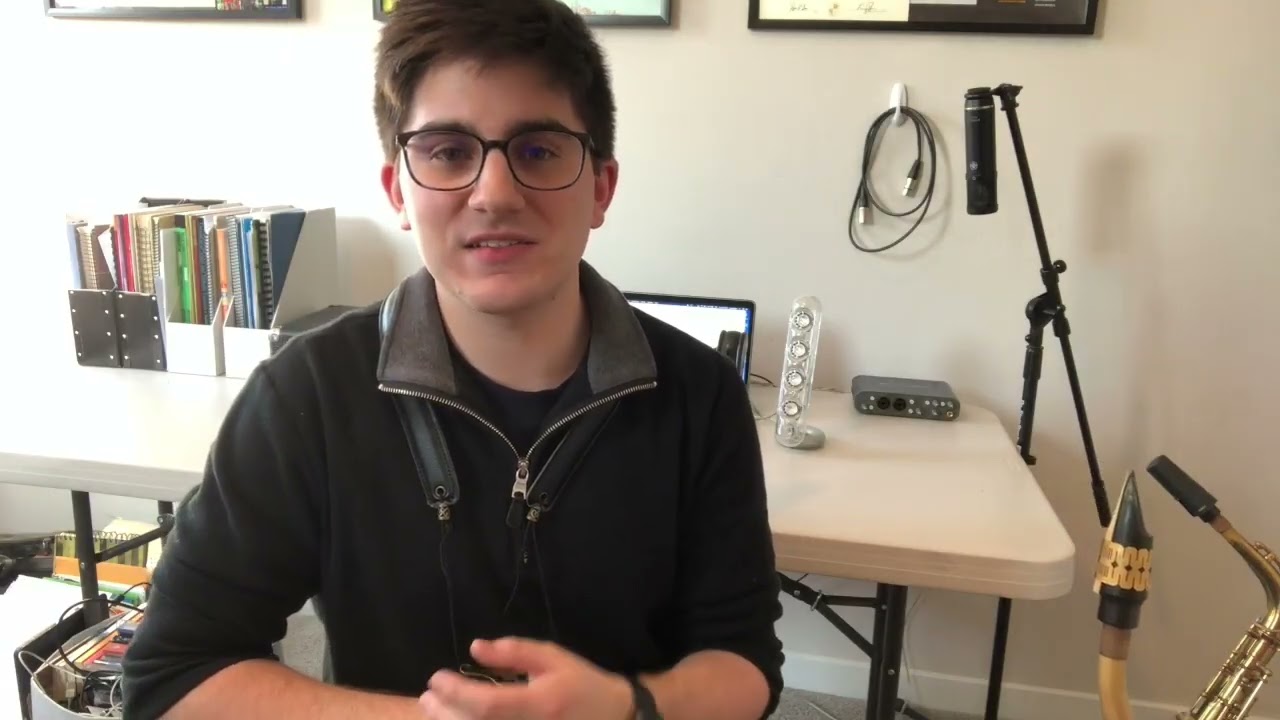
Lucas recorded this lesson for the Tunelark channel.
A typical mechanical metronome goes no lower than 40 and cannot mute beats, so the bottom three rows of the ladder need an app. Look for one that can mute beats or mute whole bars. Many call the bar setting a gap or silent bars feature: it plays for a few bars, goes quiet for a few, then comes back, and you hear at once whether you are still with it.
Once the sparse click holds, test against music instead of a click. A drum loop or backing track gives you a groove with a kick and a snare to fit around, which a metronome does not, as our guide to how bass and drums lock together explains for bassists. Our practice routine for adults shows where a few minutes of this work fit inside a daily session.
How to Find a Music Teacher on Tunelark
Every Tunelark teacher is vetted by working musicians and educators for teaching quality before they can list. Each teacher sets their own rate and shows it on their profile, and Tunelark handles scheduling, billing and support.
- Open the teacher list at tunelark.com/find-a-teacher and filter by your instrument.
- Choose a lesson length of 30, 45 or 60 minutes.
- Book a trial lesson. The first lesson with a new teacher is that teacher’s rate minus $25, for whatever length you choose, so trials start at $14.
- Bring the bar where you lose the beat and the highest tempo you can play it cleanly, so the teacher starts from your ladder.
Frequently Asked Questions
Is a metronome app as good as a dedicated metronome?
For the stages in this guide an app is the better tool, because muting beats and bars is an app feature. A dedicated digital metronome runs about $15 to $30 as of 2026 and does not ping with notifications, which some students find easier to practice beside.
How do I find the tempo a piece is supposed to go?
Look above the first bar for a number such as 96 next to a note symbol, which is the beats per minute. If there is only an Italian word or a recording, use the tap-tempo button most metronome apps have and tap along with the recording.
Should the metronome be on for every minute of practice?
No. It is a tool for building and checking time on a specific passage. Play some of every session without it, so the piece also gets shaped by phrasing and dynamics rather than only by the grid.
What if the music speeds up, slows down or has rubato?
Learn the notes against a steady click first, then take it away for the expressive pass. Rubato, a deliberate push and pull of the tempo, is easier to control when you know where the steady beat would have been.
How much time should metronome work take in a beginner’s day?
Two or three rungs a day on one short loop fits inside a beginner session of 15 to 20 minutes, five or six days a week, with the rest going to playing music. The full ladder takes several days.
Keep reading
About Jennifer Heath
I'm Jennifer Heath, VP of Operations at Tunelark and a lifelong singer. I joined the company in 2020 and oversee much of what makes Tunelark work for students and teachers: hiring, training and supporting our instructors, student support, marketing and day-to-day operations. I started voice lessons at 7 and sang with touring choirs through my teens. Music belongs in every life, for the self-expression, the discipline, the comfort and the simple joy of it.