Morning Practice vs. Evening Practice: What the Research Actually Says

Almost every music student eventually wonders whether they are practicing at the wrong time of day. The morning vs evening music practice debate has real research behind it, and while the differences are small, they point in some specific directions that can change how you organize your week.
The short version is this: morning practice tends to be better for learning genuinely new material, and evening practice is the better home for polishing, review and expressive playing. Both windows work, and sleep banks whichever one you used. Knowing what each is good at lets you put the right kind of work in each.
What the Research Actually Suggests
Two research literatures bear on this question, one on motor skill learning, which is what instrumental practice mostly is, and one on circadian rhythms and time of day. Between them they give a few consistent patterns.
First, alertness and working memory tend to peak in the late morning for most adults. That pattern comes from circadian research rather than from music studies, and it varies with chronotype, since confirmed evening types peak considerably later and should read every mention of morning here as their own sharpest window instead. For everyone else, this is where new, demanding cognitive work (including learning a new piece, a new fingering, or a new rhythm) gets the most traction.
Second, motor skills that have just been practiced consolidate during sleep. Research on procedural memory has shown that the brain continues to reorganize and strengthen newly-learned motor patterns during the night, with measurable improvements visible the next morning even without additional practice.
Third, fatigue and cumulative stress reduce the quality of new learning. By late evening, most students have less working memory and patience available, which makes new material harder to absorb.
None of these effects are enormous. Nobody has put a number on how much the late-morning window helps for music specifically, so treat the morning advantage as a plausible tilt rather than a measured edge, and remember that a window you will actually defend beats a theoretically better one you keep skipping. What matters more for most students is consistency, which we cover further in our guide on music practice routines for adults.
Why Morning Often Wins for New Material
When you sit down to learn something you have never played before, three things have to happen quickly: you have to read or hear the new pattern, hold it in working memory, and translate it into movements. All three of those are easier when you are alert and unfatigued.
Morning practice has a few specific advantages for this kind of work:
- Fresh attention. You have not yet spent the day depleting it on email, errands, or work.
- More patience for repetition. Learning a new pattern means playing it wrong many times before it settles, and that is far easier to tolerate before the day has spent your goodwill.
- Less emotional residue. Stressful interactions accumulate during the day and quietly use up cognitive bandwidth. Morning practice catches you before that drag sets in.
In practical terms, if you are working on something genuinely hard (a piece beyond your current level, a section you keep flubbing, a new technical idea) morning practice tends to give you the cleanest shot at it.
That does not mean morning practice is “better.” It means morning practice has a specific strength: it is the right window for the demanding, attention-heavy parts of your routine.
When Evening Practice Is Better
Evening practice has its own strengths, and they are different in ways worth knowing.
Polishing and refining. Once a piece is mostly learned, evening practice can be a wonderful time to play through it slowly, find the rough edges, and clean them up. The work is more about listening than encoding, and listening does not require peak alertness.
Expressive work. Teachers commonly observe, though no study has tested it, that expressive playing comes more naturally in the evening. The body is looser, the day’s filters are down, and music tends to feel more like music and less like a problem to solve.
Memorization review. Reviewing pieces you have already partly memorized is well suited to a tired hour, because you are not learning new material. Overnight consolidation banks it either way.
Lower-stakes practice. For students who would otherwise skip practice altogether, evening practice is far better than no practice. A tired thirty minutes of review or polishing still produces real learning, and zero minutes does not. What decides whether tired time pays is the material, not the hour.
The risk in evening practice is when you try to use it for the wrong kind of work, hammering away at a hard new passage you have never played before, late at night, while tired. That tends to encode bad habits and frustration, neither of which sleep will repair.
The Surprising Role of Sleep
The most interesting research on practice timing is not really about practice. It is about sleep. The finger-sequence typing experiments run by Matthew Walker and colleagues in 2002 and 2003 are the ones usually being described here. Motor sequences practiced and then slept on were performed measurably better the next day than the same sequences practiced and then left through an equal stretch of waking time. The improvements happen during sleep itself, without further practice.
The implication is narrower than it first looks. The skills you worked on get re-stored and reorganized overnight, and by morning they often feel slightly easier than they did when you stopped. That happens to whatever you practiced that day, at whatever hour you practiced it, so evening practice does not get a head start on consolidation the way it is sometimes sold.
What it does mean is that a late session is banked exactly the way an early one is. That is reason enough to treat evening practice, especially polishing and reviewing, as productive work rather than consolation-prize work.
The size of the gap before sleep does not appear to matter much either. A long stretch of email or a stressful conversation between practice and bed has not been shown to cost you the benefit. Practice, spend an hour or two on something low-key, then sleep, and consolidation still gets its clean run.
What Separates Two Students Who Practice the Same Amount
Before optimizing an hour, it is worth knowing how much of the outcome that hour explains. Dr. P. teaches voice on Tunelark and was asked a version of this question directly: two students start in the same place, put in the same hours, and two years later one is much further along. What accounts for it?
The list they give runs long, and almost none of it is scheduling. How a student takes a correction and applies it. How attentive they are to what their own body is doing while they play or sing. How well they hear the difference between good and not good, and whether they can say why. And underneath all of it, temperament: one student gets discouraged when corrected, and another takes the same note as a reason to dig in.
Set against that, the timing question is real but modest. It is worth taking because it is free, and it is worth arranging once and then forgetting about. It is not worth agonizing over, and it is certainly not worth losing a session you could have had because the ideal window has already gone. Everything above is a tiebreaker for a schedule that already exists, not a reason to build one you cannot keep.
One example of work that fits whichever window you actually get. Elspeth demonstrates the paradiddle, a sticking exercise that builds tempo, internal counting and focus, and that can be done with or without sticks, anywhere. Material like this is what a tired evening or a five-minute morning is for.
Skill video · The Paradiddle
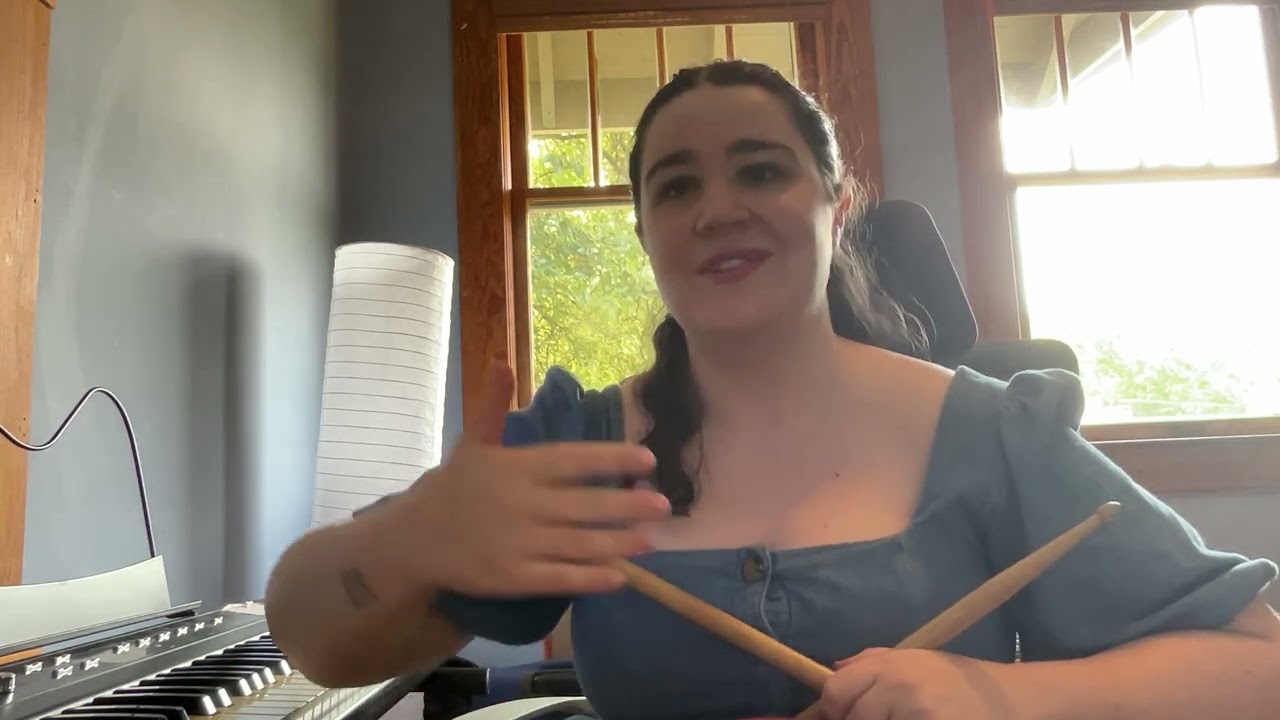
Elspeth teaches drums, piano and voice on Tunelark. View Elspeth’s profile
How to Pick Your Window (And Stick With It)
For most students, the right answer is not “morning OR evening.” It is “the same window most days, with strategic exceptions.”
If your schedule allows morning practice on the days you are working on hard new material, take it. If your schedule only allows evening practice, that is fine, use it well, and lean into review, polishing, and memorization work rather than fighting hard new material when you are tired.
A few practical principles:
- Pick the window that you can actually defend. A consistent evening practice will produce more learning than a perfect morning practice you keep skipping.
- Match the window to the work. Save your hardest pieces for whichever window catches you at higher alertness.
- Use both, if you can. Many committed students do ten to fifteen minutes in the morning on new material and twenty to thirty minutes in the evening on review. This pairing leverages both windows for what each one does best.
- Anchor practice to an existing routine. Practice attached to morning coffee or post-dinner tea is more durable than practice that floats around your day. There is more on this in our deeper look at the science behind fifteen-minute daily practice.
The morning vs evening music practice question matters less than the consistency question. Whichever window you pick, the gains come from showing up there most days, not from optimizing the perfect minute of the perfect hour.
How to Find a Good Music Teacher on Tunelark
A good teacher will help you build a practice routine that fits your actual life, not a textbook ideal.
1. Open the teacher list and filter by your instrument.
2. Read bios. Look for teachers who write about practice strategy and student-specific routines, not just repertoire.
3. Book a trial lesson with one whose profile resonates.
4. After the trial, ask yourself whether the teacher asked about your schedule and energy patterns, or assumed a standard daily routine that may not be yours.
For more practical practice strategy, see our guide on how to practice music at home.
Frequently Asked Questions
Is it really better to practice in the morning?
For learning new, difficult material, somewhat yes: most adults are sharper in the late morning, and new motor learning lands better when attention is fresh. For polishing and reviewing, evening is often just as good, since that work does not need peak alertness.
What if I can only practice late at night?
It still works, especially for review, memorization, and expressive playing. Save your hardest new material for whatever earlier window you can find (lunch break, weekend morning), and use the late evening for the kind of practice that does not require peak alertness.
How long after practice should I sleep to get the consolidation benefit?
Sleep after practice helps, and whether it has to come soon afterward is less clear for motor skills. In the Walker finger-sequence experiments the overnight gain showed up whether people trained in the morning or late in the evening, so the sleep seems to matter more than the size of the gap. Practicing, then doing something low-key for an hour or two, then sleeping is still a sensible pattern.
Should I do two short sessions instead of one long one?
Two shorter sessions, one morning and one evening, are often more effective than one long session for motor learning. The brain consolidates between sessions, and shorter sessions hold attention better. Many teachers recommend this split when a student’s schedule allows.
Does it matter if I practice right after eating?
Mildly. Heavy meals reduce alertness and can make sit-down practice feel sluggish. A light snack is fine and sometimes helpful. If you are choosing between practicing after dinner and skipping practice altogether, practice after dinner.
Keep reading
About Jennifer Heath
I'm Jennifer Heath, VP of Operations at Tunelark and a lifelong singer. I joined the company in 2020 and oversee much of what makes Tunelark work for students and teachers: hiring, training and supporting our instructors, student support, marketing and day-to-day operations. I started voice lessons at 7 and sang with touring choirs through my teens. Music belongs in every life, for the self-expression, the discipline, the comfort and the simple joy of it.