Music Lesson Apps vs. a Real Teacher: An Honest Comparison
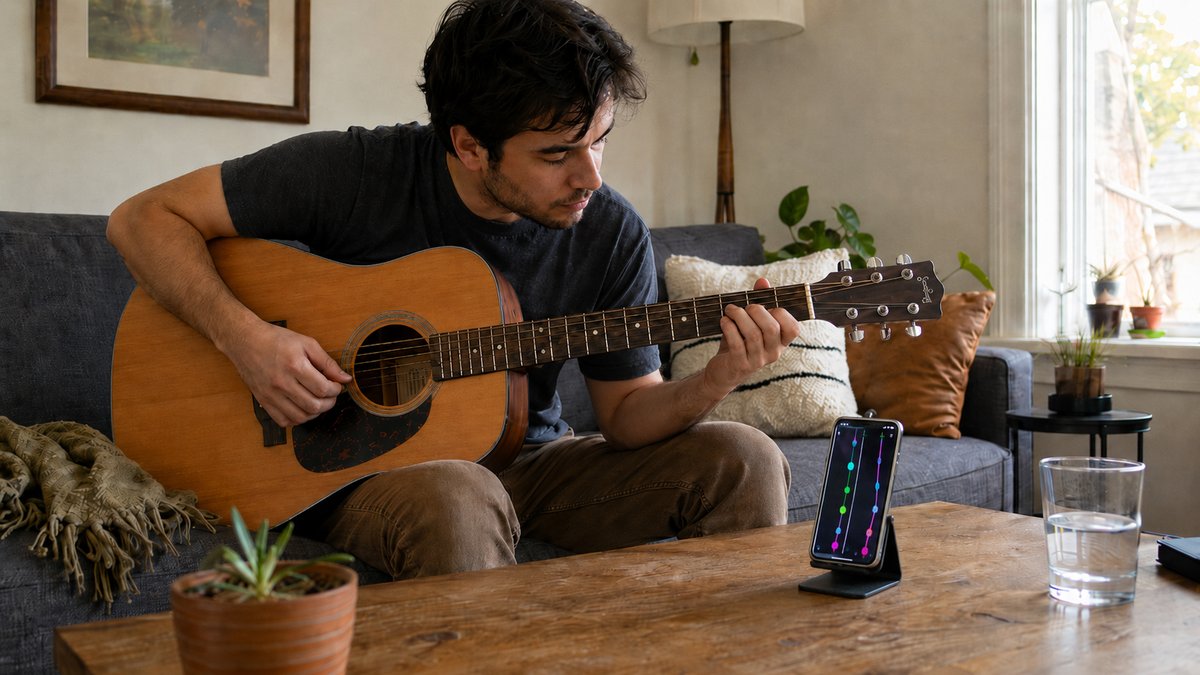
Simply Piano, Yousician, Simply Guitar, Flowkey: if you’ve thought about learning an instrument in the last five years, you’ve seen the ads. A subscription costs less per month than a single private lesson, the apps are genuinely fun, and millions of people use them. So do you actually need a teacher?
Honest answer: sometimes no. An app is a real way to start, and for some goals it’s enough. But the two aren’t interchangeable, and knowing where the line sits will save you a year of practicing the wrong things.
What Apps Genuinely Do Well
Learning apps listen through your microphone, follow along as you play, and score you note by note. That loop is excellent at a few specific things.
They make daily practice happen. Streaks, levels, and instant feedback are powerful motivators, and a habit you keep beats a perfect method you abandon.
They teach note recognition and basic positions quickly. If you’ve never touched a piano, an app will have you finding notes and playing simple melodies in days.
They’re a cheap way to test interest. Before committing to lessons for yourself or your child, a month with an app answers the question “will I actually sit down and do this?”
Used this way, as a practice companion and an on-ramp, apps earn their subscription.
What an App Can’t Hear or See
A microphone captures the whole sound you make, but the app behind it scores only two things: which note you played and roughly when you played it. Tone, tension and strain are all there in the signal, and none of them are scored. Nor can the app see your wrists, your posture, or your fingering. It has no idea whether you produced that correct note with technique that will still work at twice the speed, or with a habit that will stop you cold in a year.
This matters because bad habits pass every level. An app will happily award you three stars for a passage played with a collapsed wrist or a death-grip on the pick. A teacher interrupts that habit in week two. An app confirms it for a year, and unlearning a practiced habit takes far longer than learning it right the first time.
Hand position on guitar is a good example of what sits outside the score. Adriel A., who teaches guitar on Tunelark, shows where the fretting hand needs to sit for chords, and why the thumb and wrist matter more than most beginners expect.
Skill video · Hand Positions for Guitar Chords
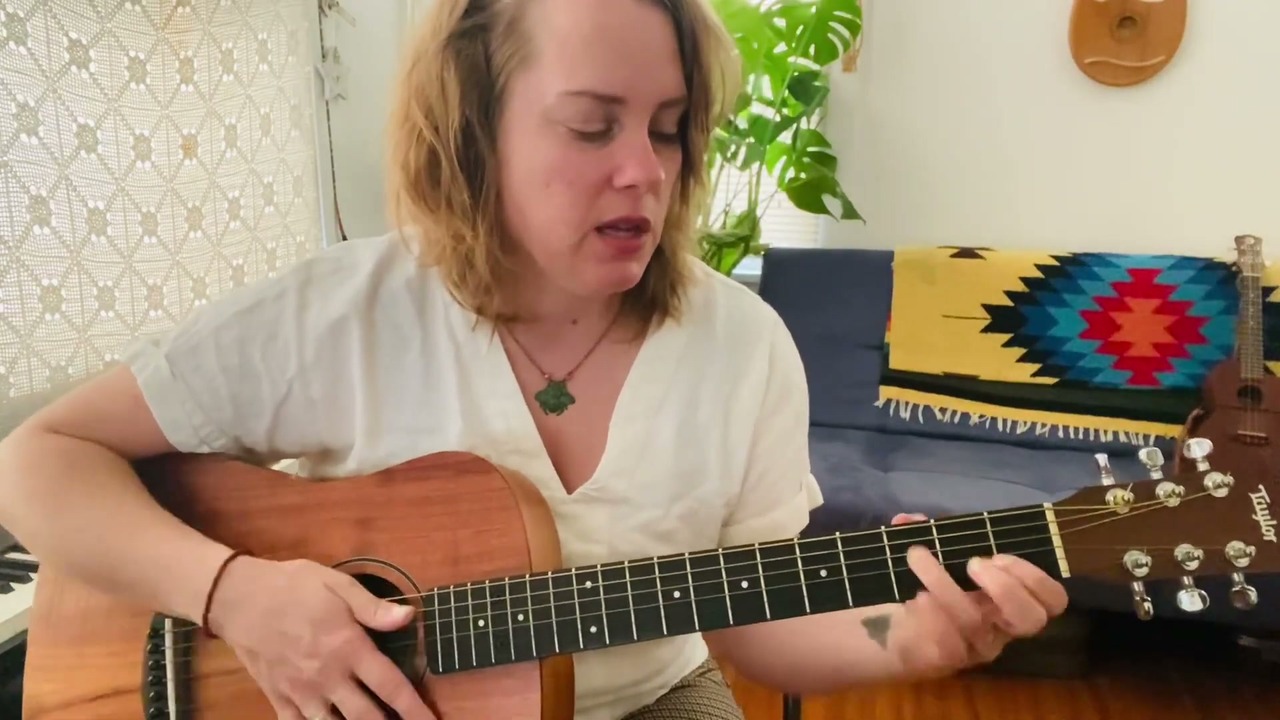
Adriel teaches guitar, piano and ukulele lessons online with Tunelark. View Adriel’s profile
For singers the gap is wider still. Vocal technique is physical, invisible, and easy to get wrong in ways that cause real strain. No app can see how you’re breathing.
The Plateau Everyone Hits
Teachers who take on app learners often describe a pattern: fast, satisfying progress for a few months, then a stall somewhere around the early-intermediate level. The songs get harder, the technique debt comes due, and the app has no answer, because diagnosis is exactly what software can’t do.
Harry B., who teaches guitar on Tunelark, describes what that looks like from the teacher’s side. A plateau is hard to see from inside it, when you are deep in a new piece or a technical concept, and part of his job is recognizing when the arc of a student’s progress starts to flatten. That is his cue to bring in something that challenges the student in a new way.
A teacher looks at your playing and tells you why you’re stuck: the thumb position that blocks that scale, the breath support that caps that high note, the strumming habit that falls apart at tempo. That single piece of diagnosis is often worth more than a month of repetitions. Our comparison of self-taught guitar vs. lessons digs deeper into why solo learners stall where guided learners don’t.
The Price Math, Honestly
On the monthly line the app usually wins, and we won’t pretend otherwise: a subscription costs less per month than one private lesson across most instruments and most markets.
Here is the arithmetic with real numbers on the lesson side. A 30-minute lesson on Tunelark runs $39 to $65 as of 2026, and $44 is the typical price, so a lesson every other week works out to about $95 a month, or roughly $1,150 for a year of 26 lessons. Your first lesson with a teacher is $25 off their 30-minute rate, so trying one costs about $19. Set your own app’s annual charge beside those figures and the monthly line is settled.
But the more useful comparison is cost per skill gained, not cost per month. Twelve months of an app subscription that leaves you stuck at the same level is more expensive than it looks, and a lesson that fixes in thirty minutes what you’d have fought alone for three months is cheaper than it looks. Slow progress is also a common reason people quit, and the most expensive outcome of all is the instrument in the closet.
The Hybrid That Actually Works
This isn’t an either-or choice, and the strongest setup we see combines both: a teacher sets the direction, catches habits early, and handles the parts an app can’t see, while the app keeps your daily practice fun between lessons.
Lessons don’t have to be weekly for this to work. Even a lesson every other week gives you a recurring checkpoint where a professional looks at what you’re building and corrects the course. The app fills the days in between.
Jay H., a voice teacher on Tunelark, sees recorded instruction the same way. The information on how to get good at music is everywhere now, he says, in millions of pre-recorded videos. What he works to build from the first lesson is the relationship: someone in the student’s corner, someone they are accountable to. In his experience, that is what gives musicians the energy to put the information to use.
When an App Is Genuinely Enough
If your goal is casual, an app may be all you need: playing a few songs for yourself, ten enjoyable minutes a day, testing whether an instrument holds your interest. There’s no rule that says every learner needs formal instruction, and a happy app user beats a burned-out perfectionist.
When You Need a Human
Get a teacher if any of these describe you: you’re a singer (technique and vocal health need eyes and ears on you), you’re stuck at the same level after months of regular practice, you have a concrete goal like performing or an audition, you’re a parent whose child needs the accountability of a real person, or you simply care about building technique that won’t need to be torn down later.
How to Find a Music Teacher on Tunelark
Tunelark connects you with music teachers who teach online across piano, guitar, voice, violin, drums, and more. Every Tunelark teacher is vetted by working musicians and educators for teaching quality before they can list. Every teacher’s rate is visible on their profile, scheduling and billing are handled for you, and your first lesson with a teacher is discounted, so trying the human side of this comparison is low-risk.
Frequently Asked Questions
Are piano learning apps worth it?
Yes, for the right role. Apps like Simply Piano are excellent for daily practice motivation, note recognition, and testing your interest cheaply. They can’t see your hands or correct technique, so pair one with a teacher if you want to get past the early-intermediate stall many app learners hit.
Can you really learn guitar from an app?
You can learn chords, songs, and basics from an app, and many people do. What apps can’t do is catch technique problems like poor wrist position or excess tension, which is why app learners often plateau, and why even occasional lessons help.
Do music apps teach bad habits?
Apps don’t teach bad habits, but they can’t detect or correct them either, so flawed technique that hits the right notes passes every level. See What an App Can’t Hear or See above.
Should I use a music app and take lessons at the same time?
That combination works well for many students. The teacher sets direction and corrects technique while the app keeps daily practice engaging between lessons. Even biweekly lessons alongside an app give you regular professional course correction.
Keep reading
About Jennifer Heath
I'm Jennifer Heath, VP of Operations at Tunelark and a lifelong singer. I joined the company in 2020 and oversee much of what makes Tunelark work for students and teachers: hiring, training and supporting our instructors, student support, marketing and day-to-day operations. I started voice lessons at 7 and sang with touring choirs through my teens. Music belongs in every life, for the self-expression, the discipline, the comfort and the simple joy of it.