What to Look For in an Online Guitar Teacher: A Buyer’s Checklist

Choosing a guitar teacher takes one extra step of thought, because guitar isn’t really one instrument. Classical guitar, jazz guitar, rock guitar, fingerstyle folk, blues, country, flamenco. These are different traditions with different techniques, different repertoires, and often different physical approaches to the instrument. A teacher who’s outstanding in one tradition can be the wrong person to take you into another. For a rock or blues player moving toward jazz, our guide to learning jazz guitar shows how much already carries over.
So before you find an online guitar teacher, you need to decide which of those traditions you are actually after. The good news: once you know what to look for, the checklist is short.
Why Style Match Matters Most for Guitar
For piano students, style match between teacher and student matters, but less. Most well-trained pianists can teach a beginner across genres, because the foundational technique (hand position, touch, reading, basic theory) overlaps heavily between classical and pop pianism. A pianist who plays mostly jazz can still get a beginner started on rock or classical foundations cleanly.
Guitar is different. The fundamental movements you make on a guitar vary by style. A classical guitarist uses a free-floating right hand with prepared finger placement, rest and free strokes, and nail technique. A bluegrass flatpicker uses a pick, an entirely different right-hand mechanic, and a completely different posture. An electric blues player leans on string bending, which is central to blues and rock and is standard vocabulary in country, pop and modern acoustic lead playing as well. Classical playing is the outlier, where bending is essentially absent. Vibrato and slides live in all of these traditions, and the instinct for when to reach for one carries over intact. The fretting-hand mechanics do not: classical vibrato rocks the finger along the string, while blues and rock vibrato bends it sideways, so the movement has to be relearned even by a player who already knows what the effect is for.
If you want to play campfire folk songs and your teacher is a classical purist, you may spend months learning things you don’t care about with the wrong technique for your eventual goals. Conversely, if you want to play classical and your teacher is a rock player, you are unlikely to develop the right-hand discipline that classical guitar requires.
So the first question to find an online guitar teacher who’s right for you isn’t “are they qualified.” It’s “are they qualified in the style I actually want to play.”
A teacher’s own lesson videos tell you their home tradition before you book. Tony G., who teaches guitar on Tunelark, shows a beginner the quickest way into blues, and why he thinks blues is the place to start: much of pop, rock and country grows out of it.
Skill video · Blues Basics
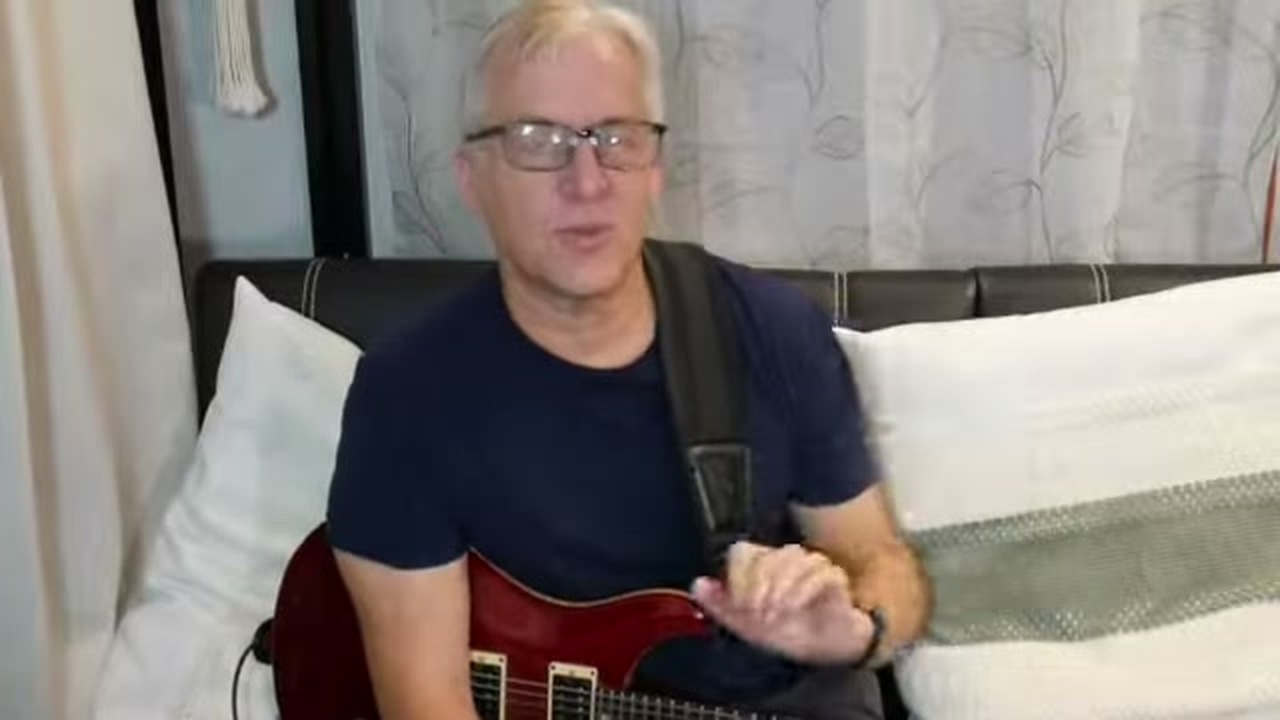
Tony teaches guitar lessons online with Tunelark. View Tony’s profile
Reading the Profile
A good guitar teacher profile will make their primary teaching style obvious. A few signals to look for as you read.
Specific style mentions. Profiles that say “I teach classical, fingerstyle, and beginner electric” are more useful than ones that say “I teach all styles.” Almost no guitarist genuinely teaches all styles at a high level, and the more honest profiles will name their actual zones.
Repertoire references. Teachers who mention specific composers, bands, or song traditions are telling you exactly what they care about. A teacher who name-checks Carcassi, Tárrega, and Villa-Lobos teaches classical. A teacher who mentions Jimi Hendrix, Stevie Ray Vaughan, and John Mayer teaches blues-rock. A teacher who lists open-tuning fingerstyle composers teaches modern acoustic. Read the names.
Adult learner orientation. If you’re an adult student, look for profiles that explicitly mention working with adults. Our broader piece on what makes a great music teacher covers the traits that matter across instruments, but for guitar specifically, an adult-friendly teacher who also teaches your style is the combo to find.
Pedagogical specificity. “I focus on solid technique from day one” or “I emphasize ear training and improvisation” tells you what you’ll spend time on. Vague profiles (“we’ll have fun and you’ll progress”) tell you less. The more specific the profile, the easier it is to evaluate fit.
What the Trial Lesson Actually Reveals
The trial lesson is where you find out whether the profile matches reality. A few things to actively look for.
How they introduce themselves and the lesson structure. A good guitar teacher will ask about your goals, your current level if any, the style you want to play, and what you’ve tried before. If they launch into a curriculum without asking, that’s a flag.
How they correct hand position. Watch closely when they suggest a change to your left or right hand. A good teacher will explain why, demonstrate the correct version, and watch you try it. They won’t just say “looks good” or skip past technique entirely.
How they handle questions. If you ask “why are we doing it this way?” a good teacher gives a real answer, even a short one. Vague or impatient responses to genuine questions usually mean the teacher doesn’t want to be challenged.
How they end. A good trial usually wraps with the teacher summarizing what they observed about you as a player, suggesting what they’d work on first if you continued, and being clear about what the next steps look like. A trial that ends with a sales pitch and nothing about you is a poor signal.
For more general tips on beginner guitar, our beginner guide covers what to expect in the first few weeks regardless of teacher.
Red Flags Specific to Guitar Teachers
A few things that aren’t necessarily disqualifying but should make you pause.
They only play, they don’t teach much. Some performing guitarists are wonderful musicians and uneven teachers. If the trial lesson is twenty minutes of them playing and ten minutes of instruction, you’re paying for a concert, not a lesson. Jason W., who teaches guitar on Tunelark, watches for a quieter version of the same problem: a teacher who spends the lesson proving their worth or talking about their accomplishments. Students can miss it, he says, because they are impressed.
They don’t watch your hands. Online lessons require active visual attention from the teacher. If they’re looking at their own screen, their notes, or their phone during your playing, technique correction is going to suffer badly over time. The camera matters in the other direction too. Jason finds hand position one of the hardest things to teach through a screen, because small details get lost, and he uses several cameras and angles so students can see each technique clearly. Asking how a teacher has their cameras set up is a fair trial question.
They push gear hard. Some recommendation is normal: a starter classical guitar, a tuner, a metronome. But a teacher who spends significant time recommending pedalboards, expensive amps, or pricey equipment in early lessons is misreading the assignment.
They dismiss your style preferences. If you tell the teacher you want to learn blues and they spend the trial drilling classical scales, that’s a hard mismatch. Style flexibility is fine; ignoring stated goals is not.
They speak negatively about other genres or players. Snobbery about pop, jazz, or any other tradition usually shows up in how they teach. The best guitar teachers are usually omnivorous listeners even within their own specialty.
If you’re an adult learner specifically, our piece on online guitar lessons for adults goes deeper on what to expect.
When the Match Isn’t Right and What to Do
Sometimes you’ll do a trial, like the teacher personally, and still feel like the fit is off. Trust that. The most common version of this is a stylistic mismatch that’s hard to articulate: the teacher is good, but they’re not the teacher for the music you actually want to play.
The move is to thank them, decline to continue, and book another trial. Most platforms make this easy. You’re not obligated to stay with the first teacher you try, and switching after a trial is a normal part of how adult students find the right match. Two to three trials before settling on a teacher is a perfectly reasonable approach.
If you’re already a few months in with a teacher and feeling like the match isn’t right, that’s also fixable. Be direct in a lesson. Say you want to focus more on the style or the skill you actually came for, and see how they respond. A good teacher will adjust; a teacher who can’t or won’t is the wrong teacher for you, and switching at that point is fine too.
You’re paying for this. The teacher should be earning the relationship every week.
How to Find a Guitar Teacher on Tunelark
Every Tunelark teacher is vetted by working musicians and educators for teaching quality before they can list. That leaves you the style question. Tunelark guitar teachers span a wide range of styles, from classical and fingerstyle through blues, rock and country. The filtering tools narrow the roster quickly, and the profile is where you confirm that the tradition you want is one the teacher actually teaches.
1. Open the teacher list and filter by guitar.
2. Read bios carefully: note the specific styles and repertoire each teacher emphasizes.
3. Book trial lessons with two or three whose profiles match your goals. A first lesson with a new teacher is $25 off that teacher’s 30-minute rate.
4. Pick the one whose trial lesson actually addressed your style, watched your hands, and ended with clear next steps.
A bigger guide on how to find a good music teacher covers the universal principles. Apply those (and then add the style layer that guitar specifically demands) and you’ll find an online guitar teacher who’s right for the music you actually want to play.
Frequently Asked Questions
Can one teacher teach me multiple styles?
Some can, especially across closely related traditions like blues-rock-country or classical-fingerstyle-folk. Crossing wider gaps (classical to metal, jazz to bluegrass) usually requires either a genuinely versatile teacher or eventually two teachers. Ask directly in the trial which styles they actively teach.
How important is having the same gear as my teacher?
Not very. For acoustic players, having any decent acoustic guitar is fine, brand and model don’t need to match the teacher. For electric, basic compatibility (a tuned, playable guitar and a way to hear yourself) is enough. Don’t let gear questions become a reason to delay starting.
How long should I give a new teacher before deciding it’s working?
Give a new teacher about a month, roughly four lessons, before you judge the fit. Rapport takes a few sessions to grow, and a good teacher needs that long to learn how you learn. Treat the one-month mark as a first review rather than a decision, and reassess properly at two to three months: if lessons still leave you flat, or they keep centering on the teacher rather than on your goals, switching is healthy and normal. Some things justify moving sooner at any point, including a teacher who dismisses the style you came for or who cannot explain why progress has stalled.
Are online guitar lessons really as good as in-person?
For most students, yes: with the right teacher and a basic webcam setup. Most lesson content transfers well. The exceptions teachers name are ensemble playing and close technique work. For most beginners and intermediate players, online is comparable in quality.
Should I switch teachers as my style preferences evolve?
Possibly, but not always. Many teachers can grow with you as your taste develops. If your interests shift dramatically (beginner pop to serious classical, for instance) switching to a specialist eventually makes sense. Treat it as a normal transition, not a failure of the original teacher.
Looking for an online guitar teacher? See our full Online Guitar and Bass Lessons page for everything you need to know about getting started.
Keep reading
About Jennifer Heath
I'm Jennifer Heath, VP of Operations at Tunelark and a lifelong singer. I joined the company in 2020 and oversee much of what makes Tunelark work for students and teachers: hiring, training and supporting our instructors, student support, marketing and day-to-day operations. I started voice lessons at 7 and sang with touring choirs through my teens. Music belongs in every life, for the self-expression, the discipline, the comfort and the simple joy of it.