Online Saxophone Lessons for Adults: It’s Not Too Late to Start
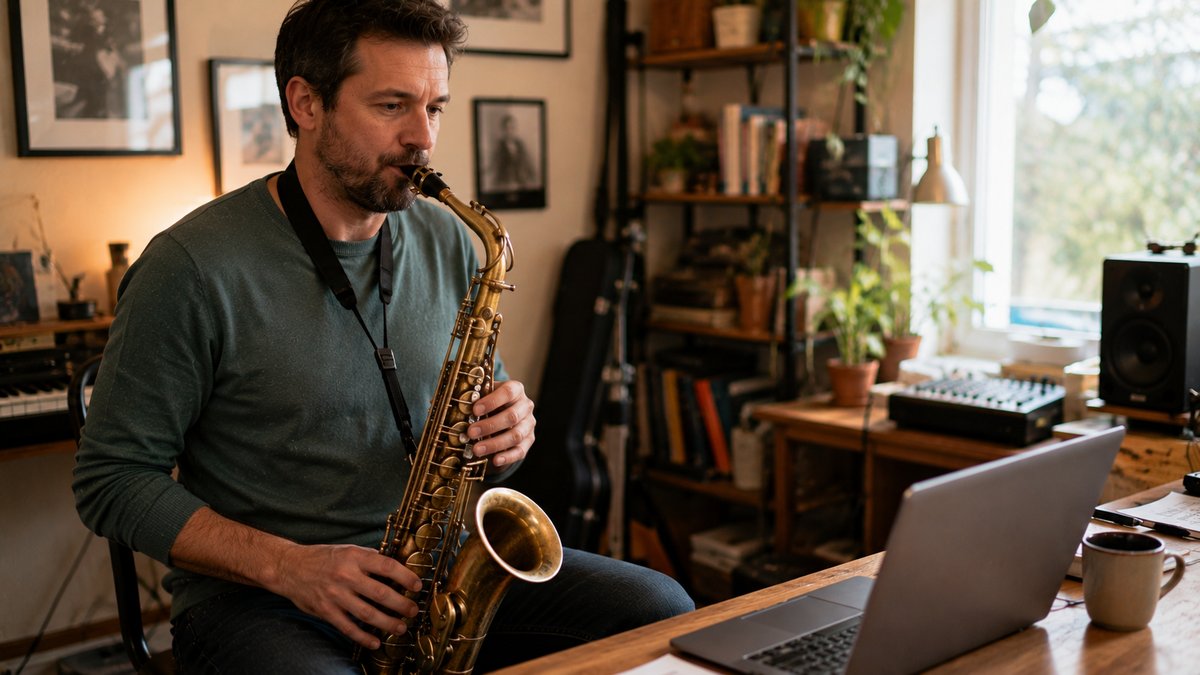
If you’ve always wanted to play the saxophone, adults make excellent saxophone students, and online lessons make it more accessible than ever. Whether you played in school decades ago or you’re a complete beginner, online saxophone lessons for adults let you learn from an experienced teacher on your own schedule, without the commute.
Here’s what to expect and how to get started.
What You Need Before the First Lesson
Getting started takes three things. Rent or buy a student alto saxophone, the standard first saxophone at any age, and our guide to online saxophone lessons covers what a beginner alto costs to buy or rent. Buy a box of 2 or 2.5 strength reeds and keep two or three in rotation. Set the neck strap so the mouthpiece meets your mouth with your head level. What goes wrong in the first week, and the fix for each, is in our guide to the first saxophone lesson.
Why Adults Do So Well on Saxophone
Adults bring focus, patience, and clear goals: the exact qualities that drive progress on sax. You know what music you want to play, and you can direct your own practice. Many adult beginners are surprised how quickly they progress when they study with intention rather than the scattered approach of a busy teenager.
What Adults Find Hard, and Why
The most common frustration is that an adult ear runs well ahead of adult hands. You know exactly what a saxophone should sound like, so the sound you make in week three registers as failure even when it is precisely on schedule. A younger student has no such reference and is delighted by the same note.
The second is physical. Embouchure, the shape your lips and face hold around the mouthpiece, is muscle, and lip muscles fatigue and rebuild the way any others do, which puts a ceiling on how much useful practice you can do in one sitting no matter how motivated you are. Pushing on through a tired embouchure teaches your face the wrong shape.
Fatigue is one way the shape goes wrong. Biting down for control is the other, and it chokes the sound. Travis S., who teaches saxophone on Tunelark, shows how a relaxed, rounded embouchure lets the reed vibrate the way it should.
Skill video · Embouchure
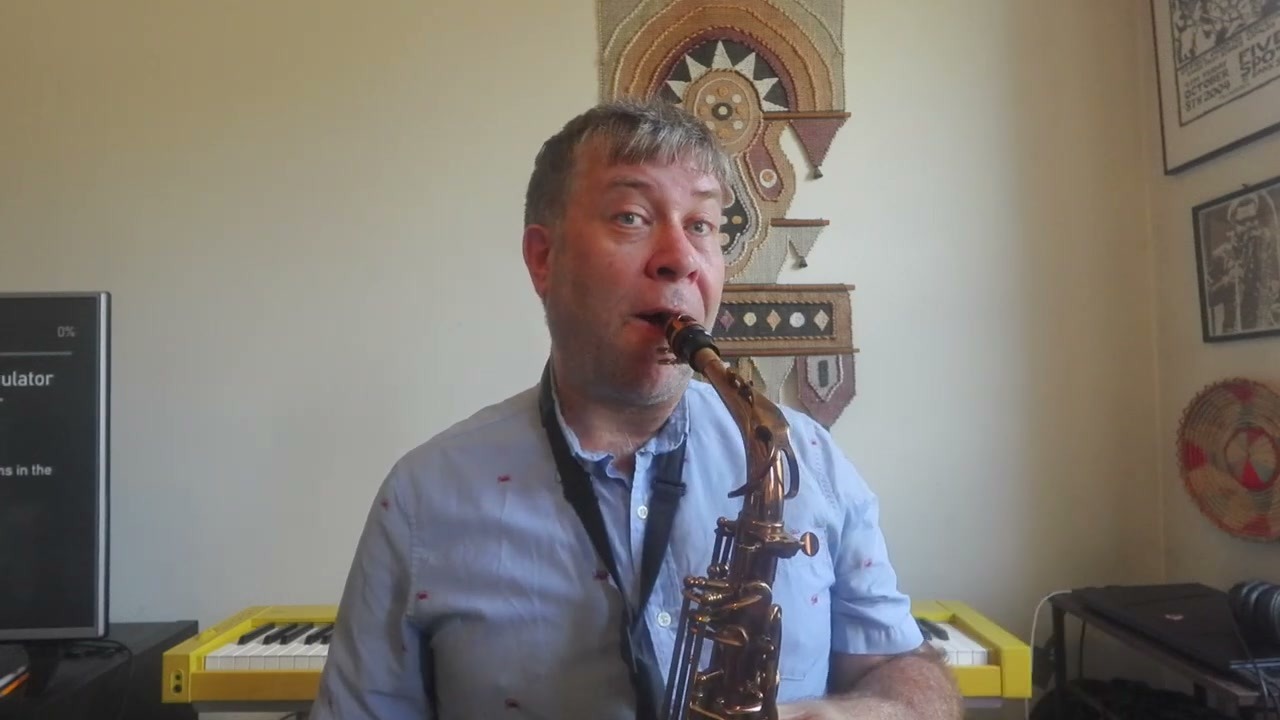
Travis teaches saxophone lessons online with Tunelark. View Travis’s profile
The third is the week that gets missed. Adults who miss a week tend to read it as evidence that they cannot commit, and stop rather than come back. Teachers see it often enough to plan around it, and a missed week costs almost nothing next to a stopped year.
What the First Months Look Like
Your earliest work is tone and embouchure, producing a clear, steady sound. A recognizable sound usually arrives in the first lesson or two, sooner than on flute, and from there you move into reading, scales, and simple tunes within the first few weeks. A steady tone you can hold across a whole phrase is a different thing, and it takes a few months of daily long tones. By about three months you’ll be playing songs that hold together from start to finish, and the warm, expressive sound the saxophone is known for keeps arriving across the first year rather than in the first month.
Why Online Saxophone Lessons Work
A good camera angle gives your teacher a clear view of your embouchure, hand position, and posture, sometimes a better view than sitting side by side. You practice on your own instrument in your own space, with no adjustment period between lesson and practice. And online access means you can study with a specialist in jazz, classical, or R&B even if no one nearby teaches your style.
What an Online Saxophone Lesson Needs Technically
The setting that matters most is the one that turns audio processing off. On Zoom, Original Sound disables the noise suppression that otherwise chops the front off every note and mistakes a long tone for background hum. On FaceTime, Mic Mode set to Wide Spectrum does the same job. Google Meet has no music or original-sound mode, so its default audio processing cannot be switched off, which makes it the weakest of the three for a wind instrument.
Past that: a wired connection rather than wifi, headphones so your teacher’s sound is not picked back up by your microphone, and enough distance between you and the laptop that a saxophone at full volume does not overload the input. A room with soft furnishings and something on the floor sounds better on camera than a bare one.
One thing no video call can do is let the two of you play together in time. Latency makes that impossible on a video call, however good the connection, so lessons alternate: your teacher demonstrates, you play, they respond. Teachers who work online build the lesson around that rhythm rather than fighting it, and it is one of the questions worth asking in a trial lesson.
Making Time as a Busy Adult
The biggest obstacle for adult learners isn’t talent. It’s time. Short, consistent practice wins: 20 focused minutes most days of the week will move you forward, because embouchure is a physical skill that builds with frequent contact. Five or six short sessions beat one long one on the weekend. Online lessons remove the commute and let you schedule around your work and family, which is often the difference between sticking with it and giving up.
How to Find a Saxophone Teacher on Tunelark
Every Tunelark teacher is vetted by working musicians and educators for teaching quality before they can list, and our saxophone teachers work online across jazz, classical, and contemporary styles. Browse profiles, find a teacher who specializes in what you want to learn, and book a first lesson at $25 off that teacher’s 30-minute rate. It’s genuinely not too late to become the saxophone player you’ve always wanted to be.
Frequently Asked Questions
Is it too late to learn saxophone as an adult?
No. What trips adults up is not age: lip muscles tire quickly at first, so sessions stay short, and a missed week is a reason to come back, not to stop.
Do online saxophone lessons actually work?
Yes. A good camera angle lets your teacher see your embouchure and posture clearly, you practice on your own instrument, and you can access specialist teachers in any style.
How much should an adult practice saxophone?
Twenty focused minutes a day, five or six days a week. Stop when your lip tires rather than playing to the clock, and split a longer session in two if the day allows.
How long until I can play songs on saxophone?
A recognizable sound comes in the first lesson or two, and simple tunes follow within the first few weeks. Playing that holds together as music from start to finish arrives at around three months, and the warm sound the horn is known for arrives across the first year.
Keep reading
About Jennifer Heath
I'm Jennifer Heath, VP of Operations at Tunelark and a lifelong singer. I joined the company in 2020 and oversee much of what makes Tunelark work for students and teachers: hiring, training and supporting our instructors, student support, marketing and day-to-day operations. I started voice lessons at 7 and sang with touring choirs through my teens. Music belongs in every life, for the self-expression, the discipline, the comfort and the simple joy of it.