Online Singing Lessons for Adults: It’s Not Too Late to Start
If you’ve always wanted to sing, here’s the truth: adults make excellent voice students, and online lessons make starting easier than it has ever been. Whether you sang in a school choir decades ago, sing along in the car and wonder what you could do with real training, or have never sung in front of another person, singing lessons for adults meet you exactly where you are.
Here’s what to expect and how to get started.
Why Adults Do So Well in Voice Lessons
Adults usually bring two advantages to singing that children rarely have. The first is a trained ear: after decades of listening to music, you already know what good phrasing, tone, and emotion sound like, even if you can’t produce them yet. The second is clear goals. You know whether you want to sing jazz standards, lead worship, front a band, or just sing happy birthday without dread, and a teacher can build lessons around exactly that.
There’s also this: your voice is the one instrument you already own and have used every day of your life. There is no instrument to buy, rent, or tune before your first lesson, and the only purchase worth making beforehand is a pair of wired earbuds. That makes the cost of starting easy to work out, because the lesson itself is very nearly the whole of it, and our singing lesson cost guide sets out what a run of lessons comes to.
“But I’m Tone Deaf”
Almost certainly, you aren’t. True tone deafness, the clinical inability to perceive pitch differences, is rare. What most adults call being tone deaf is an untrained connection between ear and voice, and that connection is trainable at any age. Pitch matching is a skill, not a gift, and voice teachers work on it every day. If this is your specific worry, our guide on how to sing in tune covers why “can’t sing” is almost never permanent.
What the First Months Look Like
Early lessons center on the physical foundation: posture, breath support, and finding your comfortable range. Expect simple exercises that feel almost too easy, because they’re building coordination you’ll rely on for everything later. Within the first weeks, most adults find they can hold notes more steadily and sing longer phrases without running out of air.
From there, you’ll work on pitch accuracy, tone, and songs you actually want to sing. A good teacher gets real repertoire into your lessons early, because singing music you love is what keeps you practicing. For a fuller picture of the timeline, see how long it takes to learn to sing.
A single lesson follows the same order. Claire C., who teaches voice on Tunelark, demonstrates how one runs, from the warm up through working on a song.
Skill video · Teaching Demonstration
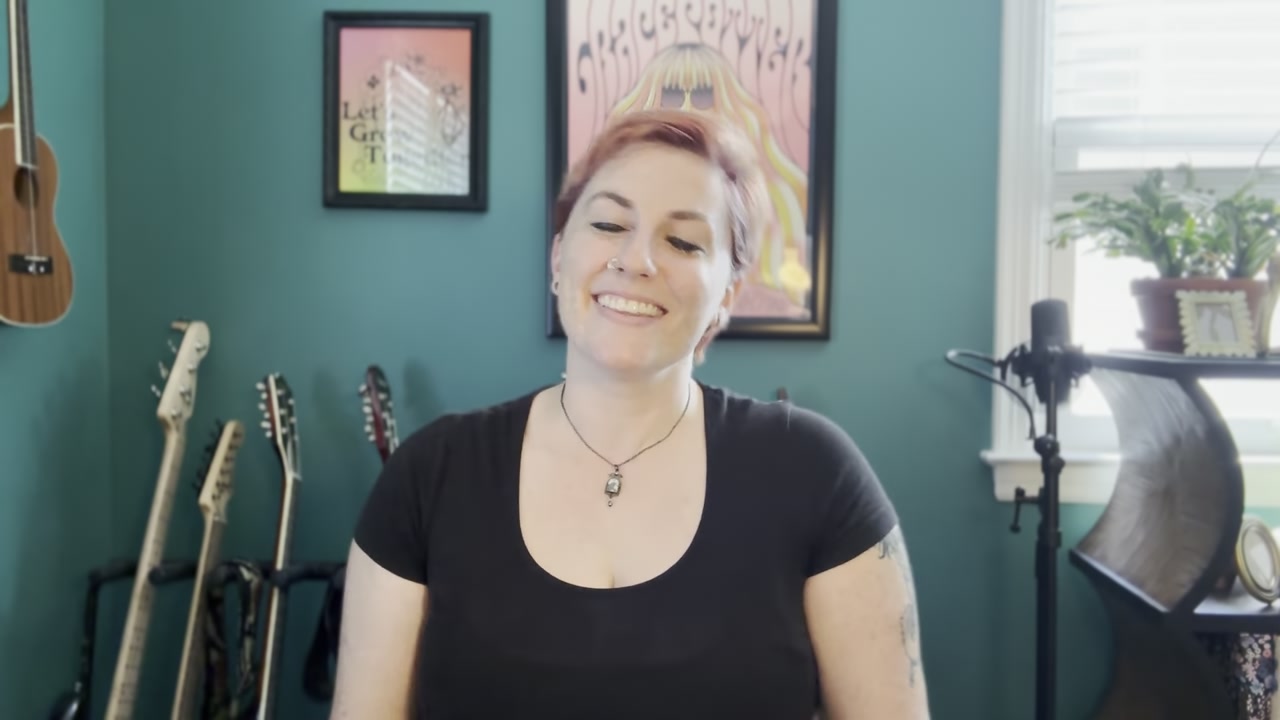
Claire teaches voice lessons online with Tunelark. View Claire’s profile
What Adult Singers Find Hardest
The first difficulty is hearing yourself accurately. Some of what you hear while singing arrives through the bones of your skull, so your voice sounds different to you than it does to anyone else in the room. That is why teachers ask you to record yourself, and why the recording is usually better than you feared it would be.
The second is volume. Most adults sing far more quietly than the voice actually wants to work, because decades of not wanting to be overheard have trained it in. A good deal of early lesson time is simply permission to make more sound, and the voice gets healthier as it gets fuller rather than more strained.
Sydney H., who teaches voice on Tunelark, sees this in students who come to lessons after years of not singing in front of anyone. They arrive tense, sing very quietly and try hard to sound perfect, and each wobble sends them further into self-judgment. The turning point she describes comes when a student lets go of sounding good and attends to what the song means. The body relaxes, the voice grows more resonant, and vibrato starts to appear.
The third is the place in the middle of the range where the voice wants to change gear. Notes there can feel like they catch or flip, and the answer is coordination rather than force. Pushing harder at that spot makes it worse, which is the opposite of what most adults expect, and it is where a teacher earns their fee.
The flip itself can be practiced. Alawna M., also a voice teacher on Tunelark, breaks it down and shows how to move between registers without the break announcing itself.
Skill video · Vocal Flips
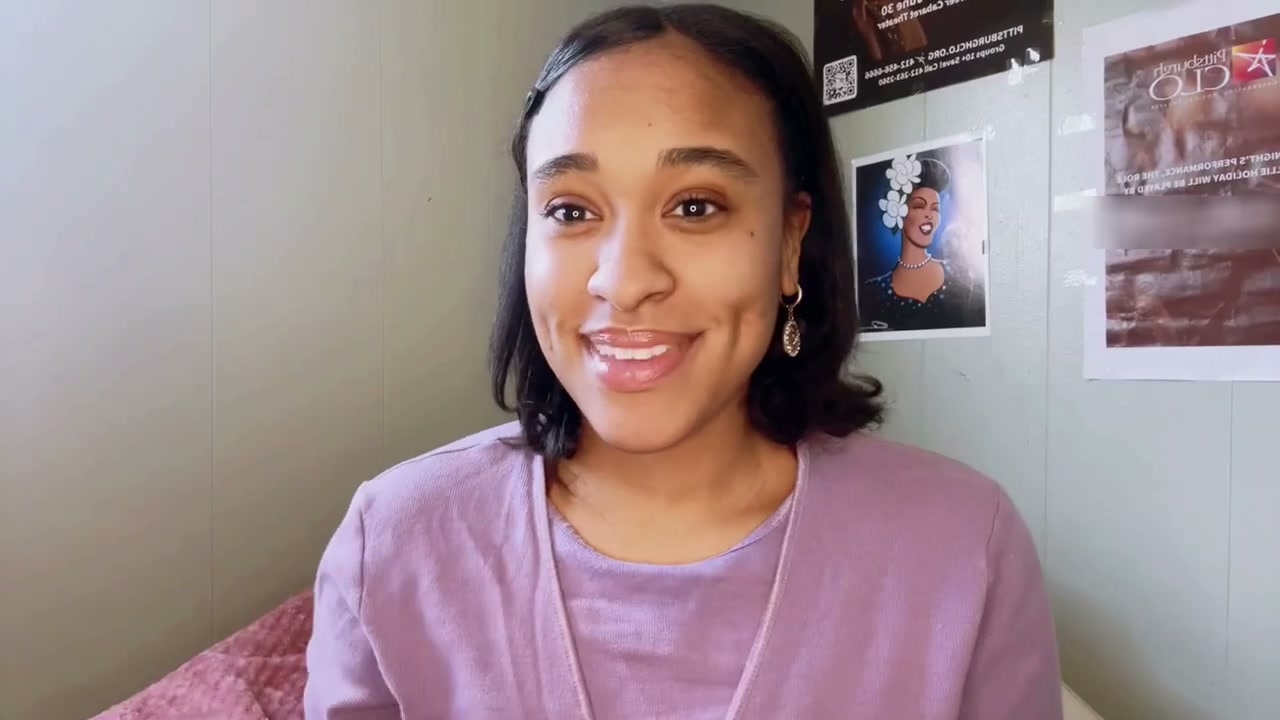
Alawna teaches voice lessons online with Tunelark. View Alawna’s profile
Why Online Voice Lessons Work
Voice translates to video better than almost any instrument. Your teacher can see your posture and breathing on camera, and a laptop microphone is fine for a trial lesson. Wired earbuds are the one thing to have from day one, because without them your teacher’s sound feeds back through your microphone. A USB microphone is a worthwhile upgrade once you are committed, since built-in mics lose the subtle changes your teacher is listening for.
Singing at home has a quieter advantage too: privacy. Many adults find it far easier to sing freely in their own space than in a studio with people in the next room. The self-consciousness that keeps adults from starting voice lessons mostly evaporates when the lesson happens in your living room. The privacy carries into the practice between lessons too, which is where most of the progress actually happens, and being able to work at full volume with nobody listening is a large part of why adults improve faster at home than they expect to.
Online access also means you choose from teachers everywhere, so you can find someone who specializes in your style, whether that’s musical theater, R&B, classical, or country.
Sound Settings That Change What Your Teacher Hears
Video platforms are built for speech, and their noise suppression treats sustained singing as something to tidy up. The result is a voice that arrives thin, with the quiet ends of phrases trimmed off, and those quiet ends are exactly what your teacher needs to hear to know whether the breath is running out or the tone is closing down.
Zoom has an Original Sound setting that disables noise suppression. FaceTime has Mic Mode, set to Wide Spectrum, for the same purpose. Google Meet has no music mode. Its noise cancellation runs only on paid Workspace and Google One plans, where you can switch it off before the lesson, and free personal accounts do not get it at all, so there is nothing there to turn off (checked September 2026). Ask which platform your teacher uses and set this up once, before the first lesson rather than during it.
Making Time as a Busy Adult
Voice practice fits into adult life more easily than almost any instrument. Fifteen to twenty focused minutes a day, five or six days a week, beats one long weekend session, and a few times a week still moves you forward when life gets busy. Warmups happen in the car or the shower, and there’s no instrument to set up. Online lessons remove the commute, which for most working adults is the difference between starting and not.
How to Find a Voice Teacher on Tunelark
Every Tunelark teacher is vetted by working musicians and educators for teaching quality before they can list. Our voice teachers work online across pop, classical, musical theater, jazz, and more. Browse profiles, find a teacher whose background fits what you want to sing, and book a first lesson, which is $25 off that teacher’s 30-minute rate. It’s genuinely not too late to find out what your voice can do.
Frequently Asked Questions
Is it too late to start singing lessons as an adult?
Not at all. Adults bring a trained ear and clear goals to voice lessons, and the voice responds to training at any age. Many voice students start in their 40s, 50s, and beyond and make steady, satisfying progress.
Can adults learn to sing if they’re tone deaf?
Almost everyone who thinks they’re tone deaf isn’t. True inability to perceive pitch is rare; what most adults have is an untrained ear-to-voice connection, which is a learnable skill that voice teachers train every day.
Do online singing lessons actually work?
Yes. Voice translates to video better than almost any instrument, and many adults sing more freely at home. The setup you need is under Why Online Voice Lessons Work above.
How often should an adult practice singing?
Fifteen to twenty focused minutes a day, five or six days a week, with a few times a week as the floor. See Making Time as a Busy Adult above.
Looking for an online voice teacher? See our full Online Voice Lessons page for everything you need to know about getting started.
Keep reading
About Jennifer Heath
I'm Jennifer Heath, VP of Operations at Tunelark and a lifelong singer. I joined the company in 2020 and oversee much of what makes Tunelark work for students and teachers: hiring, training and supporting our instructors, student support, marketing and day-to-day operations. I started voice lessons at 7 and sang with touring choirs through my teens. Music belongs in every life, for the self-expression, the discipline, the comfort and the simple joy of it.