Beginner Bass Tips: What Every New Bass Player Should Know
Beginner Bass Tips: What Every New Bass Player Should Know
The bass is the instrument that makes a band feel good. It’s the bridge between rhythm and harmony, and a great bassist makes everyone around them sound better. If you’re just starting out, these beginner bass tips will help you build a solid foundation and avoid the habits that slow new players down.
The good news: bass is one of the most beginner-friendly instruments to start, and many students start jamming along to songs within their first few weeks.
Start With Your Hands and Posture
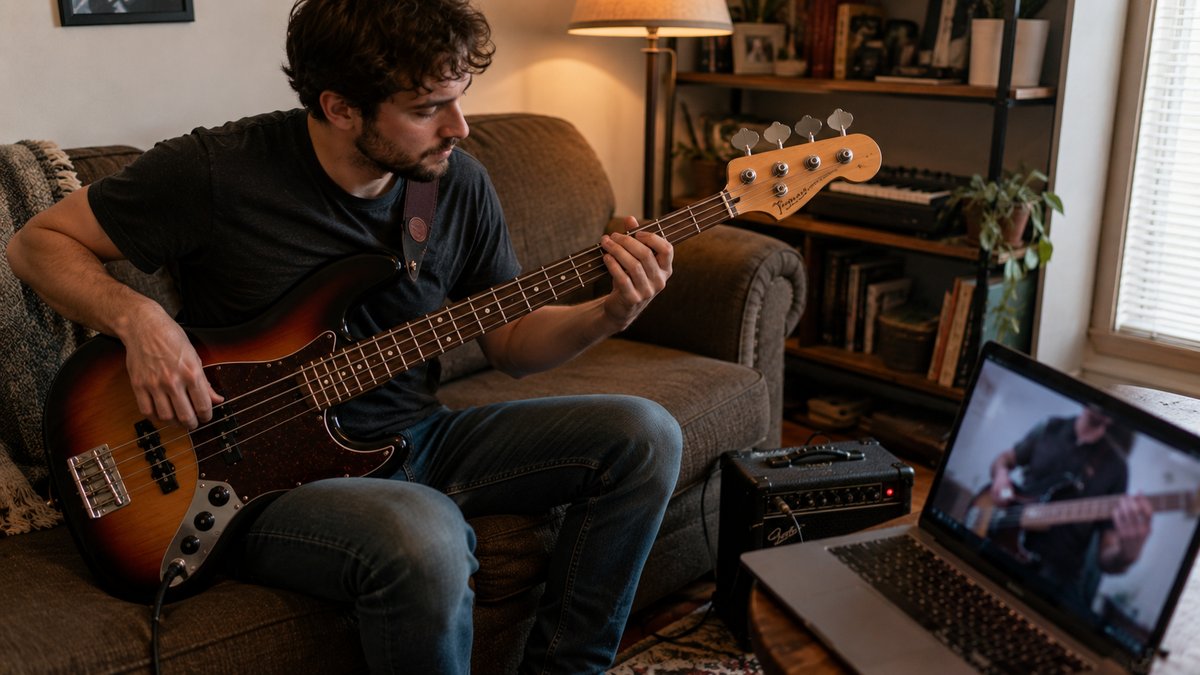
Before anything else, get comfortable with how you hold the bass and where your hands sit. Relaxed shoulders, a neutral wrist, and efficient fingering prevent tension and fatigue. Tension is the number-one thing that holds beginners back, and it’s much easier to build good habits now than to fix them later.
Learn to Play in Time First
On bass, timing is everything. Before chasing fast lines, focus on locking in with a steady beat: practice with a metronome or play along to simple songs. A bassist who plays simple notes perfectly in time is far more valuable than one who plays busy lines out of time.
Master the Fundamentals Before the Flash
Your first lessons will focus on the fundamentals: root notes, simple patterns, and clean finger technique. These basics are what let you play real songs quickly. Resist the urge to skip ahead: strong fundamentals are what make advanced playing possible later.
Use Your Ears
Bass is an instrument you feel as much as read. Train your ear by playing along to music you love and trying to find the bass line. Even a few minutes a day of playing by ear builds the musical instincts that make you a better player.
Be Consistent
Fifteen to twenty minutes of daily practice will take you further than a single long weekend session. Consistency builds the muscle memory and timing that make playing feel natural. Anchor practice to a daily habit so it sticks.
How to Find a Bass Teacher on Tunelark
Tunelark connects you with experienced bass teachers who teach online. A good teacher will catch and correct technical habits early, keep your timing honest, and tailor lessons to the music you want to play. Browse vetted profiles and book a discounted first lesson to start strong.
Frequently Asked Questions
Is bass easier to learn than guitar?
Many beginners find bass approachable because you start by playing one note at a time and can play along to songs quickly. It still rewards real study, but early progress tends to feel fast.
How much should I practice bass as a beginner?
Aim for 15-20 minutes a day. Consistent daily practice builds timing and finger strength far better than occasional long sessions.
Do I need lessons to learn bass?
You can start on your own, but a teacher helps you build clean technique and solid timing from the start, the two things hardest to fix later. Most students progress much faster with lessons.
What should I learn first on bass?
Start with posture, relaxed hand technique, root notes, and playing in time. These fundamentals let you play real songs quickly and set up everything that comes later.
Looking for an online bass teacher? See our full Online Bass Lessons page for everything you need to know about getting started.
Keep reading
About Jennifer Heath
I'm Jennifer Heath, VP at Tunelark and a lifelong singer. I joined the company in 2020 and oversee much of what makes Tunelark work for our students and our teachers. That includes hiring, training, and supporting our instructors, customer and student support, marketing, and the day-to-day operations of the business.
I started voice lessons at age 7, sang with professional choirs that toured internationally through my teens, and performed solo at competitions and community events across Texas before stepping away in my twenties to study other interests, including business management. I haven't performed professionally in years, but I'll happily take the microphone at a karaoke night. Music has been in me every day of my life. Being able to spend the last six years working inside an online music education company, while traveling the world full-time, has been a perfect fit.
I believe deeply that music belongs in every life. For the self-expression, the discipline, the comfort, and the simple joy of it.
The Tunelark blog is where we share what we've learned about online music lessons: how to choose an instrument and a teacher, what to expect from your first lesson, how the major platforms compare, and how to keep music going through the busier seasons of life. Practical, honest writing you can act on.
Who we are
Tunelark provides virtual 1-on-1 music lessons to learners
of all ages.
We remove the barrier of geography and connect learners and teachers — wherever they are. Our growing community of vetted, experienced music educators have expertise in a wide variety of instruments, genres, and skill levels. We are passionate about connecting each student with the perfect instructor.