Guitar Scales and the Fretboard: What to Learn First and How It All Connects
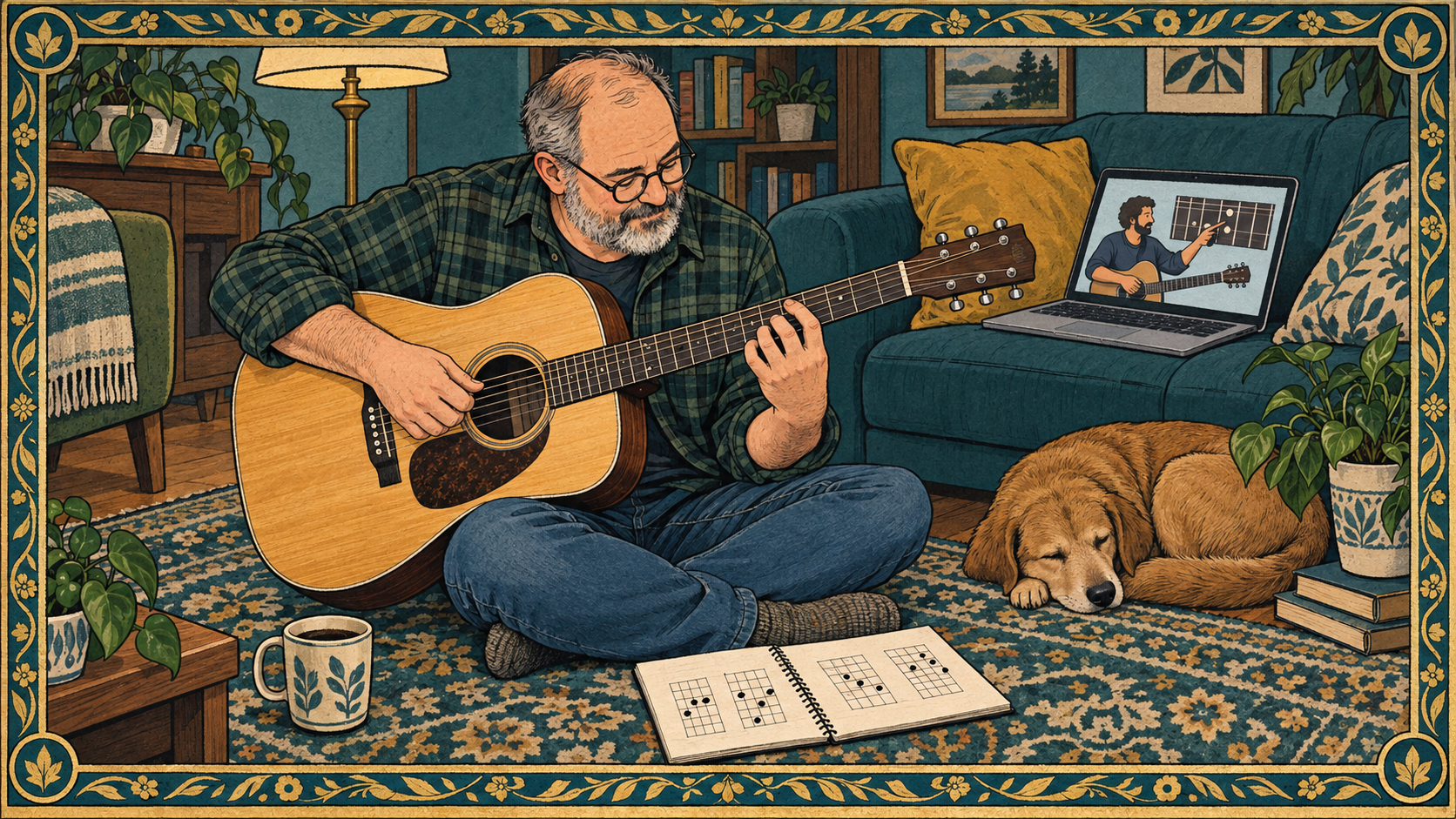
Scales have a bad reputation with guitarists for a good reason. They are usually handed over as a diagram, a box of dots on a fretboard grid, to be memorized and run up and down until the fingers know it. The fingers do learn it. What they do not learn is what the dots are, why those five boxes are one scale, or how to get from one box to the next, which is why a player can know all five pentatonic shapes and still be stuck in one of them.
This guide goes the other way around. It starts with where scales come from, which takes one formula; shows why the pentatonic is the scale every guitarist learns first; connects the boxes across the neck; and explains what the CAGED system is for. Our guitar teachers demonstrate each step. Using the scales, in a solo, is the subject of how to start improvising on guitar; this one is about knowing them.
Every scale comes from one formula
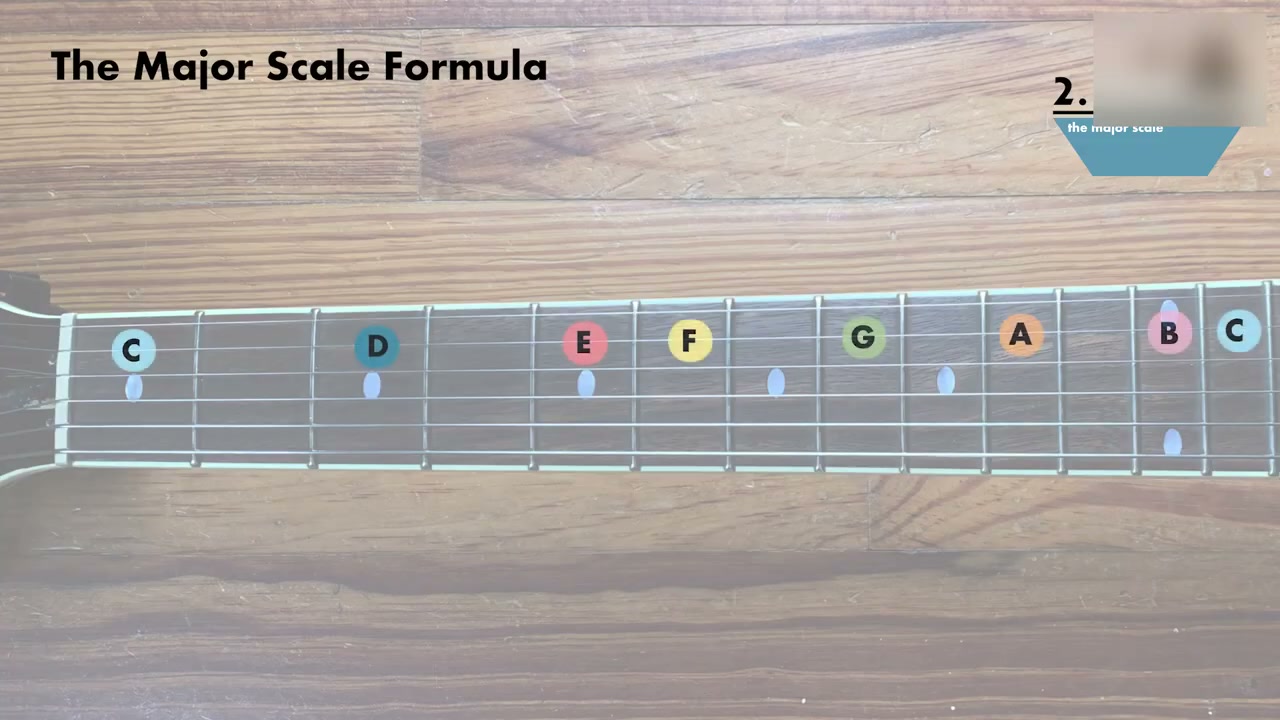
A major scale is seven notes chosen from the twelve, and the choice is made by a pattern of distances. Alex G. lays it out in under four minutes: from the root, go up a whole step, a whole step, a half step, then whole, whole, whole, half, and you are back at the root an octave up. Whole, whole, half, whole, whole, whole, half. On the guitar a half step is one fret and a whole step is two, so the formula is something you can walk up a single string and hear.
He also explains the two rules that confuse people when sharps and flats appear. A scale always goes in alphabetical order with no letter skipped and none repeated, which is why the key of G has an F sharp and not a G flat, and why F has a B flat and not an A sharp. And because some keys spell the same pitches two ways, there are twelve major scales rather than fifteen.
Skill video · The Major Scale Formula
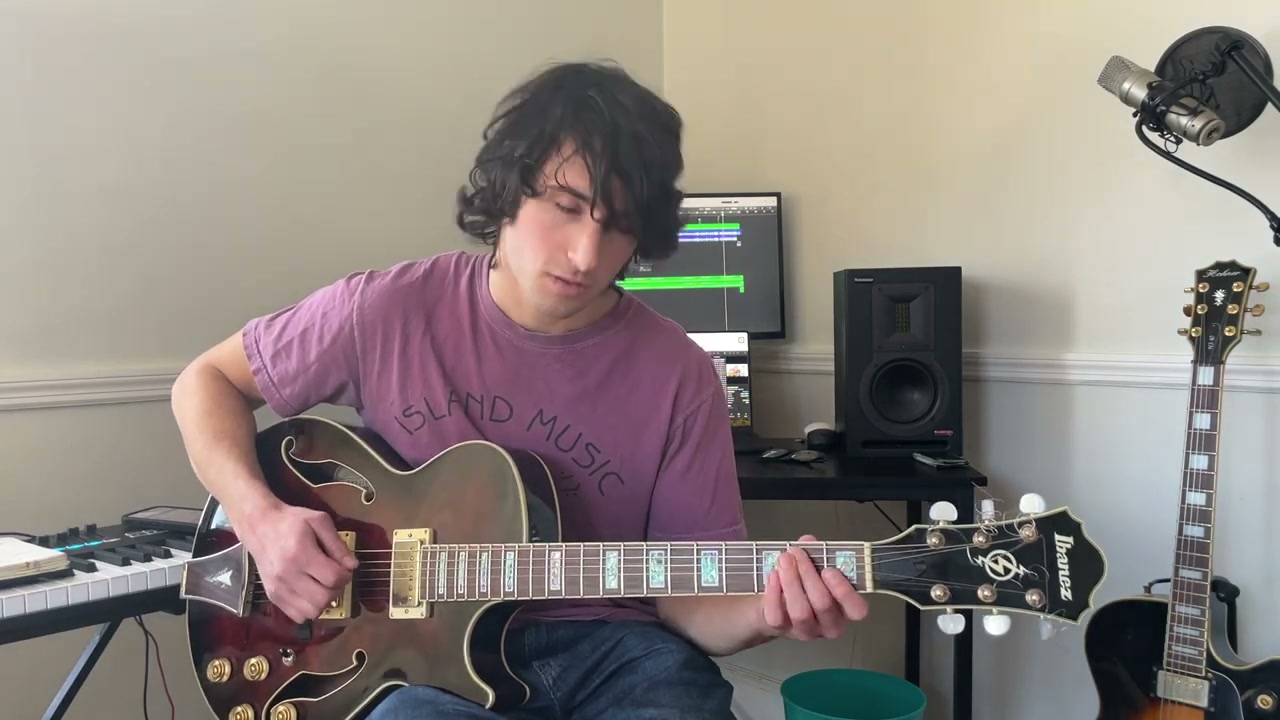
Alex teaches guitar on Tunelark. View Alex’s profile
That formula is the whole of scale theory a beginner needs for a long time. Every other scale in this article is the major scale with something taken out or moved, and why music theory matters makes the wider case for learning it this way rather than as isolated shapes.
The pentatonic is the major scale with two notes removed
Guitarists learn the pentatonic scale first, and most of them are told it is because the shapes are easy. That is true, but it is not the reason it works.
Will B. sings through the seven notes of the major scale and shows what each one wants to do. The seventh pulls up toward the root. The fourth pulls down toward the third. Those two are the least stable notes in the scale, and played together they make the tritone, the interval with the most tension in Western music, which resolves into the tonic, the home chord of the key. Take those two notes away and the two sharpest pulls in the key go with them, and so does the tritone between them. What is left is the pentatonic, five notes that sit comfortably over most of the chords in the key. It sounds right over almost anything because the notes that could sound wrong are gone.
Skill video · How Pentatonic Scales Are Derived from Major Scales
Will teaches guitar on Tunelark. View Will’s profile
He then plays each of the five pentatonic positions in G against the full major scale in the same position, so the relationship is audible rather than a diagram. Once you have heard that, the boxes stop being five separate things to memorize. They are the same seven-note scale, minus two notes, seen from five starting points. The minor pentatonic that most guitarists learn first is those same five notes counted from the relative minor: A minor pentatonic and C major pentatonic are one set of notes, A, C, D, E and G. Counted from the minor root, the two notes left out are the second and the sixth rather than the fourth and the seventh. Run that reasoning on the key Will plays in, G major, and you arrive at E minor pentatonic. Run it on C major and you arrive at the A minor pentatonic Roy uses in his clip.
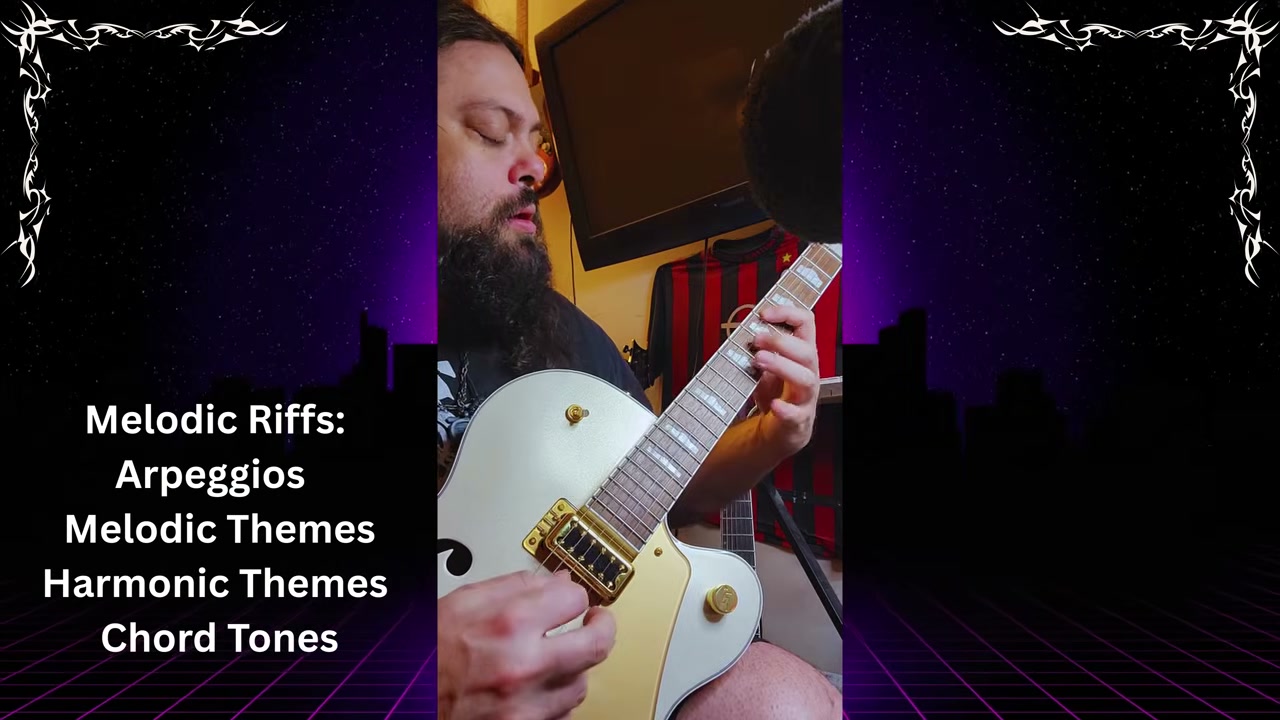
Roy L. adds the other half of the picture in a short clip: each degree of the minor pentatonic scale lines up with a chord in the key. In A minor, the first degree is the A minor chord, the second is C major, the third is D minor, the fourth is E minor, the fifth is G major, and then the cycle starts again. Every note in the scale is the root of one of those chords, which is why a solo fits a progression.
Skill video · Skills and Variations
Roy teaches guitar and bass on Tunelark. View Roy’s profile
Connecting the boxes across the neck
Here is the wall almost every player hits after learning the five shapes: they run vertically, up and down the six strings in one position, and there is no way across the neck. The solo lives in a box, usually the first one.
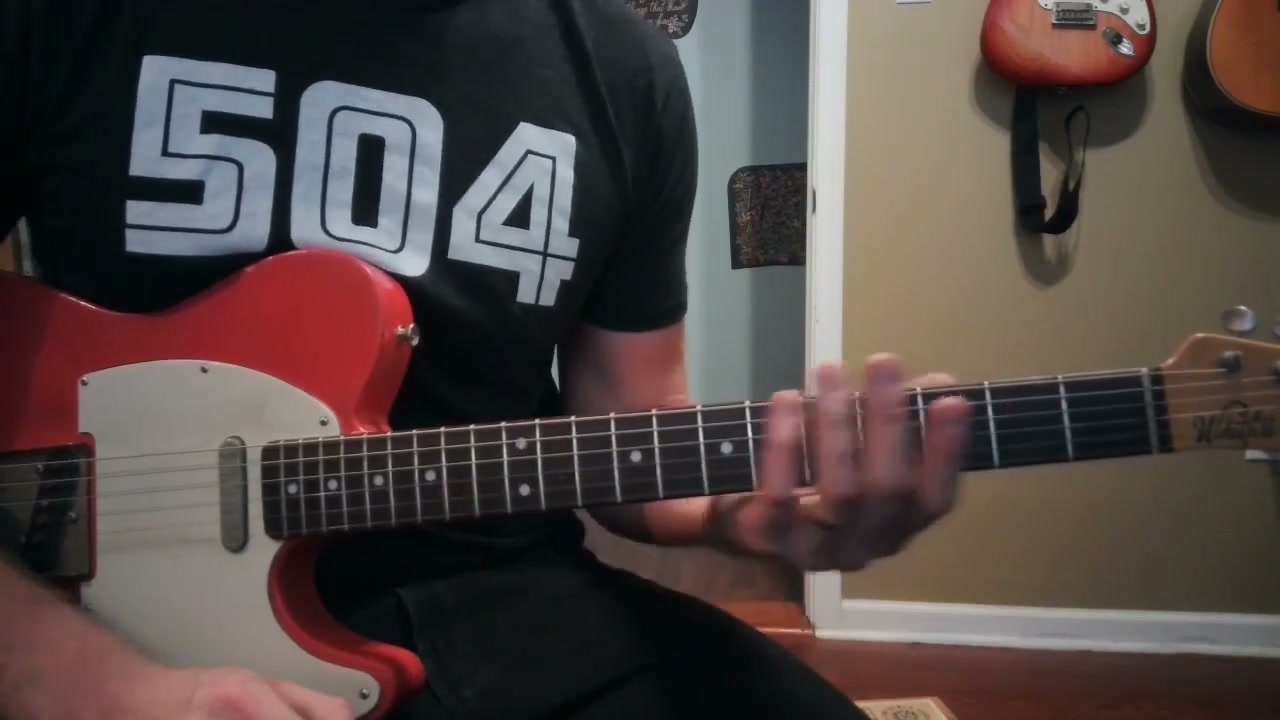
Matt S. has an exercise that dissolves it, and it rests on one observation about the shapes. Every pentatonic box has exactly two notes on each string, and the second note on any string in one box is the first note on that same string in the next box up the neck. So the connection is already there. To use it, pick a string. Play the box from the bottom until you reach that string, play its two notes, and instead of finishing the box, slide that second note up to the next box’s second note on the same string (A minor, low E string: fret 8 up to fret 10). Your hand is now in the next position, and you finish that box instead. Slide back down the same way. He starts with one string and two adjacent boxes, then adds strings until the scale runs three octaves across the whole neck.
Skill video · Connecting Pentatonic Boxes
Matt teaches guitar on Tunelark. View Matt’s profile
The exercise is a practice idea rather than a lick, and that is its value. Shift on the D string one day, the B string the next, two strings the day after, and the shapes stop being places you are stuck and become places you pass through. A month of this, a few minutes at a time, is usually enough for the neck to open up.
What CAGED is for
The other system you will hear about is CAGED, and AR B. gives a clear one-minute introduction to what it is. The five letters are the five open chord shapes, C, A, G, E and D, and the system uses those shapes to lay out any scale, and any chord, in five positions covering the whole neck. The confusion he clears up first is the names: a “C shape” is a fingering, not a key, and every key can be played in every shape.
Skill video · The CAGED System
AR teaches guitar on Tunelark. View AR’s profile
CAGED and the pentatonic boxes describe the same neck. The boxes are the fast route into playing; CAGED is the map that tells you why the boxes sit where they do and how the chord under a solo lives inside each one. Most players learn the boxes first and meet CAGED when they start asking why. Our teachers introduce it when a student is ready for it, which is usually after the boxes connect.
How to practice scales without hating them
Play them slowly, evenly, and with a metronome. A scale played fast and unevenly teaches the hand to be uneven. The economy-of-motion habits in the fretting hand guide, fingers staying close and staying down, are what make a scale feel easy at speed, and they are learned at slow tempos.
Learn one shape well before adding the next. One box, in one key, connected to the chord it belongs to, is worth more than five boxes memorized as diagrams. Then connect it to its neighbor with Matt’s slide.
Sing the scale as you play it. Will’s demonstration works because the pull of the seventh and the fourth is something you hear, and a player who can hear where the next note wants to go does not need to think about the diagram.
Use the scale on something immediately. A scale practiced over a backing track, or over one chord ringing on a looper, or under a friend’s strumming, becomes music. A scale practiced in silence stays an exercise. This is where scales turn into soloing, and the improvising guide picks up exactly there.
Keep it short and keep it daily. Ten minutes on one shape and one connection, every day, does more than an hour on the weekend. The intermediate plateau that our realistic guitar timeline describes in year two is very often a scale-shapes plateau, and this is the practice that moves it. If your playing has gone flat for a different reason, Harry B. on what to do when your playing stops improving is the better read.
Why this is where self-taught players get stuck
Scales are the part of guitar most often learned alone and least often understood alone. Diagrams are everywhere; the reasons are not. A self-taught player typically knows what a power chord is, and knows the first pentatonic box, and does not know why the box works over the chord, which is the gap the self-taught versus lessons comparison calls a theory blind spot. It is not a knowledge problem so much as a sequencing one. The formula, the two missing notes, the chord under each degree and the slide between boxes take a teacher a few lessons to put in the right order, and years to stumble on by accident.
Frequently Asked Questions
Which guitar scale should I learn first?
The minor pentatonic, in one position and one key, connected to the chord it belongs to. It is five notes, the same five as the major pentatonic of its relative major, and it works over most rock, blues and pop.
What is the major scale formula?
Whole step, whole step, half step, whole step, whole step, whole step, half step, starting from the root. On guitar a half step is one fret and a whole step is two, so you can play the formula up a single string and hear it.
Why does the pentatonic scale work over so much?
Because it is the major scale with the fourth and seventh removed. Those two notes make the tritone, the most unstable interval in the key, so the five that remain are the stable ones and fit almost any chord in the key. The minor pentatonic is the same five notes counted from the relative minor, so A minor pentatonic and C major pentatonic share every note.
How do I connect pentatonic boxes on guitar?
Every box has two notes per string, and the higher note on any string is the lower note of the next box up. Pick a string, play up to it, and slide from its second note into the next box instead of finishing the one you are in. Matt’s video above builds this from one string to the whole neck.
What is the CAGED system?
A way of organizing the guitar neck around the five open chord shapes, C, A, G, E and D, so that any chord or scale can be played in five positions covering the whole fretboard. The shapes are fingerings, not keys; any key works in any shape.
Do I need to learn music theory to play guitar scales?
You need the one formula above and the idea that each scale note is the root of a chord in the key. That much takes an afternoon and makes every diagram you meet afterward make sense.
Looking for an online guitar teacher? See our full Online Guitar and Bass Lessons page for everything you need to know about getting started.
Keep reading
About Jennifer Heath
I'm Jennifer Heath, VP of Operations at Tunelark and a lifelong singer. I joined the company in 2020 and oversee much of what makes Tunelark work for students and teachers: hiring, training and supporting our instructors, student support, marketing and day-to-day operations. I started voice lessons at 7 and sang with touring choirs through my teens. Music belongs in every life, for the self-expression, the discipline, the comfort and the simple joy of it.