Fingerstyle Guitar for Beginners: The Patterns That Unlock Thousands of Songs
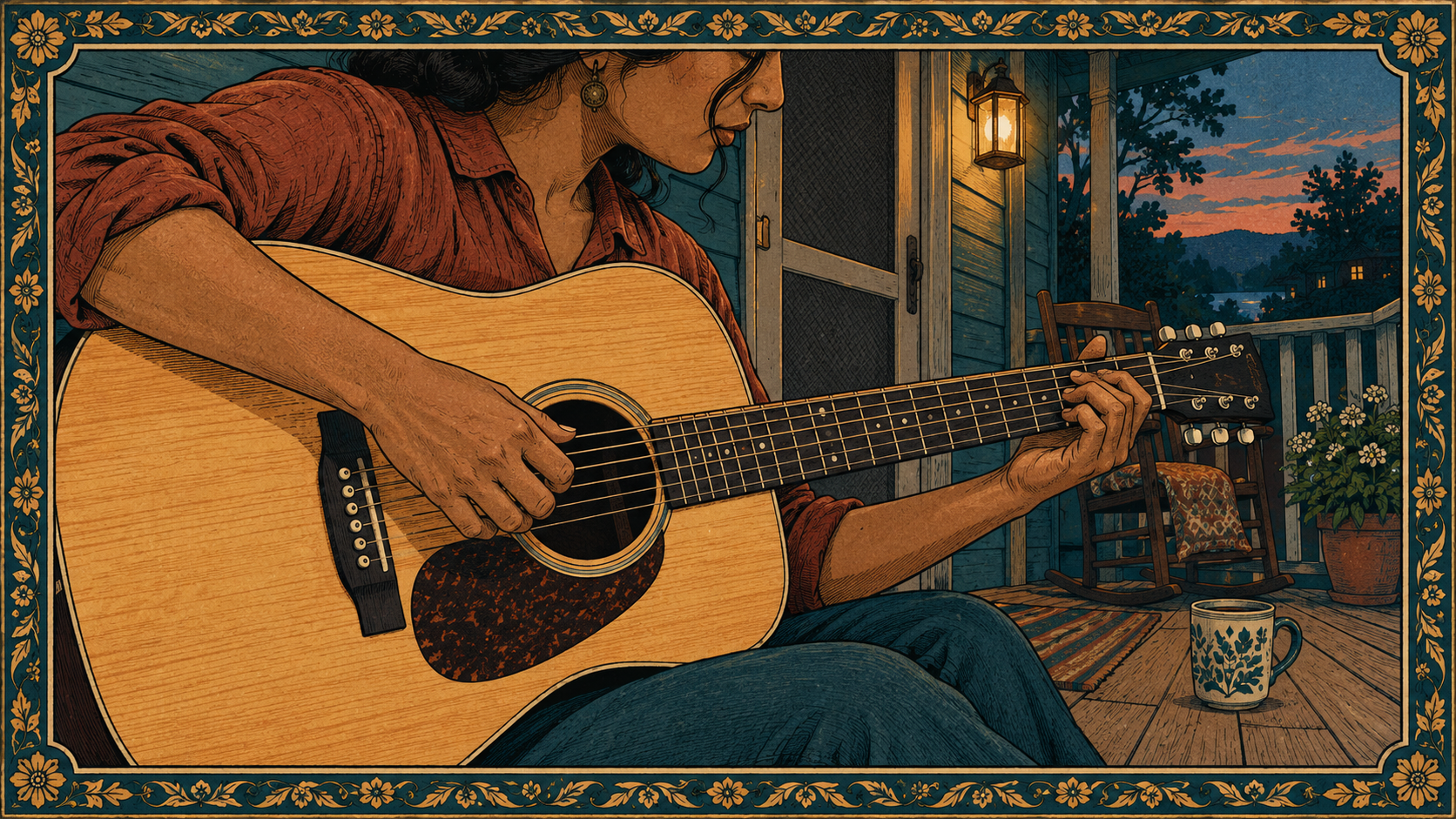
Put the pick down and something happens to the guitar. The same few chords that sounded like a campfire when they were strummed turn into “Landslide,” “Dust in the Wind,” “Fast Car” and “Hallelujah,” and the reason is not the chords. It is that the strings are being played one at a time, in a pattern, by a hand that has learned to do the same small thing over and over without thinking about it.
That is all fingerstyle is at the beginning: a repeating pattern of thumb and fingers over a chord you already know. This article covers what the hand is doing, which pattern to learn first and why, where the patterns go once they are automatic, and how to practice them so they become automatic. Our guitar teachers demonstrate each one. It assumes you can hold a clean C, G and D, which is the whole subject of the five chords every beginner needs.
What fingerstyle actually is
In a strummed chord, several strings sound together, four or five of them on an open C or an open D, and the rhythm lives in the wrist. In fingerstyle, each string is plucked by a specific finger, and the rhythm lives in the order the fingers move. The thumb takes the low strings, usually the sixth, fifth and fourth, and plays the bass notes. The index, middle and ring fingers take the high strings, one finger to one string, and play everything else.
The thumb is the important part. In almost every fingerstyle pattern, the thumb is doing what a bass player would do in a band: landing on the root of the chord on the beat, and often walking between two bass notes so the chord seems to move even when the left hand has not changed. The fingers fill in above it. Once you hear a pattern that way, as a bass line with a chord floating over it, the patterns stop being finger puzzles and start being music.
Two things about the hand before the first pattern. The index, middle and ring fingers each stay on a string of their own for the whole pattern, so the hand does not have to hunt, and that fixed assignment is what lets it get fast later. The thumb is the exception. It owns the bass strings and moves between them, which is the whole basis of the alternating bass further down this page. And the fingers pluck upward and slightly toward the palm, from the big knuckle, while the thumb pushes down and away. If the wrist is doing the work, the hand will tire in a minute and the notes will come out uneven. How the other hand holds the neck matters too, because a chord that buzzes will buzz on every pluck; the fretting hand has its own guide.
The first pattern: thumb, middle, thumb, index
Pete L. starts fingerpicking where most of our teachers start it, on a C chord and the four inside strings, with what he calls the folk pattern. The thumb plays the fifth string, the middle finger plays the second, the thumb moves up to the fourth, and the index finger plays the third. Thumb, middle, thumb, index, over and over. The high and low E strings are left alone for now.
Then he shows the variation that carries Elizabeth Cotten’s name, and that has turned up in folk, indie, blues and pop ever since: the first thumb note is held for a whole beat, the second thumb and the index come as a pair, and the folk pattern follows. The rhythm breaks up, and the same four notes suddenly sound like a song. Cotten herself was left-handed and played a right-handed guitar flipped upside down without restringing it, so her thumb picked the melody on the treble strings while her fingers kept the alternating bass underneath. That reversed-hand alternating bass is what her name properly belongs to. The rhythmic displacement in the video is the part of her sound a right-handed beginner can borrow directly, and it is a good place to start.
Skill video · Cotten Picking
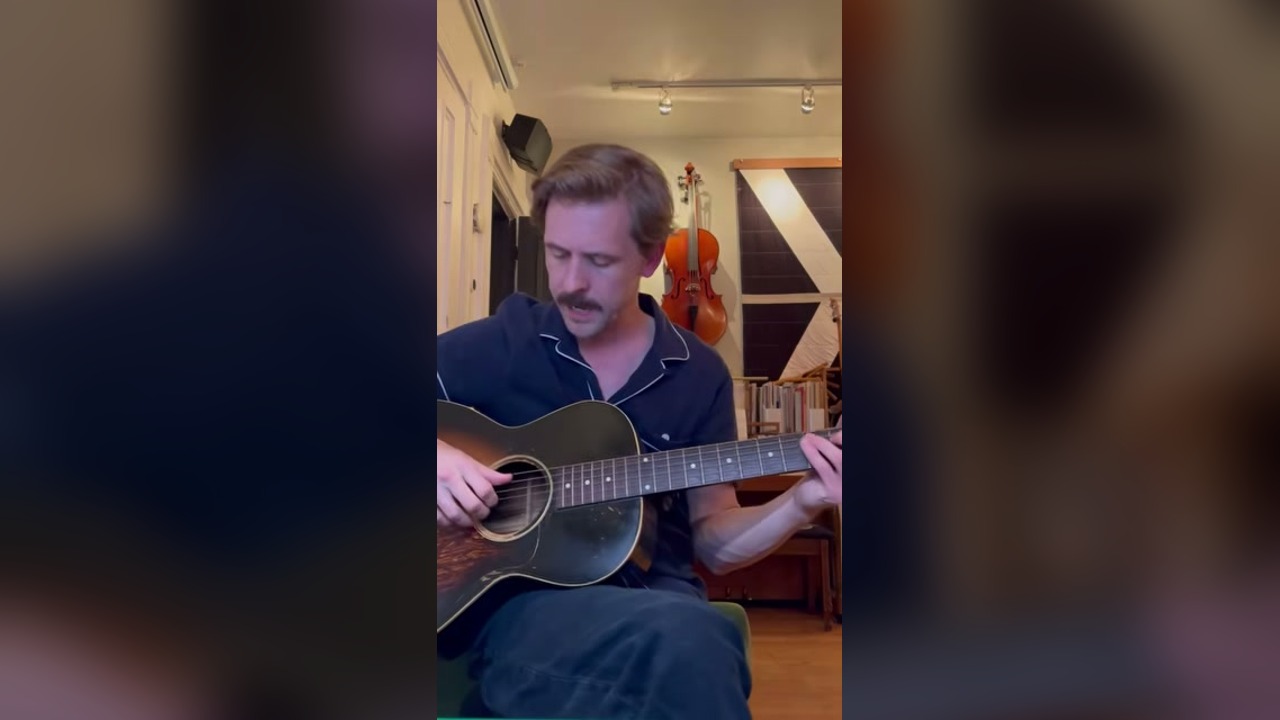
Pete teaches guitar on Tunelark. View Pete’s profile
The instruction he repeats throughout is the one that decides whether this works. The four notes have to be perfectly even before they are fast. A pattern learned unevenly, with the thumb heavy and the fingers rushed, stays uneven when it speeds up, and it will never lock in with anyone else. Slow and even first. Speed comes on its own.
The alternating bass: Travis picking
Once the thumb can keep a steady beat, it learns to move. In the pattern named after Merle Travis, the thumb alternates between two bass strings while the fingers play a fixed figure above it, and that walking bass under a held chord is the sound of half of country, folk and singer-songwriter guitar.
Jay H. teaches it as four words. Pinch the outside strings, the sixth and the second, at the same time. Then the inside pair, the fourth and the third. Then the outside pair again. Then the inside pair. Pinch, inside, outside, inside, with the same fingers on the same strings every time, and the rhythm spoken out loud while the hand learns it. He runs it on G, then C, then D. C and D each need one small adjustment.
On D, bring the thumb over the neck to fret the sixth string at the second fret, an F sharp. The thumb alternates between that F sharp on the pinch and the open fourth string, the D itself, so the root arrives on beats 2 and 4 under a D/F sharp. A thumb that cannot reach can alternate the open fourth and fifth strings instead. The picking pattern never changes.
On C, the thumb would otherwise alternate between the open sixth string and the fourth string at the second fret, and both of those are E, so the chord never gets a floor. Either add the sixth string at the third fret with the pinky, keeping the ring finger where it sits on the fifth string, for the familiar C/G voicing, or land the thumb on the fifth string so the pinch sits on the C itself. Both keep the pattern intact.
Skill video · Travis Picking Basics

Jay teaches guitar and voice on Tunelark. View Jay’s profile
Two things in his lesson are worth taking as rules. You cannot go too slow, and if the wrong finger hits the wrong string the answer is to slow down, not to try again at the same speed. And looking at the picking hand is fine at first, but the goal is to sit up and let the hand work on its own, because the whole point of a pattern that runs by itself is that you can sing, or talk, or watch what the other hand is doing.
Adding movement inside the chord
When the picking hand is steady, the fretting hand can start to move without the rhythm falling apart, and this is where fingerstyle turns from a pattern into an arrangement. The simplest version is a hammer-on inside a held chord: a finger comes off a string, the string is played open, and the finger comes back down hard enough to sound the fretted note without the hand plucking again.
Stu P. works this through on a C chord. The middle finger lifts off the fourth string, hammers back onto the second fret, and the challenge is doing that while the ring and index fingers stay perfectly still. Then the pinky hammers onto the third fret of the same string for a suspended sound, and the index pulls off the second string so the open B rings and the chord turns into Cmaj7. He then puts the whole thing into a strummed rhythm with the hand as the metronome, which is the same steady-hand idea the picking patterns depend on.
Skill video · Developing Hand Independence
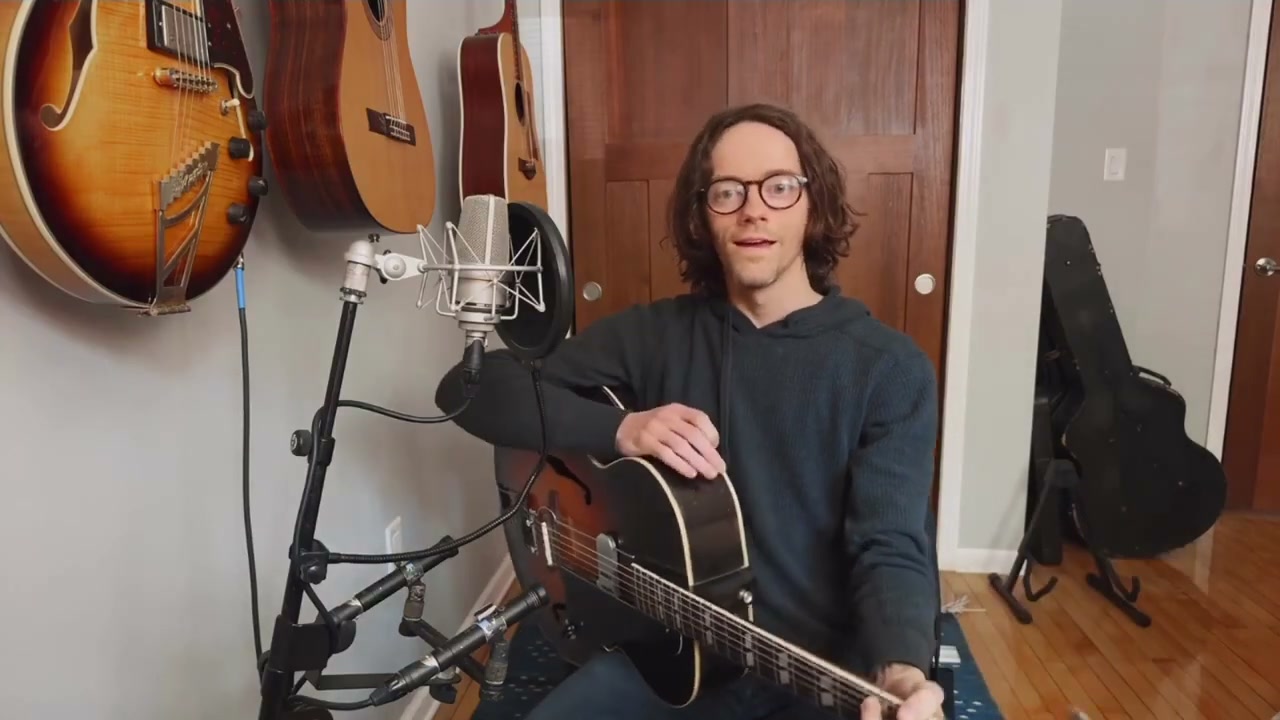
Stu teaches guitar on Tunelark. View Stu’s profile
He calls the skill independence of motion, and it is the one that separates a player who can play a pattern from one who can play a song with it. The fingers that are not moving want to move along with the one that is. Slowing down and watching the hand, without judging it, is how they learn to stay.
How to practice a pattern
A picking pattern is a motor skill, and motor skills are built by short, exact repetition rather than long sessions. Our teachers converge on the same method.
Say the pattern out loud while you play it. Pete counts “one and two and,” Jay says “pinch, inside, outside, inside,” and both are doing the same thing: giving the hand a script so the brain is not deciding each note in real time.
Stay on one chord until the pattern runs without thought, then change chords without changing the pattern. The pattern is the thing being learned. The chord is just where it happens.
Keep the sessions short and daily. Jay’s estimate is that a pattern becomes automatic in about a week of relaxed daily practice, and that matches what our teachers see in lessons. Ten minutes on the pattern every day does more than an hour on Sunday, for the reasons Tony G. lays out in his guide to ten-minute practice.
Play it under something. A pattern practiced on its own gets boring fast. A pattern practiced under the verse of a song you love gets practiced. How a teacher chooses that song, and when a student is ready for it, is the subject of Alex P.’s guide to choosing your first real piece.
What usually goes wrong
The thumb wanders. It is supposed to sit on one bass string per chord, or alternate between two. If it is landing on whichever low string it finds, the bass line disappears and the chord loses its floor. Slow down and watch where it goes.
The fingers curl into a fist after each pluck. They should return to hover just above their strings. A finger that has to travel back from the palm is late for the next note.
The sound is thin or clicky. Either the fingers are plucking with the very tip of the nail, or the hand is too tense. Most beginners get a warmer sound from the flesh of the fingertip with a little nail behind it, and a relaxed hand.
The pattern falls apart on chord changes. The picking hand is fine; the fretting hand is arriving late. That is a chord-change problem, and the two-chord drill in our beginner guitar tips fixes it faster than more picking practice will.
Fingertip soreness on the picking hand. Normal for the first two to four weeks of regular playing, then it fades as the fingertips toughen. Sharp pain in the wrist is not normal and means the wrist is doing the plucking. Let the fingers do it.
Where it goes from here
Once two or three patterns run on their own, fingerstyle opens in three directions at once: melody notes on top of the pattern, which is how a chord becomes a tune; more strings and more complex figures; and the alternating-thumb styles that lead into ragtime, blues and country. Where you go depends on the music you want to play, which is a conversation for a teacher who plays it. Alex G. has developed his own fingerstyle method, and several of our other guitar teachers specialize in it. The timeline for getting there is realistic in how long it takes to learn guitar; the short version is that a beginner who practices a pattern daily plays recognizable fingerstyle songs within a couple of months.
Frequently Asked Questions
Do I need long fingernails to play fingerstyle?
No. Long nails are a choice classical and some steel-string players make later for a brighter attack, not a requirement. The tone note in the section on what usually goes wrong above covers what to reach for instead, and it holds on steel strings and nylon alike.
Should I learn strumming or fingerstyle first?
Most of our teachers start with a few chords and simple strumming so the fretting hand learns its shapes, then add fingerpicking within the first months. If the songs you want to play are fingerpicked, there is no reason to wait; the chords are the same.
Can I learn fingerstyle on an electric guitar?
Yes. The patterns are identical, and the lighter strings are easier on the fingers. Acoustic guitar is the usual home of the style because of its sound, not because the technique needs it.
Which fingerpicking pattern should I learn first?
Thumb, middle, thumb, index on a C chord, the folk pattern in Pete’s video above. It uses only the four inside strings, with the index and middle fingers each on a string of their own while the thumb covers both the fifth and the fourth. It appears in thousands of songs, and every other pattern builds on the evenness it teaches.
How long does it take to learn fingerstyle guitar?
A single pattern becomes automatic in about a week of short daily practice. Playing a whole fingerpicked song cleanly at tempo usually takes a beginner one to three months. Solo arrangements with melody on top come later and depend on how much you play.
Is fingerstyle harder than using a pick?
It asks more of the picking hand at first, because each finger has a job. In exchange, it makes rhythm and dynamics easier once the patterns are automatic, and it lets one guitar sound like bass and melody at once.
Looking for an online guitar teacher? See our full Online Guitar and Bass Lessons page for everything you need to know about getting started.
Keep reading
About Jennifer Heath
I'm Jennifer Heath, VP of Operations at Tunelark and a lifelong singer. I joined the company in 2020 and oversee much of what makes Tunelark work for students and teachers: hiring, training and supporting our instructors, student support, marketing and day-to-day operations. I started voice lessons at 7 and sang with touring choirs through my teens. Music belongs in every life, for the self-expression, the discipline, the comfort and the simple joy of it.