Easy Piano Songs for Adult Beginners, Sorted by Skill
Adults do not want to play “Hot Cross Buns.” They want to sit down and play something they would put on themselves, and they want it soon. That is a reasonable ask, and the reason most adult beginners stall is not that the wish is unrealistic. It is that the song they picked needed a skill they had not built yet, so it felt impossible instead of nearly done.
This list is sorted by the skill each song asks for, not by fame, so you can pick the one that is one step ahead of where you are. Every piece is in the public domain or is named only, with no arrangement reproduced here. Your teacher will have a version at the right level, and simplified editions exist for all of them.
If you are starting from zero, our 30-day path to your first piano song is the plan, and this is the repertoire that plugs into it.
Tier one: one hand, five fingers
The skill: playing a melody with the right hand in a single five-finger position, thumb on C, each finger owning one key. No hand movement, no left hand yet.
Ode to Joy (Beethoven). The melody sits inside five notes for almost its whole length. It is the first real piece for a reason: it sounds like music on day one.
Jingle Bells, chorus only, and Mary Had a Little Lamb (traditional). Not glamorous, but both stay within the five-finger hand and teach you to look at the keys less. The Jingle Bells verse dips below the position, so leave it for later.
Amazing Grace (traditional). The one stretch in this tier: the melody is pentatonic and spans an octave, from the G below middle C to the G above it. Set the hand on the five notes it uses, thumb on the low G, then second finger on A, third on C, fourth on D and fifth on E, with a small stretch between the second and third, and shift up once for the high G. That shift is the one hand movement this tier asks for, and played slowly it is genuinely beautiful with one hand.
When the Saints Go Marching In (traditional). A four-note opening, five notes in all, and a lot of rhythm. Good for learning to count while you play.
Practice note: play each with the metronome at a tempo where you never stop. The point of this tier is a hand that knows where the keys are without looking.
Tier two: melody plus a single-note bass
The skill: the left hand plays one note at a time, held under the melody. This is the first hands-together step and the one where most adults feel the ceiling lift.
Ode to Joy, again. Add a left-hand root note under each bar. The same piece, twice as satisfying.
Scarborough Fair (traditional). Dorian mode, which sounds minor apart from one brighter note, and that raised sixth is the whole character of the tune. Slow, one bass note per bar. It will sound like something from a film.
Greensleeves (traditional). Printed most often in 3/4, three beats to the bar, and often in 6/8, two beats with the subdivision in threes, so check the time signature on the copy you buy. Either one is a new count after the tier one songs. The melody is the hard part. The left hand is only a note or two per bar.
House of the Rising Sun (traditional). The famous version is arpeggiated, but at this tier play a single bass note per chord and the melody above it.
Für Elise, the opening section only (Beethoven). The opening A section, up to where the music turns to F major, is much easier than the piece’s reputation, and it is the part everybody knows. The left hand here is a step past one held note, three-note broken chords that trade off with the right hand, so it sits at the top of this tier. Stop there for now. The middle section is tier four.
Practice note: hands separately first, always, then together at half speed. Our beginner piano tips explain why that order saves weeks.
A bass note held under a melody is the first time your two hands have different jobs. Heather D., who teaches piano on Tunelark, works through hand independence at the piano and how to get each hand holding its own line.
Skill video · Hand Independence
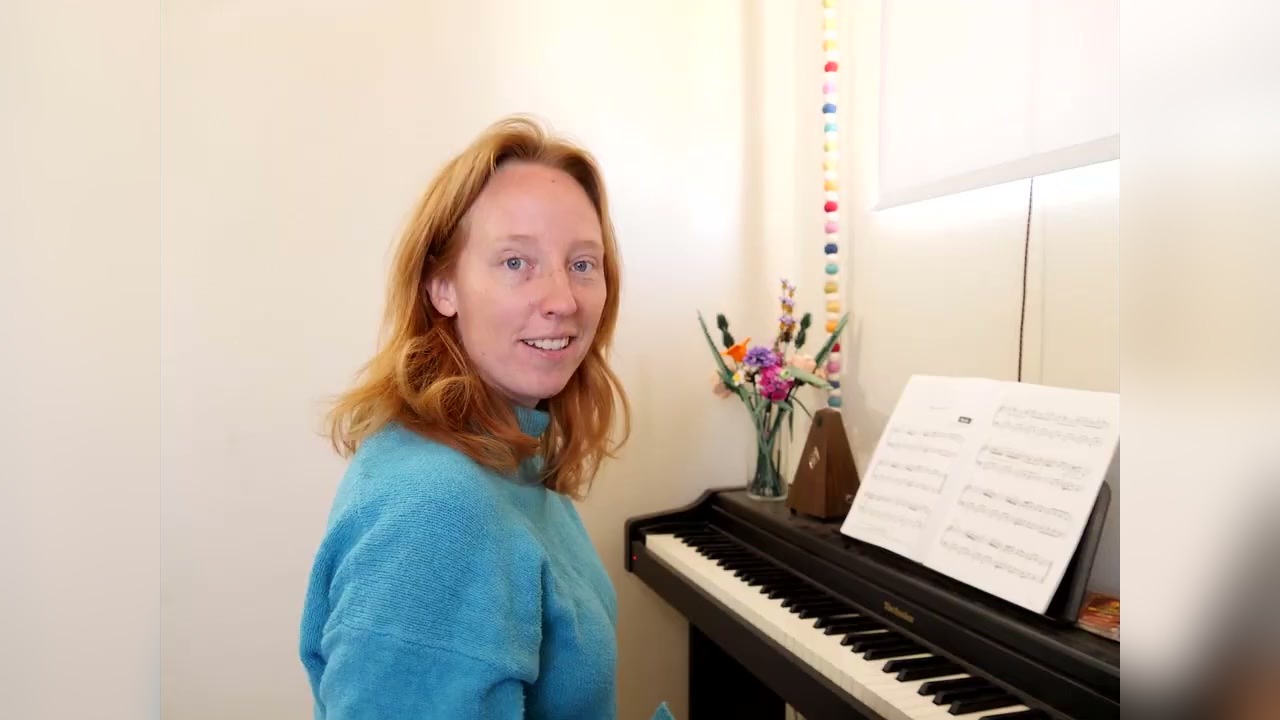
Heather teaches piano lessons online with Tunelark. View Heather’s profile
Tier three: chords in the left hand
The skill: the left hand plays simple three-note chords or broken chords while the right hand carries the melody. This is where songs start to sound like the record.
Let It Be (The Beatles). C, G, A minor, F. The same four chords for most of the song, which is why it is the first pop song many teachers assign.
Imagine (John Lennon). C and F for the verse, with a gently moving left hand. Slow enough to think.
Hallelujah (Leonard Cohen). In a slow 6/8 lilt, which is two big beats to the bar, or 12/8 in the editions that print it that way, which is four. Either way the beat divides into threes, and the left hand walks slowly through the chords. Emotionally easy to stay with, which matters for practice.
Stand by Me (Ben E. King). Four chords that repeat for the entire song, at a tempo that lets the left hand settle.
Someone Like You (Adele), verse only. This one flips the tier pattern: the broken chords sit in the right hand and the left plays single bass notes, so the shapes are the same, just in the other hand. The famous piano part is closer than you think once the pattern clicks.
Prelude in C major (Bach, from the Well-Tempered Clavier). No melody at all: the whole piece is one broken-chord pattern that changes harmony every bar. Adults love it because it sounds far harder than it is.
Practice note: learn the chord shapes away from the song first. Our guide to beginner piano chords covers the shapes simplified editions of these use.
Let It Be runs on three major triads and one minor one. Sabrina L., who teaches piano on Tunelark, works through major and minor triads at the piano and the intervals inside each one.
Skill video · Major and Minor Triads
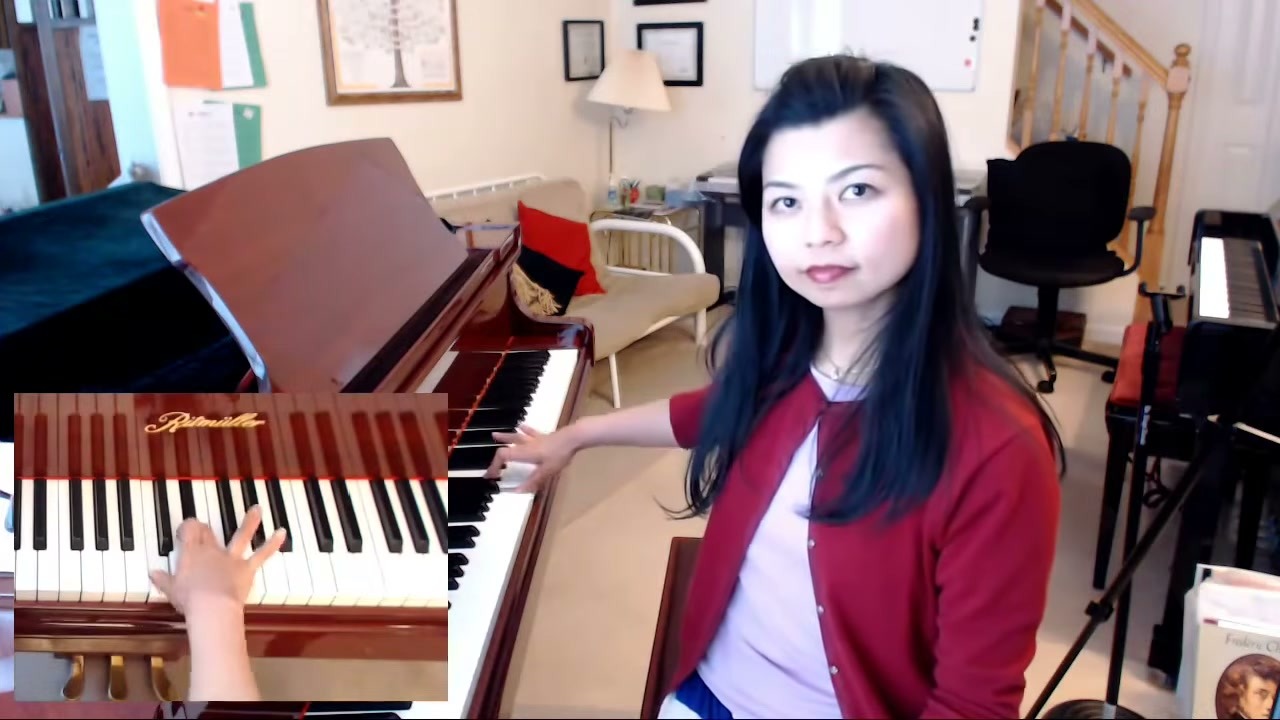
Sabrina teaches piano lessons online with Tunelark. View Sabrina’s profile
Tier four: hands moving together
The skill: both hands move, the left hand plays patterns rather than blocks, and the music has real dynamics. This is the intermediate doorway, usually six to twelve months in.
Minuet in G (from the Anna Magdalena Bach notebook). The classic first “real” classical piece, and the left hand is a genuine second voice.
Gymnopédie No. 1 (Satie). Slow and spacious, but the left hand jumps between a bass note and a chord every bar, which takes practice to make quiet.
Für Elise, complete (Beethoven). The middle sections add fast left-hand work and a run in the right hand. Worth the wait.
Moonlight Sonata, first movement (Beethoven). Triplets in the right hand, a slow melody voiced above them by the same hand, octaves in the bass and four sharps in the key signature. It is not fast, and that is what makes it hard: every note is exposed. It sits a few grades above the rest of this tier, so treat it as a year-two or year-three target rather than a first intermediate piece.
Canon in D (Pachelbel). The bass line repeats for the whole piece. The right hand gets progressively busier, so you can stop at whatever point matches your hands.
River Flows in You (Yiruma). The piece most adults name when asked what they want to play. It is a tier-four piece, not a first piece, and getting there in a year is realistic with weekly lessons.
Picking the right one
Choose from the tier you are in, not the tier you want to be in. A tier-two player who spends a month on a tier-four song learns very little and feels bad. The same month on two tier-two songs and one tier-three song builds the hands that make tier four possible. How long it takes to learn piano maps these tiers onto a realistic calendar.
Adults have one real advantage here, which our guide to online piano lessons for adults explains: you can understand why a piece works, and once you can hear the chord pattern under a song, you can learn a new one in that pattern in a fraction of the time.
Two practical notes. Keep your hand position honest while you learn these, because a song you love is exactly where bad habits hide. Our piece on piano hand position has the checks. And if you are shopping for an instrument, the thing to check for this list in particular is a sustain pedal input, because the cheapest 61-key boards have none. The Moonlight Sonata is not playable as written without a damper pedal, since the pedal is written into the notation and is what holds each bar of harmony together. Canon in D, River Flows in You and Hallelujah all play perfectly well without the pedal, they just sound dry, and the sustain is a good part of what makes them sound like the recording. On weighting and key count, our comparison of digital pianos and keyboards for beginners is the fuller answer.
How to Find a Piano Teacher on Tunelark
Tunelark connects you with deeply vetted piano teachers who teach online. Vetting is run by working musicians and music teachers, not a general recruiter, and every teacher sets their own rate and shows it on their profile. Scheduling, billing and support are handled for you.
- Browse piano teachers at tunelark.com/find-a-teacher and look for the ones who mention adult beginners and songs.
- Watch their videos; the teacher who explains why a chord pattern works is the one who will get you to tier three fastest.
- Book a trial lesson at $25 off the teacher’s 30-minute rate and name the song you want to reach.
- Ask yourself afterward whether they gave you a piece one step ahead of you, not five.
Frequently Asked Questions
What is the easiest song to learn on piano as an adult?
Ode to Joy. The melody sits inside a five-finger hand position, sounds like real music on the first day, and grows with you when you add a left hand.
How long before I can play a real song on piano?
A one-hand melody within the first two weeks, a melody with a simple bass within a month or two, and a pop song with left-hand chords by three to six months of weekly lessons and short daily practice.
Can I learn Für Elise as a beginner?
The opening section, yes, within the first few months. The complete piece needs faster left-hand work and belongs at the intermediate doorway, usually after six months to a year.
Should I learn to read music or play by chords?
Both, and in that order for most adults. Reading gets you into classical pieces and gives you independence; chord playing gets you into pop songs quickly. A teacher balances the two for the songs you actually want.
What piano do I need for these songs?
A weighted 88-key digital piano handles every song on this list. A lighter 61-key keyboard is fine for the first tier and will hold you back after that, and the cheapest have no sustain pedal input, which leaves the tier three and tier four pieces sounding dry and, in the case of the Moonlight Sonata, unplayable as written.
Looking for an online piano teacher? See our full Online Piano Lessons page for everything you need to know about getting started.
Keep reading
About Jennifer Heath
I'm Jennifer Heath, VP of Operations at Tunelark and a lifelong singer. I joined the company in 2020 and oversee much of what makes Tunelark work for students and teachers: hiring, training and supporting our instructors, student support, marketing and day-to-day operations. I started voice lessons at 7 and sang with touring choirs through my teens. Music belongs in every life, for the self-expression, the discipline, the comfort and the simple joy of it.