Best Age to Start Saxophone Lessons for Kids: A Parent’s Guide
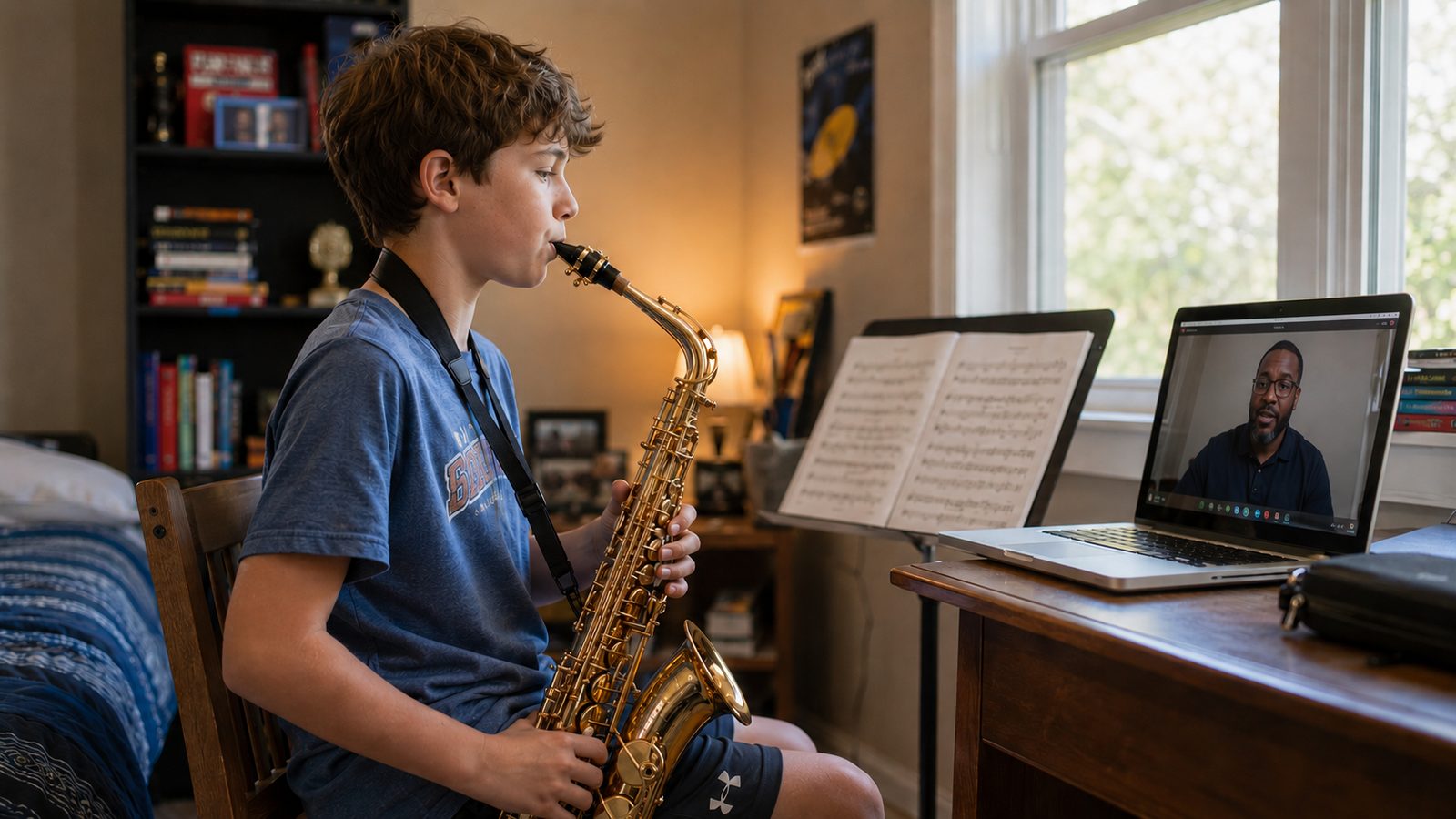
Most children who start saxophone start between 10 and 12, when their hands, arms and breath have caught up with the instrument. Some start younger. In the school band programs Travis S. directs, children can begin in third grade, around age 8. What decides it for a particular child is less the birthday than three physical questions: can they reach the keys, can they hold and carry the instrument, and do they want to play it.
Travis teaches saxophone and piano at Tunelark and has taught woodwinds for nearly 30 years. He holds a Master of Music in Jazz Saxophone Performance from the Manhattan School of Music and directs school band programs across the New York metropolitan area, so he starts children on the saxophone every year, at exactly the ages parents ask about. We asked him how he decides whether a child is ready, what the first months look like, and what he does for a child who is keen but still small.
Why there is no single right age
“I don’t think there’s a single age at which every child is ready for saxophone,” Travis says. “In the school programs where I teach, students can begin as early as third grade. I started in fifth grade, when I was ten, and I remember that even then the alto saxophone was a fairly heavy instrument.”
Weight is the first of three physical gates. A student alto saxophone, the size children start on, weighs about five and a half pounds and hangs from a strap around the neck. A ten-minute practice session is ten minutes of that weight pulling forward on a young neck and shoulders. A harness, which spreads the weight across both shoulders, is the usual fix for a smaller child. A tenor weighs about two pounds more again, which is one reason our guide to choosing between alto and tenor saxophone puts the tenor in seventh or eighth grade.
Reach is the second. The keys wrap around the body of the instrument, and the lowest ones sit under the little fingers at full stretch. A child whose fingers cannot close them without twisting the wrist will get notes that crack or refuse to sound, and will not know why.
The third is the mouth. The upper front teeth rest on top of the mouthpiece, so a loose or half-grown front tooth makes every note uncomfortable. That is often what cuts practice short for a seven- or eight-year-old, so a child with a wobbly front tooth is better off waiting until it has settled. A small stick-on mouthpiece patch softens the contact once they are.
The general question of when children are ready for any lessons is covered in our guide to what age to start music lessons. Saxophone sits later than piano or voice on that timeline for these physical reasons, not because of attention span.
What Travis checks before a child starts
For a younger child, Travis narrows the question to the body and to how the instrument feels. “With a younger child, I mainly want to know whether their hands can comfortably reach the keys and whether they feel okay holding and carrying the instrument,” he says. “If possible, I let them hold a saxophone before they decide.”
That second step is the one a family can arrange for themselves. A music store, a school instrument night or a teacher’s own instrument will let a child feel the weight, put the strap on and close their fingers over the keys. Ten minutes of that tells a parent more than a chart of starting ages, because it shows the actual child with the actual instrument.
He does not treat size as a verdict. “I wouldn’t rule out a small third grader who’s excited to try it,” he says, “but I do want them and their parents to know what the instrument feels like.” A small child who is excited gets to try; the parents go in knowing the instrument will be heavy for them for a while, and a harness and short practice sessions are part of the plan from the start.
When the saxophone is still too big: start on clarinet
For a child who wants to play and is not yet big enough, Travis has a practical detour. “If it’s too large or heavy for now, I often suggest starting on clarinet for a year or two,” he says. “It’s lighter, and it shares some important features with the saxophone, including a mouthpiece and reed.”
Both instruments are single-reed woodwinds. The player’s lower lip supports a thin cane reed against a mouthpiece, the reed vibrates, and the tone depends on how the lips and air control that vibration. A year on clarinet builds the same mouth shape, the same breath and the same reading skills, on an instrument a smaller child can hold for a full practice session.
“The skills they develop on clarinet can give them a good foundation if they decide to switch to saxophone as they grow,” he says. The switch is usually quick. The fingerings are related, the reading carries over completely, and the saxophone generally speaks more easily than the clarinet, so a child arriving from clarinet tends to find the new instrument forgiving rather than hard. Our guide to whether saxophone is hard to learn covers what the instrument asks of a beginner at any age.
Starting ages at a glance
Putting Travis’s checks together with what the instrument requires gives three rough windows.
Ages 7 to 9. Possible on alto, easiest for a larger child, with a harness rather than a neck strap, and only if the front teeth are settled and the child can keep a steady stream of air going for several seconds. A child who fails any of those checks is better served by waiting six months to a year, or by starting on clarinet.
Ages 10 to 12. The usual window. Hands, breath and teeth are almost always ready, and many school band programs start in fifth or sixth grade, so a child who starts now has classmates starting too and a concert on the calendar.
Teens. A teenager can start at any point and often moves quickly, because they can practice on their own and follow more detailed instructions. What decides how fast they go is whether they chose the instrument.
The first few months for a young beginner
Travis’s first lessons with a young beginner start before any music. “I want a young beginner to feel comfortable taking the saxophone out of its case, putting it together, setting up the reed and mouthpiece, and putting everything away properly,” he says. “We learn the parts of the instrument, how to hold it, and how to care for it. Then we work on making a sound.”
Assembly has real consequences for the sound and the instrument. A reed set too high or too low on the mouthpiece makes a good player sound bad, and a neck twisted on carelessly can bend the octave key, which then leaks air. A child who can assemble and pack away the instrument correctly by themselves can practice without a parent standing over them.
Then come notes. “From there, we begin reading music and playing a few notes, often the first five notes of the saxophone’s G scale, which gives us enough to start playing simple songs,” he says. “We also work on rhythm and on what practice at home should look like.”
The saxophone is kind to beginners here. It gives a first note sooner than most wind instruments, often in the first lesson or two, and simple melodies follow within a few weeks. What takes much longer is tone: a sound a child enjoys hearing usually takes about a year. Parents who know that in advance can hear month three for what it is, which is progress, even when it does not yet sound pretty. What happens in those first lessons is set out in more detail in our guide to the first saxophone, flute or clarinet lesson.
Travis gives a concrete benchmark from his band programs. “In a beginning band program, a reasonable goal is for students to be able to play four or five simple songs, such as ‘Hot Cross Buns’ or ‘Mary Had a Little Lamb,’ by the spring concert,” he says. “In private lessons, we can move at the individual student’s pace and go deeper into reading, rhythm, and technique, usually with a method book as a guide.”
Practice at this age is short and frequent. Children of 8 to 10 do well on 15 to 25 minutes a day, five or six days a week, and splitting that into two short sessions is normal. From 11, 25 to 45 minutes. Embouchure muscles tire quickly in the first months, so two short sessions produce better tone than one long one. Our guide to helping a child practice at home covers how to set up a routine that holds.
The early habit Travis watches for: embouchure
Embouchure is the way the lips, jaw and facial muscles shape themselves around the mouthpiece. It decides most of a saxophonist’s tone, and it is the habit Travis pays the closest attention to at the start.
“One early habit I pay particular attention to is how a student produces their sound, including their embouchure,” he says. “Puffing out the cheeks while playing, for example, can become difficult to change if it’s repeated for a long time.”
Puffed cheeks are a common beginner habit because they feel like they help: the child is pushing air, and the cheeks fill with it. What they do is take the firm corners of the mouth out of the embouchure, so the air leaks around the mouthpiece and the tone goes thin and wobbly. The opposite habit, biting down on the reed for control, chokes the sound in a different way. Both feel normal to the child doing them, which is why they need a teacher who can see the face.
His approach to fixing it is patient. “I try to notice things like that early and give the student a way to work on them without expecting an instant fix,” he says. “It takes consistency to build a habit, and it takes consistency to change one.” For a parent, that means a correction that is still being worked on three weeks later is on schedule. A mouth shape practiced every day for a year will not reset in a lesson.
Skill video · Embouchure
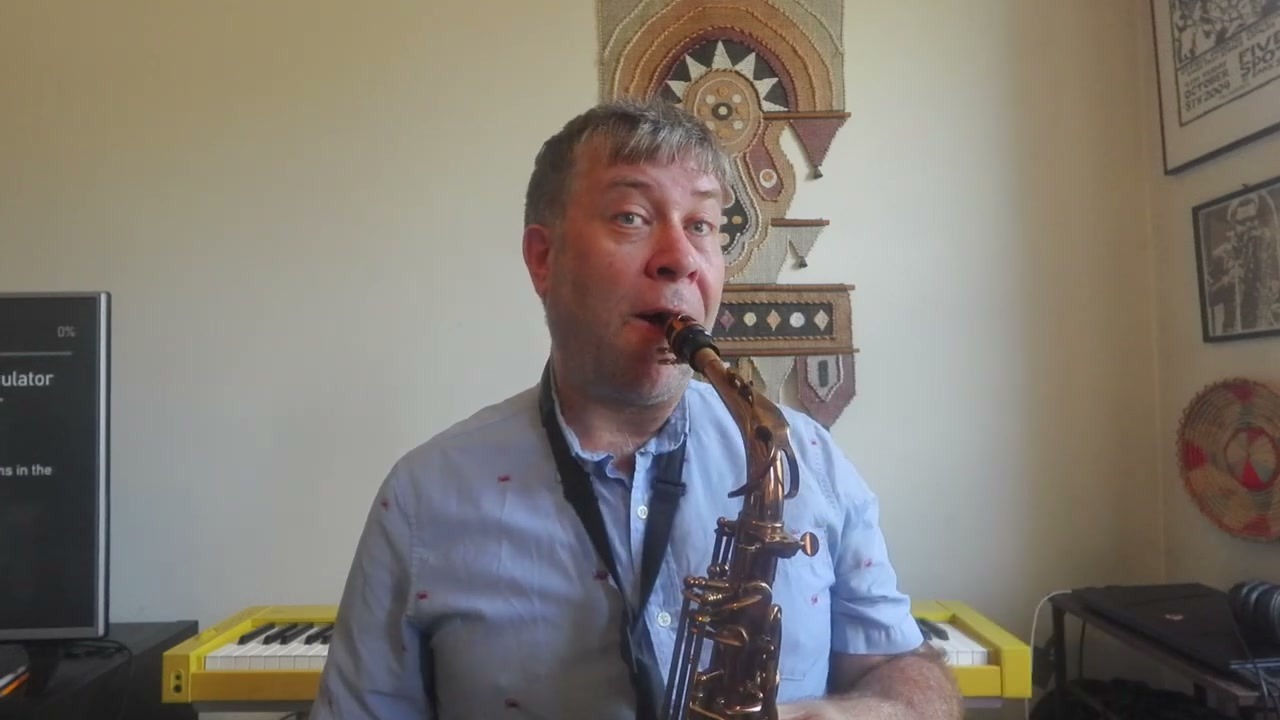
Travis teaches saxophone and piano on Tunelark. View Travis’s profile
How lessons change as a child grows
Travis teaches children, teenagers and adults, and the content stays the same across all three. “The fundamentals I teach don’t change with a student’s age, but the way we get to them does,” he says.
For children and many teenagers, the path is structured. “Younger students, including many teenagers, often benefit from a clear path through a method book: learning to read music, developing their sound, building good playing habits, and gradually expanding their repertoire,” he says. “As they get older and more experienced, I encourage them to explore music on their own and bring me something they want to learn.”
That handover is a good sign to look for in a child’s second or third year. A student who starts arriving at lessons with a song from a game soundtrack, a jazz tune they heard or a pop song they want to play has started to own the instrument, and the teacher’s job shifts from supplying the next page to helping them get where they want to go.
Improvisation follows the same rule. “If a student wants to improvise, I meet them where they are,” he says. “You don’t need to know every major and minor scale before you can begin improvising. But as a player becomes more experienced and wants to explore improvisation more deeply, that knowledge opens many more possibilities.” For a young player drawn to the saxophone by jazz, that means making something up can start early, on a handful of notes, rather than waiting for years of scales.
“At any age, I care about helping students read music, develop their sound, and understand what they’re playing,” he says. “The difference is how I frame those ideas for the person in front of me.”
About Travis
Travis has taught woodwinds and piano for nearly 30 years, from beginners through advanced players, in classical, jazz and popular styles. He started saxophone in fifth grade after his father steered him toward it, took a Bachelor of Science in biochemistry, and began teaching piano at a local music store after graduating, before earning a Master of Music in Jazz Saxophone Performance from the Manhattan School of Music. He founded the 18-piece Bjorkestra, which has played jazz festivals in Montreal, San Francisco, New York City and South Korea, led the house band during a two-month residency at Minton’s Playhouse in Harlem, and has been a guest music instructor at New York University and the Peabody Conservatory.
He directs school band programs across the New York metropolitan area, and at Tunelark he teaches saxophone and piano online from his studio in New York. He was also interviewed for our guide to whether a child in school band needs private lessons. Here he is in performance, playing the Pink Panther theme.
Performance · The Pink Panther
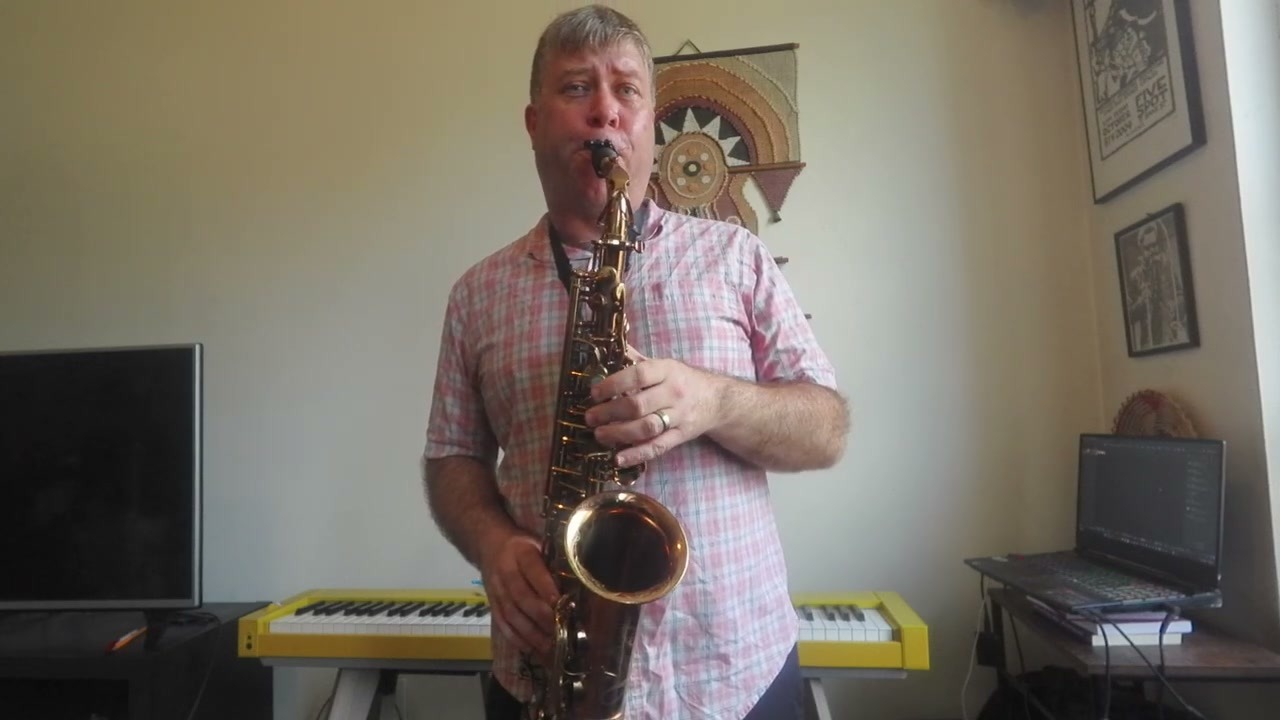
Travis teaches saxophone and piano on Tunelark. View Travis’s profile
Ready to find out if your child is ready?
The age on a chart is a starting point. The answer for your child comes from how their hands reach the keys, how the instrument feels on their neck and shoulders, and whether they want to play it, and a teacher who starts children on the instrument every year can judge that quickly.
Travis is accepting new saxophone and piano students at Tunelark, and a saxophone your child can hold on camera, rented or borrowed, is a good thing to bring to a first lesson, so he can see how it fits. You can also find a teacher for any other instrument across the rest of the roster.
Frequently Asked Questions
Can my 7-year-old start saxophone?
Sometimes. A 7-year-old with settled front teeth can start on alto with a harness. For most children that age, a year or two on clarinet first, then a switch around 9 or 10, gives an easier start.
Should my child start on alto or tenor saxophone?
Alto. It is smaller and lighter than tenor, the keys are easier to reach, and it is the standard starting instrument at any age. Tenor can come later.
Does starting on clarinet slow a child down on saxophone?
Usually not. Clarinet builds the same single-reed embouchure, breath and reading, so a child who switches tends to start saxophone ahead of a complete beginner. The main new work is the fingerings and the heavier instrument.
How long should a child practice saxophone each day?
Ages 8 to 10: 15 to 25 minutes, five or six days a week. From 11: 25 to 45 minutes. Two short sessions are fine and often better, because a young embouchure tires fast.
How long are lessons for a young saxophone student?
Thirty minutes suits most children up to about 11. Students of 12 and up, or anyone preparing an audition, often move to 45 or 60 minutes.
Keep reading
About Jennifer Heath
I'm Jennifer Heath, VP of Operations at Tunelark and a lifelong singer. I joined the company in 2020 and oversee much of what makes Tunelark work for students and teachers: hiring, training and supporting our instructors, student support, marketing and day-to-day operations. I started voice lessons at 7 and sang with touring choirs through my teens. Music belongs in every life, for the self-expression, the discipline, the comfort and the simple joy of it.