Best Gifts for Piano Students: An Honest Guide
Browse any gift guide for musicians and you’ll find piano-themed mugs, keyboard-print socks, and tiny Beethoven busts. They’re fine. They’re also not what a piano student wants.
Ask a piano teacher what their students actually need and you’ll get a shorter, far less cute list: more lesson time, a bench at the right height, a way to practice without disturbing the whole household, and music they’re genuinely excited to open.
That’s this guide. Every item below is something a piano student will still be using in March, whether that is a seven-year-old working through their first method book or a fifty-year-old who finally bought the digital piano they had been eyeing for years. Lessons come first because nothing else comes close, and the rest are ordered roughly by how much difference they make in day-to-day practice. Prices throughout are typical US retail as of 2026.
1. Piano Lessons: The Gift That Actually Moves the Needle
Here’s the honest truth about piano gear: none of it teaches anyone to play. The single biggest factor in whether a student improves is consistent time with a good teacher, which is why lessons sit at the top of this list and why everything after them is a supporting act.
A Tunelark gift card starts at $100: you can choose $100, $500, or any custom amount of $100 or more. The full amount becomes lesson credit on the recipient’s account, usable with any Tunelark teacher, for any lesson length. Lessons are one-on-one over video chat. Every Tunelark teacher is vetted by working musicians and educators for teaching quality before they can list, and many hold degrees from schools like Juilliard, Eastman, Berklee, and the San Francisco Conservatory.
Two details make this work especially well as a gift. First, if your recipient is new to Tunelark, they get an extra $30 in lesson credit when they use the card to book their first lesson, so a $100 card becomes $130. For a recipient new to Tunelark, the first lesson is free; a current student gets $25 off their first lesson with a teacher they have not worked with before, paid from the card. With $44 being the most common price for a 30-minute lesson, the first lesson is free and $130 then pays for two full lessons at $88 with $42 toward a third, about four lessons from a $100 card. Teachers set their own rates, $39 to $65 for 30 minutes as of 2026, so the exact count depends on which teacher your student picks. Second, the credit never expires, so there’s no pressure to start on January 2 if life is busy.
For kids, lessons also include free access to 150+ educational music games, which quietly solves the “will they actually practice?” problem better than any sticker chart. And if you’re weighing lessons for someone on a different instrument, or no instrument yet, our full guide to giving music lessons as a gift walks through every scenario.
2. An Adjustable Piano Bench
Most beginners sit on whatever was already in the room: a dining chair, the fixed bench that came with the piano, a stool two inches too short. Sitting at the wrong height pushes the wrists up or down, and suddenly good hand position becomes a constant correction instead of a comfortable default. An adjustable padded bench lets any player set their forearms roughly parallel to the floor, and it keeps adjusting as a kid grows or as siblings share the instrument. A padded adjustable keyboard bench runs about $40 to $70, and a full adjustable piano bench starts around $100. Of everything on this list besides lessons, this is the gift piano teachers most wish their students had.
3. Headphones for a Digital Piano
If your student plays a digital piano, decent headphones may end up the most-used gift here. Quiet practice means more practice: early mornings, late nights, apartments, a baby asleep down the hall. Start with closed-back over-ear headphones. Closed-back is the specification that keeps the sound inside the headphones, where an open-back pair leaks enough for anyone in the room to hear, which defeats the point of practicing quietly. After that, comfort beats audiophile specs, and the goal is a pair they can wear for forty-five minutes without noticing. A basic closed-back pair starts around $30, and $50 to $100 buys noticeably better comfort for long sessions. One practical detail worth checking: most digital pianos use a quarter-inch headphone jack, so make sure the pair includes an adapter, because not all do. And if the instrument itself is still being decided, our breakdown of digital pianos vs. keyboards covers what’s actually worth paying for.
4. A Sustain Pedal Upgrade
The pedal that ships with most keyboards and entry-level digital pianos is a small plastic square that slides across the floor mid-song and clicks like a mouse button. A piano-style sustain pedal (metal footplate, hinged action, grippy rubber base, usually $20 to $40) feels like the pedal on an acoustic piano and stays where you put it. It’s a classic gift category: cheap enough to seem trivial, annoying enough that nobody upgrades it for themselves, and noticeable every single time they play. This pedal is an on/off switch, so it will not do half-pedaling. That needs a continuous half-damper pedal, which reports how far it is pressed and runs $50 to $100, on an instrument that supports half-damper in the first place. It can wait until a teacher asks for it.
5. A Metronome They’ll Actually Use
Full honesty: free metronome apps exist, and they work. The case for a dedicated metronome (digital models run $15–30, mechanical wind-up ones $30–60) is simply that it isn’t a phone. A phone on the music stand is a notification machine; a metronome does one job and creates zero temptation to “just check something” between pieces. Practicing with a steady beat is one of the habits that separates students who progress from students who stall. It shows up early in our beginner piano tips for a reason. The mechanical pyramid style has a bonus: kids find the ticking arm weirdly mesmerizing, which is half the battle.
A metronome is only worth owning if there is something to set it against. Elspeth walks through the C major scale in both hands with the fingering that makes it work, and a scale played slowly and cleanly against a click is the most common thing a beginner will actually use one for.
Skill video · C Major Scale
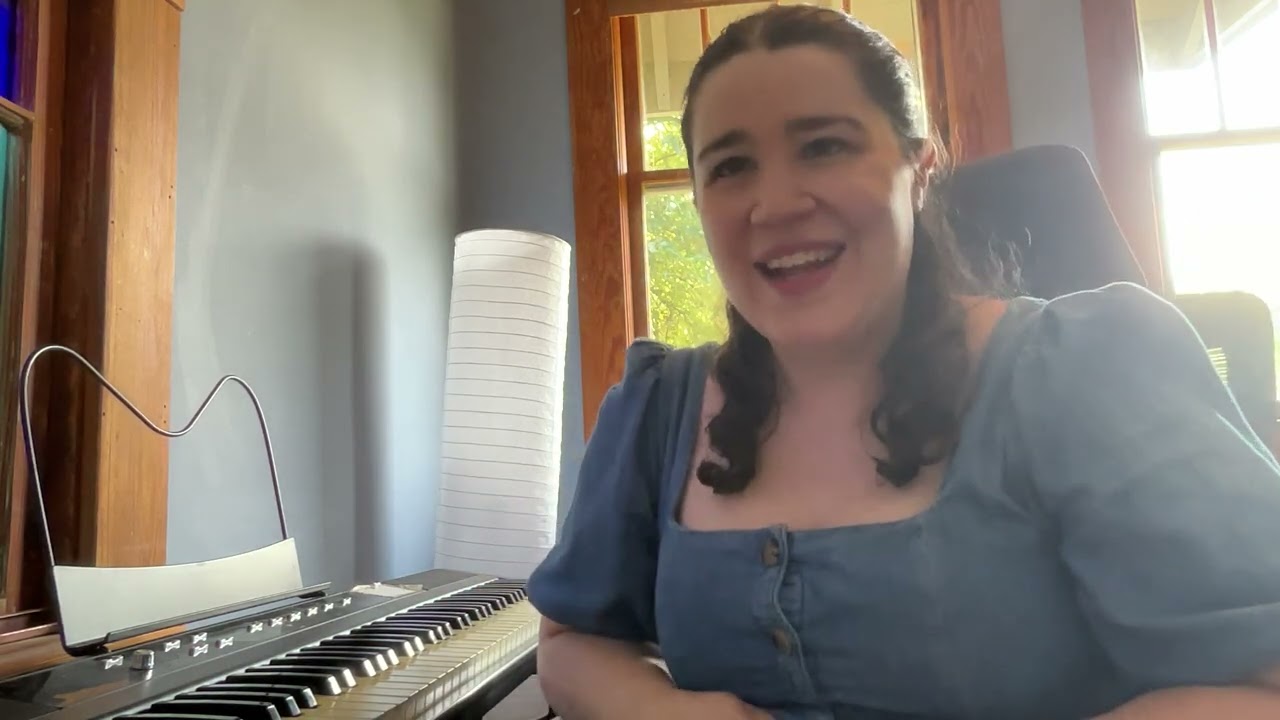
Elspeth teaches piano, voice and drums on Tunelark. View Elspeth’s profile
6. A Piano Lamp
This one sounds boring until you’ve squinted at a photocopied page in a dim living room. Acoustic uprights usually sit against a wall, facing away from the room’s light, and overhead bulbs throw glare across glossy pages. A dedicated piano lamp (clip-on or freestanding, usually $25–80) puts warm, even light exactly where the music is. It’s the gift equivalent of a good desk chair: nobody asks for one, everybody keeps it.
7. A Practice Notebook
A simple assignment notebook ($5–15, often paired with manuscript paper for jotting down exercises) gives lessons a paper trail: what the teacher assigned, what to focus on, what improved this week. For adult students it doubles as a progress log, which matters on the weeks when improvement feels invisible. For parents, a notebook where the teacher’s weekly goals live takes the nightly “what are you actually supposed to be practicing?” interrogation off the table. It’s one of several small fixes in our guide to helping kids practice piano without battles.
8. A Sheet Music Budget
Students practice the music they love and avoid the music they don’t. That’s not a character flaw. It’s just true. A couple of songbooks in styles the student actually listens to (movie themes, jazz standards, pop arrangements, video game scores, most running $15–40) can revive a stalled practice routine faster than any pep talk. If you don’t know their taste well enough to choose, a gift card to an online sheet music retailer lets them pick. The point isn’t the paper; it’s handing them a reason to sit down and play.
What a Teacher Would Have You Buy For
Every item above is really a bet on one thing: whether the student sits down on an ordinary Tuesday. So it is worth knowing what a teacher thinks that Tuesday should look like. Tony G. teaches guitar on Tunelark and has taught full time for over a decade, and the assumption he spends the most time correcting is about length.
“One of the biggest misconceptions I hear is that longer practice sessions automatically produce better results.”
What replaces it, in his experience, is attention. He has watched hours of unfocused scales go nowhere, and ten or fifteen minutes with a single clear goal move a student forward.
The bench, the lamp and the headphones are not comfort items. Each one removes a step between deciding to play and playing, and a ten-minute window is exactly the window that cannot absorb an extra step. The metronome and the notebook do the other half of the job, which is making a short session have a point. Gear that assumes an hour was ever available tends to sit unused.
Tony has watched where that leads over a few weeks:
“I’ve seen students make significant breakthroughs simply by staying consistent with a very small practice habit.”
How to Give Piano Lessons as a Gift on Tunelark
If lessons are your pick, here’s the entire process:
1. Choose an amount at tunelark.com/gift-cards: $100, $500, or any custom amount of $100 or more.
2. The card arrives by email within minutes. Print it to give in person, or forward the email directly to the recipient.
3. They pick their teacher. The recipient browses Tunelark’s vetted piano teachers and books a first lesson with the one who fits their goals and personality.
4. The credit does the rest. If they’re new to Tunelark, an extra $30 in lesson credit is added when they book that first lesson with the card, and their first lesson is free.
The reassurances are real, too: the credit never expires, it works for any of 45+ instruments if piano turns out to be a gateway, and nothing locks them into the first teacher they try. If that one isn’t the right fit, they can simply choose a different teacher and book again.
Frequently Asked Questions
Do Tunelark gift cards expire?
No, gift card credit never expires. If your piano student doesn’t book a lesson until summer, or takes a break mid-year, the balance simply sits on their account until they’re ready. Any leftover balance applies automatically to upcoming lessons, so nothing gets lost or wasted.
What if they already take lessons on Tunelark?
The card still works beautifully: the full face value is added to their account as lesson credit and applies automatically to upcoming lessons. The extra $30 is reserved for recipients who are new to Tunelark and book their first lesson with the card, so it won’t apply to a current student. But for someone already paying for weekly lessons, a card that covers the next month is arguably the most practical gift on this page.
How is the gift card delivered, and can I wrap it?
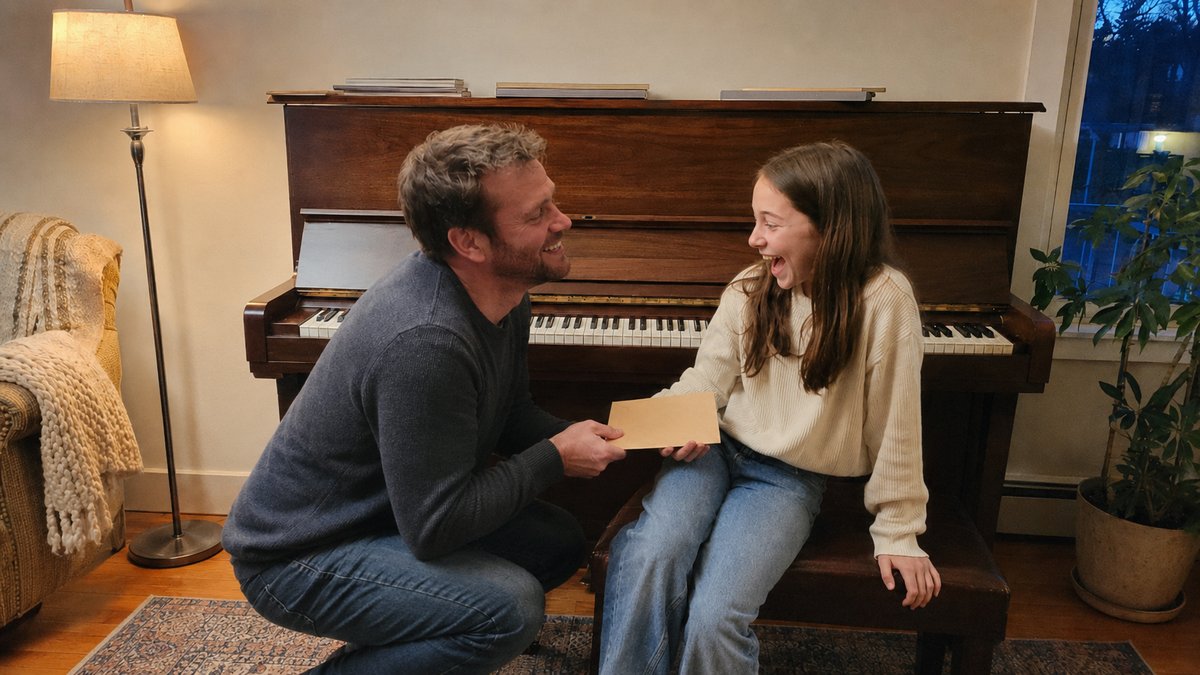
The card arrives by email within minutes of purchase, so there’s no shipping and no waiting. You can print it and tuck it into an envelope or pair it with one of the smaller gifts above, or simply forward the email if you’re giving from afar. It also makes this a genuinely workable last-minute option.
How much should I spend on gifts for piano students?
Gift cards start at $100 when you give the gift of music lessons ($100, $500, or any custom amount of $100 or more), and a $100 card becomes $130 in credit for a new student, which covers most of a month of weekly 30-minute lessons. Custom amounts can also go above $500, so a giver who wants to fund a whole year of weekly lessons can do exactly that. The accessories on this list run anywhere from $5 notebooks to piano benches of $100 and up. The honest answer: a month of lessons will do more for a student’s playing than $100 of gear, so start there and add accessories as the budget allows.
Can the gift card be used for something besides piano?
Yes. The credit works with any Tunelark teacher across 45+ instruments and skills, for any lesson length, so if the pianist in your life secretly wants to try voice or songwriting, the credit follows them. And if the first teacher isn’t quite the right fit, they can pick a different one and try again. That first lesson with a new teacher is $25 off.
Looking for an online piano teacher? See our full Online Piano Lessons page for everything you need to know about getting started.
Keep reading
About Jennifer Heath
I'm Jennifer Heath, VP of Operations at Tunelark and a lifelong singer. I joined the company in 2020 and oversee much of what makes Tunelark work for students and teachers: hiring, training and supporting our instructors, student support, marketing and day-to-day operations. I started voice lessons at 7 and sang with touring choirs through my teens. Music belongs in every life, for the self-expression, the discipline, the comfort and the simple joy of it.