Which Band Instrument Should Your Child Choose?
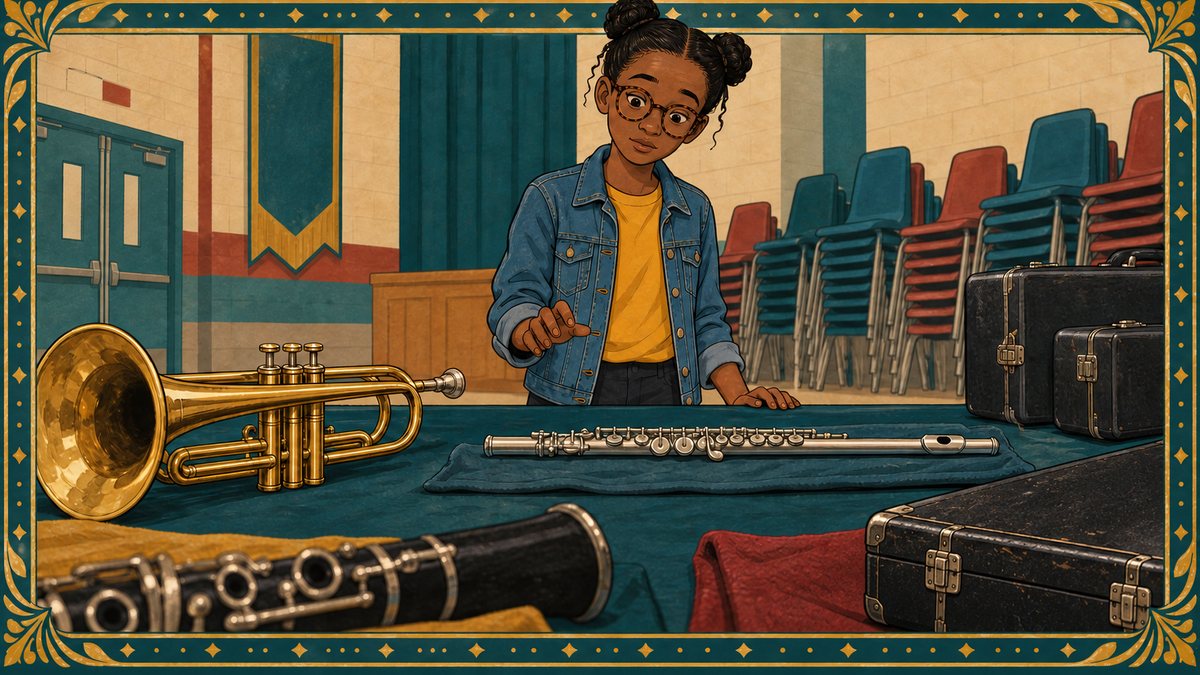
The choice is not really your child’s alone, and it is not the director’s either. It is a negotiation between three things: what your child wants to play, what their face and hands are actually built for, and which sections the band needs filled. A parent who understands all three walks into instrument night able to help. A parent who has only heard “I want the flute” can find out at the fitting that the answer is trombone, and have no idea why.
The Short List a Beginning Band Starts From
Beginning band is narrower than the concert stage suggests. Shawnee Mission School District lists five starting instruments that families provide themselves: flute, clarinet, trumpet, trombone and percussion.
Saxophone is the instrument many children ask for, and it is often not on that list at all. Shawnee Mission routes it through the clarinet: students who want saxophone begin on clarinet, and switch only after they can cross the register break, the point where the fingering system jumps to a higher octave, play well in the upper register, and pass an evaluation piece the teacher picks. That is worth knowing before your child sets their heart on it, because the answer at the fitting will not be no, it will be later.
Then there is a second list the school owns. Shawnee Mission’s page says a limited number of other instruments are available to rent from the district, naming French horn, baritone or euphonium, and tuba, and asks families interested in one to consult the band teacher first. These are the instruments your child has probably never held, and they are also the ones with the fewest children competing for them. Our guide to choosing an instrument for a child covers the wider version of this question, outside a band program.
Oboe and bassoon sit further down that road again. At one Denton ISD middle school, between one and three fifth graders a year are selected for oboe, after interviewing with the band directors. At that school, those are not instruments a child picks.
The Fitting Is About Lips and Hands
A beginning band fitting is largely a physical assessment, and some directors publish exactly what they are looking at.
The Denton ISD guide sets out its criteria instrument by instrument. For flute it wants thinner lips that are even, with a flat top lip. For trumpet it says not-so-large or thin lips that are even with a flat top lip are the very best, and that very full or curvy lips, or a top lip with a teardrop shape, usually do not work well. For alto saxophone it wants a cushy bottom lip, a puckery rather than smiley lip shape, and a slightly pronounced overbite. For oboe it steers away from profound overbites or underbites. For bassoon it says a medium or greater finger span is necessary, and that a student with even a slight underbite should avoid the instrument completely. Percussion candidates take a rhythm and coordination evaluation instead.
The low brass is the exception, and it is the reason that second list is worth a serious look. Of the trombone, euphonium and tuba, the same guide says the large mouthpiece happily accommodates most lip shapes, and of the tuba that full lips are a plus. Those are the instruments fewest children are ruled out from, and the ones fewest children are asking for.
None of this is a judgment about your child. A mouthpiece is a fixed shape and a face is not, and a lip that seals easily on one mouthpiece fights another one for months. A director who moves your child from flute to trumpet at the fitting is usually reading the same mouthpiece fit those criteria describe.
The one thing worth raising yourself is braces, current or coming. Brass and reed embouchures, the lip shape that makes the note, both work with the upper teeth resting on the mouthpiece or supporting the lips, and an orthodontic plan that lands in the middle of year one is a real consideration. Ask the director, and ask your orthodontist for their timeline before the fitting rather than after.
Age and the Physical Gate, Instrument by Instrument
Physical readiness is not the same as interest, and it is the one axis a parent can check at home before instrument night.
| Instrument | Usual start | The gate | Rental, as of 2026 |
|---|---|---|---|
| Flute | 9 to 10 | Arm length to reach the keys with the head turned, plus the lip shape that makes a note | $25 to $40 a month |
| Clarinet | 9 to 10 | Fingertips have to seal the open finger holes in the body. A half-covered hole squeaks | $25 to $40 a month |
| Alto saxophone | 10 to 12 | Weight and reach. A harness rather than a neck strap moves it earlier for a large child | $30 to $50 a month |
| Trumpet | Director’s fitting | The buzz, the lip vibration that makes a brass note. Lip shape and bite decide this more than size does | Ask the school’s dealer |
| Trombone | Director’s fitting | Arm length. The outer slide positions are a long reach for a small child | Ask the school’s dealer |
| Percussion | Director’s evaluation | A rhythm and coordination check, and a willingness to read | Bell kit and pad, through the school dealer |
| Horn, euphonium, tuba | Director’s fitting | The buzz again, plus whether the school has one to lend | Often school owned |
The blank cells are honest. School band brass is nearly always rented through whichever dealer the district works with, and that dealer’s price is printed on the instrument form that comes home. Our guide to what age a child can start music lessons has the wider age picture.
One word needs translating before the form comes home. Percussion is a section rather than an instrument, and the bell kit, a set of tuned metal bars played with mallets, is as much of the first year as the snare drum is. Our guide to drum kit or percussion lessons sets out the difference and which path suits which child.
What to Actually Do at Instrument Night
You may get only a minute or two per instrument, in a loud room, with a queue behind you. Use them like this.
1. Make a sound before anything else. On brass, the child buzzes into the mouthpiece alone, without the instrument. On flute, they blow across the headjoint, the top section of the flute, on its own. Getting any note at all in thirty seconds is a good sign, and getting none is not a verdict.
2. Watch their face, not the instrument. A child who lights up at a rough noise they made themselves is telling you more than a child who politely produces a clean one.
3. Ask the director one question per instrument: is this a good fit for their mouth? Ask it rather than waiting to be told.
4. Hold it. Ask your child to hold the instrument in playing position for a full thirty seconds. Alto saxophone and trombone are where this matters most.
5. Write down three choices in order, not one. Denton’s guide asks oboe applicants to name a second choice for exactly this reason, and a child who has already picked a second favorite takes the news much better than one who has not.
Children hear their friends’ picks as the options, so say the second list out loud on the way in. A section full of best friends is how a band ends up with eleven flutes and no low brass.
If the First Choice Turns Out Wrong
It is more reversible than it feels, and our guide to choosing an instrument for a child covers what carries over from a year on any instrument. Switching within a family is easier still, because the fingering logic carries: flute, clarinet and saxophone share enough that a player moving between them is learning an instrument rather than starting over, which is part of why Shawnee Mission’s clarinet-first route to saxophone works at all.
Teachers tend to cover families rather than single instruments, which matters more than parents expect when a child switches. Cooper W., who teaches on Tunelark, studied at Berklee and teaches saxophone, flute and clarinet. Sophie P. teaches trumpet, trombone and euphonium. A switch inside those groups does not have to mean a new teacher, a new rapport and a new start.
The year to watch is the second one, when band stops being novel and the parts get harder. That is usually when a private teacher starts to matter, and our guide to private lessons alongside school band covers what a private teacher adds that the band room cannot.
How to Find a Music Teacher on Tunelark
Tunelark connects you with deeply vetted music teachers who teach online. Vetting is run by working musicians and music teachers, not a general recruiter, and every teacher sets their own rate and shows it on their profile. Scheduling, billing and support are handled for you.
- Open the teacher list at tunelark.com/find-a-teacher and filter by instrument, then read the bios and watch any video a teacher has posted.
- Read for whether a teacher covers the whole family, which is what makes a switch painless later.
- Book a trial lesson at $25 off the teacher’s 30-minute rate, with the school’s method book open if there is one.
- Ask your child afterward what they played. A child who can name it is far likelier to practice it.
Frequently Asked Questions
My child wants saxophone. Why is the school starting them on clarinet?
Some districts require it. Shawnee Mission’s policy is that students who want saxophone begin on clarinet and switch once they can cross the register break, play in the upper register and pass an evaluation piece the teacher chooses. The reasoning is that the clarinet’s fingering and reed control transfer directly, and the clarinet is the harder of the two to start on, so the order is not arbitrary.
Can my child change instruments after the first year?
Usually yes, and a switch toward a section the band is short of is the easiest one to ask for. The practical questions are whether the rental contract can be switched and whether the child is prepared to be a beginner again in a section of second-years.
My child wants an instrument the director says is a poor fit. What now?
Ask what specifically makes it a poor fit, then ask what would change the answer, since some gates are about size and dissolve in a year. If it is lip or bite shape, it will not change, and the more useful conversation is which instrument the director thinks would fit.
Does renting or buying make more sense in the first year?
Rent. Children switch, outgrow and lose interest, and school rental programs are built around returns and repairs in a way a private sale is not. Buying makes sense once a child has come through a second year still wanting to play.
Who do we rent from, and can we use our own shop?
Most districts work with one or two dealers and send the form home with the instrument list, which is also where the monthly price is printed. A shop of your own is usually allowed, but check two things first: that the model meets the director’s specification, and that the school’s repair pickup covers an instrument bought elsewhere.
Keep reading
About Jennifer Heath
I'm Jennifer Heath, VP of Operations at Tunelark and a lifelong singer. I joined the company in 2020 and oversee much of what makes Tunelark work for students and teachers: hiring, training and supporting our instructors, student support, marketing and day-to-day operations. I started voice lessons at 7 and sang with touring choirs through my teens. Music belongs in every life, for the self-expression, the discipline, the comfort and the simple joy of it.