How Long Does It Take to Learn Flute? A Realistic Timeline
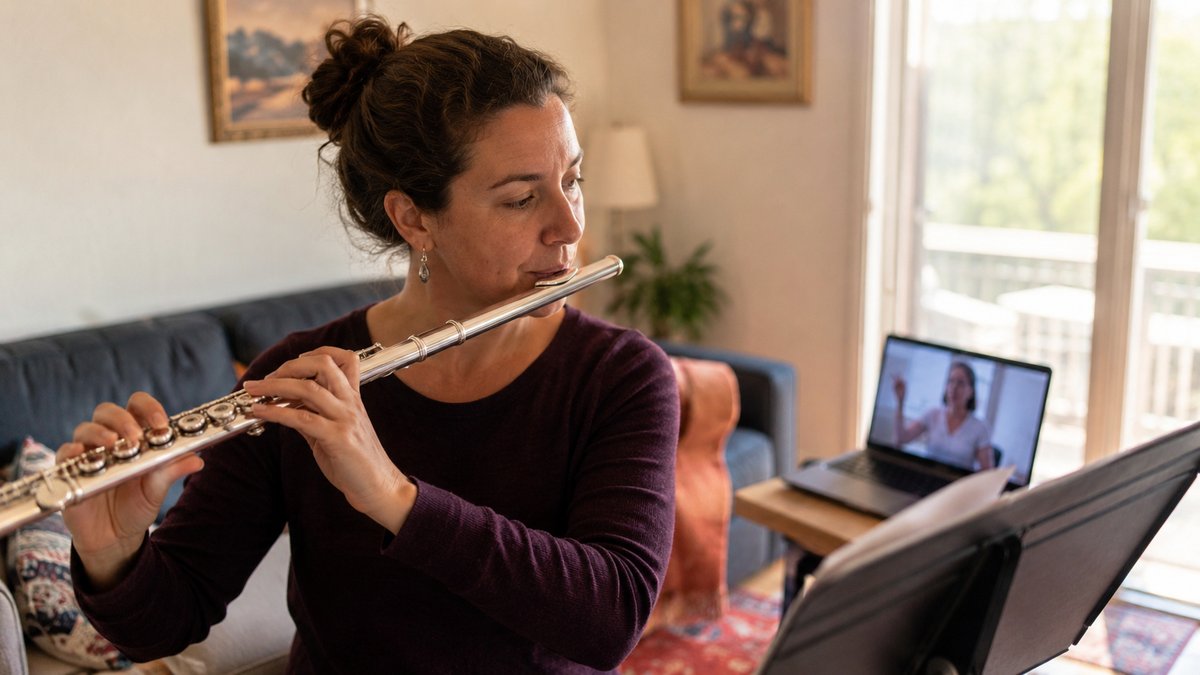
If you’re wondering how long it takes to learn flute, the honest answer is that it depends on what “learning” means to you, but most beginners can play simple melodies within a few weeks and sound genuinely musical within a year of steady practice. The flute is one of the more demanding woodwinds to start, because the first sound and a stable tone come entirely from how you shape your air, with no reed or mouthpiece to help. Once that first hurdle is behind you, progress with regular lessons tends to feel steady and rewarding rather than frustrating.
Here’s a realistic month-by-month look at what to expect, whether you’re an adult picking up the flute for the first time or a parent gauging what’s ahead for your child.
The First Month: Sound and Setup
The very first hurdle on flute isn’t fingering. It’s making a clear sound. Most beginners find a first real note within a week or two of short daily practice, often with the headjoint alone. A tone you can rely on across a whole phrase takes longer, usually two to three months. You learn your first notes in the middle register while that tone is still settling, and start playing simple three- and four-note tunes.
Week one is airy, and that is the correct sound for week one. Most teachers start you on the headjoint alone, rolling it a few degrees in and out until the tone snaps into focus, because the difference between a breathy note and a clear one is often a millimeter of lip placement. Notes cracking up into the octave above are normal too, and usually mean the air is moving faster than the note you are aiming at needs. Later that same effect is how the second octave is played, and our guide to reaching higher notes on flute shows how to do it on purpose.
Assembly is worth getting right in the first week. Hold the body by the barrel rather than the keys, twist gently, and line the embouchure hole up with the first key of the body. Flute tenons are never greased. Wipe them clean and leave them dry, because cork grease belongs on clarinet and saxophone corks, and on a flute it collects grit and makes the joints stiffer over time.
By the end of the first month most students can hold a middle-register note steady for a few seconds, play a handful of notes from memory, and get through a short tune with the tone holding up for most of it. The sound is thinner than a recording, and that is expected. Our roster of flute teachers taking new students shows who is available now.
Months 2-6: Real Songs and Reading
By your second month, most students are reading basic notation and playing recognizable melodies. Somewhere between months three and six, you’ll expand your range, work on breath support, and start playing pieces that actually sound like music to friends and family. Consistency pays here. Students who practice 15-20 minutes a day tend to move faster than those who cram once a week.
Months 6-18: Becoming a Real Player
After about six months of regular instruction, the flute starts to feel like an instrument you own rather than fight. You’ll handle the upper register, play with better intonation, and tackle longer pieces. By 12-18 months, dedicated students are playing intermediate repertoire and often joining a band, ensemble, or community group.
This is the far end of the instrument. Joyce L. teaches flute on Tunelark and plays Density 21.5, written in 1936 and still one of the hardest things a flute can be asked to do.
Performance · Density 21.5
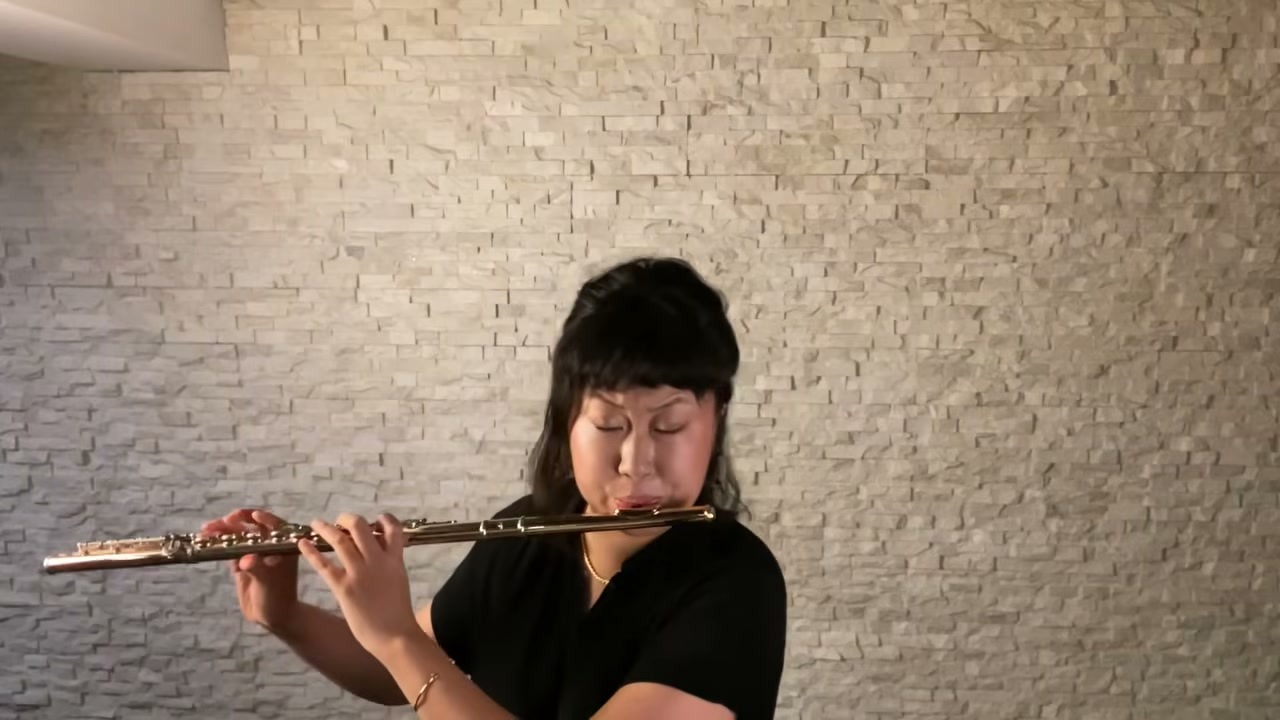
Joyce teaches flute on Tunelark. View Joyce’s profile
A Realistic Practice Week
Fifteen to twenty minutes a day, five or six days a week, does more than a single long session on the weekend. Two or three minutes on the headjoint alone, then long tones on the whole flute, then the piece you are working on, then a tune you already play well so the session ends on a good sound.
Breath is the limiter early on, not fingers. Short daily sessions build the steady air that a long weekend session cannot, and they also keep you from practicing tired, which is where a raised chin and tight shoulders creep in. Record yourself every four to six weeks and the change in tone will be obvious in a way it never is day to day.
What a Teacher Adds at Each Stage
In the first month a good teacher is mostly listening to air. Whether the sound is thin because the lip plate is rolled too far in, because the opening between your lips is too wide, or because the air is aimed too low is nearly impossible to work out alone, and all three feel much the same to the person playing. A teacher hears the difference in seconds and gives you the one adjustment that fixes it.
From month three the work shifts to breath support and reading. Where to breathe in a phrase, how to keep a long note from sagging at the end, and how to count a rhythm accurately rather than approximately are what separate a student who sounds like a beginner from one who sounds musical. This is also where a teacher picks repertoire one step past what you can already play, a choice that is hard to make for yourself.
Later a teacher opens up the upper register, vibrato, and playing with other people, and helps you prepare for a band audition or a community group if that is where you are headed. Lessons on Tunelark run 30, 45 or 60 minutes, and a 30-minute lesson each week is enough for most students at this stage.
What Affects Your Timeline
Three things move the needle most: how often you practice, whether you take lessons, and how realistic your goals are. A student who shows up every week for six months with regular practice will almost always outpace a casually self-taught player who practices sporadically. The right teacher keeps your fundamentals honest so bad habits don’t slow you down later.
Who Is Teaching at the Other End of This
A timeline is easier to trust when you can see where it leads. Joyce L. teaches flute on Tunelark, and she is an active soloist, chamber musician and orchestral player as well as an educator.
A teacher who still performs at that level hears the difference between a tone that is merely correct and one that carries, and can tell you which of the two you are making in month four, while it is still easy to change.
How to Find a Flute Teacher on Tunelark
Every Tunelark teacher is vetted by working musicians and educators for teaching quality before they can list, so you can learn from an experienced player no matter where you live. Browse profiles, read about each teacher’s style, and book a discounted first lesson to find the right fit. Your teacher will help you make the transition from first notes to real repertoire faster than going it alone.
Frequently Asked Questions
Is flute hard to learn compared to other instruments?
Flute is harder than saxophone or clarinet at the very start, because there is no reed or mouthpiece to help you make a sound, and a reliable tone can take two to three months. Once you can make a clear sound, fingering and reading progress steadily, and after the first few months flute is no harder than its woodwind siblings.
How much should I practice flute as a beginner?
Aim for 15-20 minutes a day. Short, consistent daily practice builds the breath control and muscle memory that make playing feel natural, and it beats long weekend-only sessions.
Can adults learn flute, or is it just for kids?
Adults make excellent flute students. With developed focus and clear goals, many adult beginners progress quickly and enjoy the instrument for years.
Do I need lessons or can I teach myself flute?
You can start on your own, but a teacher dramatically speeds up tone and breath development, the two things hardest to correct alone. Most students who take lessons reach real repertoire much faster.
How long before I can play in a band or community group?
Most beginners join a school band or a community ensemble somewhere between six and eighteen months, once the upper register is reliable and tuning holds under pressure. Ensembles are usually more welcoming earlier than players expect, and playing alongside others speeds everything up.
Keep reading
About Jennifer Heath
I'm Jennifer Heath, VP of Operations at Tunelark and a lifelong singer. I joined the company in 2020 and oversee much of what makes Tunelark work for students and teachers: hiring, training and supporting our instructors, student support, marketing and day-to-day operations. I started voice lessons at 7 and sang with touring choirs through my teens. Music belongs in every life, for the self-expression, the discipline, the comfort and the simple joy of it.