Free Music Learning Games for Classrooms and Schools
School music programs run on stretched budgets and borrowed time. Fine arts funding covers instruments that need repairs and sheet music that needs replacing, and the software line item, if it exists at all, rarely stretches to the kind of adaptive learning tools that math and reading classrooms take for granted. Music teachers are expected to build sight readers and trained ears with a whiteboard and whatever they can photocopy.
That gap is the reason Tunelark’s music learning games are free for verified classroom teachers. More than 150 adaptive, level-based games covering note reading in treble, bass, and alto clef, music theory, and ear training, with a full set of classroom management tools attached, at no cost to you or your school. No subscription, no trial period that expires in thirty days, no premium tier hiding the good games.
Why our flagship product is free
Tunelark started in 2017, building music learning software and teaching in-person lessons in the Bay Area. The games were the flagship product, built to teach music theory and instrument fundamentals to students in schools, and we sold them to school programs. The problem was one every music teacher knows: the schools that most needed the software were the ones that could not afford it.
So we gave the flagship away, while the company was still teaching in person in the Bay Area. In 2020 Tunelark moved to online private lessons, and the marketplace took over paying the bills. It now runs thousands of private lessons every six months, and that business keeps the games free. If some of the students who play them later want a teacher, we are glad to be the place they look.
In the years since the games became free, counted as of September 2026, more than 2,500 classroom teachers have claimed free accounts, nearly 75,000 students have played through their classrooms, and those students have answered more than 45 million questions inside the games. That is 45 million pieces of instant feedback on a note, an interval or a chord. We are pleased to report the games have been thoroughly play-tested.
What the games teach
The library climbs from fundamentals to advanced skills, so it serves a sixth-grade general music class and an honors choir alike. The core strands:
- Note reading in treble, bass, and alto clef, from “name the white notes” to reading the full staff fluently.
- Music theory fundamentals: major scales, the circle of fifths, key signatures, building intervals and triads, and how chords and melody fit together.
- Interval ear training, from distinguishing two intervals to identifying any interval within the octave by ear.
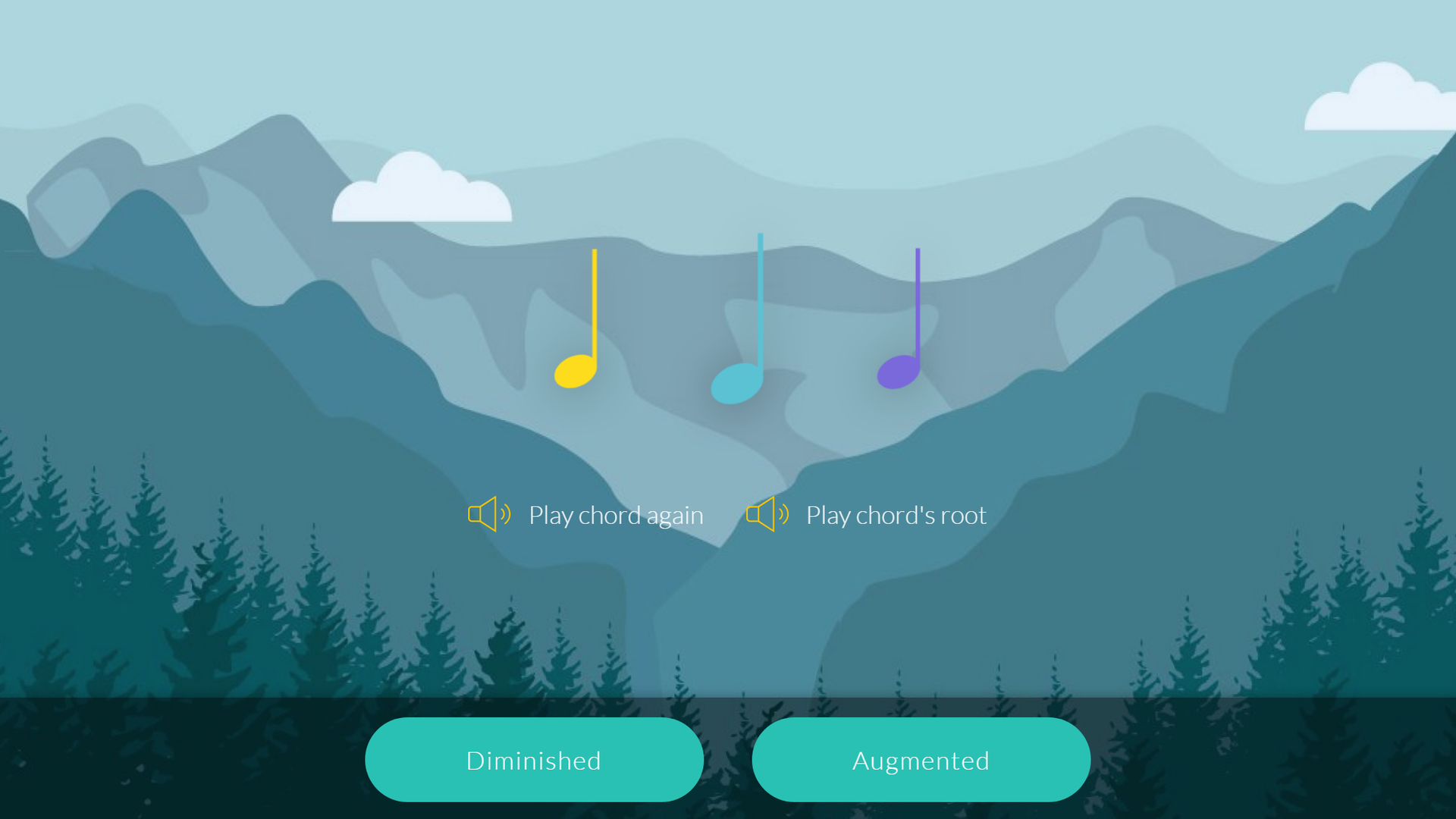
- Chord ear training, from major, minor, diminished and augmented triads through seventh chords.
Every game is level based and adaptive. Students start where they are, advance by demonstrating mastery, and get instant feedback on every answer. They can answer on an on-screen keyboard, a MIDI keyboard, or by playing their acoustic instrument into the microphone, and everything runs in a browser on the laptops, tablets, and phones your students already have.
Teachers tell us that is what they value in a room of thirty students at thirty levels. One classroom teacher wrote: “It was thrilling to be able to move around the classroom knowing that each of the 30 students was engaged in learning at their own pace.”
Claim Your Free Classroom Account
Built for how classrooms actually work
The classroom tools are included. Create a classroom, add your students, and you can shape and monitor everything from one dashboard:
- Curriculum control. Toggle missions or individual skills on and off per classroom, so your beginning band sees note reading while your AP theory students drill seventh chords.
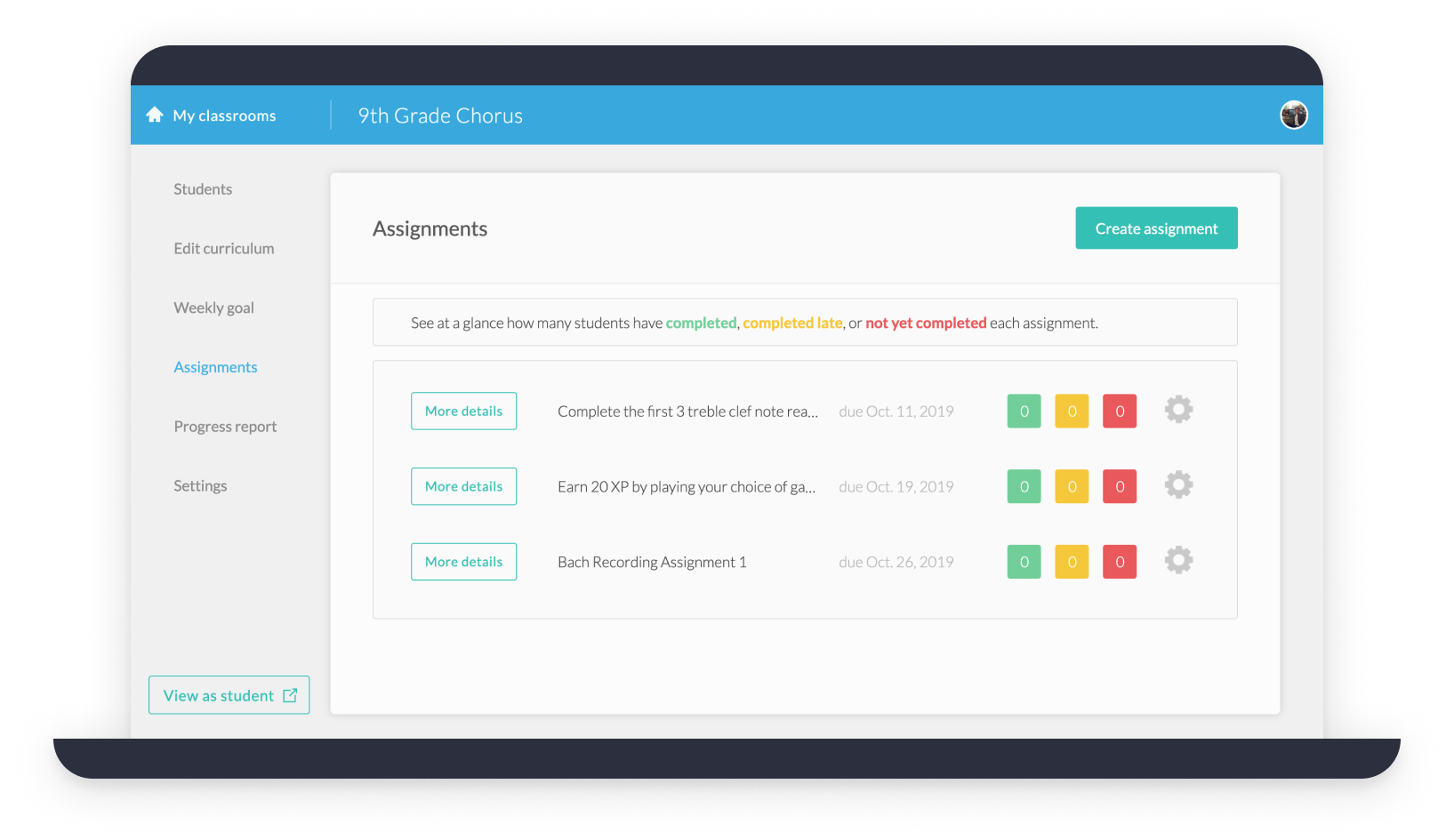
- Assignments with due dates. Assign specific games and levels, or set experience-point goals that let students choose their own games. A dashboard shows who completed each assignment, who finished late, and who has not started.
- Progress reports. Per-student reports show game sessions, skills mastered, and levels completed for every skill, which turns “did you practice?” into information you already have.
- Weekly goals. Set a target and let the streak do the nudging.
The games earn their keep as warm-ups, as station work, as substitute-day plans that students genuinely do, and as differentiated homework that grades itself. Teachers of younger students tend to lean on the points and streaks; directors of advanced ensembles use the ear training strands to build section leaders.
Does game-based learning actually work?
The research says yes, with honest caveats, and we wrote up the full evidence on music learning games separately. The short version: meta-analyses of game-based learning find real gains in learning outcomes, and the games rest on retrieval practice, one of the sturdiest findings in learning science, plus feedback, which helps, though its timing matters. Students only benefit from the practice they are willing to do, so how the drilling feels decides how much of it happens. Games do not replace your teaching. They make the drilling self-running, which hands podium minutes back to music making.
How to claim your free classroom account
The signup takes minutes, and verification keeps the free tier for the classrooms it is meant for:
1. Go to the Tunelark schools page and claim your free account.
2. We verify that you are a classroom teacher. That is the only gate.
3. Create your classroom, add students, and toggle on the missions that fit your curriculum.
4. Try the teacher demo if you want to explore the dashboard on your own.
If you also teach private students outside of school, your verified account works for them too: create a separate classroom for your studio and assign away.
Frequently Asked Questions
Are Tunelark’s classroom music games really free?
Yes. Verified classroom teachers get the full game library and classroom tools at no cost, with no student caps designed to force an upgrade. Tunelark’s private lesson marketplace pays for it.
What is the catch?
Verification that you are a classroom teacher. Beyond that, there is none.
What grade levels do the games fit?
Elementary general music through high school ensembles and theory classes. You choose what each classroom sees.
What technology do my students need?
A web browser on a laptop, Chromebook, tablet or phone, with nothing to install.
Can I track individual student progress?
Yes. Each student has a progress report by skill, and each assignment shows completion across the class.
Keep reading
About Jennifer Heath
I'm Jennifer Heath, VP of Operations at Tunelark and a lifelong singer. I joined the company in 2020 and oversee much of what makes Tunelark work for students and teachers: hiring, training and supporting our instructors, student support, marketing and day-to-day operations. I started voice lessons at 7 and sang with touring choirs through my teens. Music belongs in every life, for the self-expression, the discipline, the comfort and the simple joy of it.