How to Learn Songs by Ear on Guitar
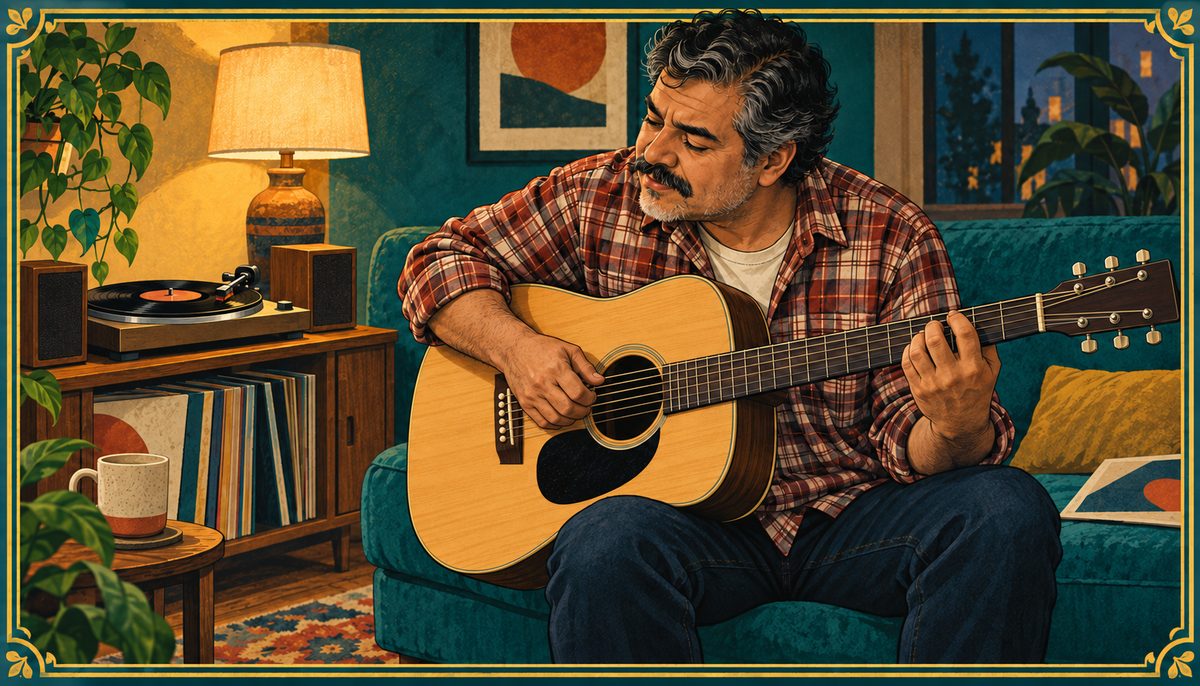
Learning a song by ear on guitar means hearing a recording and finding its chords and melody on the neck without tab, a chord chart or a video to copy. It looks like a gift some players have and others do not. Mostly it is recognition. A guitarist who knows what a major chord, a minor chord and the common chord changes sound like can hear them in a recording and find them quickly, and a guitarist who has never connected those sounds to names has to search for every note.
Learning by ear starts there: give the common sounds names, learn to hear them, and practice finding them with your hands.
Pete L. teaches guitar at Tunelark. He is a Brooklyn session and touring guitarist who has played with John Cale, Durand Jones and the Indications and Aaron Frazer, which is work where a player often learns many songs quickly and arrives knowing them. We asked him how he learns a song by ear, where a student who has only used tabs and videos should start, and what changes once they can.
Theory as names for sounds
Pete’s method starts with theory, though not the kind he learned first. “I’m a huge proponent of learning music theory as a functional tool for your instrument,” he says. “Growing up, theory was something that I learned out of a text book, completely separate from anything I was doing on my instrument.”
“I could spell a C#min7b9 chord no problem, but had no idea what it sounded like, how to play it, and how to use it in context,” Pete says. A C sharp minor seventh chord with a flat ninth is a complicated chord, and spelling it means listing its notes correctly on paper. That is real knowledge, and it does not help a guitarist who hears the chord on a record and needs to play it.
The change came later. “It wasn’t until I was an adult that I realized that ultimately music theory was just a way to name sounds so that the concepts became transferable from song to song,” he says.
A name makes a sound portable. A guitarist who learns a song from a tab learns a few chord shapes in one order. A guitarist who knows that the song moves from the home chord to the five chord and then to the four chord has learned a movement that turns up in thousands of other songs, and the next time they hear it they recognize it. For Pete, that recognition is what ear training is for: teaching the ear to pick out sounds it already has names for. Once a player has enough of those names, he says, “it really gives you the tools to build your own house,” rather than starting over with every new song. The numbers themselves, the home chord as one, the four and the five, are covered in our guide to music theory for guitarists, and our guide to learning theory as an adult covers learning it without the textbook.
Ears, brain and hands
For a student who has learned everything from tabs and videos, Pete starts with how the three parts of playing connect. “Something I talk a lot about in my lessons is the triangulation between the ears, the brain, and the hands,” he says. “Theory, technique, and ear training are deeply interactive.”
Each of the three can be strong while another is weak, and each weakness shows up differently. A tab player usually has capable hands: they can play what the page tells them, sometimes quite fast. What is missing is the link from the sound to the hands. They hear a chord on a record and have no way to get from the sound to a fret without trying shapes at random. A player with only book theory, like Pete as a teenager, has the brain without the ears. A player who can hum any melody back but cannot find it on the neck has the ears without the hands.
Fluency, in Pete’s account, is all three working at once. “When we can hear what we’re doing, know intellectually what the concept behind the sound is, and feel comfortable having your hands recreate that sound, that is when true playing fluency starts to happen,” he says.
The practical consequence is that ear training on guitar is done with the guitar in hand. Naming intervals from a phone app trains the ears and the brain. Finding the same sound on the neck right afterward, and naming the fret it was on, connects the hands to both.
A way to work out a song by ear
The steps below are a common way to work out a song from a recording. They build from the sound that is easiest to hear to the hardest, and each step uses one of the names from the section above.
Tune to the recording first. Most recordings are at standard pitch, but not all, and a guitar a little sharp or flat of the record makes every match sound wrong. A clip-on tuner gets the guitar to standard pitch; our guide to tuning a guitar covers it. If a song still sounds slightly off against every fret, the recording may be tuned a little away from standard, and fine-tuning all six strings to it solves that.
Find the home note. Play the song and hum the note it feels like it wants to end on, usually the last note of a chorus or the final chord. Then slide a finger up the low E string one fret at a time until a note matches the hum. That note is the key, or tonic.
Find the bass notes. Most chords in popular songs have their root in the bass. Listen to the bass player, not the guitar, and find each bass note on the low E and A strings the same way. These are the roots of the chords.
Decide major or minor. Over each root, play a major chord and then a minor one. One will fit the recording and one will clash. With practice the difference becomes audible without trying both: a major chord sounds settled and bright, a minor chord darker.
Use the key to guess. Once the home note is known, the likely chords are known too. In the key of G major the chords built from the scale are G, A minor, B minor, C, D, E minor and F sharp diminished, and most songs in G use G, C, D and E minor. If the bass moves to C, the chord is almost certainly C major, not C minor. This is where theory saves the most time, because it turns a search across twelve possible roots and two qualities into a choice between a handful.
Then the melody or the riff. Sing the phrase, find the first note on the neck, then find each next note by whether it moves up or down and how far. Loop a few seconds of the recording, and slow it down if the playback app can do so without changing the pitch. Knowing the scale of the key helps here too, because melodies mostly use the notes of their key; our guide to guitar scales and the fretboard shows where those notes sit.
The first few songs take a long time this way. Each one after that is faster, because the progressions, the bass movements and the major and minor sounds repeat from song to song. That repetition is what Pete means by concepts that transfer.
Why tabs and charts get easier too
Learning by ear does not mean giving up tab or chord charts. Pete’s point is that a trained ear makes them faster. “Learning by ear and having a working concept of theory will accelerate every part of the process, especially when going back to reading tabs and charts,” he says.
He compares it to finding your way around a city. “Without a developed ear or a working knowledge of theory, learning songs will feel like following google maps directions, step by step and without much context,” he says. “Once we start to pull in our ears and our brain, it’s like getting to know your town, learning to route the fastest way from home, to the grocery store, to the movie theater, to the ice cream parlor in your head, and what times of day to avoid the traffic on main street.”
On the page, this looks like a guitarist reading a tab and recognizing that the next four bars are the same progression as the verse moved up a step, or that a fill is the pentatonic scale they already know in a new position. A player following the tab note by note has to read all of it. A player who recognizes the shape reads a quarter of it and knows the rest. Tab also leaves out rhythm in most of its common forms, a gap our guide to reading guitar tabs explains, and a player who has heard the recording fills that in by ear.
Pete’s reason goes beyond speed. “The ear and the brain inform so much of what we’re doing and are so important for connecting and giving context to our art rather than just recreating a series of physical motions,” he says. A song learned this way can be played in another key, simplified for a beginner’s band, or changed to fit a singer, because the player knows what each part is doing. That flexibility is what makes the skill useful when guitarists start playing in a band, where a part often has to change to fit everyone else. Our guide to playing guitar in a band covers how to find a part that fits.
Learning songs quickly as a working guitarist
Session and touring work shows why the method pays off. A sideman joining an artist’s band may need to learn a whole set of songs in days, often from recordings rather than charts, and play them the way the artist expects. A guitarist who has to find every chord by trial and error cannot do that. One who hears a recording as a set of familiar moves, the home chord, the four, the five, a minor chord where the bridge starts, can write a short chart from one listen and spend the rest of the time on the parts that are actually unusual.
Students do not need a touring schedule for the same method to help. The first song learned this way can take an evening. Later ones go faster, because more of each new song is already familiar.
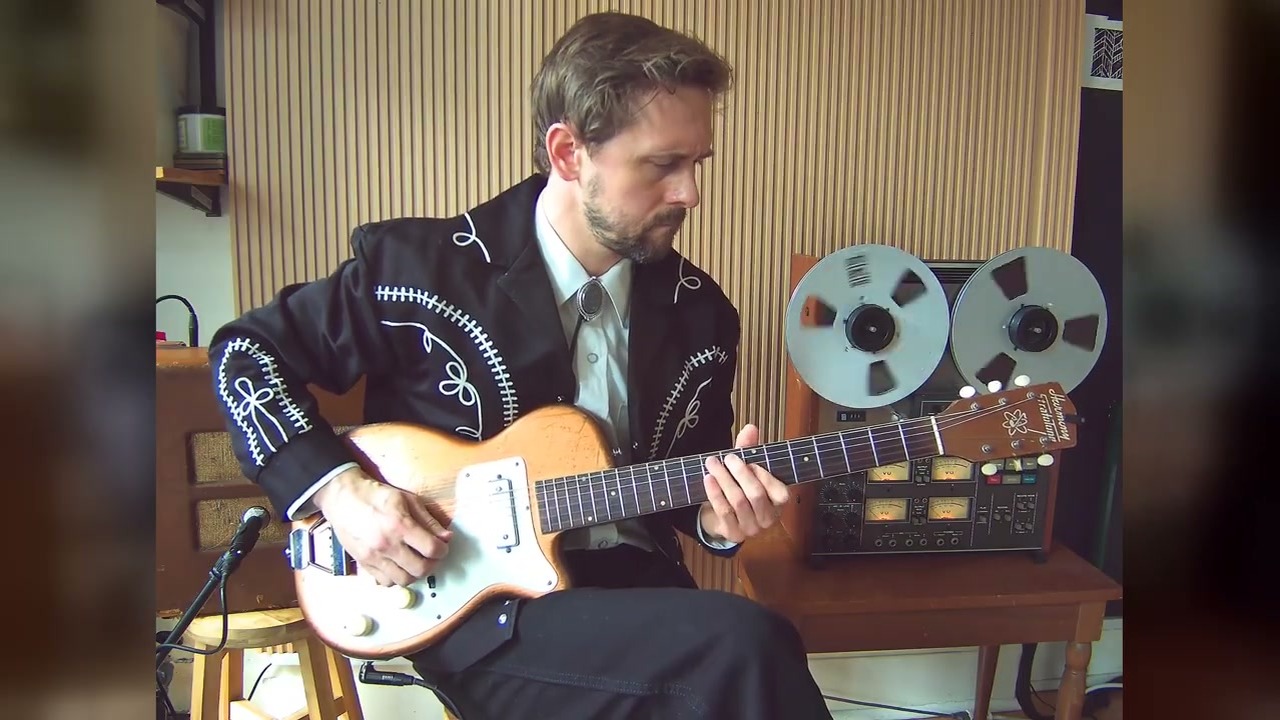
Here Pete plays “Bring It On Down To My House, Honey,” a western swing standard from 1936.
Performance · Bring It On Down To My House, Honey
Pete teaches guitar on Tunelark. View Pete’s profile
About Pete
Pete is a Brooklyn-based multi-instrumentalist, composer and producer with more than sixteen years of teaching experience. Beyond his session and touring work, he writes and produces for his Americana band the Stray Dogs, which has released three albums, and he has appeared on NPR’s Tiny Desk Concerts and Jimmy Kimmel Live!. In 2012 he co-founded Bantam Studios, a music school for adults in the New York area that has taught more than 8,000 students, and he has taught for the Brooklyn Conservatory of Music and the New York City Department of Education.
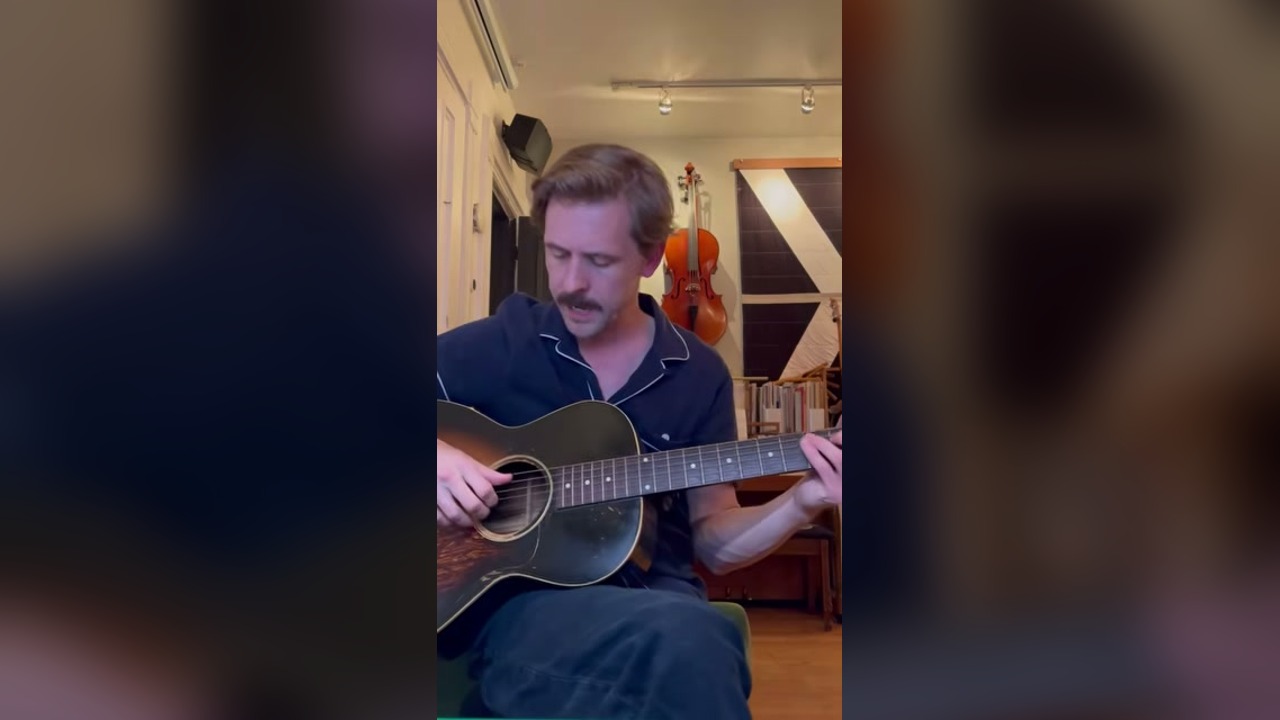
His own learning ran on both tracks. He began violin at six with classical lessons, orchestras and string quartets, then took up the guitar at twelve and went about ten years without a guitar lesson, learning songs from the bands he liked and from playing with better friends. A violin teacher from those years told him the best thing a teacher could give a student was the ability to teach themselves, and he still teaches with that aim. Here he teaches the fingerpicking pattern Elizabeth Cotten built her playing on.
Skill video · Cotten Picking
Pete teaches guitar on Tunelark. View Pete’s profile
Ready to learn songs by ear?
Pete is accepting new guitar students at Tunelark, and a recording of a song you have been trying to work out is a good thing to bring to a first lesson. You can also find a teacher for another instrument across the rest of the roster.
Frequently Asked Questions
Can anyone learn to play guitar by ear?
Yes. Recognizing chords and melodies is a skill built by practice, and the steps are the same for everyone.
How long does it take to learn songs by ear?
The first song can take an evening. Speed comes from familiarity: once the common chord progressions and the sound of major and minor are recognized, a simple song can take minutes.
Should I stop using tabs to train my ear?
No. Use tab for songs you need to learn fast, and work out a few songs a week by ear. A trained ear also makes tab quicker to read, because familiar progressions stand out.
What is the first ear training exercise for guitar?
Finding the home note of a song: hum the note it wants to end on, then slide up the low E string until a note matches. Then find the bass notes the same way.
Do I need to know music theory to learn by ear?
Not to start, but a small amount speeds it up. Knowing which chords belong to a key narrows the search from twelve possible chords to a handful.
Looking for an online guitar teacher? See our full Online Guitar and Bass Lessons page for everything you need to know about getting started.
Keep reading
About Jennifer Heath
I'm Jennifer Heath, VP of Operations at Tunelark and a lifelong singer. I joined the company in 2020 and oversee much of what makes Tunelark work for students and teachers: hiring, training and supporting our instructors, student support, marketing and day-to-day operations. I started voice lessons at 7 and sang with touring choirs through my teens. Music belongs in every life, for the self-expression, the discipline, the comfort and the simple joy of it.