Online Piano Lessons for Adults: An Honest Beginner’s Guide
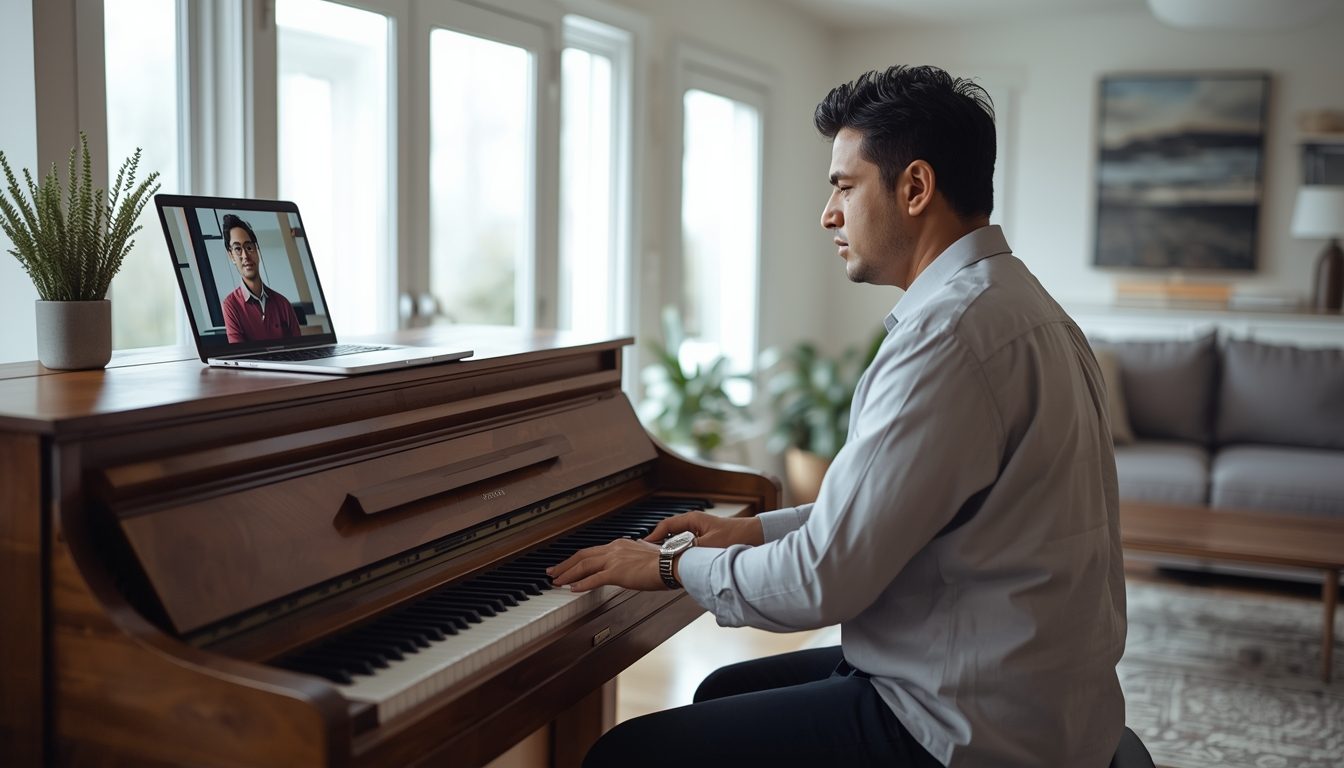
If you’ve been circling the idea of piano for months (or years) and keep talking yourself out of it, this guide is for you. The fears adults bring to piano are remarkably consistent: I’m too old, I don’t have natural talent, I can’t read music, I’ll never have time. None of them hold up under inspection. That doesn’t mean piano will be easy. It means the reasons you’ve been telling yourself probably aren’t the real obstacle.
Online piano lessons for adults have changed what’s possible. You can study with a teacher who genuinely respects adult learners from your own living room, on your own schedule, without the activation energy of driving across town to a studio. Here’s an honest look at what that actually looks like.
Why Adults Are Great Piano Students
The biggest myth in adult music learning is that kids learn faster. They don’t, exactly. They learn differently. Children tend to lean on repetition and a parent keeping them at it. Adults tend to lean on understanding. Once an adult grasps why a passage works the way it does (the rhythm, the chord, the fingering logic) they can practice it deliberately in a way that most children can’t. It is also why our list of easy piano songs for adult beginners is sorted by the skill each piece asks for, not by fame.
Adults also bring three advantages most children lack. You chose this. Nobody is dragging you to the bench. You can articulate what you want. “I want to play this specific song for my mother” is a goal that drives years of focused work. And you can self-assess. You know when you played something poorly, and you know what felt off about it.
What adults sometimes lack (patience with the awkward beginner phase, willingness to play simple music, time for daily practice) are habits you can build. They’re not innate. Teachers say adult students who stick with piano for a year are often surprised at how far they’ve come, and that steady sense of progress is one of the benefits of learning music as an adult.
What an Online Piano Lesson Actually Looks Like
A typical online piano lesson runs 30, 45 or 60 minutes on a video call. You sit at your piano with a webcam positioned so your teacher can see your hands and a good portion of the keyboard. Your teacher does the same on their end. You play, they listen and watch, they correct, they demonstrate. You play again. What each of those lengths costs, and which one adults usually book, is in our guide to piano lesson prices.
This is the shape of an ordinary lesson. Sabrina L. teaches piano on Tunelark and works through the triads most adult repertoire is built from.
Skill video · Major and Minor Triads
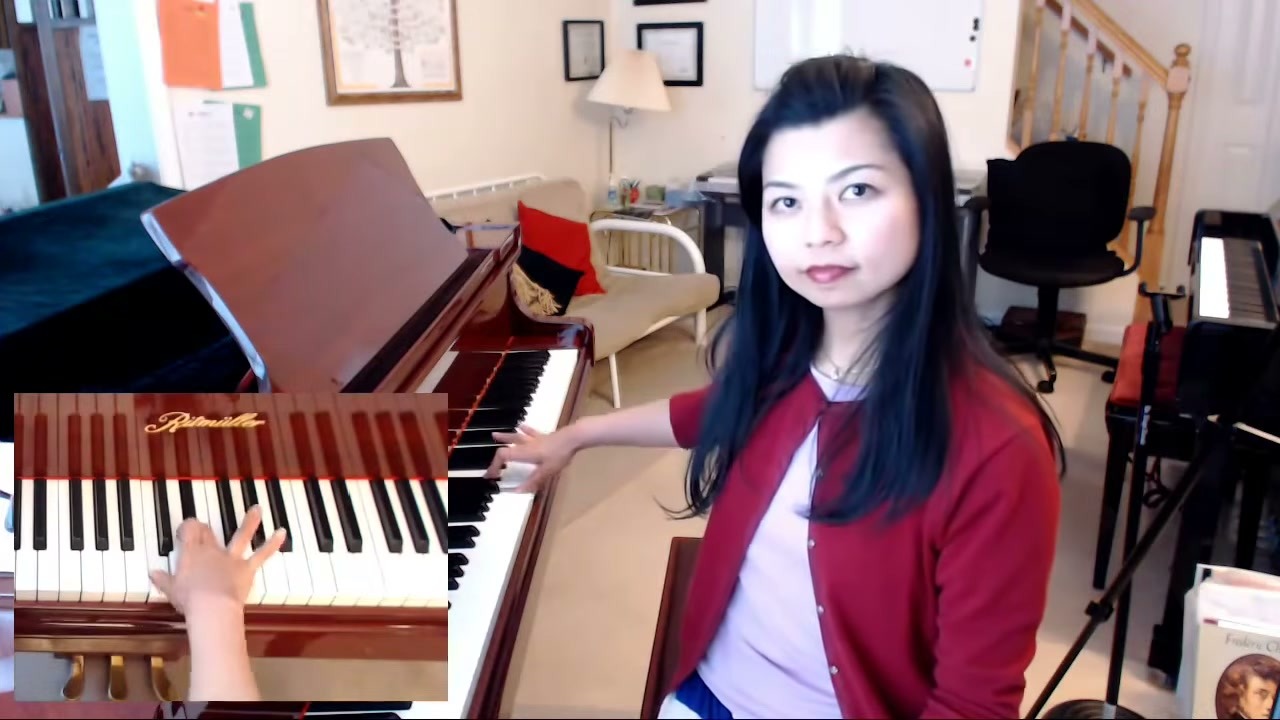
Sabrina teaches piano on Tunelark. View Sabrina’s profile
The technical bar is low. A laptop or tablet with a built-in camera works, as long as you angle it so your hands and a good stretch of the keyboard are in frame rather than your face. A second camera angle is an upgrade, not a requirement. Most students settle into a setup within the first couple of lessons. If you’re new to the format, our first online music lesson guide walks through the practical details.
The rhythm of a typical lesson: a brief check-in on the week, a warm-up or technical exercise, work on whatever piece you’re learning, introduction of new material, and homework for the week. Many teachers record the lesson so you can rewatch the parts where they demonstrated a technique. That replay value is one of the most underrated advantages of online instruction, and in a studio you would have to set it up yourself.
What to Expect in Your First 90 Days
The first 90 days of online piano lessons for adults follow a fairly predictable arc.
Days 1-30. You learn the keyboard layout, finger numbering, basic hand position, the names of notes on the staff, and simple five-finger patterns. By the end of month one, you’re playing simple melodies hands-separately and starting to put hands together on very basic material. You can read notes in the treble clef slowly. The bass clef feels foreign and that’s normal.
Days 31-60. Real coordination starts to develop. Hands-together playing on simple pieces becomes possible. You’re reading both clefs, slowly, but you’re reading. Basic chords appear, usually in the left hand. You’ll play a recognizable song or two that you can show off to someone.
Days 61-90. You’re playing short, real pieces from beginning to end. Sight-reading is still slow but it’s happening. You’ve made and corrected a hundred small technical mistakes with your teacher’s guidance, and your hands are starting to feel like they know where they are. Practice still requires concentration, but it no longer feels like complete chaos.
What 90 days won’t produce: fluency, fast playing, complex repertoire, or the ability to play anything you hear. That’s a different timescale. But it does produce real competence on real music.
What Helps Most (and What Doesn’t)
A few patterns consistently separate adult piano students who progress from those who stall.
What helps most:
- Practicing five or six days a week, even 15 minutes. The neurological consolidation that builds skill happens between practice sessions, and long gaps let those gains fade, so frequent short sessions beat occasional long ones.
- A teacher who picks repertoire you actually want to play.
- Slow practice. Almost every adult student plays too fast in the early phase and ingrains errors. The students who slow down and clean up details progress faster long-term.
- A real piano or a weighted-key digital keyboard. The early technique habits matter enormously.
What doesn’t help:
- Comparing yourself to children, conservatory students, or YouTube prodigies. Your timeline is your timeline.
- Skipping the boring fundamentals to play “real songs.” The fundamentals are the reason real songs eventually sound good.
- Practicing only when you feel inspired. Inspiration is unreliable. A schedule is reliable.
- Pushing through hand pain. Pain is a signal to back off, adjust technique, and ask your teacher about it.
If you’re new to piano specifically, our beginner piano tips article goes deeper on the daily habits that build skill. And if you’re trying to compare platforms before committing, our roundup of the best online piano lessons lays out what to look for.
How to Find a Piano Teacher on Tunelark
Many Tunelark piano teachers love working with adult beginners and adapt their approach accordingly. To find a teacher:
1. Open the teacher list and filter by piano.
2. Read bios. Look for teachers who specifically mention working with adult students, and who write in a tone that feels respectful, not condescending.
3. Book a trial lesson with one whose profile resonates.
4. After the trial, ask yourself: did the teacher seem genuinely interested in your goals, or were they running through a generic curriculum?
You’re not too old, you don’t need natural talent, and you don’t have to read music yet. Those are starting conditions, not disqualifications. The students who do well at piano are the ones who show up consistently and stay curious, and that’s not a function of age.
Frequently Asked Questions
Am I too old to start piano lessons?
No. Adults in their fifties, sixties, and seventies regularly start piano and reach a satisfying level of playing. The brain remains plastic for music learning throughout life, and adults often progress faster than they expect in the early months.
Do I need to be able to read music before I start?
No. Reading music is one of the first skills your teacher will help you develop, and it usually clicks within the first few months. You don’t need any prior musical training.
How much should I practice each day?
15 to 20 minutes a day, five or six days a week, is plenty for steady progress as an adult beginner. Consistency matters far more than duration. Short, daily practice will outperform occasional long sessions almost every time.
Can I really learn piano without an in-person teacher?
Yes. Adults learn piano online successfully all the time, from complete beginners to returners. Online piano lessons for adults work well because most of what your teacher needs is a view of your hands and clean audio of your playing. The technology is solid.
What if I tried piano as a kid and quit?
You’re not the person you were as a kid, and the teaching available to adults is dramatically different. Many returning adults discover they actually love piano once the lessons match their adult brain instead of fighting it.
Looking for an online piano teacher? See our full Online Piano Lessons page for everything you need to know about getting started.
Keep reading
About Jennifer Heath
I'm Jennifer Heath, VP of Operations at Tunelark and a lifelong singer. I joined the company in 2020 and oversee much of what makes Tunelark work for students and teachers: hiring, training and supporting our instructors, student support, marketing and day-to-day operations. I started voice lessons at 7 and sang with touring choirs through my teens. Music belongs in every life, for the self-expression, the discipline, the comfort and the simple joy of it.