How to Improvise on Flute: Where to Start, and What Jazz Asks

Improvising on flute starts with scales and a very small number of notes. A flutist who has only ever played from the page begins by choosing one or two notes they already play comfortably and making up rhythms with them, then adds notes from the scale as the rhythms start to feel like phrases. Jazz adds a style on top of that: a looser approach to rhythm and articulation, a different sound, and the habit of listening and responding to a band.
Alyssa P. teaches flute at Tunelark. She spent six years teaching band at international schools, including Oasis International School in Ankara, where her work included directing a jazz band, and she teaches jazz alongside classical, pop and worship music. One former student wrote on her profile that she was “the first teacher who intentionally taught me how to improvise.” We asked her why improvisation belongs in flute lessons, how a student who has never left the page should start, and what a flutist needs to sound at home in jazz.
Why a classical or band flutist should improvise
Most flute students learn entirely from written music, through school band, orchestra or a lesson book, and many never play a note that was not printed for them. Alyssa teaches improvisation to all of them, including students who have no plans to play jazz.
“Improvisation is a valuable skill for any musician,” she says. “I teach improvisation because it helps students become more confident, creative, and independent musicians. It isn’t just a jazz skill. It teaches students to listen, make musical decisions in real time, and trust their own instincts.”
She points out that every player already improvises a little. “Any time you correct a mistake on the fly, that involves some improvisation,” she says. A flutist who loses their place in a band piece and finds a way back in without stopping has made a musical decision in real time. Practicing improvisation makes that a skill instead of a scramble.
The benefits carry over to written music too. “Even for students who primarily play classical music or in school band, improvisation strengthens skills like rhythm, scales, phrasing, and ear training,” Alyssa says. A student who has made up a phrase has had to decide where it starts, where it breathes and where it lands, and those are the same decisions a written phrase asks for, only made by someone else. Our article on whether a child needs private lessons alongside school band covers what a lesson adds to the band room more generally.
Improvising also removes the right-or-wrong scoring that written music carries. “It also gives students a chance to experiment without worrying about playing the “wrong” notes,” she says. “I want my students to see themselves not just as people who play the notes on a page, but as musicians who can listen, create, and express their own musical ideas.”
The former student quoted above was also in a school jazz band, so for them improvising was a jazz skill as well. Alyssa’s advice holds either way: “I would, however, advise all students to learn how to improvise.”
Start with scales and two notes
For a student who has never played off the page, Alyssa starts with the material they already practice. “The basis of improvisation is scale work,” she says. “All students at all levels need to practice scales. Beginners start with learning the first five notes of a major scale, and we continue to work on scales at all levels of playing. All music is just scales in different order. Improvisation is no different!”
A scale is a set of notes that sound like they belong together, and the notes of a written piece mostly come from the scale of its key. Our guide to why music theory matters explains how keys and scales organize the music students already play. An improviser who stays inside the scale of the key will mostly sound like they belong in the piece, which is why scales are the place to start.
The first step is small on purpose. “Students learning how to improvise begin by playing with notes that they are comfortable playing,” Alyssa says. “I often will have them choose one or two notes in a scale and improvise different rhythms to start, and then we move forward from there.”
Two notes take away the hardest decision, which notes to play, and leave only rhythm. A student who plays two notes in a dozen different rhythms is already improvising, and they are practicing the part of improvisation that most affects whether a phrase sounds musical.
A first improvising routine at home
The steps below build out from her two-note start. They can be done alone in a practice room, with a phone playing a simple backing track or a drone, which is a single sustained note to play against.
1. Two notes, many rhythms. Choose two neighboring notes you play easily, such as G and A in the lower octave. Set a metronome or a slow backing track, and play a short rhythm using only those two notes. Then play a different rhythm. Keep going for a minute or two without stopping to judge any of them.
2. Add the rest of the five. Use the first five notes of the G major scale: G, A, B, C and D. Make short phrases of three or four notes, and end each phrase on G so it sounds finished.
3. Leave space. Play a short phrase, then rest for the same length of time. The rests turn a stream of notes into phrases, and in a band they are where other players get heard.
4. Question and answer. Play a two-bar phrase that ends on any note except G, as if asking something, then a two-bar phrase that ends on G, as if answering it.
5. Try a five-note scale with a different sound. Over a backing track that stays on a D minor chord, play the D minor pentatonic scale: D, F, G, A and C. A pentatonic scale has no half steps between neighboring notes, so almost any order of its notes fits that chord, which makes it a common first scale for improvising in many styles.
6. Record one minute. Listen back a day later and find one phrase you liked. Start the next session by playing it again and changing one thing.
Alyssa recommends the first attempts happen with no audience at all. “Another great way to start is to practice doing it at home with no one listening to take away any sort of desire to sound good,” she says. “It probably won’t sound good to start, and that’s okay! Music is all about learning from our mistakes.” She remembers a band director who told his players he wanted them to make loud mistakes, since that is how a player improves, and she agrees with him.
The routine works with any five notes a student plays well. A beginner a few months in, at the stage our flute learning timeline describes as real songs and reading, has enough notes for steps 1 to 4. Step 5 can wait until the low and middle octaves are comfortable.
What a flutist needs to sound at home in jazz
Jazz is a style as well as a skill, and a flutist can improvise well and still not sound like a jazz player. Alyssa compares the variety within jazz to food. “Think of it like different kinds of pizza: they all have the same basic foundation, but the toppings can be very different,” she says.
What changes first is how the player listens. “For a flutist, learning to sound at home in jazz means learning to listen and respond differently,” she says. “Jazz often involves more flexibility with rhythm, articulation, phrasing, vibrato, and dynamics, as well as learning to swing and improvise.”
Some of those differences can be described directly:
- Swing. In most swing styles, pairs of eighth notes are not played evenly. The first of each pair is longer and the second shorter, in a lilting long-short pattern, even though the page shows two equal eighth notes. Learning to swing is learning to hear and feel that ratio, which varies with the tempo and the band.
- Articulation. Classical flute playing usually starts notes cleanly and evenly with the tongue. Jazz phrasing tongues some notes and slurs into others, often accenting notes that fall off the beat, and players learn the pattern mostly by copying recordings.
- Vibrato. A classical flutist often uses vibrato through most sustained notes. A jazz flutist uses it more selectively, sometimes holding a note straight and adding vibrato only at the end.
- Playing with the rhythm section. The piano, bass and drums keep the time and the harmony in a jazz group. “Jazz also requires understanding how to play with the rhythm section and leave space for other musicians,” Alyssa says. A soloist who plays without pause covers up the rest of the band.
The flute is quieter than the instruments around it in most jazz groups, so jazz flutists usually play into a microphone, which also changes what kind of tone carries.
How jazz flute differs from band and orchestra playing
The bigger difference is what the written part is for. “That is different from concert band or orchestral playing, where the focus is often on blending with the ensemble, matching articulations and tone, and accurately interpreting the written music,” Alyssa says. In a concert band, a flutist’s job is usually to sound like the section and to play what the conductor and composer intended.
In jazz, the page is where the performance begins. “In jazz, I want students to learn the written music, but also understand that the page is a starting point for developing their own musical voice,” she says. “Any song in jazz will turn out slightly different each time it is played.” A jazz chart often gives the melody and the chord symbols and leaves the solo sections open, so a player who has only learned to read accurately has the first half of the job.
The sound itself changes too. “Jazz flute also involves a different sound, so just like learning how to make a good sound initially, jazz requires playing with air, embouchure, and other elements of playing to make it sound more how we want in a jazz context,” Alyssa says. Some jazz flutists use a little more air in the tone than a classical player would, and the microphone lets a softer, breathier sound carry. The air and embouchure control in our guide to improving flute tone is the same control a jazz flutist uses to change that color on purpose.
Flute is less common in jazz than saxophone or trumpet, but it has a long place there. Frank Wess brought new colors to Count Basie’s band on flute in the 1950s and early 1960s, and jazz flute recordings since then cover most styles of the music. “While many people don’t see flute as a jazz instrument, I believe that flute can fit well into jazz, and it is one of my favorite genres of music!” Alyssa says.
For a student who wants to start, the path combines everything above: scales and the two-note routine for the improvising, recordings of jazz flutists for the swing and articulation, and a school jazz band or a backing track for practice playing with a rhythm section. Reading a jazz chart uses the same staff and rhythms as any other music, which our guide to reading sheet music covers from the start.
About Alyssa
Alyssa has played the flute for more than twenty years and has taught for more than fifteen. She holds a Bachelor of Music in Music Education from Taylor University, where she played in the Symphony Orchestra and the Flute Choir, and she performs with the Sycamore Community Band. She decided to teach in sixth grade, after reading a novel about a girl at an international school in Switzerland, and later chose music education over English once she noticed how much more she had to talk about with music professors. In high school she was drum major of her school’s marching band for two years and ran the middle school flute choir. She teaches students ages 7 and up at the beginner and intermediate levels, and she also teaches music theory and audition preparation.
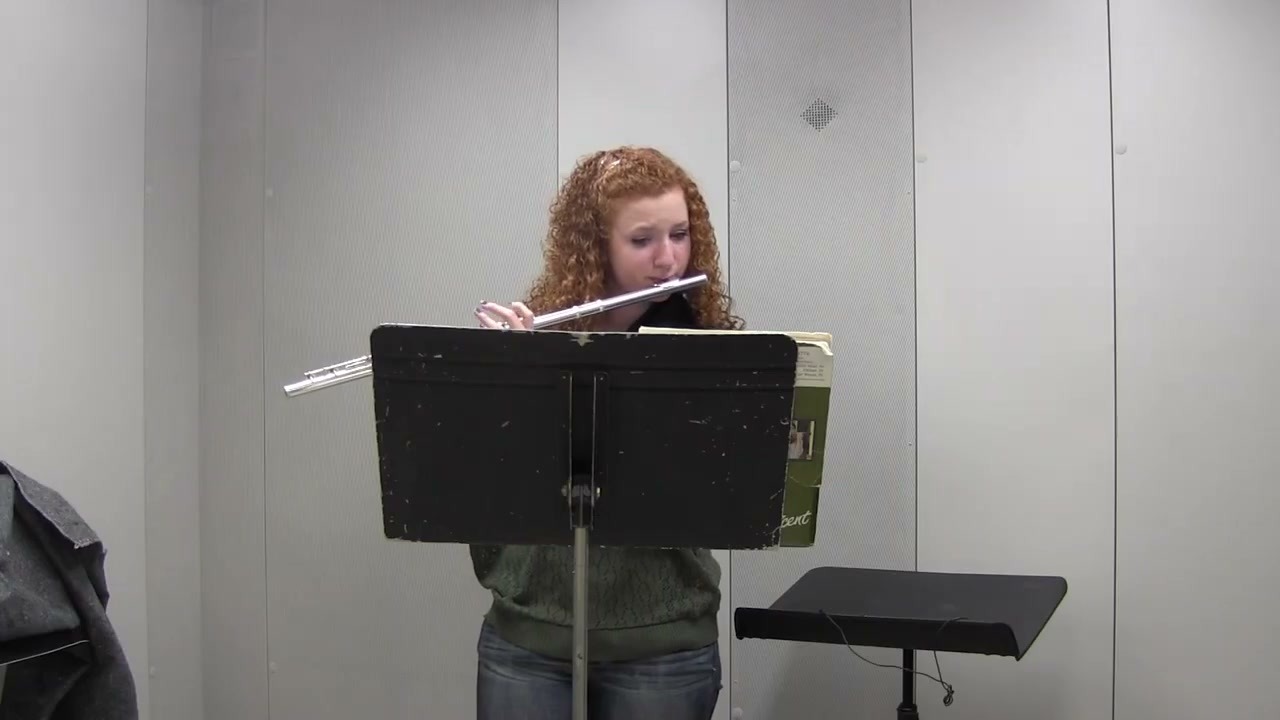
Here she plays “Danse de la Chèvre,” Arthur Honegger’s piece for solo flute.
Performance · Danse de la Chèvre
Alyssa teaches flute on Tunelark. View Alyssa’s profile
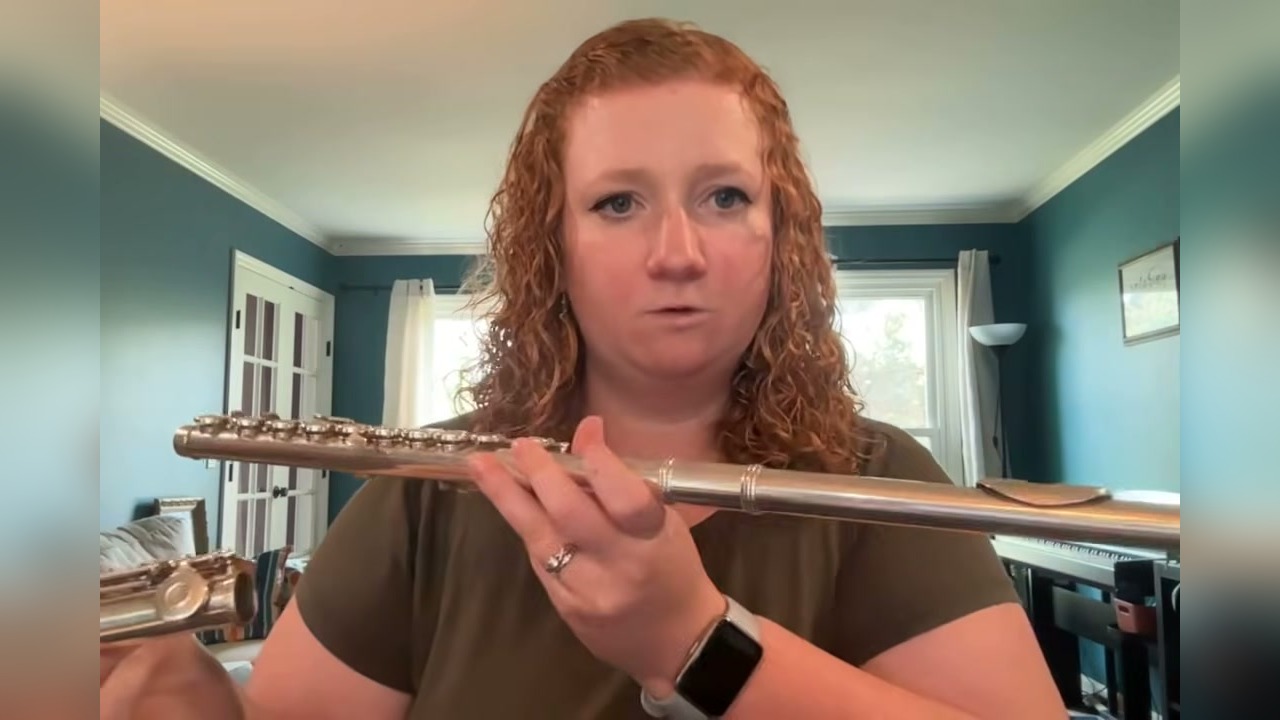
For a student just starting out, her lesson on putting the flute together and making a first sound is where all of this begins.
Skill video · Putting Your Flute Together and Making a First Sound
Alyssa teaches flute on Tunelark. View Alyssa’s profile
Ready to start improvising on flute?
Alyssa is accepting new flute students at Tunelark, and a scale you already know well is all you need to bring to start improvising in a first lesson. You can also find a teacher for another instrument across the rest of the roster.
Frequently Asked Questions
Can a beginner improvise on flute?
Yes. A beginner who knows two or three notes can improvise by making up rhythms with them, which is how Alyssa starts students.
What scale should I use to improvise on flute?
Start with the first five notes of a major scale you know. The minor pentatonic scale is a common next step, because its notes fit a minor chord in almost any order.
Do I need to read music to improvise?
No, though most flutists already do. Improvising is done by ear and by feel, and reading helps later with jazz charts and written melodies.
Is flute used in jazz?
Yes. Flute has been part of jazz since the late 1920s, and in the 1950s Frank Wess, who also played tenor saxophone, played it in Count Basie’s band.
How is jazz flute different from classical flute?
Jazz swings its eighth notes, uses vibrato more selectively, often uses a breathier tone through a microphone, and treats the written part as a starting point for the player’s own ideas.
Keep reading
About Jennifer Heath
I'm Jennifer Heath, VP of Operations at Tunelark and a lifelong singer. I joined the company in 2020 and oversee much of what makes Tunelark work for students and teachers: hiring, training and supporting our instructors, student support, marketing and day-to-day operations. I started voice lessons at 7 and sang with touring choirs through my teens. Music belongs in every life, for the self-expression, the discipline, the comfort and the simple joy of it.