How to Improve Flute Tone: What a Good Sound Is Made Of
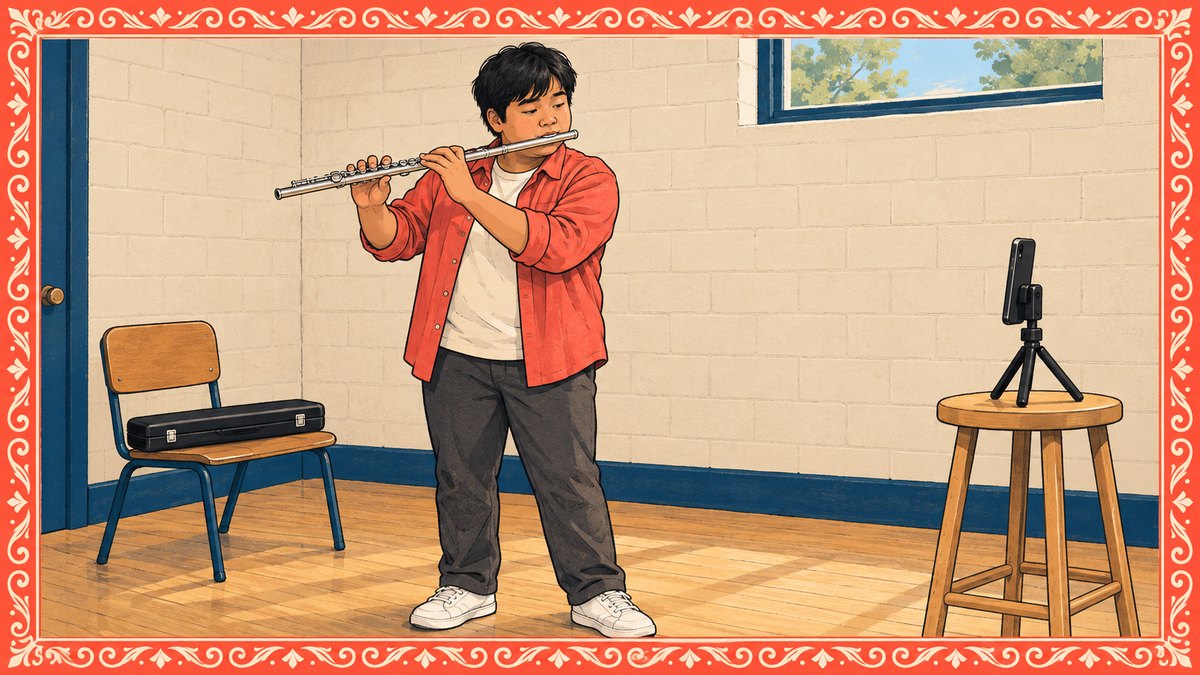
A better flute tone comes from control rather than effort. Once a student can make a steady sound, the next gains come from small, deliberate changes to how fast the air moves, where it is aimed, how large the opening between the lips is, and how the lips are shaped, plus a clear idea of the sound they are trying to make. Long tones, a tuner and recordings of your own playing are the tools that make those changes practicable at home.
Alyssa P. teaches flute at Tunelark. She has played the flute for more than twenty years, holds a Bachelor of Music in Music Education from Taylor University, and spent six years teaching band at international schools, including Oasis International School in Ankara. We asked her what separates a sound that works from a good flute tone, why the pitch drifts when the volume changes, and what long tones are actually training.
From a steady sound to a good tone
Every flutist’s first goal is a sound that comes out reliably, and our beginner flute tips cover that stage and the beginner embouchure. Alyssa’s own lesson on putting the flute together and making a first sound covers it too, starting on the head joint alone.
Skill video · Putting Your Flute Together and Making a First Sound
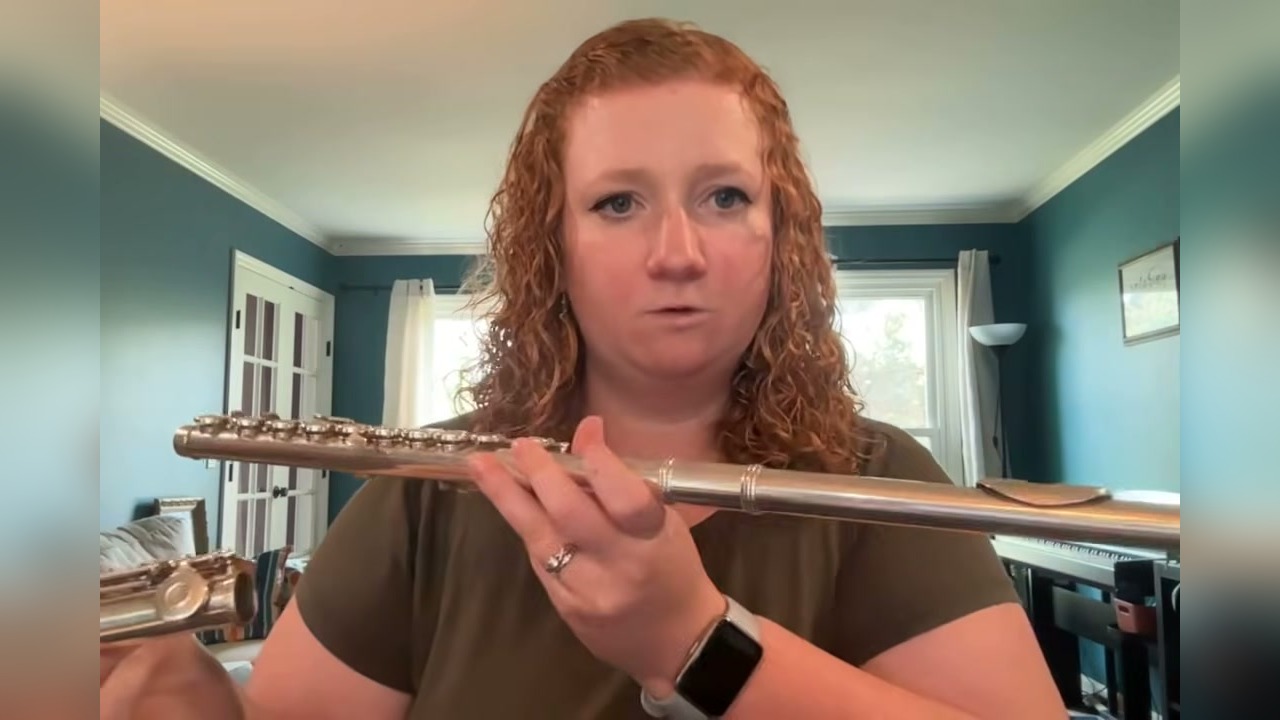
Alyssa teaches flute on Tunelark. View Alyssa’s profile
Once that sound is steady, the job changes. “Once a student can produce a steady sound, the next step is learning to control the air in order to produce not just a sound, but a sound that is in tune, has beautiful tone, and is pleasant to listen to,” Alyssa says.
She lists what a good tone has: a clear, focused sound, a warmth or brightness that suits the music, and, in her words, “stability across octaves and dynamics.”
Focus. A focused sound has a clear core. An unfocused one carries a layer of hiss around the note, which is air that went past the edge of the embouchure hole without turning into sound. Most young flutists have some of this, and it shrinks as the air stream gets narrower and better aimed.
Color. A sound can lean warm and round or bright and ringing. Neither is better in general. A slow movement in an orchestra piece and a fast pop tune ask for different colors, and a player who can only make one has less to choose from. Jazz asks for another color again, which our guide to improvising on flute covers.
Stability. The tone holds its quality and its pitch when the music goes higher or lower and when it gets louder or softer. This is the hardest of the three, because each change of register or volume asks the player to adjust something. Moving between the low and middle octaves has its own mechanics, which our guide to flute octaves and higher notes covers.
What the player is physically changing
The changes that produce those three qualities are small, and they happen at the lips and in the breath. “Physically, the player is making relatively small but important adjustments in air speed and direction, aperture size (the hole through which they are blowing), and embouchure (the shape you are making with your lips),” Alyssa says. “The goal isn’t simply to blow harder, but to learn how those different elements of producing a sound interact.”
Each of the four does something a student can hear:
- Air speed is how fast the air leaves the lips. Faster air raises the pitch, and fast enough air jumps the note to the next octave up with the same fingering. Too slow, and the note sags flat or breaks.
- Air direction is where the stream hits the far edge of the embouchure hole. Aiming more down into the flute darkens the sound and lowers the pitch; aiming more across brightens it and raises the pitch.
- Aperture size is the size of the opening between the lips. A small aperture makes a narrow, fast stream and a focused sound. A large one spreads the air and adds the hiss described above.
- Embouchure is the shape of the lips and the muscles around them. Tight, pinched corners make the sound thin and pull the pitch sharp; relaxed, flexible lips let the player make fine changes to the other three.
They interact, which is why “blow harder” rarely helps. Blowing harder changes the air speed, but the extra air also widens the aperture if the lips give way, and it pushes the pitch up. A student who wants a bigger sound gets a sharper, airier one instead.
Alyssa treats sound as its own subject in a lesson. “It’s important to treat your sound like any other thing you practice,” she says. “When I work with students on sound, we do different exercises to not only know what a good, resonant tone sounds and feels like, but also to build the muscles necessary to produce that sound.” Those muscles are the small ones around the lips, and they tire quickly in the first months, which is one reason short daily practice beats a long weekly session on any wind instrument. She adds that the same control “can lead into learning other important elements of playing, such as vibrato and trills.”
Listening gives the ear a target
A student can only aim at a sound they can imagine. “I find that students who listen to other flute players, recordings or in-person professional concerts and recitals, naturally produce a better tone because they have a sound in their ear that they are wanting to replicate,” Alyssa says. She gives her students recommendations of well-known flutists to listen to.
A practical way to use this: play a short passage from a flute recording, then play a single long note in the same register and compare. The comparison is easier on one note than on a whole piece, and it shows whether the gap is focus, color or steadiness.
Why loud goes sharp and soft goes flat
Most flutists meet the same problem: the pitch climbs as the playing gets louder and sinks as it gets softer. “It all comes back to two things: air and embouchure,” Alyssa says. “Many students strain to play louder, causing more tension and therefore more sharpness. Playing softer without intentional practice often is done by slowing down the air and using less air. Neither of those things help our intonation.”
The mechanism is the one from the list above. Louder playing usually means faster air and tighter lips, and both push the pitch up. Softer playing usually means slower air, and slower air lets the pitch fall. A woodwind teaching guide from Bluffton University describes the standard correction in terms of how much of the embouchure hole the lower lip covers: cover more of the hole when playing loudly and less when playing softly, with a slight drop or lift of the head helping with the coverage. Covering more lowers the pitch, which offsets the loud playing; covering less raises it, which offsets the soft playing.
Alyssa describes the same correction from the player’s side. “When playing louder, a student may need to make a small adjustment to keep the pitch from rising, often by adjusting the air direction and relaxing the embouchure rather than simply trying to “blow less.” When playing softly, they need to maintain enough focused, supported air to keep the note from collapsing flat,” she says.
Soft playing catches students out most often, because quiet feels like it should mean less air effort. What it actually needs is a smaller aperture with the air still moving fast through it. The support for that comes from the breath: the diaphragm does its work on the inhale, and on the exhale the muscles of the abdominal wall and the lower ribs meter the air out steadily, so the stream does not weaken as the note gets quieter.
She builds this into every lesson rather than saving it for a special unit. “I have a lot of exercises that help students practice different dynamic levels and intonation,” she says. “This is all incorporated into warm-up exercises and technique, given during each lesson to practice during each practice time.”
Using a tuner to train the ear
A tuner shows whether a note is sharp or flat, and Alyssa uses one herself. “When I practice, I keep a tuner on my music stand at all times,” she says. “After warming up and that initial tuning note, if I notice I am playing certain parts of my music out of tune, I will stop and work through those with my tuner, adjusting my embouchure and air until I figure out what I need to do to make those parts in tune.”
The goal is a better ear, and the tuner is the check on it. “This also helps my ears recognize intonation problems when I’m playing in real time,” she says. A clip-on tuner costs about $10 to $25 as of 2026, and a phone app works too.
One way to keep the tuner from becoming a crutch: play the note first with your eyes away from the screen, decide whether it felt sharp, flat or centered, then look. Adjust the air direction or lip coverage, play it again, and check again. Done this way, every look at the tuner is a test of what your ear thought, which is what builds the real-time skill she describes.
What long tones are training
Long tones are the classic tone exercise for wind players: one note, held, as evenly as possible. Alyssa starts every practice session with them, and she is specific about what they build. “Long tones are really an exercise in control, awareness, and consistency, not simply endurance, although endurance is part of it,” she says. “They’re training the student’s ability to maintain a stable air stream, consistent embouchure, centered tone, steady pitch, and controlled dynamics over time.”
Each item on that list is something that drifts during a held note. The air stream weakens toward the end of the breath. The lips tire and the aperture spreads. The pitch sinks as the air slows. A long tone puts all of those on display for several seconds at a time, where they are easy to hear.
A simple long-tone routine for an intermediate student looks like this:
1. Start on a comfortable note in the middle of the low octave, such as B or A.
2. Set a metronome to 60 and hold the note for eight beats, aiming for no change in pitch, volume or color from the first beat to the last.
3. Breathe, then move down a half step and repeat, working down toward the bottom of the flute and then back up.
4. Once the even version is comfortable, hold each note while growing from soft to loud and back to soft, with the tuner on the stand to show where the pitch moves.
5. Keep the whole routine to about five minutes, so the lips are warmed up and not tired for the rest of practice.
Alyssa varies the focus from week to week. “Some weeks, we may be working on intonation specifically, or we may be working on something like vibrato,” she says. “It all depends on what level you are at and where we are working towards with other repertoire as well.” The routine stays short and the target changes, which is the kind of purpose-driven practice our article on what music teachers want you to do when you practice describes.
How to tell your tone is getting better
Tone improves slowly enough that a student practicing alone often cannot hear it day to day. Alyssa’s answer is recording. “A great tool for checking for improvement is recording yourself, which I encourage students to do. Comparing recordings can help you see progress over time,” she says.
The comparison works best when the recordings are made the same way each time:
- Record the same thing each time, such as the first minute of your long tones and one short passage you know well.
- Use the same phone in the same spot, the same distance from you, in the same room.
- Leave four to six weeks between recordings, which is long enough for real change to show.
- Listen for specific things: less hiss around the note, a pitch that stays put at the end of a breath, and low and middle notes that sound like the same instrument.
Our guide to tracking your practice progress covers keeping a simple log alongside the recordings. A reliable tone across a whole phrase usually takes two to three months of regular practice from the first notes, and our flute learning timeline sets out what comes before and after. Past that point, tone keeps improving for as long as a flutist keeps listening and practicing it.
In lessons, Alyssa also tells students what to listen for in each week’s long tones. “We also go over long tone exercises during lesson time, and I will teach you what to listen for during each practice session,” she says.
About Alyssa
Alyssa teaches flute to students ages 7 and up at the beginner and intermediate levels, in styles including classical, jazz, pop and worship music, and she also teaches music theory and audition preparation. She performs with the Sycamore Community Band and has performed with the Taylor University Symphony Orchestra and the Taylor University Flute Choir. Her own start came in fifth grade, when her school offered a before-school band: an older cousin and an aunt showed her how to form the embouchure before the school’s instrument tryout night, and she left with a flute.
Here she plays a flute sonata in recital with a piano accompanist.
Performance · Flute Sonata

Alyssa teaches flute on Tunelark. View Alyssa’s profile
Ready to work on your flute tone?
Alyssa is accepting new flute students at Tunelark, and a recording of your long tones is a good thing to bring to a first lesson. You can also find a teacher for another instrument across the rest of the roster.
Frequently Asked Questions
Why does my flute sound airy?
Usually air is passing the edge of the embouchure hole without turning into sound, which happens when the opening between the lips is too large or the air is aimed off the edge. A smaller aperture and long tones are the usual fix.
Why does my flute go sharp when I play loud?
Louder playing tends to bring faster air and tighter lips, and both raise the pitch. Covering a little more of the embouchure hole and relaxing the lips brings it back down.
How long should I practice long tones?
About five minutes at the start of each session is enough for most students. Longer sessions tire the lip muscles before the rest of practice.
Do I need a tuner to practice flute?
It helps. A clip-on tuner costs about $10 to $25 as of 2026, and a phone app works too. Play the note first, judge it by ear, then check.
How long does it take to get a good flute tone?
A reliable tone across a phrase usually takes two to three months from the first notes. Tone keeps improving for years after that with regular long tones and listening.
Keep reading
About Jennifer Heath
I'm Jennifer Heath, VP of Operations at Tunelark and a lifelong singer. I joined the company in 2020 and oversee much of what makes Tunelark work for students and teachers: hiring, training and supporting our instructors, student support, marketing and day-to-day operations. I started voice lessons at 7 and sang with touring choirs through my teens. Music belongs in every life, for the self-expression, the discipline, the comfort and the simple joy of it.